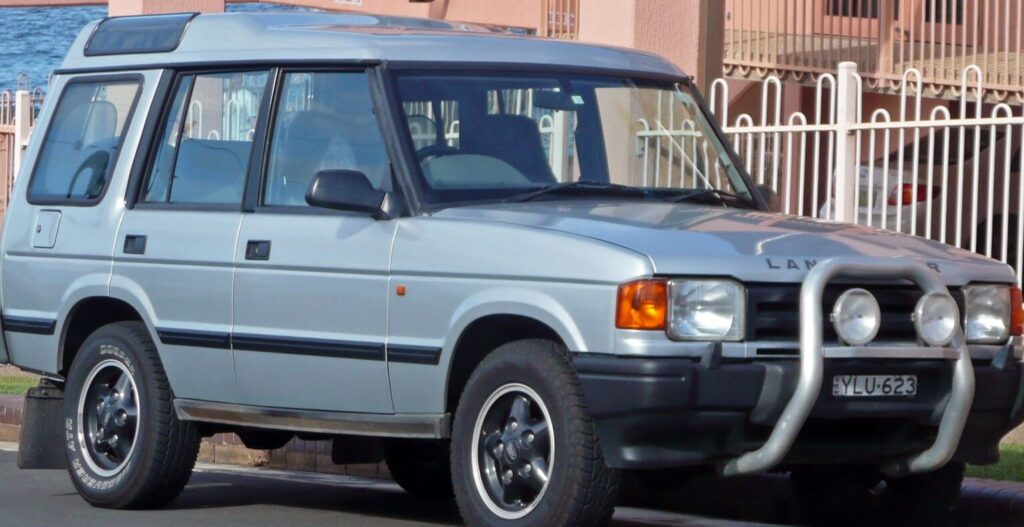
The Land Rover Discovery I 2.0i, produced between 1995 and 1998, represented an entry point into the Discovery range, offering a more accessible price point than its larger-engined siblings. Positioned as a family-oriented SUV, it aimed to provide Land Rover’s renowned off-road capability in a package suitable for everyday use. This variant utilized a 2.0-liter inline-four engine paired with a four-speed automatic transmission, making it a popular choice in European markets where fuel economy and lower purchase costs were prioritized. It was part of the first generation of the Discovery (Series I), internally designated the LJ platform, which aimed to bridge the gap between the rugged Defender and the more luxurious Range Rover.
Technical Specifications
| Brand | Land Rover |
| Model | Discovery |
| Generation | Discovery I |
| Type (Engine) | 2.0i (111 Hp) 4WD Automatic |
| Start of production | 1995 |
| End of production | 1998 |
| Powertrain Architecture | Internal Combustion engine |
| Body type | SUV |
| Seats | 5 |
| Doors | 5 |
| Fuel consumption (combined) | 11.5 l/100 km (20.5 US mpg, 24.6 UK mpg, 8.7 km/l) |
| Fuel Type | Petrol (Gasoline) |
| Acceleration 0 – 100 km/h | 15.3 sec |
| Acceleration 0 – 62 mph | 15.3 sec |
| Acceleration 0 – 60 mph | 14.5 sec |
| Maximum speed | 157 km/h (97.56 mph) |
| Weight-to-power ratio | 18.2 kg/Hp (55 Hp/tonne) |
| Weight-to-torque ratio | 7.6 kg/Nm (131.2 Nm/tonne) |
| Power | 111 Hp @ 4750 rpm |
| Power per litre | 55.7 Hp/l |
| Torque | 265 Nm @ 1800 rpm (195.45 lb.-ft. @ 1800 rpm) |
| Engine layout | Front, Longitudinal |
| Engine Model/Code | T16 |
| Engine displacement | 1994 cm3 (121.68 cu. in.) |
| Number of cylinders | 4 |
| Engine configuration | Inline |
| Number of valves per cylinder | 2 |
| Fuel injection system | Multi-port manifold injection |
| Engine aspiration | Naturally aspirated engine |
| Engine oil capacity | 4.9 l (5.18 US qt | 4.31 UK qt) |
| Coolant capacity | 10 l (10.57 US qt | 8.8 UK qt) |
| Kerb Weight | 2020 kg (4453.34 lbs.) |
| Max. weight | 2720 kg (5996.57 lbs.) |
| Max load | 700 kg (1543.24 lbs.) |
| Trunk (boot) space – minimum | 1290 l (45.56 cu. ft.) |
| Trunk (boot) space – maximum | 1970 l (69.57 cu. ft.) |
| Fuel tank capacity | 89 l (23.51 US gal | 19.58 UK gal) |
| Length | 4524 mm (178.11 in.) |
| Width | 1810 mm (71.26 in.) |
| Height | 1960 mm (77.17 in.) |
| Wheelbase | 2540 mm (100 in.) |
| Front track | 1486 mm (58.5 in.) |
| Rear track | 1486 mm (58.5 in.) |
| Drive wheel | All wheel drive (4×4) |
| Number of gears and type of gearbox | 4 gears, automatic transmission |
| Front suspension | Rigid axle suspension |
| Rear suspension | Rigid axle suspension |
| Front brakes | Ventilated discs |
| Rear brakes | Disc |
| Assisting systems | ABS (Anti-lock braking system) |
| Power steering | Hydraulic Steering |
| Tires size | 205/80 R16 |
Powertrain & Engine Architecture
The heart of the Discovery I 2.0i is the T16 engine, a 1994cc inline-four cylinder petrol engine. This engine, while not known for its outright performance, was a relatively simple and robust design. It featured a two-valve-per-cylinder configuration and utilized a multi-port fuel injection system for improved efficiency and driveability. The T16 engine produced 111 horsepower at 4750 rpm and 265 Nm (195 lb-ft) of torque at 1800 rpm. The four-speed automatic transmission, while providing convenience, was not particularly advanced. It featured a traditional torque converter and lacked the efficiency of more modern automatic gearboxes. The transmission was selected to provide smooth operation and ease of use, catering to a broader range of drivers.
Driving Characteristics
The 2.0i automatic Discovery I offered a comfortable, if not particularly exhilarating, driving experience. Acceleration was leisurely, taking around 15.3 seconds to reach 62 mph. The automatic transmission, while smooth, contributed to a noticeable loss of power compared to the five-speed manual versions. The gear ratios were optimized for fuel economy and low-speed off-road crawling rather than rapid acceleration. In real-world conditions, the 2.0i was best suited for relaxed cruising and everyday driving. While capable off-road, its lower power output meant it wasn’t as adept at tackling challenging terrain as the V8-powered models.
Equipment & Trim Levels
The 2.0i typically represented the base trim level in the Discovery I range. Standard equipment included power steering, central locking, and an AM/FM radio. Interior upholstery was typically cloth, and the dashboard featured a relatively simple layout. Optional extras included air conditioning, electric windows, and a sunroof. The trim level was designed to offer essential comfort and convenience features at an affordable price point. It was often chosen by families and individuals who prioritized practicality and value over luxury.
Chassis & Braking
The Discovery I utilized a body-on-frame construction, providing a robust and durable chassis. Suspension consisted of a rigid axle setup at both the front and rear, offering good off-road articulation. Braking was provided by ventilated discs at the front and solid discs at the rear. Anti-lock Braking System (ABS) was standard, enhancing safety and control. The suspension was tuned to provide a comfortable ride on paved roads while maintaining off-road capability. The relatively heavy weight of the vehicle, combined with the modest power output of the 2.0i engine, meant that braking performance was adequate but not exceptional.
Market Reception & Comparison
The Discovery I 2.0i was generally well-received as an affordable and capable SUV. Critics praised its off-road ability and spacious interior, but noted its lack of outright performance. Compared to the V8-powered models, the 2.0i offered significantly better fuel economy, making it a more attractive option for drivers covering long distances. However, the V8s provided a more refined driving experience and superior towing capacity. The 2.0i also faced competition from other SUVs in the market, such as the Mitsubishi Pajero and Nissan Patrol, which offered similar levels of capability and affordability.
Legacy
The Land Rover Discovery I 2.0i, while not the most powerful or prestigious variant, holds a significant place in the Discovery lineage. Its affordability and practicality made it a popular choice for families and individuals seeking a capable and reliable SUV. Today, these vehicles are increasingly sought after by enthusiasts and collectors. The T16 engine, while not known for its longevity, is generally reliable if properly maintained. Common issues include oil leaks and wear on the timing chain. The automatic transmission can also be prone to failure if not serviced regularly. Despite these potential issues, the Discovery I 2.0i remains a capable and charming vehicle, offering a unique blend of off-road capability and everyday practicality.