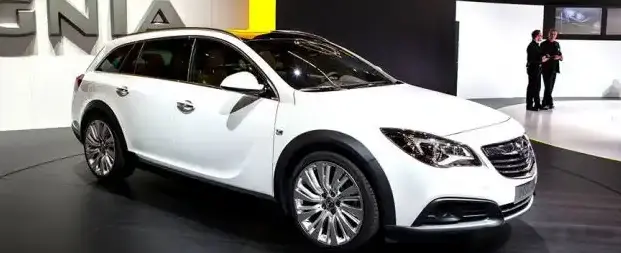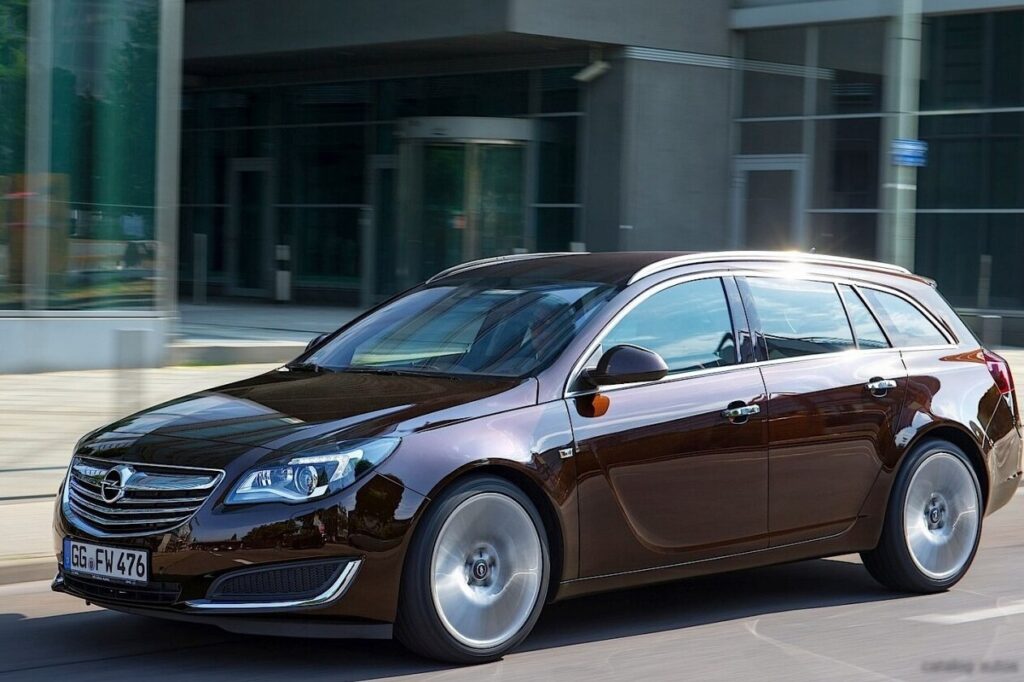
The Opel Insignia Sports Tourer, specifically the 2.0 CDTI (170 hp) All-Wheel Drive variant produced from July 2015 to January 2017, represents a significant offering in the European D-segment station wagon market. This model falls within the A generation (first generation) of the Insignia, benefitting from the 2013 facelift which brought styling and technological updates. Positioned as a mid-range option within the Insignia lineup, it aimed to balance fuel efficiency, practicality, and all-weather capability for families and business users alike. The Sports Tourer body style, Opel’s designation for a station wagon, provided increased cargo capacity compared to the hatchback version, making it a popular choice for those needing versatile space.
Technical Specifications
| Brand | Opel |
| Model | Insignia |
| Generation | Insignia Sports Tourer (A, facelift 2013) |
| Type (Engine) | 2.0 CDTI (170 Hp) AWD |
| Start of production | July, 2015 |
| End of production | January, 2017 |
| Powertrain Architecture | Internal Combustion engine |
| Body type | Station wagon (estate) |
| Seats | 5 |
| Doors | 5 |
| Fuel consumption (urban) | 7 l/100 km (33.6 US mpg, 40.4 UK mpg, 14.3 km/l) |
| Fuel consumption (extra urban) | 4.8 l/100 km (49 US mpg, 58.9 UK mpg, 20.8 km/l) |
| Fuel consumption (combined) | 5.6 l/100 km (42 US mpg, 50.4 UK mpg, 17.9 km/l) |
| CO2 emissions | 149 g/km |
| Fuel Type | Diesel |
| Acceleration 0 – 100 km/h | 10.4 sec |
| Acceleration 0 – 62 mph | 10.4 sec |
| Acceleration 0 – 60 mph | 9.9 sec |
| Maximum speed | 210 km/h (130.49 mph) |
| Emission standard | Euro 6 |
| Weight-to-power ratio | 10.5 kg/Hp, 95 Hp/tonne |
| Weight-to-torque ratio | 4.5 kg/Nm, 223.5 Nm/tonne |
| Power | 170 Hp @ 3750 rpm |
| Power per litre | 86.9 Hp/l |
| Torque | 400 Nm @ 1750-2500 rpm (295.02 lb.-ft. @ 1750-2500 rpm) |
| Engine layout | Front, Transverse |
| Engine Model/Code | B20DTH |
| Engine displacement | 1956 cm3 (119.36 cu. in.) |
| Number of cylinders | 4 |
| Engine configuration | Inline |
| Cylinder Bore | 83 mm (3.27 in.) |
| Piston Stroke | 90.4 mm (3.56 in.) |
| Compression ratio | 16:1 |
| Fuel injection system | Diesel Commonrail |
| Engine aspiration | Turbocharger, Intercooler |
| Engine oil capacity | 4.9 l (5.18 US qt | 4.31 UK qt) |
| Coolant | 7 l (7.4 US qt | 6.16 UK qt) |
| Kerb Weight | 1790 kg (3946.27 lbs.) |
| Max. weight | 2450 kg (5401.33 lbs.) |
| Max load | 660 kg (1455.05 lbs.) |
| Trunk (boot) space – minimum | 540 l (19.07 cu. ft.) |
| Trunk (boot) space – maximum | 1530 l (54.03 cu. ft.) |
| Fuel tank capacity | 70 l (18.49 US gal | 15.4 UK gal) |
| Max. roof load | 100 kg (220.46 lbs.) |
| Permitted trailer load with brakes (12%) | 2000 kg (4409.25 lbs.) |
| Permitted trailer load without brakes | 750 kg (1653.47 lbs.) |
| Length | 4913 mm (193.43 in.) |
| Width | 1856 mm (73.07 in.) |
| Width including mirrors | 2084 mm (82.05 in.) |
| Height | 1513 mm (59.57 in.) |
| Wheelbase | 2737 mm (107.76 in.) |
| Front track | 1587 mm (62.48 in.) |
| Rear (Back) track | 1590 mm (62.6 in.) |
| Minimum turning circle | 11.40 m (37.4 ft.) |
| Drive wheel | All wheel drive (4×4) |
| Number of gears and type of gearbox | 6 gears, manual transmission |
| Front brakes | Ventilated discs |
| Rear brakes | Disc |
Powertrain & Engine Architecture
At the heart of the Insignia 2.0 CDTI AWD lies the B20DTH engine, a 1.956-liter inline-four cylinder diesel. This engine is a member of Opel/Vauxhall’s family of common-rail direct injection diesel engines. The B20DTH utilizes a turbocharger with an intercooler to boost power and efficiency. The common-rail direct injection system, supplied by Bosch, delivers fuel directly into the cylinders at extremely high pressure, optimizing combustion. The engine features a 16:1 compression ratio and a variable geometry turbocharger (VGT) to enhance low-end torque and responsiveness. The six-speed manual transmission was the standard offering for this variant, providing a balance between fuel economy and driver control. The all-wheel-drive system employed a multi-plate clutch to distribute torque between the front and rear axles, enhancing traction in adverse conditions.
Driving Characteristics
The 170 hp and 400 Nm (295 lb-ft) of torque delivered by the 2.0 CDTI engine provided adequate performance for everyday driving and long-distance cruising. Acceleration from 0-60 mph took approximately 9.9 seconds, and the top speed was rated at 130.49 mph. While not a sports car, the Insignia Sports Tourer offered a comfortable and composed ride. The all-wheel-drive system significantly improved handling and stability, particularly on slippery surfaces. The manual transmission, while offering more driver engagement than an automatic, required more effort in stop-and-go traffic. Compared to the higher-output 2.0 BiTurbo diesel, the 170 hp version felt less powerful, but it offered better fuel economy and lower running costs. The gear ratios were tuned for fuel efficiency, meaning the engine sometimes felt strained when accelerating quickly.
Equipment & Trim Levels
The 2.0 CDTI AWD variant of the Insignia Sports Tourer typically came equipped with a respectable level of standard features. These included air conditioning, electric windows, a touchscreen infotainment system with Bluetooth connectivity, alloy wheels, and a suite of safety features such as ABS, ESP (Electronic Stability Program), and multiple airbags. Higher trim levels, such as the ‘SE’ or ‘Elite’ offered additional features like leather upholstery, heated seats, a navigation system, and advanced driver-assistance systems like adaptive cruise control and lane departure warning. Interior upholstery was typically cloth on the base models, with leather options available on higher trims. The dashboard layout was functional and well-designed, with a focus on ergonomics.
Chassis & Braking
The Insignia Sports Tourer featured a McPherson strut front suspension and a multi-link rear suspension, providing a comfortable and controlled ride. The all-wheel-drive system added to the vehicle’s stability and handling. The braking system consisted of ventilated discs on the front wheels and solid discs on the rear. ABS (Anti-lock Braking System) and ESP (Electronic Stability Program) were standard features, enhancing safety and control. The steering was electrically assisted, providing a light and precise feel. Stabilizer bars were fitted to both the front and rear axles to reduce body roll during cornering.
Market Reception & Comparison
The Opel Insignia Sports Tourer 2.0 CDTI AWD was generally well-received by automotive critics. It was praised for its spacious interior, comfortable ride, and all-weather capability. However, some critics noted that the interior materials weren’t as premium as those found in some of its competitors, such as the Ford Mondeo or Volkswagen Passat. Fuel economy was a strong point, with the combined fuel consumption of 5.6 l/100 km (42 US mpg) being competitive for its class. Reliability was generally good, although some owners reported issues with the diesel particulate filter (DPF) system, a common problem with modern diesel engines. Compared to the more powerful 2.0 BiTurbo version, the 170 hp model offered a more affordable entry point into the Insignia range, appealing to buyers who prioritized fuel efficiency and practicality over outright performance.
Legacy
The Opel Insignia Sports Tourer 2.0 CDTI AWD has proven to be a relatively reliable and durable vehicle in the used car market. The B20DTH engine, while not without its potential issues (such as DPF problems), is generally considered to be a robust and long-lasting unit when properly maintained. The all-wheel-drive system continues to be a valuable asset for buyers in regions with harsh winters or challenging road conditions. Today, these Insignias represent a good value proposition for those seeking a spacious, practical, and fuel-efficient station wagon. Parts availability remains good, and the relatively simple mechanical design makes it a viable option for DIY mechanics.