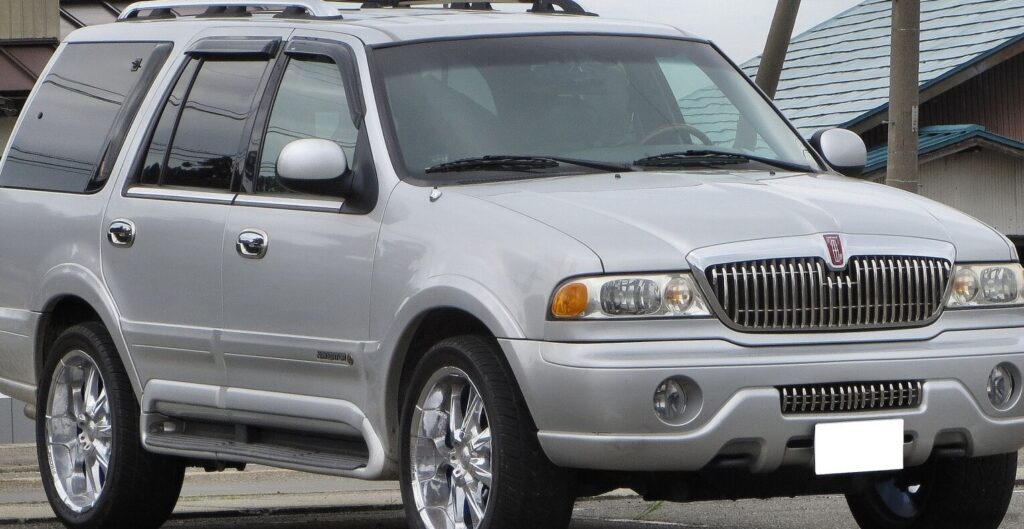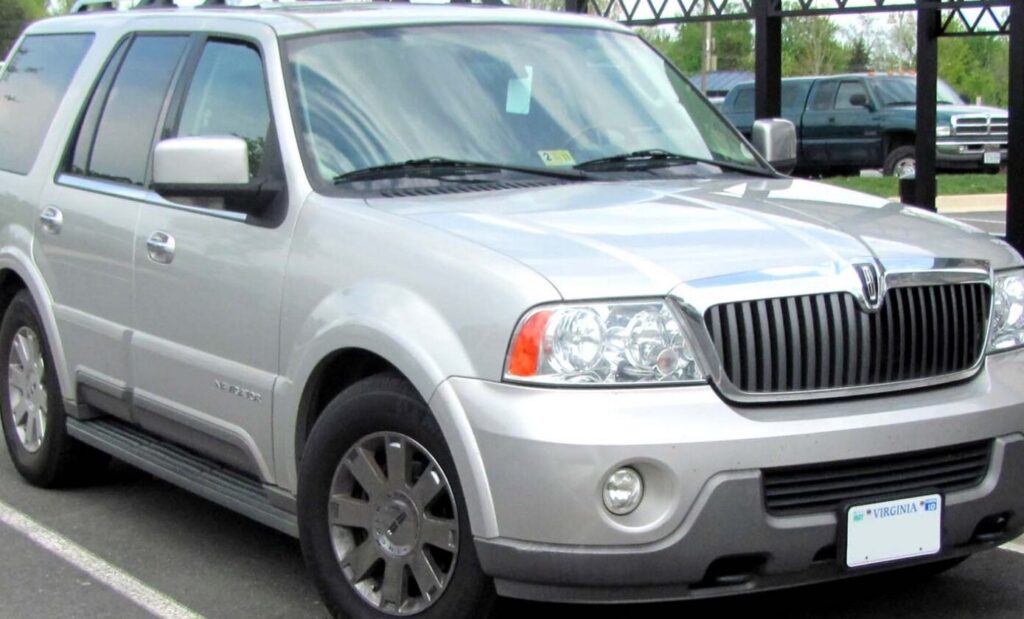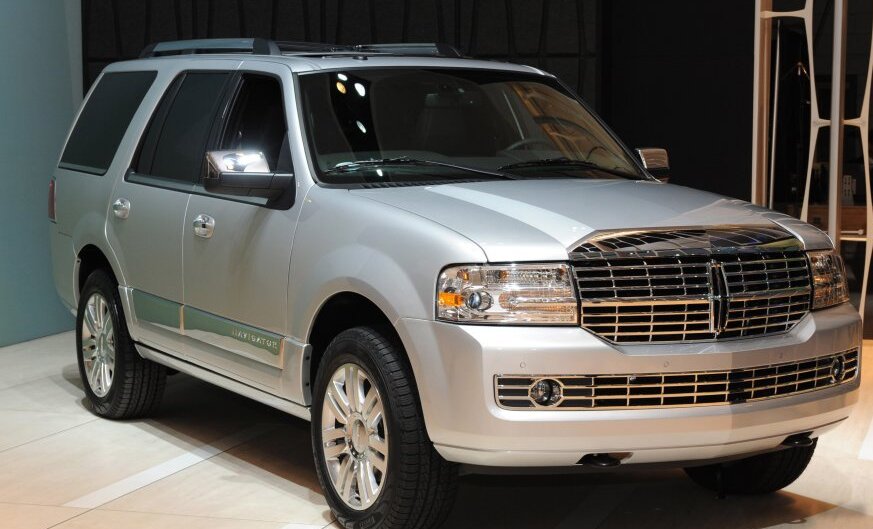
The Lincoln Navigator III, specifically the 5.4i V8 variant with an automatic transmission, represented a significant evolution in Lincoln’s full-size SUV offerings. Produced from 2008 to 2014, this generation Navigator (internally designated as the third generation) aimed to blend luxury, capability, and a more refined driving experience compared to its predecessors. This particular configuration, boasting a 5.4-liter V8 engine producing 310 horsepower, occupied a central position within the Navigator lineup, offering a balance between performance and fuel efficiency for buyers seeking a premium SUV experience. It was positioned above the base models, but below any potential higher-performance or luxury-focused trims that might have been offered in certain model years.
Technical Specifications
| Brand | Lincoln |
| Model | Navigator |
| Generation | Navigator III |
| Type (Engine) | 5.4i V8 (310 Hp) Automatic |
| Start of production | 2008 |
| End of production | 2014 |
| Powertrain Architecture | Internal Combustion engine |
| Body type | SUV |
| Seats | 8 |
| Doors | 5 |
| Fuel consumption (urban) | 16.8 l/100 km (14 US mpg, 16.8 UK mpg, 6 km/l) |
| Fuel consumption (extra urban) | 11.8 l/100 km (19.9 US mpg, 23.9 UK mpg, 8.5 km/l) |
| Fuel consumption (combined) | 14.7 l/100 km (16 US mpg, 19.2 UK mpg, 6.8 km/l) |
| Fuel Type | Petrol (Gasoline) |
| Weight-to-power ratio | 8.5 kg/Hp, 117.6 Hp/tonne |
| Weight-to-torque ratio | 5.3 kg/Nm, 187.7 Nm/tonne |
| Power | 310 Hp @ 5000 rpm |
| Power per litre | 57.3 Hp/l |
| Torque | 495 Nm @ 3600 rpm (365.09 lb.-ft. @ 3600 rpm) |
| Maximum engine speed | 5400 rpm |
| Engine layout | Front, Longitudinal |
| Engine Model/Code | Triton |
| Engine displacement | 5408 cm3 (330.02 cu. in.) |
| Number of cylinders | 8 |
| Engine configuration | V-engine |
| Cylinder Bore | 90.2 mm (3.55 in.) |
| Piston Stroke | 105.9 mm (4.17 in.) |
| Compression ratio | 9.8:1 |
| Number of valves per cylinder | 3 |
| Fuel injection system | Multi-port manifold injection |
| Engine aspiration | Naturally aspirated engine |
| Valvetrain | SOHC, VVT |
| Engine oil capacity | 6.6 l (6.97 US qt | 5.81 UK qt) |
| Coolant capacity | 15.5 l (16.38 US qt | 13.64 UK qt) |
| Kerb Weight | 2637 kg (5813.59 lbs.) |
| Max. weight | 3402 kg (7500.13 lbs.) |
| Max load | 765 kg (1686.54 lbs.) |
| Trunk (boot) space – minimum | 515 l (18.19 cu. ft.) |
| Trunk (boot) space – maximum | 2931 l (103.51 cu. ft.) |
| Fuel tank capacity | 106 l (28 US gal | 23.32 UK gal) |
| Length | 5293 mm (208.39 in.) |
| Width | 2002 mm (78.82 in.) |
| Width including mirrors | 2332 mm (91.81 in.) |
| Height | 1989 mm (78.31 in.) |
| Wheelbase | 3023 mm (119.02 in.) |
| Front track | 1699 mm (66.89 in.) |
| Rear (Back) track | 1702 mm (67.01 in.) |
| Ride height (ground clearance) | 234 mm (9.21 in.) |
| Drag coefficient (Cd) | 0.40 |
| Minimum turning circle | 12.45 m (40.85 ft.) |
| Approach angle | 22.4° |
| Departure angle | 21.7° |
| Ramp-over angle | 19.5° |
| Drivetrain Architecture | Rear wheel drive |
| Number of gears | 6 |
| Gearbox type | Automatic transmission |
| Front suspension | Independent coil spring |
| Rear suspension | Independent coil spring |
| Front brakes | Ventilated discs |
| Rear brakes | Ventilated discs |
| Assisting systems | ABS (Anti-lock braking system) |
| Steering type | Steering rack and pinion |
| Tires size | 255/70 R18 |
| Wheel rims size | 18 |
INTRODUCTION
The third-generation Lincoln Navigator, launched for the 2008 model year, represented a significant departure from its body-on-frame predecessors. Moving to a body-on-frame construction based on the Ford F-150 platform, it offered improved ride quality, handling, and interior space. The 5.4i V8 Automatic variant was a mainstay of the Navigator lineup throughout its production run. It catered to buyers who desired a powerful and comfortable SUV without necessarily needing the ultimate in performance or the complexity of optional features. This model year saw Lincoln attempting to establish a stronger identity separate from Ford, focusing on luxury and refinement.
Powertrain & Engine Architecture
At the heart of the Navigator 5.4i was Ford’s 5.4-liter Triton V8 engine. This engine, designated with various codes throughout its lifespan (often referenced as the 3V version in this generation), was a three-valve-per-cylinder design, enhancing both power and efficiency. The engine utilized multi-port fuel injection, delivering fuel directly into the intake ports. Variable Valve Timing (VVT) was incorporated to optimize engine performance across a wider range of engine speeds. The engine produced 310 horsepower at 5000 rpm and 495 Nm (365 lb-ft) of torque at 3600 rpm. The engine’s longitudinal mounting allowed for a rear-wheel-drive configuration, with four-wheel drive available as an option. Paired with the 5.4L V8 was a six-speed automatic transmission, providing smooth and responsive shifting. This transmission was designed to handle the engine’s substantial torque output and contribute to improved fuel economy compared to older four-speed automatics.
Driving Characteristics
The Navigator 5.4i Automatic offered a comfortable and capable driving experience. While not a sports SUV, the 310 horsepower and 365 lb-ft of torque provided ample power for everyday driving and towing. Acceleration was respectable, though not particularly brisk, with a 0-60 mph time estimated around 8-9 seconds. The six-speed automatic transmission was generally well-behaved, offering smooth shifts and appropriate gear selection. Compared to the optional 4×4 version, the rear-wheel-drive model offered slightly better fuel economy and a more traditional driving feel. The automatic transmission’s gear ratios were tuned for a balance of acceleration and fuel efficiency, prioritizing comfortable cruising over outright performance. Compared to potential higher-output engine options (if offered in later years), this variant prioritized smoothness and ease of use over raw power.
Equipment & Trim Levels
The Navigator 5.4i typically came standard with a generous array of features, reflecting its luxury SUV positioning. Standard equipment often included leather upholstery, tri-zone automatic climate control, a premium audio system, power-adjustable front seats, and a rear-seat entertainment system. Optional extras included navigation, power-folding running boards, and upgraded interior trim packages. Trim levels varied slightly from year to year, but generally offered increasing levels of luxury and convenience features. The base trim provided a well-equipped vehicle, while higher trims added features like chrome exterior accents, upgraded leather, and more advanced technology.
Chassis & Braking
The Navigator III utilized an independent coil spring suspension at both the front and rear, contributing to a comfortable ride quality. The chassis was designed to handle the vehicle’s substantial weight and provide stable handling. Ventilated disc brakes were standard at all four corners, providing adequate stopping power. An Anti-lock Braking System (ABS) was standard, enhancing safety and control during emergency braking situations. The rear track width was slightly wider than the front, contributing to stability. The relatively high ride height (234mm or 9.21 inches) provided good ground clearance for off-road excursions, though the Navigator was primarily designed for on-road comfort and luxury.
Market Reception & Comparison
The Lincoln Navigator III, including the 5.4i V8 Automatic variant, generally received positive reviews for its spacious interior, comfortable ride, and powerful engine. Critics noted the improved refinement compared to previous generations. However, fuel economy was a common criticism, as the large SUV and V8 engine resulted in relatively high fuel consumption. Compared to other full-size SUVs of the era, such as the Cadillac Escalade and Chevrolet Suburban, the Navigator offered a competitive blend of luxury, capability, and value. The 5.4L engine was generally considered reliable, but required regular maintenance, including spark plug replacements, to prevent issues.
Legacy
The Lincoln Navigator III 5.4i V8 Automatic remains a popular choice in the used car market, particularly for buyers seeking a large, comfortable, and capable SUV. The 5.4-liter Triton V8 engine, while known for potential spark plug issues if not properly maintained, is generally considered durable and long-lasting. Parts availability is good, and the vehicle’s relatively simple mechanical design makes it relatively easy to maintain. Today, these Navigators are often sought after for their spacious interiors, towing capacity, and classic American SUV styling. While fuel economy remains a concern, the Navigator III 5.4i continues to offer a compelling value proposition for buyers seeking a luxurious and capable full-size SUV.