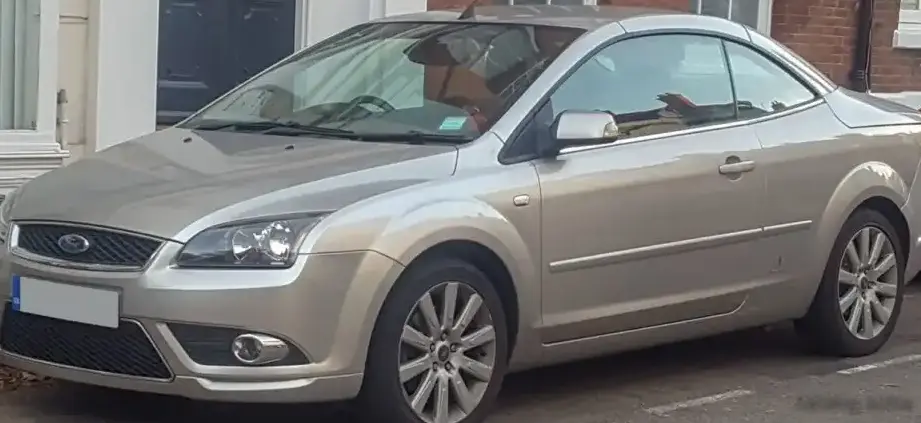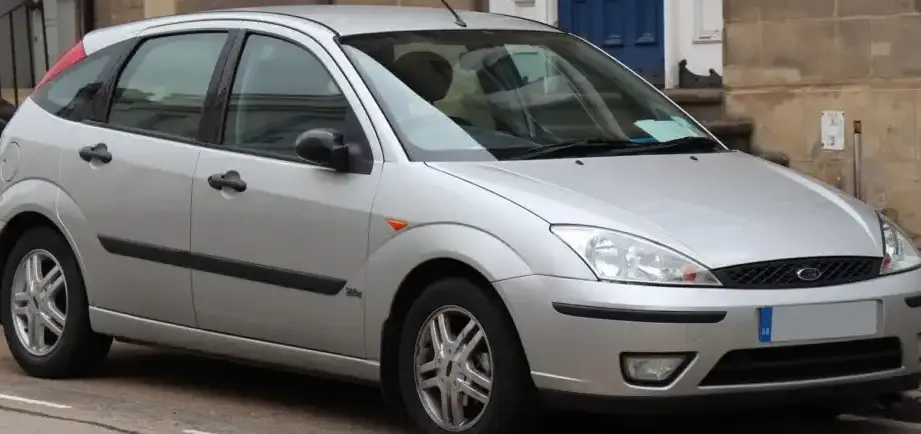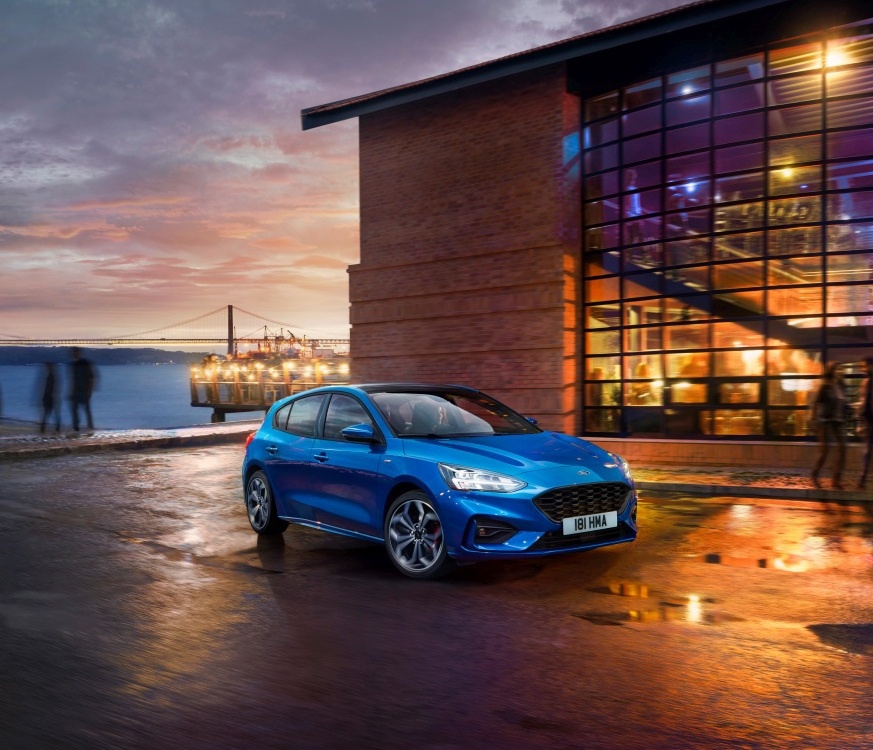
The Ford Focus IV Hatchback ST 2.3 EcoBoost Automatic, produced from June 2019 to 2021, represented the performance-oriented pinnacle of the fourth-generation Focus lineup in many markets, including North America. Positioned as the flagship trim, it offered a significant step up in power and handling compared to the standard Focus models. This variant aimed to deliver a compelling hot hatch experience, blending everyday practicality with engaging driving dynamics. It was a key competitor to vehicles like the Volkswagen Golf GTI and the Honda Civic Si, offering a distinctly American take on the European hot hatch formula.
Technical Specifications
| Brand | Ford |
| Model | Focus |
| Generation | Focus IV Hatchback |
| Type | ST 2.3 EcoBoost (280 Hp) Automatic |
| Start of production | June, 2019 |
| End of production | 2021 |
| Powertrain Architecture | Internal Combustion engine |
| Body type | Hatchback |
| Seats | 5 |
| Doors | 5 |
| CO2 emissions | 179 g/km |
| Fuel Type | Petrol (Gasoline) |
| Maximum speed | 250 km/h (155.34 mph) |
| Emission standard | Euro 6d-TEMP |
| Weight-to-power ratio | 5.2 kg/Hp, 191.9 Hp/tonne |
| Weight-to-torque ratio | 3.5 kg/Nm, 287.9 Nm/tonne |
| Power | 280 Hp @ 5500 rpm |
| Torque | 420 Nm @ 3000-4000 rpm (309.78 lb.-ft. @ 3000-4000 rpm) |
| Engine layout | Front, Transverse |
| Engine Model/Code | N3DA |
| Number of cylinders | 4 |
| Engine configuration | Inline |
| Fuel injection system | Direct injection |
| Engine aspiration | Turbocharger, Intercooler |
| Engine oil capacity | 5.3 l (5.6 US qt | 4.66 UK qt) |
| Coolant | 7.6 l (8.03 US qt | 6.69 UK qt) |
| Kerb Weight | 1459 kg (3216.54 lbs) |
| Max. weight | 2040 kg (4497.43 lbs) |
| Max load | 581 kg (1280.89 lbs) |
| Trunk (boot) space – minimum | 273 l (9.64 cu. ft) |
| Trunk (boot) space – maximum | 1250 l (44.14 cu. ft) |
| Fuel tank capacity | 52 l (13.74 US gal | 11.44 UK gal) |
| Permitted trailer load with brakes (12%) | 1600 kg (3527.4 lbs) |
| Permitted trailer load without brakes | 750 kg (1653.47 lbs) |
| Permitted towbar download | 90 kg (198.42 lbs) |
| Length | 4388 mm (172.76 in) |
| Width | 1825 mm (71.85 in) |
| Width with mirrors folded | 1848 mm (72.76 in) |
| Width including mirrors | 1979 mm (77.91 in) |
| Height | 1458 mm (57.4 in) |
| Wheelbase | 2700 mm (106.3 in) |
| Minimum turning circle (turning diameter) | 10.7 m (35.1 ft) |
| Drivetrain Architecture | The Internal combustion engine (ICE) drives the front wheels of the vehicle. |
| Drive wheel | Front wheel drive |
| Number of gears and type of gearbox | 7 gears, automatic transmission |
| Steering type | Steering rack and pinion |
| Power steering | Electric Steering |
| Tires size | 235/40 R18 |
| Wheel rims size | 8J x 18 |
Powertrain & Engine Architecture
The heart of the Focus ST Automatic is the 2.3-liter EcoBoost inline-four cylinder engine, designated with the engine code N3DA. This engine is a direct descendant of the unit first seen in the Ford Mustang EcoBoost, but specifically tuned for the Focus ST’s application. It utilizes direct fuel injection, a twin-scroll turbocharger with an integrated intercooler, and a variable exhaust camshaft timing system. These features contribute to its impressive power output of 280 horsepower at 5,500 rpm and 310 lb-ft of torque between 3,000 and 4,000 rpm. The engine’s aluminum block and head help to keep weight down. The automatic transmission is a seven-speed unit with paddle shifters, offering quick and precise gear changes. This transmission was chosen to broaden the appeal of the ST, offering a more accessible driving experience than the standard six-speed manual.
Driving Characteristics
The 2.3L EcoBoost engine paired with the seven-speed automatic delivers a different driving experience compared to the manual transmission version. While the manual offers a more direct connection to the car, the automatic provides smoother shifts and greater convenience, particularly in everyday driving situations. The automatic transmission is well-programmed, offering quick downshifts and holding gears effectively during spirited driving. However, some enthusiasts noted a slight loss of responsiveness compared to the manual. The gear ratios are tuned to provide strong acceleration in the lower gears, while higher gears are optimized for fuel efficiency during highway cruising. The front-wheel-drive layout, combined with the engine’s torque output, can result in some torque steer under hard acceleration, a characteristic common to many powerful front-wheel-drive vehicles.
Equipment & Trim Levels
The Focus ST Automatic came generously equipped as standard. Key features included a sport-tuned suspension, Recaro sport seats, a Sony premium sound system, and Ford’s SYNC 3 infotainment system with an 8-inch touchscreen. Standard safety features included automatic emergency braking, lane-keeping assist, and blind-spot monitoring. Optional extras included a sunroof, heated front seats, and a Bang & Olufsen premium sound system. Interior upholstery typically consisted of cloth and leather combination, with unique ST badging and accents. The dashboard featured a sporty design with aluminum pedals and a flat-bottom steering wheel.
Chassis & Braking
The Focus ST featured a specially tuned chassis designed to enhance handling and responsiveness. The suspension included stiffer springs and dampers compared to the standard Focus, along with a thicker stabilizer bar. The front suspension utilized independent MacPherson struts, while the rear featured an independent multi-link setup. Braking duties were handled by larger-than-standard disc brakes on all four wheels, providing ample stopping power. The electronic power steering system offered precise and responsive steering feel. The car’s relatively low weight, at around 3,216 pounds, contributed to its agile handling characteristics.
Market Reception & Comparison
The Focus ST Automatic was generally well-received by automotive critics. It was praised for its powerful engine, engaging handling, and comfortable interior. However, some reviewers noted that the automatic transmission slightly dulled the driving experience compared to the manual. Fuel economy was rated at around 22 mpg city and 29 mpg highway, which was competitive for a hot hatch of its performance level. Compared to the manual version, the automatic offered slightly lower fuel economy. The ST Automatic was positioned as a more accessible and user-friendly option for buyers who preferred the convenience of an automatic transmission.
Legacy
The Ford Focus ST 2.3 EcoBoost Automatic remains a popular choice in the used car market. The 2.3-liter EcoBoost engine has proven to be relatively reliable, although regular maintenance is crucial. Common issues include potential oil consumption and occasional turbocharger problems. The seven-speed automatic transmission has also demonstrated good durability. The Focus ST’s combination of performance, practicality, and affordability has made it a desirable option for enthusiasts seeking a fun-to-drive and versatile hatchback. Its legacy as a capable and engaging hot hatch continues to grow, solidifying its place in the modern automotive landscape.