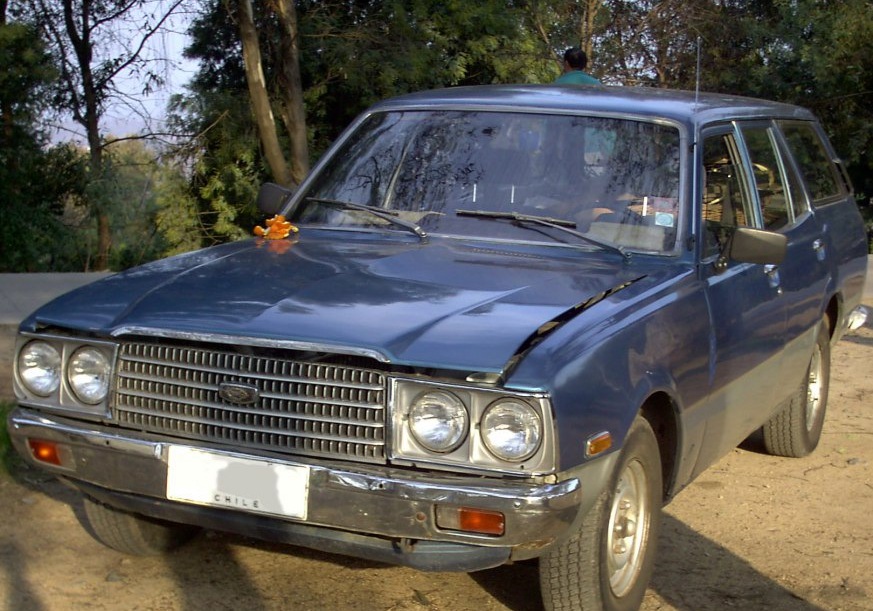
The Toyota Carina Wagon (TA4K) 1.6, produced between 1981 and 1982, represented a practical and economical offering within the broader Carina range. Part of the fourth generation of the Carina, the TA4K wagon aimed to provide family-oriented transportation with a focus on fuel efficiency and reliability – hallmarks of Toyota engineering at the time. This variant, powered by the 2T engine producing 73 horsepower, served as an entry-level option for buyers seeking a spacious and dependable vehicle. It was positioned below the more powerful and often better-equipped Carina sedans and coupes.
Technical Specifications
| Brand | Toyota |
| Model | Carina |
| Generation | Carina Wagon (TA4K) |
| Type (Engine) | 1.6 (TA4K) (73 Hp) |
| Start of production | 1981 |
| End of production | 1982 |
| Powertrain Architecture | Internal Combustion engine |
| Body type | Station wagon (estate) |
| Seats | 5 |
| Doors | 5 |
| Fuel Type | Petrol (Gasoline) |
| Power | 73 Hp |
| Engine Model/Code | 2T |
| Engine aspiration | Naturally aspirated engine |
| Engine oil capacity | 4.2 l (4.44 US qt | 3.7 UK qt) |
| Coolant capacity | 7.9 l (8.35 US qt | 6.95 UK qt) |
Powertrain & Engine Architecture
The heart of the TA4K 1.6 was the Toyota 2T engine, a 1.6-liter inline-four cylinder gasoline engine. This engine was a relatively simple design, utilizing a single overhead camshaft (SOHC) valvetrain and a two-barrel carburetor for fuel delivery. The 2T engine was known for its durability and ease of maintenance, though it wasn’t particularly powerful. It featured a cast iron block and cylinder head, contributing to its robustness. The engine’s 73 horsepower output at approximately 6,000 rpm and 99 lb-ft of torque at 3,600 rpm were modest, but sufficient for the Carina Wagon’s intended purpose. The transmission paired with the 2T in the TA4K was typically a three-speed automatic, although a four-speed manual was also available. The automatic transmission was designed for smooth, comfortable operation rather than sporty performance, with relatively wide gear ratios prioritizing fuel economy.
Driving Characteristics
The driving experience in the Carina Wagon 1.6 was characterized by its practicality and ease of use. The 73 horsepower engine, coupled with the three-speed automatic transmission, provided adequate, but not exhilarating, acceleration. The wagon wasn’t designed for quick sprints; instead, it focused on providing smooth and reliable transportation. The automatic transmission’s shift points were calibrated for fuel efficiency, meaning the engine often operated at lower RPMs during cruising. Compared to the manual transmission versions, the automatic offered a more relaxed driving experience, particularly in city traffic. However, the manual transmission provided better fuel economy and a more engaging driving feel. The wagon’s suspension, while not particularly sophisticated, offered a comfortable ride, absorbing bumps and imperfections in the road reasonably well. The steering was light and easy to use, making it maneuverable in urban environments.
Equipment & Trim Levels
The TA4K 1.6 Carina Wagon was generally offered with a fairly basic level of equipment, reflecting its position as an entry-level model. Standard features typically included cloth upholstery, a basic AM/FM radio, and manual windows and door locks. Air conditioning was often an optional extra, as were power windows and upgraded audio systems. The interior design was functional and straightforward, prioritizing practicality over luxury. Dashboard layout was simple, with clearly labeled controls. Trim levels were relatively limited, with most variations stemming from optional equipment packages. The wagon’s spacious interior was a key selling point, offering ample room for passengers and cargo. The rear seats could be folded down to create a larger cargo area, enhancing its versatility.
Chassis & Braking
The Carina Wagon TA4K utilized a conventional body-on-frame construction, which was common for vehicles of that era. The suspension consisted of independent front suspension with MacPherson struts and a solid rear axle with leaf springs. This setup provided a comfortable ride, but didn’t offer the same level of handling precision as more modern independent rear suspension systems. Braking was typically accomplished with front disc brakes and rear drum brakes. Power assist was standard, providing adequate stopping power for the wagon’s weight and intended use. Steering was a recirculating ball system, which was typical for the time, offering a relatively simple and reliable design. Stabilizer bars were often omitted on the base models to keep costs down, impacting handling slightly.
Market Reception & Comparison
The Toyota Carina Wagon 1.6 was generally well-received in its primary markets, particularly in Europe and Japan. Critics praised its reliability, fuel efficiency, and spacious interior. However, its modest performance was often noted. Compared to other wagons in its class, such as the Ford Sierra or Opel Ascona, the Carina Wagon offered a more refined and reliable experience, but lacked the sporty pretensions of some of its European rivals. The 1.6-liter engine provided reasonable fuel economy, typically in the range of 28-32 mpg, making it an attractive option for budget-conscious buyers. The automatic transmission, while convenient, did slightly reduce fuel economy compared to the manual version. The Carina Wagon’s reputation for durability and low maintenance costs contributed to its popularity in the used car market.
Legacy
The Toyota Carina Wagon TA4K 1.6, while not a particularly groundbreaking vehicle, played an important role in establishing Toyota’s reputation for building reliable and practical automobiles. The 2T engine proved to be a durable and long-lasting powerplant, and many examples are still on the road today. In the used car market, these wagons are often sought after by enthusiasts looking for a classic Toyota with a focus on simplicity and dependability. While parts availability can be a challenge, the 2T engine’s robust design and the Carina Wagon’s overall build quality ensure that it remains a viable option for those seeking a vintage station wagon. The TA4K represents a transitional period in automotive engineering, bridging the gap between older, simpler designs and the more technologically advanced vehicles that would follow.