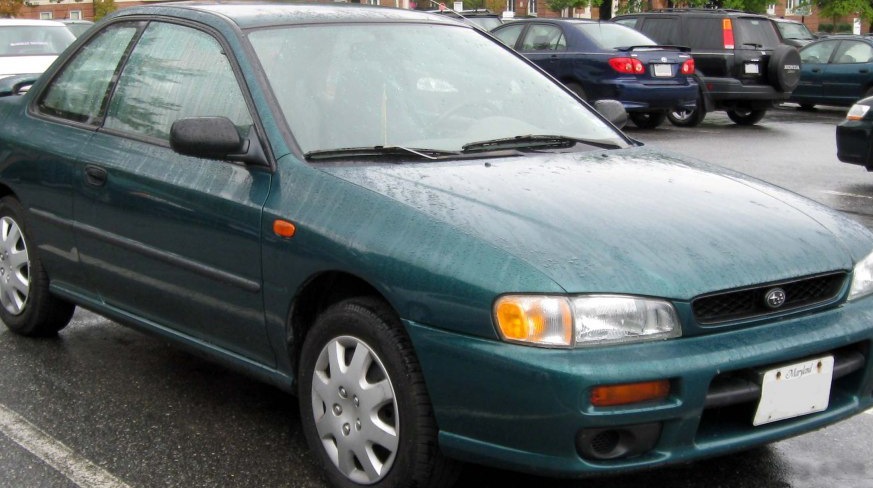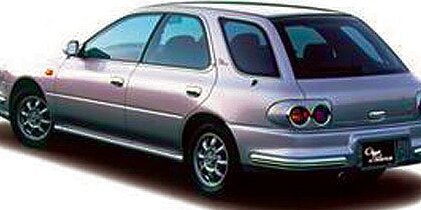
The Subaru Impreza I Station Wagon (GF) 1.8i, produced from 1992 to 2000, represented Subaru’s entry into the compact estate car market. Positioned as a practical and all-weather capable vehicle, it was a key component of the first-generation Impreza lineup (GF/GM/GE chassis codes). This variant, equipped with the 1.8-liter EJ18S engine and a four-speed automatic transmission, aimed to provide a comfortable and accessible option for families and drivers prioritizing ease of use over outright performance. It served as a more affordable and fuel-efficient alternative to the higher-performance turbocharged models and the more expensive manual transmission options within the Impreza range.
Technical Specifications
| Brand | Subaru |
| Model | Impreza |
| Generation | Impreza I Station Wagon (GF) |
| Type | 1.8i (103 Hp) 4WD Automatic |
| Start of production | 1992 |
| End of production | 2000 |
| Powertrain Architecture | Internal Combustion engine |
| Body type | Station wagon (estate) |
| Seats | 5 |
| Doors | 5 |
| Fuel consumption (combined) | 8.8 l/100 km (26.7 US mpg, 32.1 UK mpg, 11.4 km/l) |
| Fuel Type | Petrol (Gasoline) |
| Acceleration 0 – 100 km/h | 11.8 sec |
| Acceleration 0 – 62 mph | 11.8 sec |
| Acceleration 0 – 60 mph | 11.2 sec |
| Maximum speed | 174 km/h (108.12 mph) |
| Weight-to-power ratio | 11.3 kg/Hp, 88.4 Hp/tonne |
| Weight-to-torque ratio | 7.9 kg/Nm, 126.2 Nm/tonne |
| Power | 103 Hp @ 5600 rpm |
| Power per litre | 56.6 Hp/l |
| Torque | 147 Nm @ 4400 rpm (108.42 lb.-ft. @ 4400 rpm) |
| Engine layout | Front, Longitudinal |
| Engine Model/Code | EJ18S |
| Engine displacement | 1820 cm3 (111.06 cu. in.) |
| Number of cylinders | 4 |
| Engine configuration | Boxer |
| Cylinder Bore | 87.9 mm (3.46 in.) |
| Piston Stroke | 75 mm (2.95 in.) |
| Compression ratio | 9.5:1 |
| Number of valves per cylinder | 4 |
| Fuel injection system | Multi-port manifold injection |
| Engine aspiration | Naturally aspirated engine |
| Valvetrain | OHC |
| Engine oil capacity | 4 l (4.23 US qt | 3.52 UK qt) |
| Kerb Weight | 1165 kg (2568.39 lbs.) |
| Trunk (boot) space – minimum | 356 l (12.57 cu. ft.) |
| Trunk (boot) space – maximum | 1275 l (45.03 cu. ft.) |
| Fuel tank capacity | 50 l (13.21 US gal | 11 UK gal) |
| Length | 4350 mm (171.26 in.) |
| Width | 1690 mm (66.54 in.) |
| Height | 1420 mm (55.91 in.) |
| Wheelbase | 2520 mm (99.21 in.) |
| Front track | 1460 mm (57.48 in.) |
| Rear track | 1450 mm (57.09 in.) |
| Drive wheel | All wheel drive (4×4) |
| Number of gears | 4 |
| Gearbox type | automatic transmission |
| Front suspension | Wishbone |
| Rear suspension | Several levers and rods |
| Front brakes | Ventilated discs |
| Rear brakes | Disc |
| Assisting systems | ABS (Anti-lock braking system) |
| Steering type | Steering rack and pinion |
| Power steering | Hydraulic Steering |
| Tires size | 175/70 R14 |
| Wheel rims size | 14 |
Powertrain & Engine Architecture
The heart of the Impreza 1.8i was the EJ18S engine, a 1.8-liter (1820 cc) naturally aspirated, horizontally-opposed (boxer) four-cylinder. This engine design, a Subaru hallmark, offered inherent balance and a lower center of gravity, contributing to the car’s handling characteristics. The EJ18S featured a single overhead camshaft (SOHC) valvetrain with four valves per cylinder, and utilized multi-port fuel injection for precise fuel delivery. The engine produced 103 horsepower at 5600 rpm and 147 Nm (108 lb-ft) of torque at 4400 rpm. Paired with this engine was a four-speed automatic transmission, designed for smooth and convenient operation. This transmission wasn’t known for its sportiness, prioritizing comfort and fuel efficiency over rapid gear changes.
Driving Characteristics
The 1.8i Automatic Impreza offered a comfortable, if not particularly exhilarating, driving experience. Acceleration from 0-60 mph took around 11.2 seconds, and top speed was limited to 108 mph. The automatic transmission, while smooth, resulted in a noticeable loss of power compared to the five-speed manual versions. Gear ratios were optimized for fuel economy and everyday drivability, rather than aggressive performance. The all-wheel-drive system provided excellent traction in various weather conditions, a key selling point for Subaru. However, the relatively low horsepower and torque figures meant that overtaking maneuvers required careful planning, especially when fully loaded.
Equipment & Trim Levels
The 1.8i trim level generally represented the entry point into the Impreza Station Wagon range. Standard equipment typically included power steering, central locking, electric windows, and an AM/FM radio. Interior upholstery was usually cloth, and the dashboard featured a functional, if somewhat basic, design. Optional extras could include air conditioning, a sunroof, and upgraded audio systems. The focus was on providing a well-equipped, practical vehicle at an accessible price point.
Chassis & Braking
The Impreza I Station Wagon utilized a MacPherson strut front suspension and a multi-link rear suspension, providing a comfortable ride and reasonable handling. Brakes were ventilated discs at the front and solid discs at the rear. Anti-lock Braking System (ABS) was standard, enhancing safety and control, particularly on slippery surfaces. The chassis was designed to accommodate the all-wheel-drive system, resulting in a slightly higher ride height compared to some competitors. Stabilizer bars were fitted front and rear to reduce body roll during cornering.
Market Reception & Comparison
The Impreza 1.8i Automatic was generally well-received as a practical and reliable family car. Critics praised its all-weather capability and spacious interior. However, the engine’s performance was often considered adequate rather than exciting, especially when compared to the more powerful turbocharged Impreza models like the WRX. Fuel economy was reasonable for its class, averaging around 26.7 US mpg. Compared to the 1.6-liter base model, the 1.8i offered a noticeable improvement in performance, while remaining more affordable than the higher-spec engines. The automatic transmission, while convenient, was often criticized for diminishing the car’s overall driving enjoyment.
Legacy
The Subaru Impreza I Station Wagon 1.8i Automatic has proven to be a relatively durable and reliable vehicle. The EJ18S engine, while not known for being particularly high-strung, is generally considered robust and capable of high mileage with proper maintenance. Today, these cars are increasingly sought after by enthusiasts and collectors, particularly those looking for a classic Subaru with all-wheel-drive capability. Common issues include age-related wear and tear on suspension components and potential oil leaks. However, parts availability remains relatively good, and the Impreza’s simple mechanical design makes it relatively easy to maintain and repair. The 1.8i Automatic represents a solid and dependable entry point into the world of classic Subaru ownership.