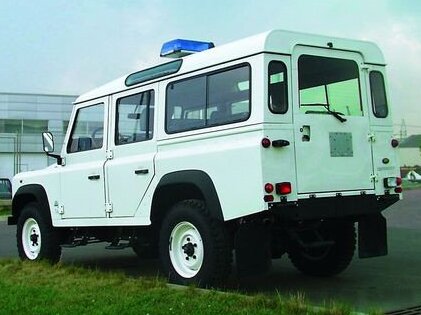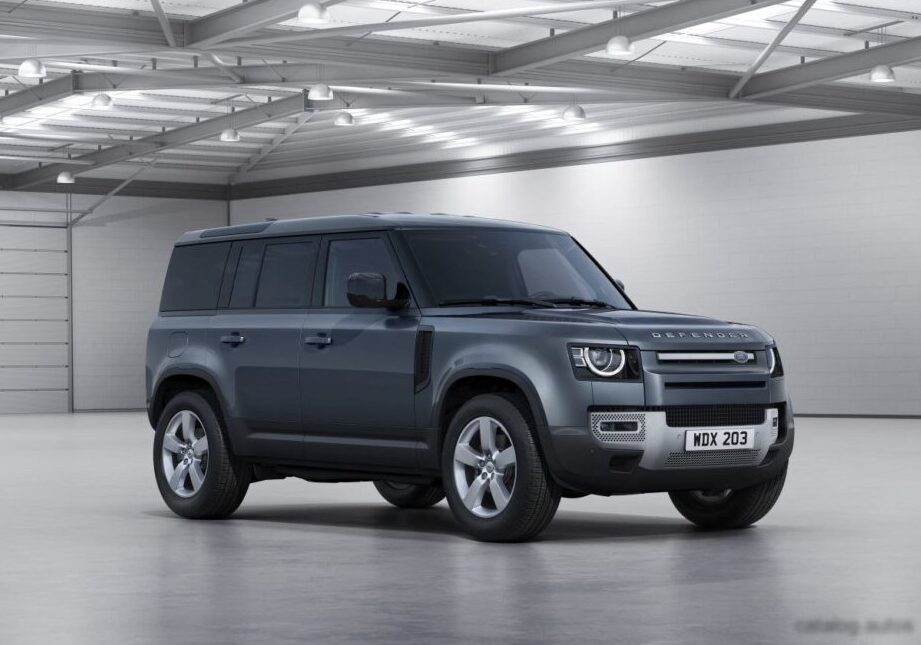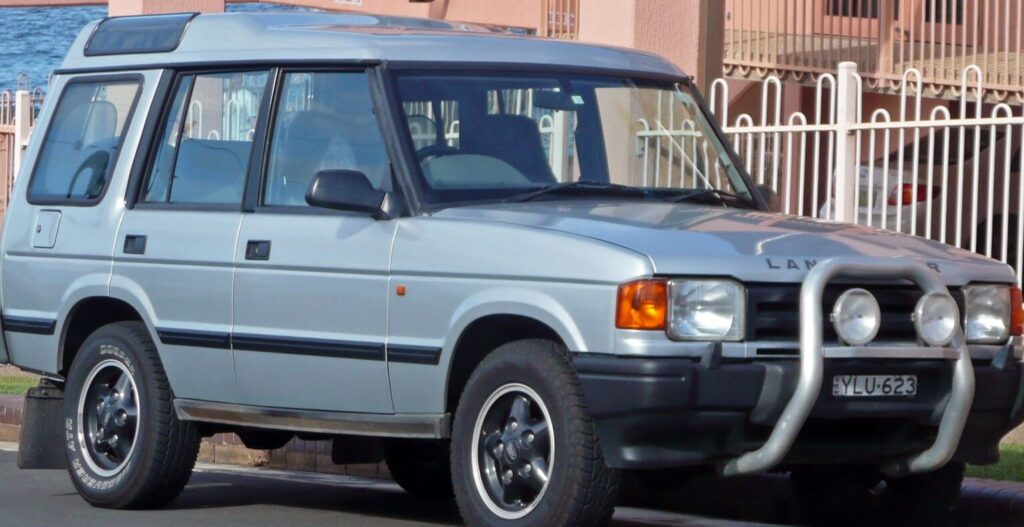
The Land Rover Discovery I 3.9i V8, produced between 1994 and 1998, marked a pivotal moment for Land Rover, effectively bridging the gap between the rugged, utilitarian Series vehicles and the more luxurious Range Rover. This variant, powered by the Rover 3.9-liter V8 engine producing 182 horsepower, occupied a mid-to-upper position within the Discovery I lineup, offering a compelling blend of off-road capability and on-road refinement. It played a crucial role in establishing the Discovery as a versatile family vehicle equally adept at adventurous excursions and everyday commuting. The Discovery I, internally designated as the LJ platform, was a landmark vehicle for Land Rover, introducing coil-spring suspension and a more modern interior to the brand’s traditionally spartan offerings.
Technical Specifications
| Brand | Land Rover |
| Model | Discovery |
| Generation | Discovery I |
| Type (Engine) | 3.9i V8 (182 Hp) |
| Start of production | 1994 |
| End of production | 1998 |
| Powertrain Architecture | Internal Combustion engine |
| Body type | SUV |
| Seats | 7 |
| Doors | 5 |
| Fuel consumption (combined) | 14.9 l/100 km (15.8 US mpg / 19 UK mpg / 6.7 km/l) |
| Fuel Type | Petrol (Gasoline) |
| Acceleration 0 – 100 km/h | 11.5 sec |
| Acceleration 0 – 62 mph | 11.5 sec |
| Acceleration 0 – 60 mph | 10.9 sec |
| Maximum speed | 170 km/h (105.63 mph) |
| Weight-to-power ratio | 11.1 kg/Hp, 90.1 Hp/tonne |
| Weight-to-torque ratio | 6.5 kg/Nm, 154.5 Nm/tonne |
| Power | 182 Hp @ 4750 rpm |
| Power per litre | 46.1 Hp/l |
| Torque | 312 Nm @ 3100 rpm (230.12 lb.-ft. @ 3100 rpm) |
| Engine layout | Front, Longitudinal |
| Engine Model/Code | 35 D, 36 D |
| Engine displacement | 3947 cm3 (240.86 cu. in.) |
| Number of cylinders | 8 |
| Engine configuration | V-engine |
| Cylinder Bore | 94 mm (3.7 in.) |
| Piston Stroke | 71.1 mm (2.8 in.) |
| Compression ratio | 9.3:1 |
| Number of valves per cylinder | 2 |
| Fuel injection system | Multi-port manifold injection |
| Engine aspiration | Naturally aspirated engine |
| Engine oil capacity | 6.1 l (6.45 US qt | 5.37 UK qt) |
| Coolant capacity | 11.3 l (11.94 US qt | 9.94 UK qt) |
| Kerb Weight | 2020 kg (4453.34 lbs.) |
| Max. weight | 2720 kg (5996.57 lbs.) |
| Max load | 700 kg (1543.24 lbs.) |
| Trunk (boot) space – minimum | 1290 l (45.56 cu. ft.) |
| Trunk (boot) space – maximum | 1970 l (69.57 cu. ft.) |
| Fuel tank capacity | 89 l (23.51 US gal | 19.58 UK gal) |
| Length | 4524 mm (178.11 in.) |
| Width | 1810 mm (71.26 in.) |
| Height | 1960 mm (77.17 in.) |
| Wheelbase | 2540 mm (100 in.) |
| Front track | 1486 mm (58.5 in.) |
| Rear (Back) track | 1486 mm (58.5 in.) |
| Drive wheel | All wheel drive (4×4) |
| Number of gears and type of gearbox | 5 gears, manual transmission |
| Front suspension | Rigid axle suspension |
| Rear suspension | Rigid axle suspension |
| Front brakes | Ventilated discs |
| Rear brakes | Disc |
| Assisting systems | ABS (Anti-lock braking system) |
| Power steering | Hydraulic Steering |
| Tires size | 205/80 R16 |
Powertrain & Engine Architecture
The heart of the Discovery I 3.9i V8 is the Rover 3.9-liter (3947 cc) naturally aspirated V8 engine, designated as either the 35D or 36D depending on minor variations. This engine, derived from the Buick-Oldsmobile-Rover V8 family, featured a 90-degree V-angle, two valves per cylinder, and a cast iron block with aluminum cylinder heads. Fuel delivery was managed by a multi-port fuel injection system, providing adequate, though not cutting-edge, performance for the time. The engine’s relatively simple design contributed to its robustness, but also limited its fuel efficiency. The standard transmission was a 5-speed manual, while a 4-speed automatic was also available. The manual transmission, while durable, wasn’t known for its precise shift feel. It was geared to provide reasonable acceleration, but didn’t fully exploit the V8’s torque potential.
Driving Characteristics
The 3.9i V8-powered Discovery I offered a distinct driving experience. While not particularly quick – 0-60 mph taking around 10.9 seconds – the engine delivered a smooth and responsive power delivery, especially in the mid-range. The all-wheel-drive system provided excellent traction in various conditions, making it a capable off-roader. Compared to the later 2.5-liter inline-four diesel versions, the V8 offered significantly more refinement and effortless cruising ability, but at the cost of considerably worse fuel economy. The manual transmission, while offering driver control, felt somewhat agricultural compared to more modern gearboxes. The high gearing meant that the engine wasn’t stressed at highway speeds, but required downshifts for quicker overtaking maneuvers. The automatic transmission, while providing convenience, further dulled the performance and felt less connected to the engine.
Equipment & Trim Levels
The 3.9i V8 typically came with a reasonably well-equipped interior, reflecting its position as a higher-spec model. Standard features included cloth upholstery, power windows and locks, and a basic stereo system. Optional extras, such as leather seats, sunroof, and air conditioning, were commonly specified. The dashboard layout was functional and straightforward, prioritizing usability over aesthetics. The Discovery I offered a seven-seat configuration as standard, with a rear bench seat that could be folded or removed to increase cargo space. Trim levels varied slightly depending on the market, but generally focused on adding comfort and convenience features. The V8 models often received upgraded interior trim and additional sound deadening compared to the base models.
Chassis & Braking
The Discovery I utilized a body-on-frame construction, providing a robust and durable chassis. Suspension consisted of coil springs all around, a significant improvement over the leaf-spring setups of earlier Land Rovers. This provided a more comfortable ride, both on and off-road. Braking was handled by ventilated discs at the front and discs at the rear, assisted by an anti-lock braking system (ABS). While adequate for the vehicle’s weight and performance, the braking system wasn’t particularly powerful by modern standards. The steering was hydraulic power-assisted, providing reasonable feel and maneuverability. The chassis was designed to withstand significant off-road abuse, and the suspension offered a good balance between comfort and articulation.
Market Reception & Comparison
The Discovery I 3.9i V8 was generally well-received by automotive critics. It was praised for its off-road capability, spacious interior, and comfortable ride. However, the V8 engine’s fuel consumption was a common criticism. Compared to the 2.5-liter diesel versions, the 3.9i V8 offered superior performance and refinement, but was significantly more expensive to run. Against competitors like the Jeep Grand Cherokee, the Discovery I offered a more sophisticated and capable off-road experience, but lacked the Jeep’s brand recognition in some markets. The V8 variant was often seen as a more premium offering, appealing to buyers who prioritized performance and refinement over fuel economy.
Legacy
The Rover 3.9-liter V8, while not the most technologically advanced engine of its time, proved to be remarkably durable. Well-maintained examples continue to operate reliably today. However, age-related issues, such as oil leaks and cooling system failures, are common. The Discovery I 3.9i V8 has gained a loyal following among enthusiasts, who appreciate its classic design, off-road capability, and relatively simple mechanicals. In the used car market, prices for well-preserved examples have been steadily increasing, reflecting the vehicle’s growing popularity as a collectible and a capable all-terrain vehicle. The Discovery I laid the foundation for the modern Discovery line, establishing its reputation as a versatile and capable family SUV. It remains a popular choice for those seeking a classic Land Rover with genuine off-road credentials and a distinctive character.