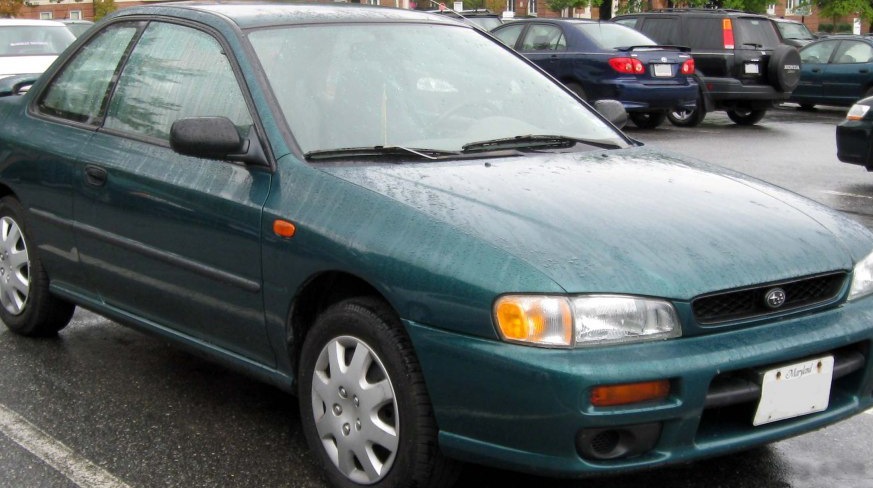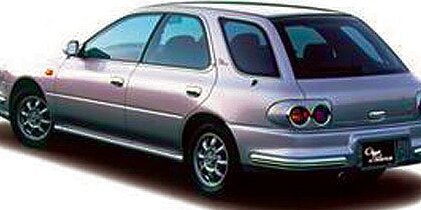
The Subaru Impreza I Station Wagon (GF), specifically the 2.0-liter 115 horsepower variant with a four-speed automatic transmission and all-wheel drive, was produced between 1995 and 2000. This model represented Subaru’s entry into the increasingly popular compact station wagon segment, offering a blend of practicality, all-weather capability, and the distinctive engineering hallmarks of the Impreza line. Within the GF series, which spanned from 1992-2000, this configuration occupied a middle ground, providing a more accessible price point and ease of use compared to the higher-performance turbocharged models, while still delivering Subaru’s renowned symmetrical all-wheel drive system.
Technical Specifications
| Brand | Subaru |
| Model | Impreza |
| Generation | Impreza I Station Wagon (GF) |
| Type | 2.0 (115 Hp) 4WD Automatic |
| Start of production | 1995 |
| End of production | 2000 |
| Powertrain Architecture | Internal Combustion engine |
| Body type | Station wagon (estate) |
| Seats | 5 |
| Doors | 5 |
| Fuel consumption (combined) | 9 l/100 km (26.1 US mpg, 31.4 UK mpg, 11.1 km/l) |
| Fuel Type | Petrol (Gasoline) |
| Acceleration 0 – 100 km/h | 10 sec |
| Acceleration 0 – 62 mph | 10 sec |
| Acceleration 0 – 60 mph | 9.5 sec |
| Maximum speed | 185 km/h (114.95 mph) |
| Weight-to-power ratio | 10.1 kg/Hp, 98.7 Hp/tonne |
| Weight-to-torque ratio | 6.9 kg/Nm, 145.9 Nm/tonne |
| Power | 115 Hp @ 5600 rpm |
| Power per litre | 57.7 Hp/l |
| Torque | 170 Nm @ 4400 rpm (125.39 lb.-ft. @ 4400 rpm) |
| Engine layout | Front, Longitudinal |
| Engine Model/Code | EJ20G |
| Engine displacement | 1994 cm3 (121.68 cu. in.) |
| Number of cylinders | 4 |
| Engine configuration | Boxer |
| Cylinder Bore | 92 mm (3.62 in.) |
| Piston Stroke | 75 mm (2.95 in.) |
| Compression ratio | 9.5:1 |
| Number of valves per cylinder | 4 |
| Fuel injection system | Multi-port manifold injection |
| Engine aspiration | Naturally aspirated engine |
| Valvetrain | OHC |
| Engine oil capacity | 4 l (4.23 US qt | 3.52 UK qt) |
| Kerb Weight | 1165 kg (2568.39 lbs.) |
| Max. weight | 1720 kg (3791.95 lbs.) |
| Max load | 555 kg (1223.57 lbs.) |
| Trunk (boot) space – minimum | 356 l (12.57 cu. ft.) |
| Trunk (boot) space – maximum | 1275 l (45.03 cu. ft.) |
| Fuel tank capacity | 50 l (13.21 US gal | 11 UK gal) |
| Length | 4350 mm (171.26 in.) |
| Width | 1690 mm (66.54 in.) |
| Height | 1420 mm (55.91 in.) |
| Wheelbase | 2520 mm (99.21 in.) |
| Front track | 1460 mm (57.48 in.) |
| Rear (Back) track | 1450 mm (57.09 in.) |
| Drive wheel | All wheel drive (4×4) |
| Number of gears and type of gearbox | 4 gears, automatic transmission |
| Front suspension | Wishbone |
| Rear suspension | Several levers and rods |
| Front brakes | Ventilated discs |
| Rear brakes | Drum |
| Assisting systems | ABS (Anti-lock braking system) |
| Steering type | Steering rack and pinion |
| Power steering | Hydraulic Steering |
| Tires size | 185/70 R14 |
| Wheel rims size | 14 |
Powertrain & Engine Architecture
The heart of this Impreza variant is the EJ20G 2.0-liter naturally aspirated boxer-four engine. Subaru’s boxer engine design, with its horizontally opposed pistons, provides a low center of gravity, contributing to the car’s balanced handling. The EJ20G utilizes a single overhead camshaft (OHC) design and multi-port fuel injection. This engine produced 115 horsepower at 5,600 rpm and 170 Nm (125 lb-ft) of torque at 4,400 rpm. The four-speed automatic transmission was a conventional hydraulic unit, chosen for its ease of use and suitability for drivers prioritizing comfort over outright performance. While not as sophisticated as later electronically controlled transmissions, it provided smooth shifts for everyday driving.
Driving Characteristics
The 115 hp automatic Impreza offered a comfortable and predictable driving experience. Acceleration from 0-60 mph took around 9.5 seconds, and top speed was approximately 115 mph. Compared to the five-speed manual version, the automatic suffered a slight performance penalty due to the transmission’s inherent efficiency losses. The automatic’s gear ratios were tuned for fuel economy and smooth cruising, rather than aggressive acceleration. The all-wheel drive system provided excellent traction in various weather conditions, a key selling point for Subaru. However, the automatic transmission didn’t allow for the engine to be kept in its optimal power band as effectively as a manual, resulting in a less engaging driving experience for enthusiasts.
Equipment & Trim Levels
The 2.0-liter automatic Impreza typically came with a reasonable level of standard equipment. This included power windows and locks, a basic audio system, and air conditioning. Interior upholstery was typically cloth, with a functional, if somewhat spartan, dashboard layout. Optional extras included a sunroof, upgraded audio systems, and alloy wheels. The trim level generally sat in the mid-range of the Impreza lineup, offering a step up from the base models in terms of comfort and convenience features, but lacking the sporty enhancements found in the turbocharged WRX variants.
Chassis & Braking
The Impreza I Station Wagon featured a MacPherson strut front suspension and a multi-link rear suspension, providing a comfortable ride and predictable handling. The front brakes were ventilated discs, offering good stopping power, while the rear brakes were drums, a cost-saving measure common in this class of vehicle. Anti-lock brakes (ABS) were standard, enhancing safety. The chassis was designed to accommodate the all-wheel drive system, with a robust structure and carefully tuned suspension geometry. Stabilizer bars were fitted to both the front and rear axles to reduce body roll during cornering.
Market Reception & Comparison
The 115 hp automatic Impreza was generally well-received by critics as a practical and reliable family car. It was praised for its all-weather capability, spacious interior, and comfortable ride. However, some reviewers noted that the automatic transmission dulled the driving experience compared to the manual version, and the engine lacked the punch of the turbocharged models. Fuel economy was respectable for its time, averaging around 26 mpg in combined driving. Compared to other station wagons in its class, the Impreza offered a unique combination of all-wheel drive and a boxer engine, setting it apart from the competition.
Legacy
The EJ20G engine, while not as celebrated as the turbocharged EJ205 and EJ207 variants, proved to be a durable and reliable powerplant. The four-speed automatic transmission, while not cutting-edge, also demonstrated good longevity. Today, these Impreza wagons are relatively affordable on the used car market. They are often sought after by those looking for a practical, reliable, and all-weather capable vehicle. While maintenance costs can be higher than some competitors due to the boxer engine’s unique design, the Impreza’s robust construction and loyal following ensure that parts availability remains good. The 2.0-liter automatic Impreza represents a solid and dependable choice for those seeking a classic Subaru experience.