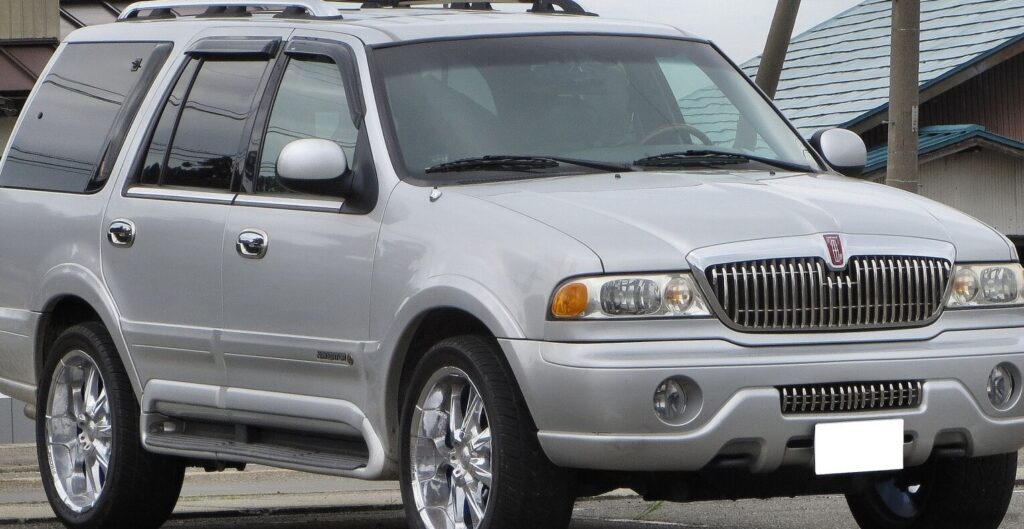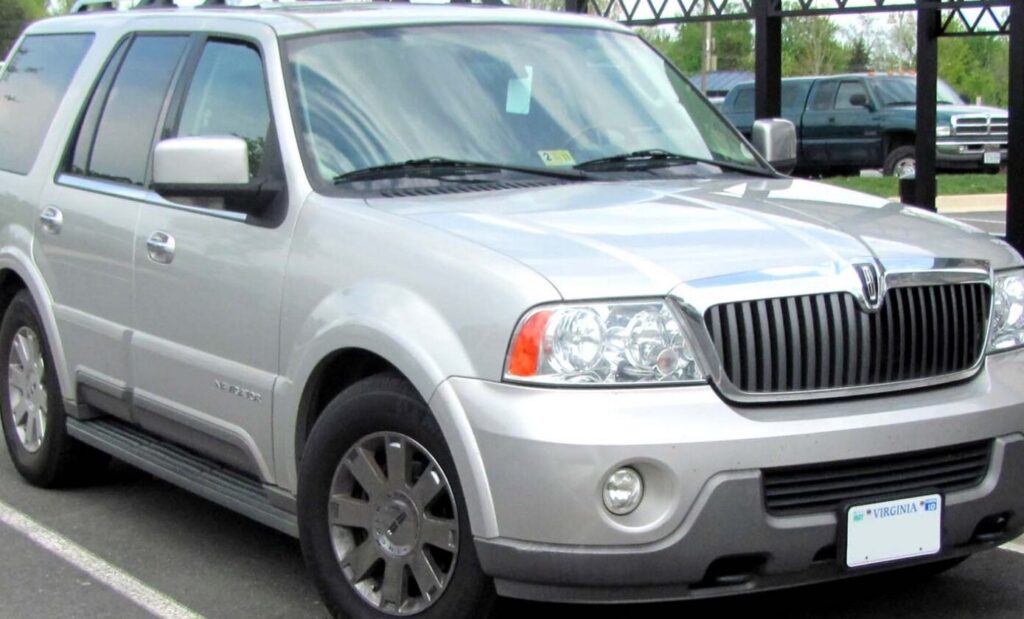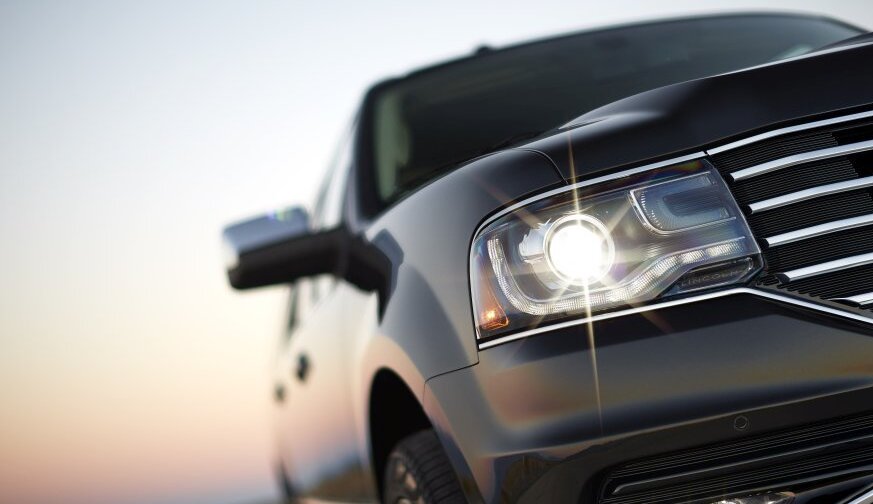
The Lincoln Navigator III L, specifically the facelifted version produced from 2015 to 2017, represented a significant evolution of Lincoln’s full-size luxury SUV. This iteration, powered by the 3.5 GTDI V6 engine producing 380 horsepower and paired with a six-speed automatic transmission and a four-wheel-drive system, aimed to balance powerful performance with improved fuel efficiency and a refined driving experience. Positioned as a premium offering within the Navigator lineup, the 3.5 GTDI L trim catered to buyers seeking a spacious, well-equipped SUV capable of towing and comfortable long-distance travel. It served as a direct competitor to vehicles like the Cadillac Escalade, GMC Yukon Denali, and the higher trims of the Chevrolet Tahoe and Suburban.
Technical Specifications
| Brand | Lincoln |
| Model | Navigator |
| Generation | Navigator III L (facelift 2015) |
| Type (Engine) | 3.5 GTDI V6 (380 Hp) 4×4 Automatic |
| Start of production | 2014 |
| End of production | 2017 |
| Powertrain Architecture | Internal Combustion engine |
| Body type | SUV |
| Seats | 8 |
| Doors | 5 |
| Fuel consumption (urban) | 15.6 l/100 km (15.1 US mpg, 18.1 UK mpg, 6.4 km/l) |
| Fuel consumption (extra urban) | 12.3 l/100 km (19.1 US mpg, 23 UK mpg, 8.1 km/l) |
| Fuel consumption (combined) | 14.7 l/100 km (16 US mpg, 19.2 UK mpg, 6.8 km/l) |
| Fuel Type | Petrol (Gasoline) |
| Weight-to-power ratio | 7.2 kg/Hp, 138.2 Hp/tonne |
| Weight-to-torque ratio | 4.4 kg/Nm, 227 Nm/tonne |
| Power | 380 Hp @ 5250 rpm |
| Power per litre | 108.7 Hp/l |
| Torque | 624 Nm @ 2750 rpm (460.24 lb.-ft. @ 2750 rpm) |
| Maximum engine speed | 6100 rpm |
| Engine layout | Front, Longitudinal |
| Engine Model/Code | EcoBoost |
| Engine displacement | 3496 cm3 (213.34 cu. in.) |
| Number of cylinders | 6 |
| Engine configuration | V-engine |
| Cylinder Bore | 92.5 mm (3.64 in.) |
| Piston Stroke | 86.7 mm (3.41 in.) |
| Compression ratio | 10:1 |
| Number of valves per cylinder | 4 |
| Fuel injection system | Direct injection |
| Engine aspiration | Twin-Turbo, Intercooler |
| Valvetrain | DOHC, Ti-VCT |
| Engine oil capacity | 5.7 l (6.02 US qt | 5.02 UK qt) |
| Coolant | 17 l (17.96 US qt | 14.96 UK qt) |
| Kerb Weight | 2749 kg (6060.51 lbs.) |
| Max. weight | 3461 kg (7630.2 lbs.) |
| Max load | 712 kg (1569.69 lbs.) |
| Trunk (boot) space – minimum | 1206 l (42.59 cu. ft.) |
| Trunk (boot) space – maximum | 3630 l (128.19 cu. ft.) |
| Fuel tank capacity | 127 l (33.55 US gal | 27.94 UK gal) |
| Length | 5646 mm (222.28 in.) |
| Width | 2002 mm (78.82 in.) |
| Width with mirrors folded | 2024 mm (79.69 in.) |
| Width including mirrors | 2332 mm (91.81 in.) |
| Height | 1981 mm (77.99 in.) |
| Wheelbase | 3327 mm (130.98 in.) |
| Front track | 1702 mm (67.01 in.) |
| Rear (Back) track | 1707 mm (67.2 in.) |
| Front overhang | 1011 mm (39.8 in.) |
| Rear overhang | 1308 mm (51.5 in.) |
| Ride height (ground clearance) | 213 mm (8.39 in.) |
| Drag coefficient (Cd) | 0.37 |
| Minimum turning circle (turning diameter) | 11.89 m (39.01 ft.) |
| Approach angle | 22.1° |
| Departure angle | 20.3° |
| Ramp-over (brakeover) angle | 16.2° |
| Drive wheel | All wheel drive (4×4) |
| Number of gears and type of gearbox | 6 gears, automatic transmission SelectShift |
| Front suspension | Independent coil spring |
| Rear suspension | Independent multi-link suspension |
| Front brakes | Ventilated discs |
| Rear brakes | Ventilated discs |
| Assisting systems | ABS (Anti-lock braking system) |
| Steering type | Steering rack and pinion |
| Power steering | Electric Steering |
| Tires size | 275/55 R20 |
| Wheel rims size | 20 |
Powertrain & Engine Architecture
The heart of the Navigator III L was the 3.5-liter EcoBoost V6 engine. This engine, part of Ford’s EcoBoost family, utilized a twin-turbocharged configuration with direct fuel injection and variable valve timing (Ti-VCT). The engine code is a key identifier, often found as part of the VIN. The direct injection system allowed for precise fuel delivery, enhancing both power and efficiency. The twin-turbochargers provided a broad torque curve, minimizing turbo lag and delivering strong acceleration across a wide RPM range. The six-speed automatic transmission, dubbed SelectShift, was designed to provide smooth and responsive gear changes. While not the most advanced transmission available at the time (some competitors offered eight or nine-speed automatics), it was well-matched to the engine’s torque characteristics.
Driving Characteristics
The 380-horsepower and 460 lb-ft of torque provided by the 3.5 GTDI V6 delivered confident acceleration, especially considering the Navigator’s substantial weight. While not a sports car, the Navigator L offered brisk performance for merging onto highways and passing other vehicles. The automatic transmission generally shifted smoothly, although some drivers noted a slight hesitation in certain situations. Compared to lower-powered Navigator trims (which were not commonly offered in the L variant), the 3.5 GTDI provided a significantly more engaging driving experience. The four-wheel-drive system enhanced traction in inclement weather and provided added stability when towing. The gear ratios were tuned for a balance of acceleration and fuel economy, prioritizing usability over outright performance.
Equipment & Trim Levels
The Navigator III L with the 3.5 GTDI engine typically came standard with a high level of equipment. This included leather upholstery, tri-zone automatic climate control, a premium sound system (often THX II certified), power-adjustable front seats with heating and ventilation, and a rear-seat entertainment system. Optional extras included adaptive cruise control, power-folding running boards, and upgraded interior trim materials. The L trim generally represented the higher end of the Navigator spectrum, offering a more luxurious and feature-rich experience than base models.
Chassis & Braking
The Navigator III L featured an independent coil spring front suspension and an independent multi-link rear suspension, designed to provide a comfortable ride while maintaining reasonable handling. Ventilated disc brakes were used on all four wheels, providing adequate stopping power for the vehicle’s weight. The anti-lock braking system (ABS) was standard. The chassis was reinforced to handle the increased power and torque of the 3.5 GTDI engine. Stabilizer bars were used front and rear to reduce body roll during cornering.
Market Reception & Comparison
Critics generally praised the Navigator III L’s spacious interior, comfortable ride, and powerful engine. The 3.5 GTDI engine was seen as a significant improvement over previous Navigator powertrains, offering a better balance of performance and fuel economy. However, some reviewers noted that the Navigator’s fuel economy was still relatively poor compared to some competitors. Reliability was generally good, although some owners reported minor issues with the infotainment system and the automatic transmission. Compared to the base Navigator trims, the 3.5 GTDI L offered a more refined and capable driving experience, justifying its higher price tag.
Legacy
The 3.5 GTDI V6 engine proved to be a durable and reliable powertrain when properly maintained. While not without its quirks, the engine has generally held up well over time. In the used car market, Navigator III L models with this engine configuration remain desirable, particularly those that have been well-cared for. The combination of spaciousness, luxury, and powerful performance continues to appeal to buyers seeking a full-size SUV. The EcoBoost engine’s continued use in subsequent Navigator generations demonstrates its overall success and longevity within the Lincoln lineup.