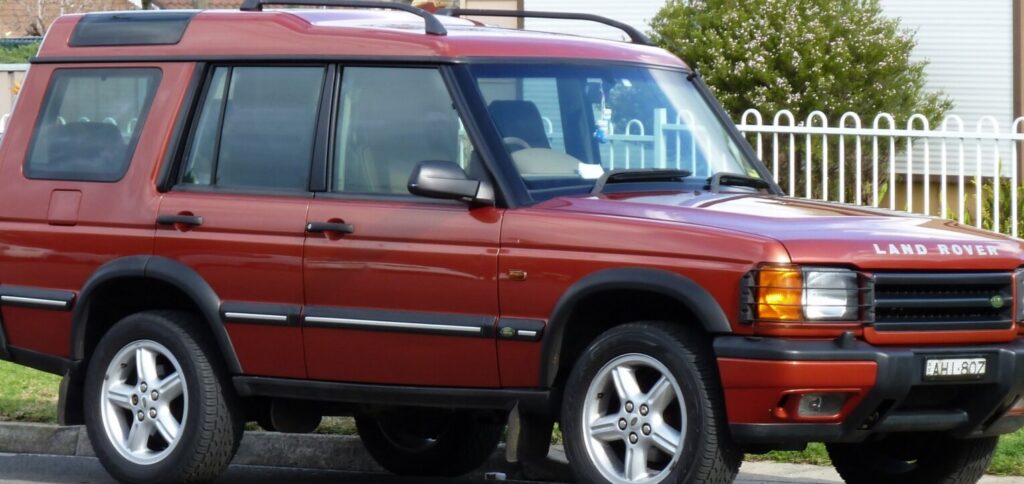
The Land Rover Discovery II 2.5 TDi, produced from 1998 to 2004, represented a significant evolution of the original Discovery, building upon its reputation for off-road capability and family practicality. This variant, powered by a 2.5-liter turbocharged diesel engine producing 136 horsepower, occupied a key position in the Discovery II lineup, offering a balance between fuel efficiency, torque for towing and off-roading, and a relatively accessible price point. It was primarily marketed in Europe, Australia, and other international markets where diesel engines were favored, though limited numbers were available in North America during the early years of its production. The Discovery II itself was based on the Td5 platform, a revised version of the original Discovery’s chassis, offering improved refinement and safety features.
Technical Specifications
| Brand | Land Rover |
| Model | Discovery |
| Generation | Discovery II |
| Type (Engine) | 2.5 TDi (136 Hp) |
| Start of production | 1998 |
| End of production | 2004 |
| Powertrain Architecture | Internal Combustion engine |
| Body type | SUV |
| Seats | 7 |
| Doors | 5 |
| Fuel consumption (urban) | 11.5 l/100 km (20.5 US mpg) |
| Fuel consumption (extra urban) | 8.2 l/100 km (28.7 US mpg) |
| Fuel consumption (combined) | 9.4 l/100 km (25 US mpg) |
| Fuel Type | Diesel |
| Acceleration 0 – 100 km/h | 15.3 sec |
| Acceleration 0 – 62 mph | 15.3 sec |
| Acceleration 0 – 60 mph | 14.5 sec |
| Maximum speed | 157 km/h (97.56 mph) |
| Weight-to-power ratio | 14.9 kg/Hp |
| Weight-to-torque ratio | 6.7 kg/Nm |
| Power | 136 Hp @ 4200 rpm |
| Torque | 300 Nm @ 1950 rpm (221.27 lb.-ft. @ 1950 rpm) |
| Engine layout | Front, Longitudinal |
| Engine Model/Code | 10P |
| Engine displacement | 2496 cm3 (152.32 cu. in.) |
| Number of cylinders | 5 |
| Engine configuration | Inline |
| Cylinder Bore | 84.45 mm (3.32 in.) |
| Piston Stroke | 89 mm (3.5 in.) |
| Compression ratio | 19.5:1 |
| Number of valves per cylinder | 2 |
| Fuel injection system | Diesel Commonrail |
| Engine aspiration | Turbocharger |
| Valvetrain | OHC |
| Engine oil capacity | 7.2 l (7.61 US qt | 6.34 UK qt) |
| Kerb Weight | 2020 kg (4453.34 lbs.) |
| Max. weight | 2750 kg (6062.71 lbs.) |
| Max load | 730 kg (1609.37 lbs.) |
| Trunk (boot) space – minimum | 1290 l (45.56 cu. ft.) |
| Trunk (boot) space – maximum | 1970 l (69.57 cu. ft.) |
| Fuel tank capacity | 95 l (25.1 US gal | 20.9 UK gal) |
| Length | 4710 mm (185.43 in.) |
| Width | 1860 mm (73.23 in.) |
| Height | 1890 mm (74.41 in.) |
| Wheelbase | 2540 mm (100 in.) |
| Front track | 1540 mm (60.63 in.) |
| Rear (Back) track | 1560 mm (61.42 in.) |
| Drive wheel | All wheel drive (4×4) |
| Number of gears | 5 gears, manual transmission |
| Front suspension | Coil spring |
| Rear suspension | Coil spring |
| Front brakes | Ventilated discs |
| Rear brakes | Disc |
| Assisting systems | ABS (Anti-lock braking system) |
| Power steering | Hydraulic Steering |
| Tires size | 235/70 R16 |
| Wheel rims size | 16 |
Powertrain & Engine Architecture
The heart of the Discovery II 2.5 TDi is the 10P engine, a 2.5-liter inline five-cylinder diesel. This engine represented a significant upgrade over the earlier 200Tdi and 300Tdi engines, incorporating a Bosch electronic diesel injection (EDI) system and a turbocharger with an intercooler. The EDI system allowed for more precise fuel delivery, improving both power and fuel efficiency. The engine featured an overhead camshaft (OHC) design with two valves per cylinder. The turbocharger boosted power output to 136 horsepower and 300 Nm (221 lb-ft) of torque, providing ample pulling power for towing and off-road excursions. The five-speed manual transmission was the standard offering, providing a good balance between fuel economy and driver control. While an automatic transmission was available, it was less common and often criticized for its sluggish performance with this engine.
Driving Characteristics
The 2.5 TDi with the manual transmission offered a reasonably engaging driving experience. While not particularly fast – 0-60 mph took around 14.5 seconds – the engine’s strong low-end torque made it capable in everyday driving situations and particularly well-suited for off-road conditions. The gear ratios were well-chosen for both on-road cruising and tackling challenging terrain. The automatic transmission, however, significantly detracted from the driving experience, feeling slow to respond and often hunting for the correct gear. The added weight of the automatic also further reduced performance. Compared to the more powerful V8 variants, the 2.5 TDi was noticeably slower, but it offered significantly better fuel economy. Compared to the later 2.5 Td5 engine, the 2.5 TDi was less refined and produced more engine noise, but it was generally considered more robust and easier to maintain.
Equipment & Trim Levels
The Discovery II 2.5 TDi typically came with a respectable level of standard equipment, including air conditioning, power steering, central locking, and electric windows. Interior upholstery was typically cloth, though leather was available as an option. Trim levels varied depending on the market, but generally included base models and higher-specification versions with additional features such as alloy wheels, upgraded audio systems, and sunroofs. Optional extras included heated seats, parking sensors, and a self-leveling rear suspension system. The dashboard layout was functional and straightforward, with clearly labeled controls.
Chassis & Braking
The Discovery II utilized a robust ladder-frame chassis, providing excellent strength and durability. Suspension consisted of coil springs all around, offering a comfortable ride both on and off-road. Front brakes were ventilated discs, while rear brakes were solid discs. Anti-lock Braking System (ABS) was standard, enhancing safety. The 2.5 TDi models typically featured a stabilizer bar on both the front and rear axles to reduce body roll during cornering. The suspension setup was tuned to provide a good balance between on-road comfort and off-road articulation.
Market Reception & Comparison
The Discovery II 2.5 TDi was generally well-received by critics as a practical and capable SUV. It was praised for its off-road ability, spacious interior, and relatively affordable price. However, the engine was sometimes criticized for being noisy and lacking refinement compared to some of its competitors. Fuel economy was a strong point, particularly compared to the V8 models. In terms of reliability, the 2.5 TDi proved to be a durable engine, but it was susceptible to issues with the fuel injection pump and turbocharger if not properly maintained. Compared to the higher-powered V8 variants, the 2.5 TDi appealed to buyers who prioritized fuel economy and practicality over outright performance.
Legacy
Today, the Land Rover Discovery II 2.5 TDi remains a popular choice among enthusiasts and those seeking a capable and affordable SUV. The 10P engine, while aging, is known for its robustness and relatively simple mechanics, making it easier to maintain than some of the more complex engines found in later models. Parts availability is generally good, although some components can be expensive. Well-maintained examples of the 2.5 TDi continue to command reasonable prices in the used car market, and the model is increasingly appreciated for its classic Land Rover character and off-road pedigree. The 2.5 TDi’s blend of practicality, capability, and affordability has cemented its place as a significant variant in the Discovery II lineage.