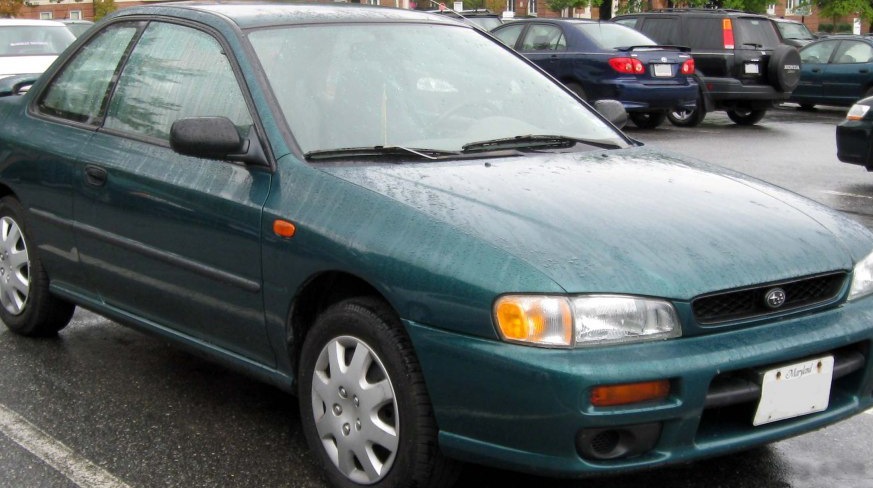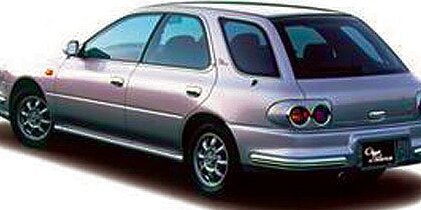
The Subaru Impreza I Station Wagon (GF) GT 2.0 Turbo, produced between 1998 and 2000, represented a compelling blend of practicality and performance within the first generation (GC/GF) Impreza lineup. Positioned as a premium trim level, it catered to buyers seeking the versatility of a wagon combined with the spirited driving experience associated with Subaru’s turbocharged engines and all-wheel-drive system. This variant was primarily sold in markets like Europe, Japan, and Australia, where the demand for compact, capable wagons was significant. It occupied a higher tier than the naturally aspirated models, offering a substantial power upgrade and more sophisticated features.
Technical Specifications
| Brand | Subaru |
| Model | Impreza |
| Generation | Impreza I Station Wagon (GF) |
| Type | GT 2.0 Turbo (218 Hp) 4WD Automatic |
| Start of production | 1998 |
| End of production | 2000 |
| Powertrain Architecture | Internal Combustion engine |
| Body type | Station wagon (estate) |
| Seats | 5 |
| Doors | 5 |
| Fuel consumption (urban) | 13.7 l/100 km (17.2 US mpg, 20.6 UK mpg) |
| Fuel consumption (extra urban) | 8 l/100 km (29.4 US mpg, 35.3 UK mpg) |
| Fuel Type | Petrol (Gasoline) |
| Acceleration 0 – 100 km/h | 6.5 sec |
| Acceleration 0 – 62 mph | 6.5 sec |
| Acceleration 0 – 60 mph | 6.2 sec |
| Maximum speed | 228 km/h (141.67 mph) |
| Weight-to-power ratio | 5.9 kg/Hp |
| Weight-to-torque ratio | 4.4 kg/Nm |
| Power | 218 Hp @ 5600 rpm |
| Power per litre | 109.3 Hp/l |
| Torque | 292 Nm @ 3600 rpm (215.37 lb.-ft. @ 3600 rpm) |
| Engine layout | Front, Longitudinal |
| Engine Model/Code | EJ20 T |
| Engine displacement | 1994 cm3 (121.68 cu. in.) |
| Number of cylinders | 4 |
| Engine configuration | Boxer |
| Cylinder Bore | 92 mm (3.62 in.) |
| Piston Stroke | 75 mm (2.95 in.) |
| Compression ratio | 8:1 |
| Number of valves per cylinder | 4 |
| Fuel injection system | Multi-port manifold injection |
| Engine aspiration | Turbocharger |
| Valvetrain | DOHC |
| Engine oil capacity | 4.5 l (4.76 US qt | 3.96 UK qt) |
| Kerb Weight | 1285 kg (2832.94 lbs.) |
| Max. weight | 1800 kg (3968.32 lbs.) |
| Max load | 515 kg (1135.38 lbs.) |
| Trunk (boot) space – maximum | 1275 l (45.03 cu. ft.) |
| Fuel tank capacity | 50 l (13.21 US gal | 11 UK gal) |
| Length | 4350 mm (171.26 in.) |
| Width | 1690 mm (66.54 in.) |
| Height | 1435 mm (56.5 in.) |
| Wheelbase | 2520 mm (99.21 in.) |
| Front track | 1460 mm (57.48 in.) |
| Rear (Back) track | 1455 mm (57.28 in.) |
| Drive wheel | All wheel drive (4×4) |
| Number of gears and type of gearbox | 4 gears, automatic transmission |
| Front suspension | Wishbone |
| Rear suspension | Several levers and rods |
| Front brakes | Ventilated discs |
| Rear brakes | Disc |
| Assisting systems | ABS (Anti-lock braking system) |
| Steering type | Steering rack and pinion |
| Power steering | Hydraulic Steering |
| Tires size | 205/50 R16 |
| Wheel rims size | 16 |
Powertrain & Engine Architecture
At the heart of the GT 2.0 Turbo lay the EJ20T engine, a 2.0-liter (1994cc) horizontally-opposed (Boxer) four-cylinder. This engine was a hallmark of Subaru’s engineering, known for its smooth operation and inherent balance. The ‘T’ designation indicated the presence of a turbocharger, significantly boosting power output. The EJ20T utilized multi-port fuel injection and a dual overhead camshaft (DOHC) valvetrain, optimizing airflow and combustion efficiency. The 8:1 compression ratio was a compromise necessary to accommodate the turbocharger and prevent pre-ignition. The engine produced 218 horsepower at 5600 rpm and 292 Nm (215 lb-ft) of torque at 3600 rpm. The automatic transmission was a four-speed unit, designed to handle the increased power and torque. While not as sporty as a manual transmission, it provided convenience and ease of use, appealing to a broader range of drivers.
Driving Characteristics
The combination of the turbocharged engine and the automatic transmission resulted in a driving experience that was both refined and capable. Acceleration to 60 mph was achieved in approximately 6.2-6.5 seconds, making it a relatively quick vehicle for its time. The automatic transmission, while smooth, did result in some power loss compared to the available five-speed manual. The all-wheel-drive system provided excellent traction in various conditions, enhancing stability and handling. The gear ratios were tuned for a balance between acceleration and fuel economy, but the turbocharger provided a noticeable surge of power when needed. Compared to the naturally aspirated Impreza variants, the GT 2.0 Turbo offered a significantly more engaging and responsive driving experience.
Equipment & Trim Levels
The GT 2.0 Turbo trim typically included features such as power windows, power locks, air conditioning, and a decent audio system. Interior upholstery was often cloth, though leather options were sometimes available. The dashboard layout was functional and driver-focused. Optional extras could include a sunroof, upgraded audio systems, and alloy wheels. The GT trim generally represented a step up in terms of comfort and convenience compared to the base models.
Chassis & Braking
The Impreza I Station Wagon featured a MacPherson strut front suspension and a multi-link rear suspension, providing a comfortable ride and good handling characteristics. The GT 2.0 Turbo typically came equipped with ventilated disc brakes at the front and solid disc brakes at the rear, offering adequate stopping power. Anti-lock braking system (ABS) was standard, enhancing safety. Stabilizer bars were fitted to both the front and rear axles to reduce body roll during cornering.
Market Reception & Comparison
The Impreza I Station Wagon GT 2.0 Turbo was generally well-received by automotive critics. It was praised for its performance, handling, and practicality. However, the automatic transmission was sometimes criticized for detracting from the sporty driving experience. Fuel economy was reasonable for a turbocharged vehicle of its size, but not exceptional. Compared to other trims in the Impreza lineup, the GT 2.0 Turbo offered a significant performance advantage but came at a higher price point. It competed with other compact wagons like the Mitsubishi Galant and the Honda Accord Wagon, offering a unique combination of performance and all-wheel-drive capability.
Legacy
The EJ20T engine, in its various iterations, proved to be a robust and reliable powerplant when properly maintained. The automatic transmission, while not as sought after by enthusiasts as the manual, generally held up well over time. Today, the Impreza I Station Wagon GT 2.0 Turbo is considered a desirable classic by Subaru enthusiasts. Well-maintained examples are becoming increasingly rare and command a premium in the used car market. The combination of its performance, practicality, and iconic Subaru engineering makes it a compelling choice for collectors and drivers alike. Common issues with these vehicles, when neglected, include turbocharger wear, oil leaks, and corrosion, particularly in regions with harsh winters.