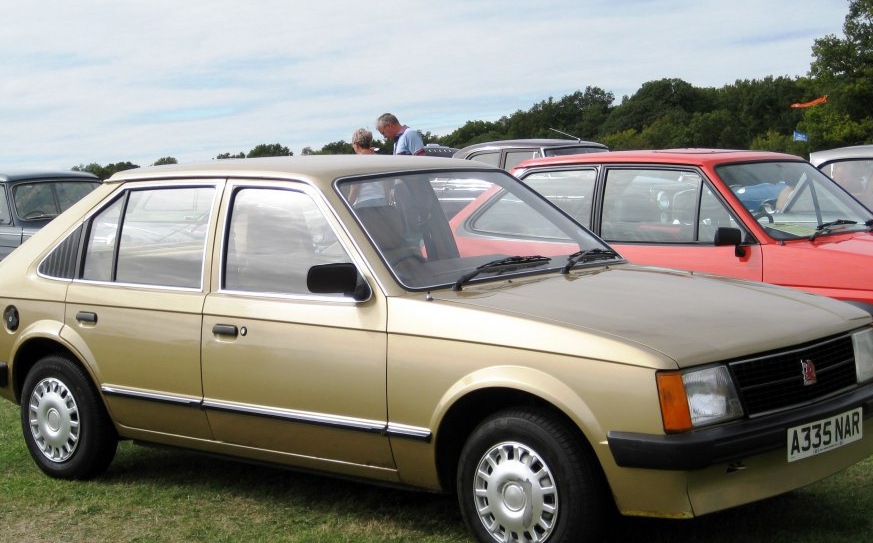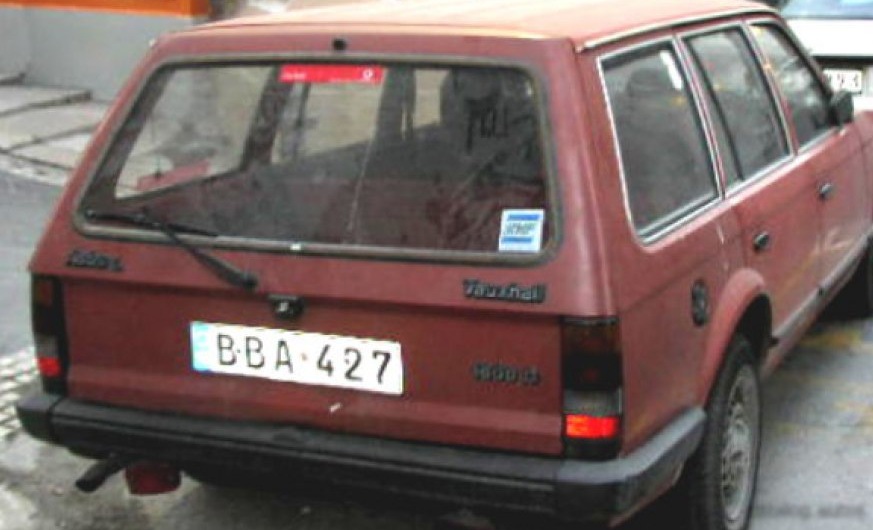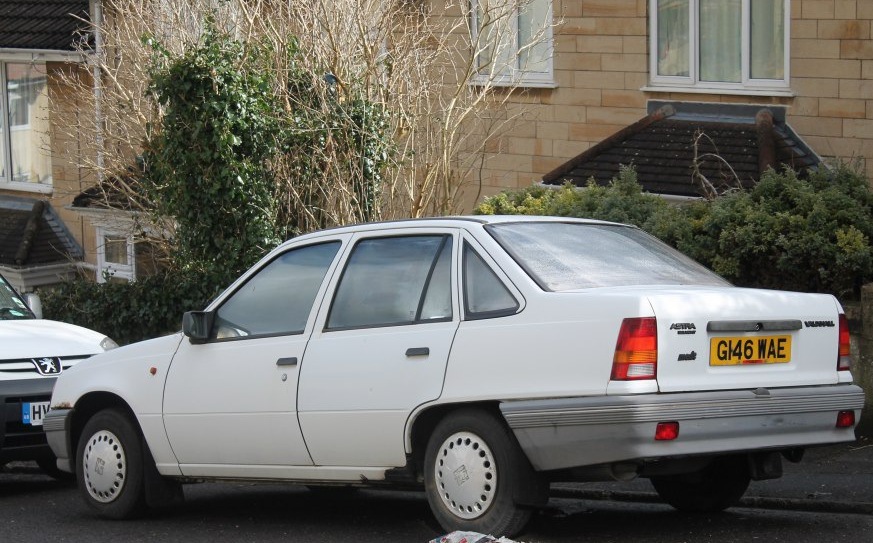
The Vauxhall Astra Mk II Belmont 1.7 D, produced between 1989 and 1991, represented an economy-focused variant within the broader Mk II Astra range. The Belmont, a three-box sedan, was specifically aimed at buyers prioritizing practicality and fuel efficiency. This 1.7-liter diesel version occupied the entry-level position in the Belmont lineup, offering a cost-effective alternative to the petrol-powered models and the more powerful diesel options available. It was part of the larger Astra Mk II family (1986-1991), which itself was a significant update to the original Astra, offering improved styling, interior space, and mechanical refinement.
Technical Specifications
| Brand | Vauxhall |
| Model | Astra |
| Generation | Astra Mk II Belmont |
| Type (Engine) | 1.7 D (57 Hp) |
| Start of production | 1989 |
| End of production | 1991 |
| Powertrain Architecture | Internal Combustion engine |
| Body type | Sedan |
| Seats | 5 |
| Doors | 4 |
| Fuel Type | Diesel |
| Power | 57 Hp @ 4600 rpm |
| Power per litre | 33.5 Hp/l |
| Torque | 105 Nm @ 2400 rpm |
| Torque (lb-ft) | 77.44 lb.-ft. @ 2400 rpm |
| Engine layout | Front, Transverse |
| Engine Model/Code | 17D |
| Engine displacement | 1700 cm3 |
| Engine displacement (cu. in.) | 103.74 cu. in. |
| Number of cylinders | 4 |
| Engine configuration | Inline |
| Cylinder Bore | 82.5 mm |
| Cylinder Bore (in.) | 3.25 in. |
| Piston Stroke | 79.5 mm |
| Piston Stroke (in.) | 3.13 in. |
| Compression ratio | 23:1 |
| Number of valves per cylinder | 2 |
| Fuel injection system | Precombustion chamber injection |
| Engine aspiration | Naturally aspirated engine |
| Engine oil capacity | 5 l |
| Engine oil capacity (US qt) | 5.28 US qt |
| Engine oil capacity (UK qt) | 4.4 UK qt |
| Coolant capacity | 6.5 l |
| Coolant capacity (US qt) | 6.87 US qt |
| Coolant capacity (UK qt) | 5.72 UK qt |
| Trunk (boot) space – minimum | 550 l |
| Trunk (boot) space – minimum (cu. ft.) | 19.42 cu. ft. |
| Fuel tank capacity | 52 l |
| Fuel tank capacity (US gal) | 13.74 US gal |
| Fuel tank capacity (UK gal) | 11.44 UK gal |
| Length | 4218 mm |
| Length (in.) | 166.06 in. |
| Width | 1658 mm |
| Width (in.) | 65.28 in. |
| Height | 1400 mm |
| Height (in.) | 55.12 in. |
| Wheelbase | 2520 mm |
| Wheelbase (in.) | 99.21 in. |
| Front track | 1400 mm |
| Front track (in.) | 55.12 in. |
| Rear (Back) track | 1406 mm |
| Rear (Back) track (in.) | 55.35 in. |
| Drivetrain Architecture | The Internal combustion engine (ICE) drives the front wheels of the vehicle. |
| Drive wheel | Front wheel drive |
| Number of gears and type of gearbox | 5 gears, manual transmission |
Powertrain & Engine Architecture
The 1.7-liter diesel engine, designated as the 17D, was a naturally aspirated, indirect injection diesel. It utilized a precombustion chamber design, common for diesels of that era, where fuel was injected into a small chamber connected to the main cylinder, promoting more complete combustion. This engine produced 57 horsepower at 4600 rpm and 105 Nm (77.44 lb-ft) of torque at 2400 rpm. The engine featured a simple two-valve per cylinder configuration and a relatively low compression ratio of 23:1. The five-speed manual transmission was the only gearbox option available with this engine, prioritizing fuel economy over outright performance. The engine was mounted transversely at the front of the vehicle, driving the front wheels.
Driving Characteristics
The Astra Mk II Belmont 1.7 D was not designed for spirited driving. Its primary focus was on providing economical transportation. Acceleration was modest, and the engine required frequent gear changes to maintain momentum, especially when laden or climbing hills. The five-speed gearbox helped to keep engine speeds within a reasonable range, but the lack of power was always noticeable. Compared to the petrol-powered Astra variants, the 1.7 D offered significantly less horsepower but a considerable improvement in fuel economy. Compared to other diesel options in the range, like the 2.0L, it was noticeably slower but more affordable to purchase and operate.
Equipment & Trim Levels
The 1.7 D Belmont typically came with a basic level of equipment. Standard features included cloth upholstery, a simple dashboard layout, and manual windows and door locks. Power steering and central locking were generally not standard, but could be added as optional extras. The interior was functional and durable, reflecting the car’s economy-focused positioning. Trim levels were relatively limited for the 1.7 D, with most cars being fairly spartan in their specification. Options included a basic radio cassette player and upgraded seat fabrics.
Chassis & Braking
The Astra Mk II Belmont featured a MacPherson strut front suspension and a twist-beam rear suspension. The braking system consisted of disc brakes at the front and drum brakes at the rear. The suspension setup was tuned for comfort rather than handling precision, providing a reasonably compliant ride on most road surfaces. Stabilizer bars were fitted to reduce body roll, but the car’s overall handling characteristics were unremarkable. The relatively light weight of the diesel engine helped to balance the car, but the rear drum brakes limited overall stopping power.
Market Reception & Comparison
The Astra Mk II Belmont 1.7 D was well-received by buyers seeking an affordable and fuel-efficient family car. Critics acknowledged its practicality and low running costs, but also noted its lack of performance. Compared to competitors like the Ford Escort and Volkswagen Jetta, the Astra offered a competitive package in terms of price and fuel economy. However, the Escort generally offered a more engaging driving experience, while the Jetta was perceived as being more refined. The 1.7 D’s reliability was generally good, although the indirect injection diesel system could require occasional maintenance.
Legacy
The Vauxhall Astra Mk II Belmont 1.7 D, while not a performance icon, remains a popular choice among classic car enthusiasts and those seeking a simple, reliable, and economical vehicle. The 17D engine, while dated by modern standards, is known for its durability and relatively straightforward maintenance. Today, these cars are relatively affordable to purchase and maintain, making them an attractive option for those looking for a classic car experience without breaking the bank. Parts availability can be a challenge, but a dedicated network of classic Vauxhall parts suppliers exists. The 1.7 D Belmont represents a practical and honest approach to motoring from a bygone era.