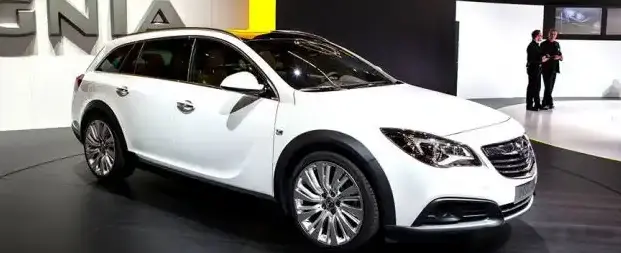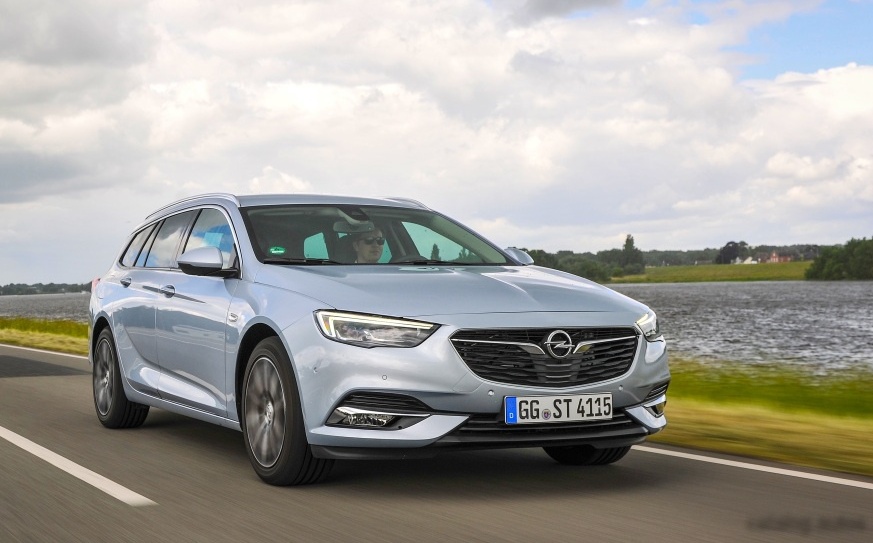
The Opel Insignia Sports Tourer (B) 1.6 Turbo, produced from June 2018 to September 2019, represents a compelling offering within the broader Insignia B generation (2017-2022). Positioned as a mid-range variant, it aimed to balance performance and fuel efficiency within Opel’s wagon lineup. This model, built on the GM’s E2 platform (also known as the 1HX0 platform shared with the Vauxhall/Buick Regal), was primarily marketed in Europe as a practical and stylish family vehicle, offering a spacious interior and a sizable cargo area. The “Sports Tourer” designation signifies Opel’s wagon body style, competing with rivals like the Ford Mondeo Estate, Volkswagen Passat Variant, and Skoda Superb Estate.
Technical Specifications
| Brand | Opel |
| Model | Insignia |
| Generation | Insignia Sports Tourer (B) |
| Type (Engine) | 1.6 Turbo (200 Hp) |
| Start of production | June, 2018 |
| End of production | September, 2019 |
| Powertrain Architecture | Internal Combustion engine |
| Body type | Station wagon (estate) |
| Seats | 5 |
| Doors | 5 |
| Fuel consumption (urban) | 8.0-8.3 l/100 km (29.4 – 28.3 US mpg) |
| Fuel consumption (extra urban) | 5.3-5.6 l/100 km (44.4 – 42 US mpg) |
| Fuel consumption (combined) | 6.3-6.6 l/100 km (37.3 – 35.6 US mpg) |
| CO2 emissions | 145-151 g/km |
| Fuel Type | Petrol (Gasoline) |
| Acceleration 0 – 100 km/h | 7.9 sec |
| Acceleration 0 – 62 mph | 7.9 sec |
| Acceleration 0 – 60 mph | 7.5 sec |
| Maximum speed | 232 km/h (144.16 mph) |
| Emission standard | Euro 6d-Temp |
| Weight-to-power ratio | 7.3 kg/Hp |
| Weight-to-torque ratio | 5.2 kg/Nm |
| Power | 200 Hp @ 5500 rpm |
| Torque | 280 Nm @ 1650-4500 rpm (206.52 lb.-ft. @ 1650-4500 rpm) |
| Engine layout | Front, Transverse |
| Engine Model/Code | D16SHT |
| Engine displacement | 1598 cm3 (97.52 cu. in.) |
| Number of cylinders | 4 |
| Engine configuration | Inline |
| Cylinder Bore | 79 mm (3.11 in.) |
| Piston Stroke | 81.5 mm (3.21 in.) |
| Compression ratio | 9.5:1 |
| Number of valves per cylinder | 4 |
| Fuel injection system | Direct injection |
| Engine aspiration | Turbocharger, Intercooler |
| Engine oil capacity | 5.5 l (5.81 US qt | 4.84 UK qt) |
| Kerb Weight | 1462 kg (3223.16 lbs.) |
| Max. weight | 2130 kg (4695.85 lbs.) |
| Max load | 668 kg (1472.69 lbs.) |
| Trunk (boot) space – minimum | 560 l (19.78 cu. ft.) |
| Trunk (boot) space – maximum | 1660 l (58.62 cu. ft.) |
| Fuel tank capacity | 62 l (16.38 US gal | 13.64 UK gal) |
| Max. roof load | 100 kg (220.46 lbs.) |
| Permitted trailer load with brakes (12%) | 1410 kg (3108.52 lbs.) |
| Permitted trailer load without brakes | 750 kg (1653.47 lbs.) |
| Permitted towbar download | 90 kg (198.42 lbs.) |
| Length | 4986 mm (196.3 in.) |
| Width | 1863 mm (73.35 in.) |
| Width with mirrors folded | 1941 mm (76.42 in.) |
| Width including mirrors | 2093 mm (82.4 in.) |
| Height | 1500 mm (59.06 in.) |
| Wheelbase | 2829 mm (111.38 in.) |
| Front track | 1607 mm (63.27 in.) |
| Rear (Back) track | 1610 mm (63.39 in.) |
| Front overhang | 990 mm (38.98 in.) |
| Rear overhang | 1167 mm (45.94 in.) |
| Minimum turning circle | 11.74 m (38.52 ft.) |
| Drivetrain Architecture | Front wheel drive |
| Drive wheel | Front wheel drive |
| Number of gears and type of gearbox | 6 gears, manual transmission |
| Front brakes | Disc |
| Rear brakes | Disc |
| Assisting systems | ABS (Anti-lock braking system) |
| Steering type | Steering rack and pinion |
| Power steering | Electric Steering |
| Tires size | 215/60 R16; 215/55 R17; 225/55 R17; 245/45 R18 |
| Wheel rims size | 6.5J x 16; 7J x 17; 7.5J x 17; 8.5J x 18 |
INTRODUCTION
The Opel Insignia Sports Tourer (B) 1.6 Turbo, launched in 2018, was a key variant in Opel’s strategy to offer a compelling alternative in the competitive mid-size wagon segment. This iteration of the Insignia, the second generation, represented a significant step forward in terms of design, technology, and driving dynamics compared to its predecessor. The 1.6 Turbo engine, designated with the code D16SHT, was a crucial part of the lineup, providing a balance between performance and fuel economy. It sat comfortably in the middle of the range, offering more power than the base diesel options but remaining more accessible than the flagship 2.0-liter petrol and diesel variants.
Powertrain & Engine Architecture
The heart of this Insignia variant is the 1.6-liter turbocharged four-cylinder engine, specifically the D16SHT code. This engine belongs to Opel’s family of small-displacement, direct-injection turbocharged engines. It features a single-scroll turbocharger and direct fuel injection, allowing for precise fuel delivery and efficient combustion. The engine produces 200 horsepower at 5500 rpm and 280 Nm (206.52 lb.-ft.) of torque between 1650 and 4500 rpm. The engine utilizes a timing chain for durability. The 6-speed manual transmission was standard, offering a relatively conventional gear ratio spread designed for both fuel efficiency and reasonable acceleration. The transmission is front-wheel drive only; all-wheel drive was available on higher-spec Insignia models.
Driving Characteristics
The 1.6 Turbo engine delivers a respectable driving experience. While not overtly sporty, it provides sufficient power for everyday driving and overtaking maneuvers. The 7.9-second 0-62 mph acceleration time is adequate for most drivers. The turbocharger provides a noticeable boost in power from around 1800 rpm, offering good responsiveness. The manual transmission is precise and easy to use, although the gear ratios are geared towards economy rather than outright performance. Compared to the higher-output 2.0-liter variants, the 1.6 Turbo feels less urgent, particularly at higher speeds. However, it offers a more refined and fuel-efficient driving experience, making it well-suited for long journeys.
Equipment & Trim Levels
The Insignia Sports Tourer 1.6 Turbo typically came equipped with a good level of standard equipment. This included air conditioning, a touchscreen infotainment system with Apple CarPlay and Android Auto compatibility, Bluetooth connectivity, and a suite of safety features such as automatic emergency braking and lane departure warning. Higher trim levels added features like leather upholstery, heated front seats, a panoramic sunroof, and adaptive cruise control. Interior upholstery was typically cloth on base models, with leather options available on higher trims. The dashboard layout was modern and functional, with a focus on ergonomics.
Chassis & Braking
The Insignia Sports Tourer features a MacPherson strut front suspension and a multi-link rear suspension, providing a comfortable and controlled ride. The suspension is tuned to prioritize comfort over outright sportiness. Braking duties are handled by disc brakes on all four wheels, providing adequate stopping power. ABS (Anti-lock Braking System) is standard, along with electronic stability control. The steering is electrically assisted, offering a light and precise feel. Stabilizer bars are fitted front and rear to reduce body roll during cornering.
Market Reception & Comparison
The Insignia Sports Tourer 1.6 Turbo was generally well-received by automotive critics. It was praised for its spacious interior, comfortable ride, and good fuel economy. However, some critics noted that the engine could feel a little underpowered when fully loaded or tackling steep hills. Compared to the 2.0-liter diesel variants, the 1.6 Turbo offered slightly lower fuel economy but a more refined driving experience. Against competitors like the Ford Mondeo Estate and Volkswagen Passat Variant, the Insignia offered a compelling combination of value, practicality, and style.
Legacy
The Opel Insignia Sports Tourer 1.6 Turbo has proven to be a relatively reliable vehicle in the used car market. The 1.6-liter turbo engine, while not without its potential issues (such as occasional turbocharger problems or timing chain wear), is generally considered durable when properly maintained. Regular oil changes and adherence to the manufacturer’s service schedule are crucial for long-term reliability. Today, these models represent a good value proposition for buyers seeking a spacious, comfortable, and well-equipped wagon at an affordable price point. The Insignia’s blend of practicality and style continues to appeal to families and individuals alike.