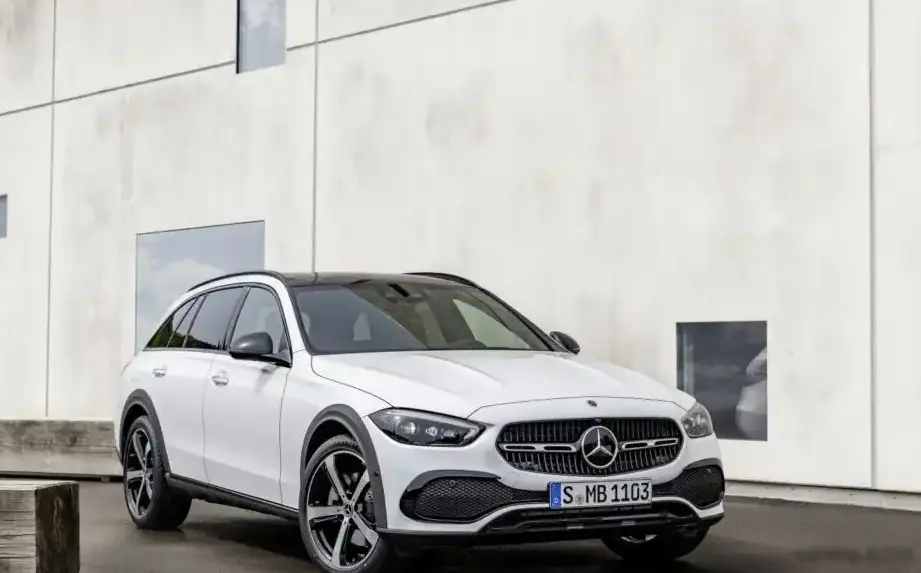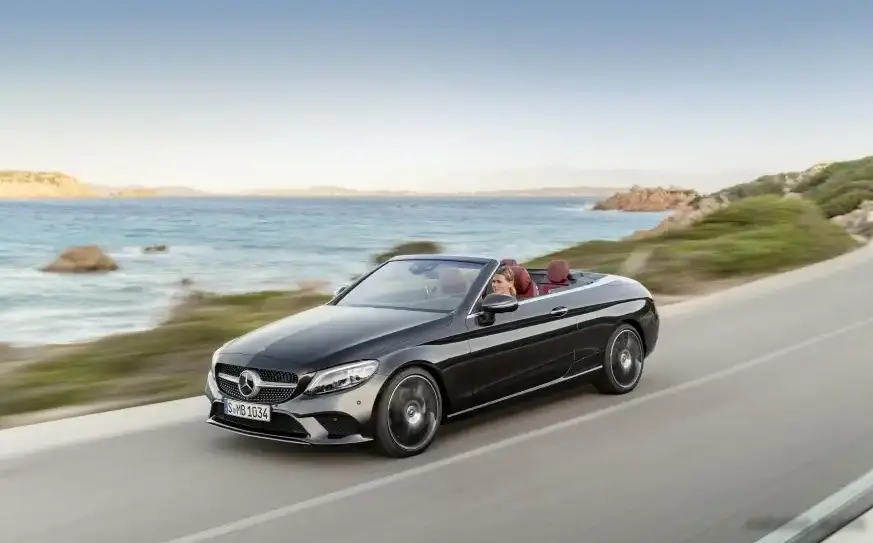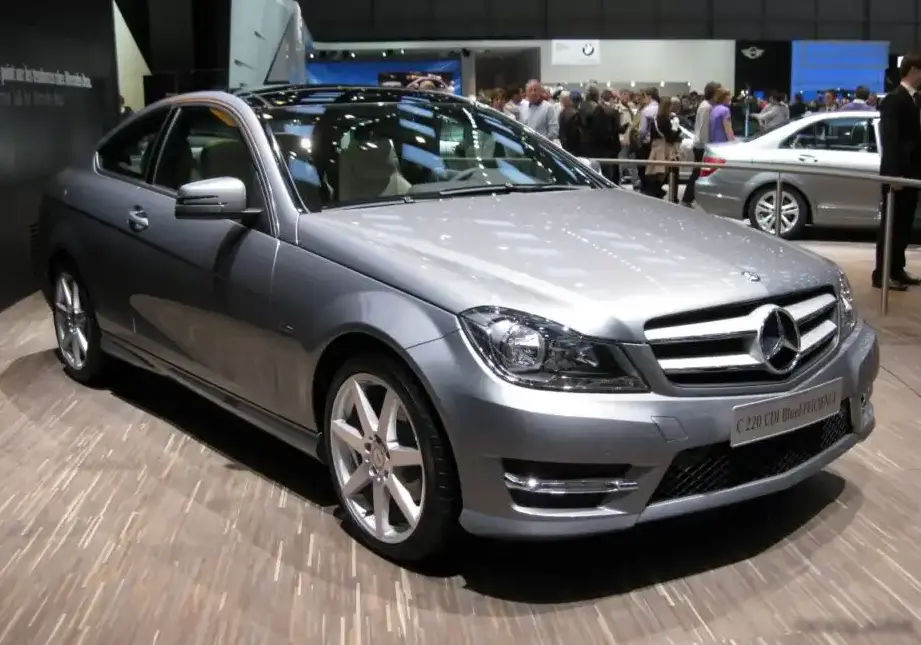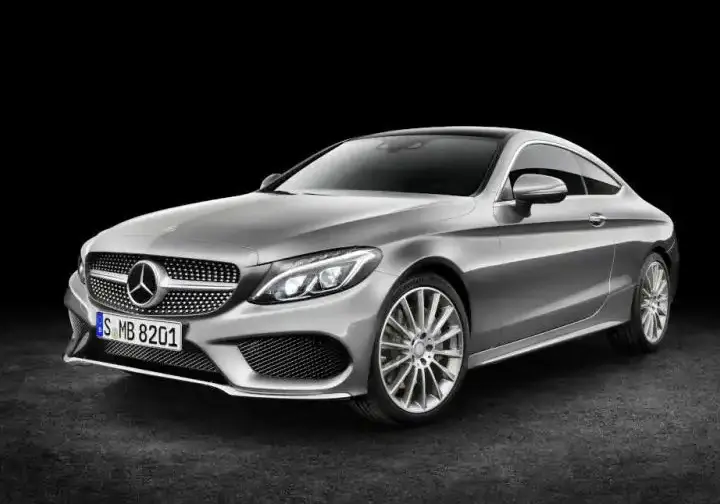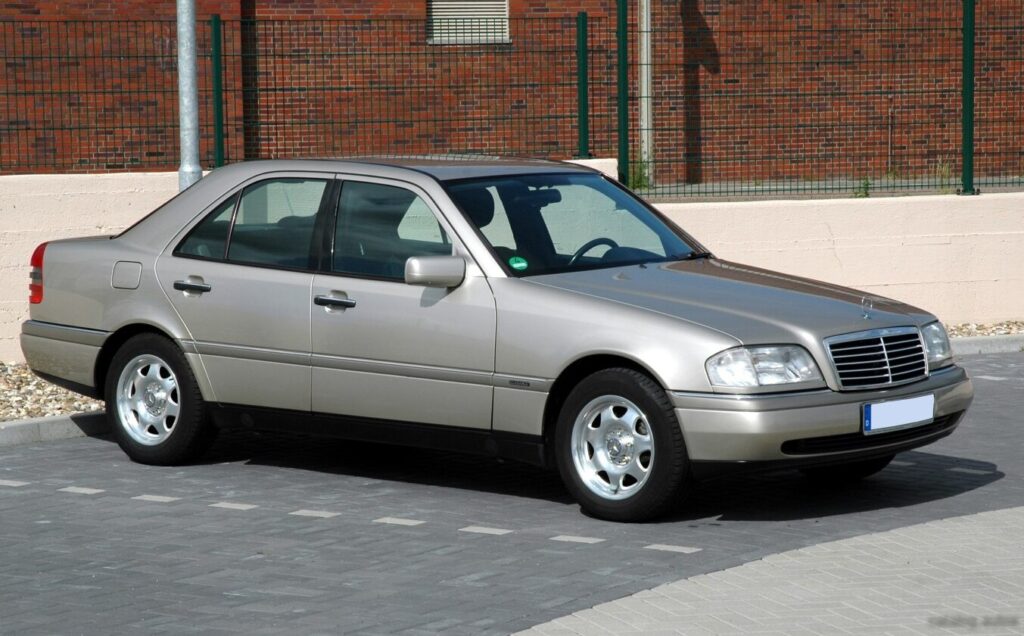
The Mercedes-Benz C 200 D, produced between April 1996 and June 1997, was a diesel-powered variant of the W202 C-Class. Positioned as an entry-level offering within the range, it aimed to provide fuel efficiency and comfortable transportation. This model occupied a specific niche, appealing to buyers prioritizing economy over outright performance. It was part of the first generation C-Class, internally designated as the W202, which represented Mercedes-Benz’s attempt to modernize and downsize its compact executive car, replacing the W124. The C 200 D featured a 2.0-liter diesel engine paired with a 5-speed automatic transmission, a combination designed for relaxed cruising and lower running costs.
Technical Specifications
| Brand | Mercedes-Benz |
| Model | C-class |
| Generation | C-class (W202) |
| Type (Engine) | C 200 D (88 Hp) 5G-TRONIC |
| Start of production | April, 1996 |
| End of production | June, 1997 |
| Powertrain Architecture | Internal Combustion engine |
| Body type | Sedan |
| Seats | 5 |
| Doors | 4 |
| Fuel consumption (urban) | 10.6 l/100 km (22.2 US mpg, 26.6 UK mpg, 9.4 km/l) |
| Fuel consumption (extra urban) | 6 l/100 km (39.2 US mpg, 47.1 UK mpg, 16.7 km/l) |
| Fuel consumption (combined) | 7.7 l/100 km (30.5 US mpg, 36.7 UK mpg, 13 km/l) |
| Fuel Type | Diesel |
| Maximum speed | 168 km/h (104.39 mph) |
| Weight-to-power ratio | 15.8 kg/Hp, 63.3 Hp/tonne |
| Weight-to-torque ratio | 10.3 kg/Nm, 97.1 Nm/tonne |
| Power | 88 Hp @ 5000 rpm |
| Power per litre | 44.1 Hp/l |
| Torque | 135 Nm @ 2000-4650 rpm (99.57 lb.-ft. @ 2000-4650 rpm) |
| Engine layout | Front, Longitudinal |
| Engine Model/Code | OM 604 D 20 / 604.915 |
| Engine displacement | 1997 cm3 (121.86 cu. in.) |
| Number of cylinders | 4 |
| Engine configuration | Inline |
| Cylinder Bore | 87 mm (3.43 in.) |
| Piston Stroke | 84 mm (3.31 in.) |
| Compression ratio | 22:1 |
| Number of valves per cylinder | 4 |
| Fuel injection system | Precombustion chamber injection |
| Engine aspiration | Naturally aspirated engine |
| Valvetrain | DOHC |
| Engine oil capacity | 6.5 l (6.87 US qt | 5.72 UK qt) |
| Coolant | 8 l (8.45 US qt | 7.04 UK qt) |
| Kerb Weight | 1390 kg (3064.43 lbs.) |
| Max. weight | 1870 kg (4122.64 lbs.) |
| Max load | 480 kg (1058.22 lbs.) |
| Fuel tank capacity | 62 l (16.38 US gal | 13.64 UK gal) |
| Length | 4487 mm (176.65 in.) |
| Width | 1720 mm (67.72 in.) |
| Height | 1427 mm (56.18 in.) |
| Wheelbase | 2690 mm (105.91 in.) |
| Front track | 1499 mm (59.02 in.) |
| Rear track | 1464 mm (57.64 in.) |
| Drivetrain Architecture | Rear wheel drive |
| Drive wheel | Rear wheel drive |
| Number of gears and type of gearbox | 5 gears, automatic transmission G-TRONIC |
| Front suspension | Double wishbone |
| Rear suspension | Independent multi-link spring suspension with stabilizer |
| Front brakes | Disc |
| Rear brakes | Disc |
| Steering type | Cone worm with recirculation balls |
| Power steering | Hydraulic Steering |
| Tires size | Front wheel tires: 195/65 R15Rear wheel tires: 195/65 R15 |
| Wheel rims size | Front wheel rims: 6.5J x 15Rear wheel rims: 6.5J x 15 |
Powertrain & Engine Architecture
The C 200 D was powered by the OM 604 D 20 engine, a 1.997-liter inline-four cylinder diesel. This engine utilized precombustion chamber injection, a system common in Mercedes-Benz diesels of the era. This system involved injecting fuel into a small pre-chamber connected to the main combustion chamber, promoting more complete combustion and reducing engine noise. The engine featured a double overhead camshaft (DOHC) valvetrain, contributing to improved breathing and efficiency. The 5G-TRONIC automatic transmission was a five-speed unit, offering smooth shifts and contributing to the car’s relaxed driving experience. This transmission was designed to balance fuel economy with acceptable performance, prioritizing comfort over sporty responsiveness.
Driving Characteristics
The C 200 D with the automatic transmission delivered a comfortable, but not particularly brisk, driving experience. With 88 horsepower and 135 Nm (99.57 lb-ft) of torque, acceleration was adequate for everyday driving, but overtaking required careful planning. The automatic transmission’s gear ratios were optimized for fuel efficiency, meaning the engine often operated at lower RPMs. Compared to the manual transmission versions of the C 200 D, the automatic offered greater convenience but slightly reduced responsiveness. Higher-output variants, such as the C 220 D or the gasoline-powered C 200, provided significantly more performance, but at the cost of increased fuel consumption.
Equipment & Trim Levels
The C 200 D typically came equipped with a reasonable level of standard features for its time. This included power windows, central locking, and an AM/FM radio. Interior upholstery was typically cloth, with options for leather available at an extra cost. Air conditioning was often an optional extra. Dashboard configuration was relatively simple and functional, reflecting the car’s focus on practicality. Available options included a sunroof, upgraded audio systems, and alloy wheels.
Chassis & Braking
The W202 C-Class featured a double wishbone front suspension and an independent multi-link rear suspension, providing a comfortable ride and good handling characteristics. The C 200 D was equipped with disc brakes on all four wheels, offering adequate stopping power for its weight and performance. Hydraulic power steering was standard, making maneuvering easy. The suspension was tuned for comfort, prioritizing ride quality over sporty handling. Stabilizer bars were included both front and rear to reduce body roll during cornering.
Market Reception & Comparison
The C 200 D was generally well-received as a fuel-efficient and reliable option within the C-Class range. Critics praised its comfortable ride and relatively quiet engine for a diesel. However, its performance was often criticized as being somewhat underwhelming, particularly when compared to the more powerful gasoline variants. In terms of fuel economy, the C 200 D offered a significant advantage over the C 200 and C 220 gasoline models. Reliability was generally good, although the precombustion chamber injection system could require occasional maintenance.
Legacy
The OM 604 engine family, including the D 20 variant, is known for its durability and longevity. Many C 200 D models have remained on the road for decades, a testament to the engine’s robust design. In the used car market, the C 200 D is often sought after by buyers looking for a reliable and economical classic Mercedes-Benz. While not a performance icon, it represents a practical and well-engineered entry point into the world of Mercedes-Benz ownership. The 5G-TRONIC transmission, while not as sophisticated as modern automatics, proved to be a durable and dependable unit.