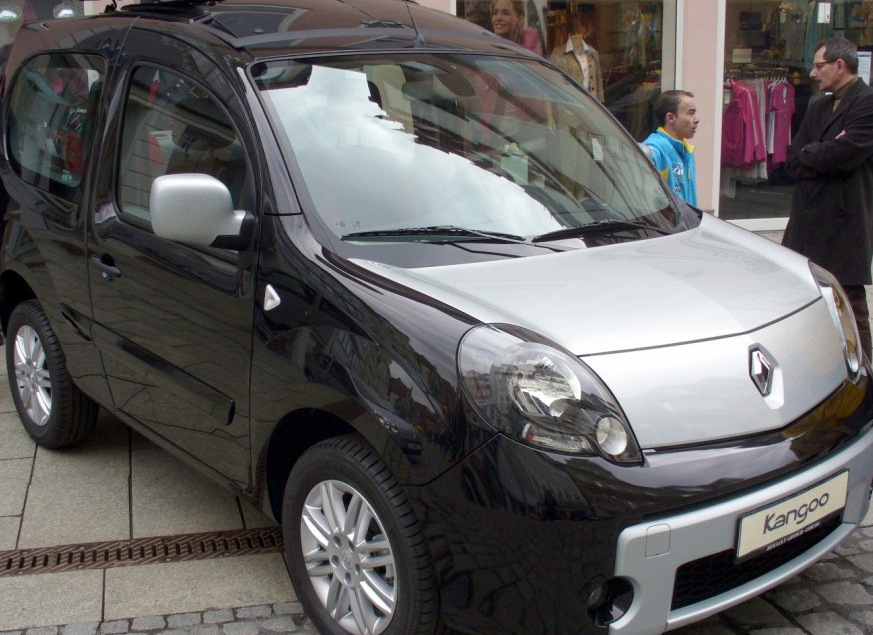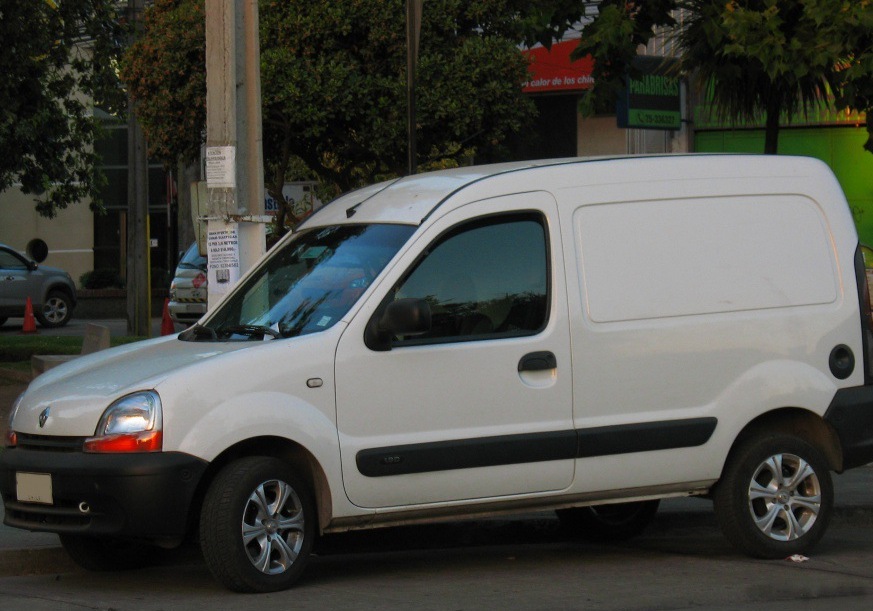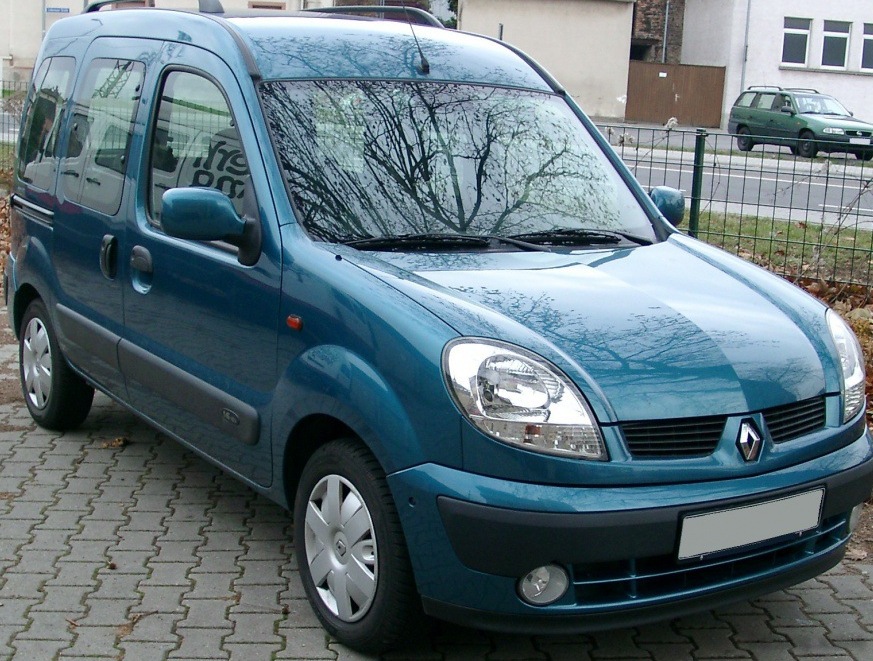
The Renault Kangoo I, specifically the KC facelift model produced between 2003 and 2005, offered a versatile and practical option in the European light commercial vehicle and multi-purpose vehicle (MPV) segment. The 1.6 16V 95 horsepower, four-wheel drive (4×4) variant represented a mid-range offering within the Kangoo I lineup, aimed at buyers needing enhanced traction for varied conditions. This version combined a relatively economical gasoline engine with the added capability of all-wheel drive, making it suitable for both urban and rural environments. The Kangoo I, based on the shared Renault-Nissan B platform, was a popular choice for small businesses, families, and individuals requiring a flexible and spacious vehicle.
Technical Specifications
| Brand | Renault |
| Model | Kangoo |
| Generation | Kangoo I (KC, facelift 2003) |
| Type (Engine) | 1.6 16V (95 Hp) 4×4 |
| Start of production | 2003 |
| End of production | 2005 |
| Powertrain Architecture | Internal Combustion engine |
| Body type | Minivan |
| Seats | 5 |
| Doors | 4/5 |
| Fuel consumption (urban) | 10.8 l/100 km (21.8 US mpg, 26.2 UK mpg, 9.3 km/l) |
| Fuel consumption (extra urban) | 7.4 l/100 km (31.8 US mpg, 38.2 UK mpg, 13.5 km/l) |
| Fuel consumption (combined) | 8.7 l/100 km (27 US mpg, 32.5 UK mpg, 11.5 km/l) |
| CO2 emissions | 208 g/km |
| Fuel Type | Petrol (Gasoline) |
| Acceleration 0 – 100 km/h | 13.1 sec |
| Acceleration 0 – 62 mph | 13.1 sec |
| Acceleration 0 – 60 mph | 12.4 sec |
| Maximum speed | 153 km/h (95.07 mph) |
| Emission standard | Euro 3 |
| Weight-to-power ratio | 13.7 kg/Hp, 73.1 Hp/tonne |
| Weight-to-torque ratio | 8.8 kg/Nm, 113.8 Nm/tonne |
| Power | 95 Hp @ 5000 rpm |
| Power per litre | 59.4 Hp/l |
| Torque | 148 Nm @ 3750 rpm (109.16 lb.-ft. @ 3750 rpm) |
| Engine layout | Front, Transverse |
| Engine Model/Code | K4M |
| Engine displacement | 1598 cm3 (97.52 cu. in.) |
| Number of cylinders | 4 |
| Engine configuration | Inline |
| Cylinder Bore | 79.5 mm (3.13 in.) |
| Piston Stroke | 80.5 mm (3.17 in.) |
| Number of valves per cylinder | 4 |
| Fuel injection system | Multi-port manifold injection |
| Engine aspiration | Naturally aspirated engine |
| Engine oil capacity | 4.9 l (5.18 US qt | 4.31 UK qt) |
| Kerb Weight | 1300 kg (2866.01 lbs.) |
| Max. weight | 1850 kg (4078.55 lbs.) |
| Max load | 550 kg (1212.54 lbs.) |
| Trunk (boot) space – minimum | 550 l (19.42 cu. ft.) |
| Trunk (boot) space – maximum | 2500 l (88.29 cu. ft.) |
| Fuel tank capacity | 60 l (15.85 US gal | 13.2 UK gal) |
| Max. roof load | 100 kg (220.46 lbs.) |
| Permitted trailer load with brakes (12%) | 1200 kg (2645.55 lbs.) |
| Permitted towbar download | 75 kg (165.35 lbs.) |
| Length | 4035 mm (158.86 in.) |
| Width | 1672 mm (65.83 in.) |
| Width including mirrors | 2031 mm (79.96 in.) |
| Height | 1885 mm (74.21 in.) |
| Wheelbase | 2600 mm (102.36 in.) |
| Front track | 1400 mm (55.12 in.) |
| Rear (Back) track | 1415 mm (55.71 in.) |
| Front overhang | 735 mm (28.94 in.) |
| Rear overhang | 700 mm (27.56 in.) |
| Minimum turning circle | 10.79 m (35.4 ft.) |
| Drive wheel | All wheel drive (4×4) |
| Number of gears and type of gearbox | 5 gears, manual transmission |
| Front suspension | Independent type McPherson |
| Rear suspension | Coil spring |
| Front brakes | Ventilated discs |
| Rear brakes | Disc |
| Steering type | Steering rack and pinion |
| Tires size | 175/65 R14 |
| Wheel rims size | 5.5J x 14 |
Powertrain & Engine Architecture
The 1.6 16V engine, designated K4M by Renault, is a naturally aspirated, inline-four cylinder gasoline engine. This engine featured multi-point fuel injection and four valves per cylinder, contributing to its relatively high output for its displacement. The 16-valve configuration enhanced breathing and allowed for a broader powerband. The engine produced 95 horsepower at 5000 rpm and 148 Nm (109 lb-ft) of torque at 3750 rpm. The 4×4 system employed a viscous coupling to distribute power between the front and rear axles, providing automatic engagement of the rear wheels when front wheel slip was detected. The transmission was a five-speed manual, chosen for its balance of fuel efficiency and driver control. While an automatic transmission was available on other Kangoo I variants, it wasn’t offered with the 1.6 16V 4×4 configuration.
Driving Characteristics
The 1.6 16V 4×4 Kangoo offered a noticeable step up in traction compared to the two-wheel drive models, particularly on loose surfaces like gravel, snow, or mud. However, the 95 horsepower output meant that performance was modest. Acceleration from 0-100 km/h (0-62 mph) took around 13.1 seconds, and top speed was limited to 153 km/h (95 mph). The five-speed manual transmission allowed drivers to keep the engine in its optimal power range, but overtaking required careful planning. Compared to the more powerful 1.9 dCi diesel variants, the 1.6 16V felt less responsive, but it offered a smoother and quieter driving experience. The 4×4 system added weight, slightly impacting fuel economy and handling on paved roads.
Equipment & Trim Levels
The 1.6 16V 4×4 Kangoo typically came with a reasonable level of standard equipment, reflecting its position as a mid-range offering. This included power steering, central locking, and an adjustable steering column. Interior upholstery was typically cloth, and the dashboard featured a functional, if somewhat basic, design. Optional extras included air conditioning, electric windows, and a radio/CD player. The Kangoo’s defining feature was its spacious and configurable interior, with folding rear seats and a large cargo area. The 4×4 models often featured reinforced suspension components to handle the added weight and stresses of the all-wheel drive system.
Chassis & Braking
The Kangoo I utilized an independent McPherson strut suspension at the front and a coil spring suspension at the rear. This setup provided a comfortable ride, although it wasn’t particularly sporty. The 4×4 models often had slightly stiffer springs and dampers to improve stability when carrying loads or driving on uneven terrain. Braking was handled by ventilated discs at the front and discs at the rear, providing adequate stopping power for the vehicle’s weight and performance. The steering was a rack and pinion system, offering reasonable precision and feedback.
Market Reception & Comparison
The Renault Kangoo I 1.6 16V 4×4 was generally well-received by critics as a practical and versatile vehicle. Its all-wheel drive capability was a significant selling point for buyers in regions with inclement weather or challenging road conditions. However, the engine’s modest power output was often cited as a drawback, particularly when compared to the more powerful diesel options. Fuel economy was reasonable for a gasoline engine of its size, but it couldn’t match the efficiency of the diesel models. The Kangoo’s strength lay in its spaciousness, practicality, and affordability.
Legacy
The Renault Kangoo I, including the 1.6 16V 4×4 variant, established the Kangoo as a popular choice in the light commercial vehicle and MPV segments. The K4M engine proved to be relatively reliable, although regular maintenance is essential to prevent issues such as oil leaks and timing chain wear. Today, these vehicles are relatively affordable on the used car market, but finding well-maintained examples can be challenging. The 4×4 system adds to the vehicle’s appeal for those seeking a practical and capable vehicle for all-weather use. While not a performance vehicle, the Kangoo I 1.6 16V 4×4 remains a testament to Renault’s commitment to building functional and versatile vehicles.