
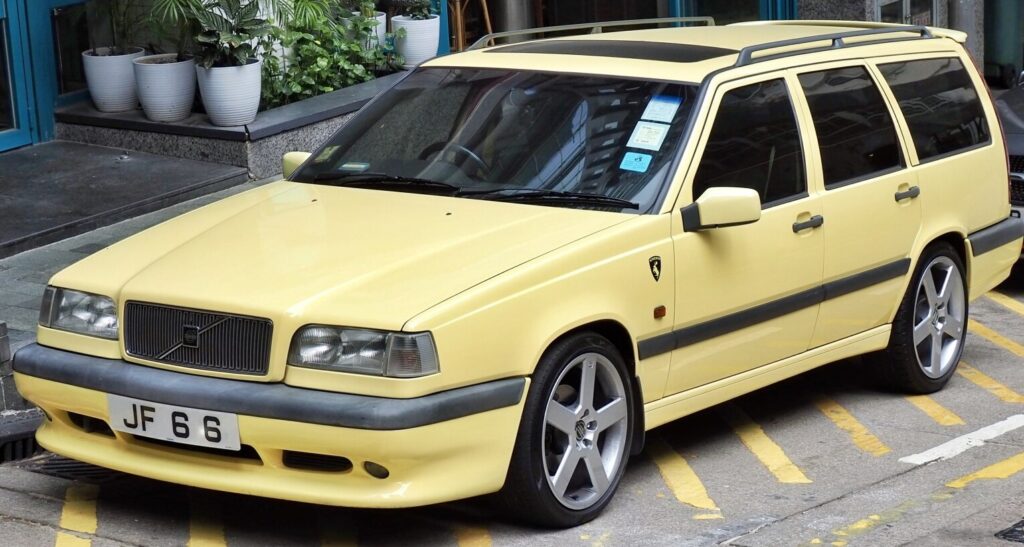
The Volvo 850 Combi 2.5 10V, produced between 1994 and 1997, represents a pivotal moment in Volvo’s history. This variant, a station wagon (estate) powered by a 2.4-liter inline-five engine producing 144 horsepower, was a key component of the 850 series, which aimed to modernize Volvo’s image and appeal to a broader customer base. The 850 Combi, built on Volvo’s P80 platform (internally designated as the 850 series), was a significant departure from the traditionally boxy Volvo designs, embracing a more aerodynamic and contemporary aesthetic. This particular 2.5-liter, 10-valve configuration occupied a middle ground in the 850 lineup, offering a balance between performance and affordability.
Technical Specifications
| Brand | Volvo |
| Model | 850 |
| Generation | 850 Combi (LW) |
| Type (Engine) | 2.5 10V (144 Hp) |
| Start of production | 1994 |
| End of production | 1997 |
| Powertrain Architecture | Internal Combustion engine |
| Body type | Station wagon (estate) |
| Seats | 5 |
| Doors | 5 |
| Fuel consumption (combined) | 8.8 l/100 km |
| Fuel consumption (US mpg) | 26.7 US mpg |
| Fuel consumption (UK mpg) | 32.1 UK mpg |
| Fuel consumption (km/l) | 11.4 km/l |
| Fuel Type | Petrol (Gasoline) |
| Acceleration 0 – 100 km/h | 10.5 sec |
| Acceleration 0 – 62 mph | 10.5 sec |
| Acceleration 0 – 60 mph | 10 sec |
| Maximum speed | 200 km/h (124.27 mph) |
| Weight-to-power ratio | 9.9 kg/Hp |
| Weight-to-torque ratio | 6.9 kg/Nm |
| Power | 144 Hp @ 5400 rpm |
| Power per litre | 59.1 Hp/l |
| Torque | 206 Nm @ 3600 rpm (151.94 lb.-ft. @ 3600 rpm) |
| Engine layout | Front, Transverse |
| Engine Model/Code | B5252S |
| Engine displacement | 2435 cm3 (148.59 cu. in.) |
| Number of cylinders | 5 |
| Engine configuration | Inline |
| Cylinder Bore | 83 mm (3.27 in.) |
| Piston Stroke | 90 mm (3.54 in.) |
| Compression ratio | 10:1 |
| Number of valves per cylinder | 2 |
| Fuel injection system | Multi-port manifold injection |
| Engine aspiration | Naturally aspirated engine |
| Valvetrain | DOHC |
| Engine oil capacity | 5.3 l (5.6 US qt | 4.66 UK qt) |
| Coolant capacity | 7.2 l (7.61 US qt | 6.34 UK qt) |
| Kerb Weight | 1423 kg (3137.18 lbs.) |
| Max. weight | 1970 kg (4343.11 lbs.) |
| Max load | 547 kg (1205.93 lbs.) |
| Trunk (boot) space – minimum | 420 l (14.83 cu. ft.) |
| Trunk (boot) space – maximum | 1580 l (55.8 cu. ft.) |
| Fuel tank capacity | 73 l (19.28 US gal | 16.06 UK gal) |
| Length | 4709 mm (185.39 in.) |
| Width | 1761 mm (69.33 in.) |
| Height | 1415 mm (55.71 in.) |
| Wheelbase | 2670 mm (105.12 in.) |
| Front track | 1520 mm (59.84 in.) |
| Rear track | 1470 mm (57.87 in.) |
| Drivetrain Architecture | Front wheel drive |
| Number of gears | 5 |
| Gearbox type | Manual transmission |
| Front suspension | Wishbone |
| Rear suspension | Coil spring |
| Front brakes | Ventilated discs |
| Rear brakes | Disc |
| Assisting systems | ABS (Anti-lock braking system) |
| Steering type | Steering rack and pinion |
| Power steering | Hydraulic Steering |
| Tires size | 185/65 R15 |
| Wheel rims size | 15 |
Powertrain & Engine Architecture
The heart of the 850 Combi 2.5 10V is the B5252S engine, a 2.4-liter inline-five cylinder powerplant. This engine, a hallmark of Volvo’s engineering during the period, featured a cast iron block and an aluminum cylinder head. The ‘10V’ designation refers to the engine’s two valves per cylinder configuration. Fuel delivery was managed by a Bosch multi-port fuel injection system, providing a balance between efficiency and performance. The engine’s DOHC (Double Overhead Camshaft) valvetrain contributed to its relatively smooth operation and respectable power output for its displacement. The five-cylinder configuration offered a unique engine note and a smoother power delivery compared to traditional four-cylinder engines. This variant was exclusively offered with a 5-speed manual transmission, providing drivers with full control over the engine’s power.
Driving Characteristics
The 850 Combi 2.5 10V offered a comfortable and capable driving experience. While not overtly sporty, the 144 horsepower engine provided adequate acceleration for everyday driving and highway cruising. The 0-60 mph time of around 10 seconds was respectable for the era. The manual transmission allowed for precise gear selection, and the engine’s torque curve provided good responsiveness in most driving situations. Compared to the higher-output 850 T5 (turbocharged) models, the 2.5 10V prioritized fuel economy and ease of use over outright performance. The wagon body style, while adding weight, also contributed to a stable and predictable handling characteristic.
Equipment & Trim Levels
The 850 Combi 2.5 10V typically came equipped with a reasonable level of standard features. These included power windows and locks, a basic audio system, and cloth upholstery. Safety was, as always with Volvo, a priority, with standard ABS brakes and a robust safety cage. Optional extras included a sunroof, upgraded audio systems, leather upholstery, and automatic climate control. The trim level generally fell into a mid-range position within the 850 lineup, offering a step up from the base models but lacking the luxury features of the higher-spec T5 variants.
Chassis & Braking
The 850 Combi featured a MacPherson strut front suspension and a coil spring rear suspension. This setup provided a comfortable ride quality while maintaining reasonable handling characteristics. The front brakes were ventilated discs, providing good stopping power, while the rear brakes were solid discs. The hydraulic power steering offered a light and responsive feel. The chassis was designed to accommodate the wagon body style and provide ample cargo space without compromising structural rigidity.
Market Reception & Comparison
The 850 Combi 2.5 10V was generally well-received by automotive critics. It was praised for its spacious interior, comfortable ride, and strong safety features. However, some critics noted that the engine lacked the punch of the turbocharged models. Compared to the 850 Turbo, the 2.5 10V offered better fuel economy (around 26.7 mpg combined) and lower maintenance costs, making it an attractive option for buyers prioritizing practicality and affordability. The 850 TDI diesel variant offered even better fuel economy, but at the expense of performance.
Legacy
The Volvo 850 series, and the 2.5 10V Combi in particular, played a significant role in reshaping Volvo’s image. It demonstrated that Volvo could produce vehicles that were both safe and stylish. The B5252S engine proved to be a durable and reliable powerplant, and many examples are still on the road today. In the used car market, the 850 Combi 2.5 10V represents a good value proposition, offering a spacious, comfortable, and reliable vehicle at an affordable price. Its unique five-cylinder engine and distinctive styling have also earned it a following among Volvo enthusiasts.
