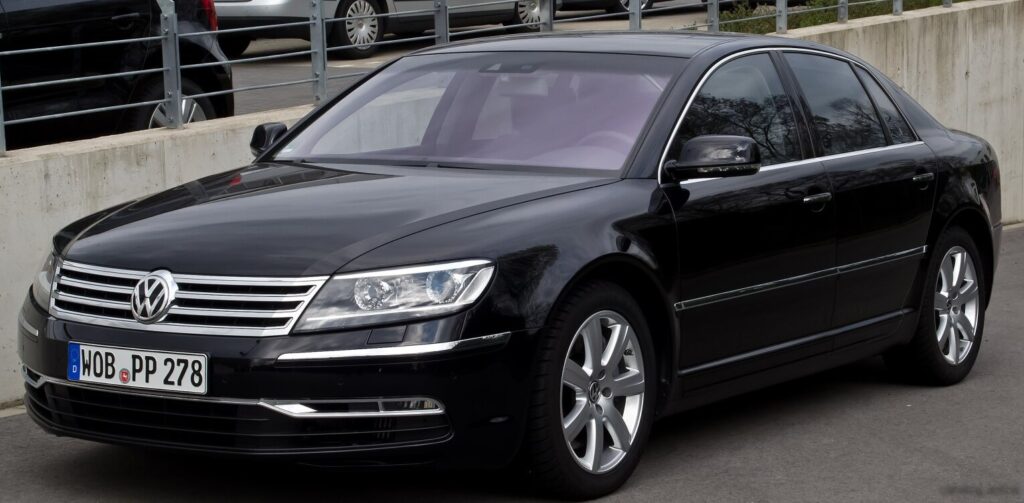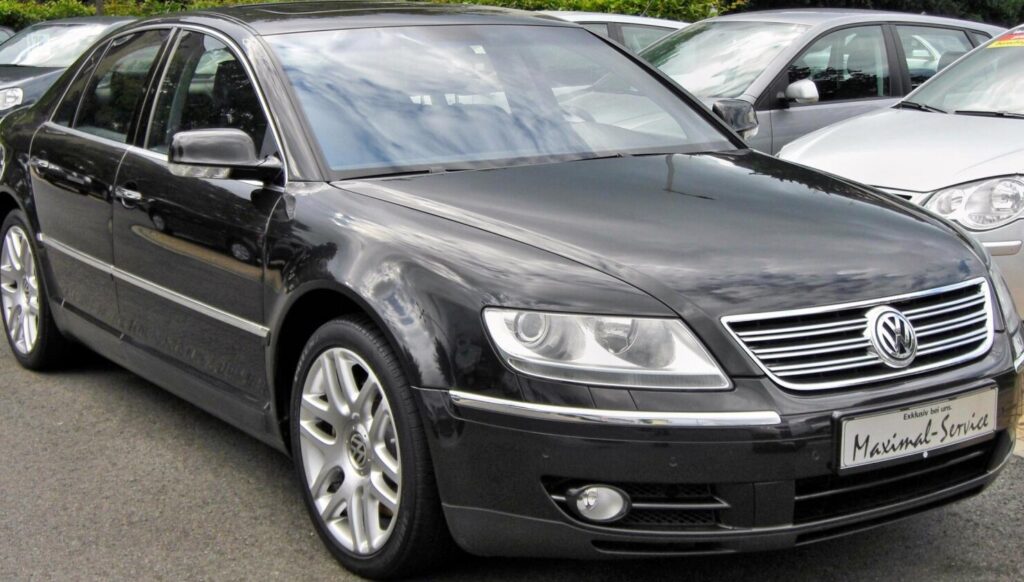
The Volkswagen Phaeton 3.0 TDI, produced between 2004 and 2006, represented Volkswagen’s ambitious foray into the luxury sedan segment, directly challenging established German rivals like the Mercedes-Benz S-Class and BMW 7 Series. Positioned as a flagship model, the Phaeton aimed to showcase Volkswagen’s engineering prowess and build quality. The 3.0 TDI variant, powered by a robust diesel engine, offered a compelling blend of performance, efficiency, and refinement. It was built on the D2 platform, shared with the Audi A8, and represented a significant investment for the Volkswagen Group. This particular engine and transmission combination aimed to provide a balance between power and economy, appealing to buyers who prioritized long-distance comfort and lower running costs.
Technical Specifications
| Brand | Volkswagen |
| Model | Phaeton |
| Generation | Phaeton |
| Type (Engine) | 3.0 TDI (224 Hp) |
| Start of production | 2004 |
| End of production | 2006 |
| Powertrain Architecture | Internal Combustion engine |
| Body type | Sedan |
| Seats | 5 |
| Doors | 4 |
| Fuel consumption (economy) – urban | 12.9 l/100 km (18.2 US mpg, 21.9 UK mpg, 7.8 km/l) |
| Fuel consumption (economy) – extra urban | 7.7 l/100 km (30.5 US mpg, 36.7 UK mpg, 13 km/l) |
| Fuel Type | Diesel |
| Acceleration 0 – 100 km/h | 8.8 sec |
| Acceleration 0 – 62 mph | 8.8 sec |
| Acceleration 0 – 60 mph | 8.4 sec |
| Maximum speed | 237 km/h (147.26 mph) |
| Weight-to-power ratio | 10.1 kg/Hp, 99.3 Hp/tonne |
| Weight-to-torque ratio | 5 kg/Nm, 199.6 Nm/tonne |
| Power | 224 Hp @ 4000 rpm |
| Power per litre | 75.5 Hp/l |
| Torque | 450 Nm @ 1500 rpm (331.9 lb.-ft. @ 1500 rpm) |
| Engine layout | Front, Longitudinal |
| Engine Model/Code | BMK |
| Engine displacement | 2967 cm3 (181.06 cu. in.) |
| Number of cylinders | 6 |
| Engine configuration | V-engine |
| Cylinder Bore | 83 mm (3.27 in.) |
| Piston Stroke | 91.4 mm (3.6 in.) |
| Compression ratio | 17:1 |
| Number of valves per cylinder | 4 |
| Fuel injection system | Diesel Commonrail |
| Engine aspiration | Turbocharger, Intercooler |
| Engine oil capacity | 8.3 l (8.77 US qt | 7.3 UK qt) |
| Coolant | 13 l (13.74 US qt | 11.44 UK qt) |
| Kerb Weight | 2255 kg (4971.42 lbs.) |
| Max. weight | 2780 kg (6128.85 lbs.) |
| Max load | 525 kg (1157.43 lbs.) |
| Trunk (boot) space – minimum | 500 l (17.66 cu. ft.) |
| Fuel tank capacity | 90 l (23.78 US gal | 19.8 UK gal) |
| Length | 5055 mm (199.02 in.) |
| Width | 1903 mm (74.92 in.) |
| Height | 1450 mm (57.09 in.) |
| Wheelbase | 2881 mm (113.43 in.) |
| Front track | 1628 mm (64.09 in.) |
| Rear (Back) track | 1612 mm (63.46 in.) |
| Drivetrain Architecture | The Internal combustion engine (ICE) drives the front wheels of the vehicle. |
| Drive wheel | Front wheel drive |
| Number of gears and type of gearbox | 6 gears, automatic transmission |
| Front suspension | Air suspension |
| Rear suspension | Air suspension |
| Front brakes | Ventilated discs |
| Rear brakes | Ventilated discs |
| Assisting systems | ABS (Anti-lock braking system) |
| Steering type | Steering rack and pinion |
| Power steering | Hydraulic Steering |
| Tires size | 235/55 R17 |
| Wheel rims size | 17 |
Powertrain & Engine Architecture
The heart of the Phaeton 3.0 TDI is the BMK engine, a 2.967-liter V6 diesel. This engine utilizes a common rail direct injection system, delivering fuel at extremely high pressure for optimized combustion. A variable geometry turbocharger (VGT) and intercooler work in tandem to boost power and torque while managing exhaust gas temperatures. The engine features four valves per cylinder and a robust cast iron block, contributing to its durability. The 6-speed automatic transmission, sourced from ZF, was specifically tuned for smooth and refined shifts, prioritizing comfort over outright performance. This transmission featured Tiptronic functionality, allowing drivers to manually select gears when desired. The engine’s longitudinal mounting and front-wheel-drive configuration were typical for Volkswagen’s larger vehicles at the time.
Driving Characteristics
The 3.0 TDI Phaeton offered a distinctly different driving experience compared to its petrol-powered siblings or the higher-output V8 and W12 models. While not overtly sporty, the 224 horsepower and 332 lb-ft of torque provided ample power for effortless cruising and confident overtaking. The automatic transmission, while smooth, wasn’t particularly quick to downshift, resulting in a slightly more relaxed pace. The gear ratios were optimized for fuel efficiency and highway driving. Compared to the more powerful variants, the 3.0 TDI felt less urgent, but its abundant low-end torque made it surprisingly capable in everyday driving situations. The air suspension contributed to a remarkably comfortable ride, effectively isolating passengers from road imperfections.
Equipment & Trim Levels
The Phaeton 3.0 TDI typically came well-equipped, reflecting its luxury positioning. Standard features included leather upholstery, wood trim, automatic climate control, a premium audio system, and power-adjustable front seats with memory function. Optional extras were plentiful, including rear seat entertainment, massaging seats, a sunroof, and advanced driver-assistance systems. Trim levels varied depending on the market, but generally offered increasing levels of luxury and technology. The 3.0 TDI often served as a mid-range offering, bridging the gap between the entry-level petrol engines and the more exclusive V8 and W12 models.
Chassis & Braking
The Phaeton’s chassis was designed for comfort and stability. It featured an independent suspension all around, with air suspension as standard equipment. This air suspension allowed for adjustable ride height and damping, further enhancing ride quality. Braking duties were handled by ventilated disc brakes on all four wheels, coupled with an Anti-lock Braking System (ABS). The Phaeton’s relatively heavy weight necessitated a robust braking system to ensure adequate stopping power. Stabilizer bars were fitted front and rear to minimize body roll during cornering.
Market Reception & Comparison
The Phaeton, despite its impressive engineering and build quality, faced an uphill battle in the luxury sedan market. Critics praised its refinement, comfort, and technology, but questioned its brand image and value proposition compared to established rivals. The 3.0 TDI variant was generally well-received for its fuel efficiency and strong torque output. Compared to the petrol engines, the TDI offered significantly better fuel economy, making it a popular choice for long-distance drivers. However, some reviewers noted that the diesel engine lacked the smoothness and refinement of the petrol V8 and W12 options. Reliability was generally good, although the complex technology could lead to higher maintenance costs.
Legacy
The Volkswagen Phaeton, while not a commercial success, remains a fascinating and ambitious project. The 3.0 TDI variant, in particular, has proven to be a relatively reliable and durable powertrain. On the used car market, these models are often sought after by enthusiasts who appreciate their unique blend of luxury, comfort, and fuel efficiency. The Phaeton’s advanced technology and build quality have ensured that many examples remain in good condition today, offering a compelling alternative to more mainstream luxury sedans. The engine itself, a member of the VW Group’s robust diesel family, is known for its longevity when properly maintained.