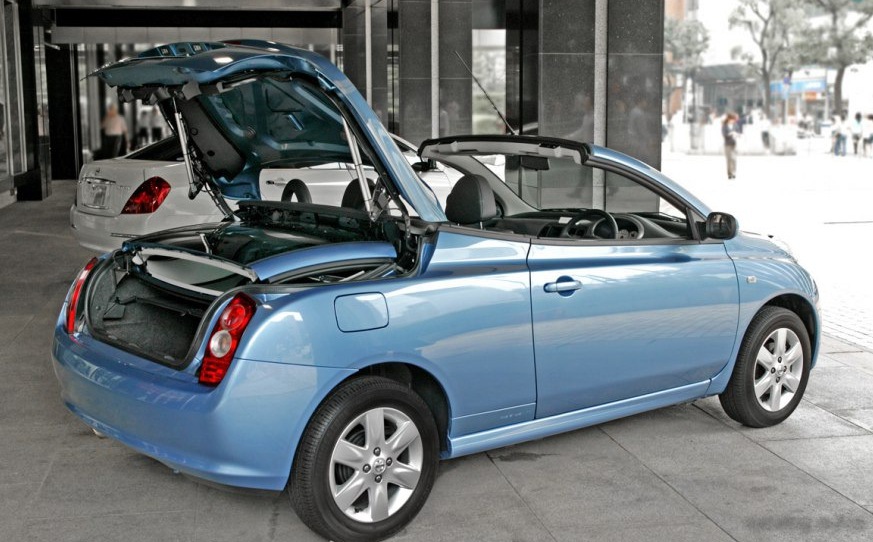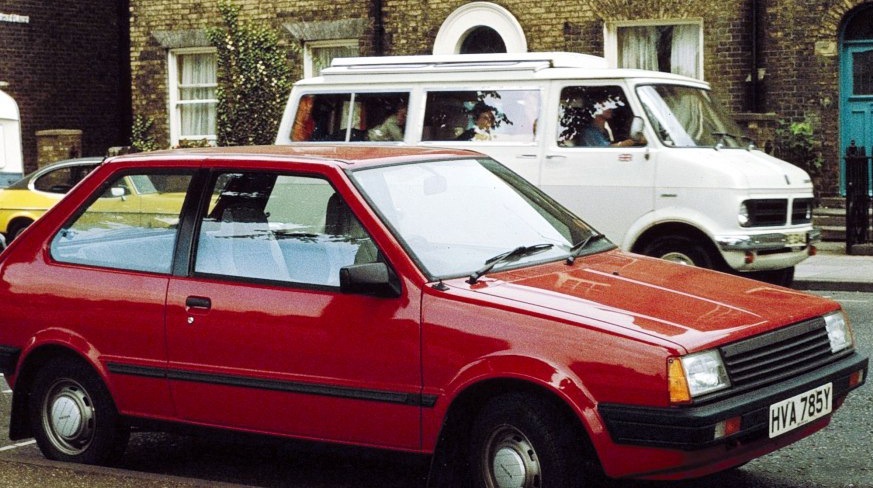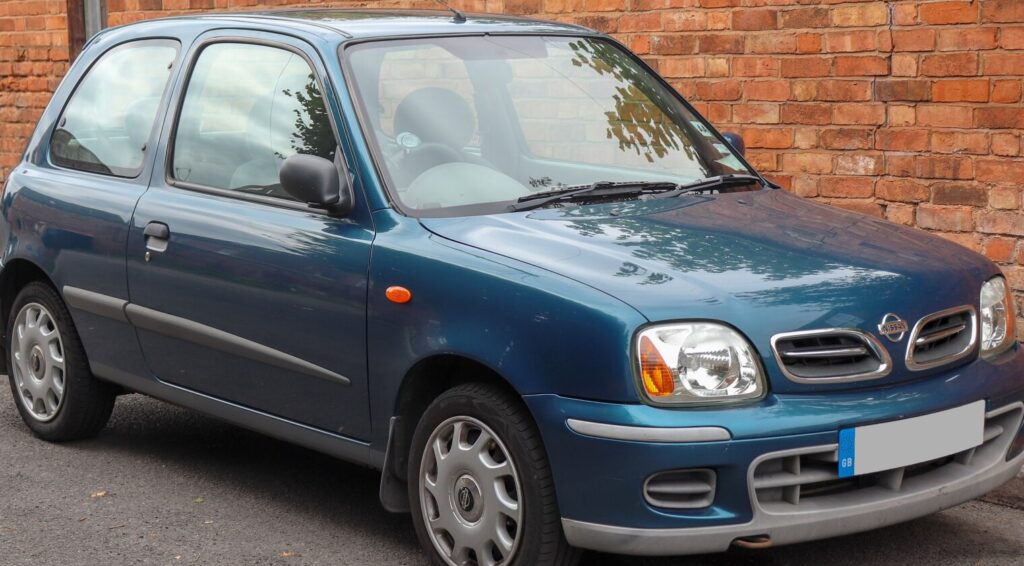
The Nissan Micra K11, produced from 1992 to 2000, represented a significant step forward for Nissan’s supermini offering. The 1.3i 16V (75 hp) variant with a Continuously Variable Transmission (CVT) was introduced as a more refined and accessible option within the K11 range, primarily aimed at buyers prioritizing ease of use and fuel efficiency over outright performance. This model sat in the mid-range of the K11 lineup, positioned above the base 1.0-liter models and below the sportier 1.4 and 1.6-liter versions. It was a key player in the European supermini segment, competing with vehicles like the Peugeot 205, Renault Clio, and Ford Fiesta.
Technical Specifications
| Brand | Nissan |
| Model | Micra |
| Generation | Micra (K11) |
| Type (Engine) | 1.3i 16V (75 Hp) CVT |
| Start of production | 1992 |
| End of production | 2000 |
| Powertrain Architecture | Internal Combustion engine |
| Body type | Hatchback |
| Seats | 5 |
| Doors | 3/5 |
| Fuel consumption (urban) | 6.9 l/100 km (34.1 US mpg, 40.9 UK mpg, 14.5 km/l) |
| Fuel consumption (extra urban) | 5.2 l/100 km (45.2 US mpg, 54.3 UK mpg, 19.2 km/l) |
| Fuel consumption (combined) | 6 l/100 km (39.2 US mpg, 47.1 UK mpg, 16.7 km/l) |
| Fuel Type | Petrol (Gasoline) |
| Acceleration 0 – 100 km/h | 13.7 sec |
| Acceleration 0 – 62 mph | 13.7 sec |
| Acceleration 0 – 60 mph | 13 sec |
| Maximum speed | 165 km/h (102.53 mph) |
| Weight-to-power ratio | 11 kg/Hp, 90.9 Hp/tonne |
| Weight-to-torque ratio | 8 kg/Nm, 124.8 Nm/tonne |
| Power | 75 Hp @ 6000 rpm |
| Power per litre | 58.8 Hp/l |
| Torque | 103 Nm @ 4000 rpm (75.97 lb.-ft. @ 4000 rpm) |
| Engine layout | Front, Transverse |
| Engine Model/Code | CG13DE |
| Engine displacement | 1275 cm3 (77.81 cu. in.) |
| Number of cylinders | 4 |
| Engine configuration | Inline |
| Cylinder Bore | 71 mm (2.8 in.) |
| Piston Stroke | 80.5 mm (3.17 in.) |
| Compression ratio | 9.5:1 |
| Number of valves per cylinder | 4 |
| Fuel injection system | Multi-port manifold injection |
| Engine aspiration | Naturally aspirated engine |
| Valvetrain | DOHC |
| Engine oil capacity | 3 l (3.17 US qt | 2.64 UK qt) |
| Coolant capacity | 4 l (4.23 US qt | 3.52 UK qt) |
| Kerb Weight | 825 kg (1818.81 lbs.) |
| Max. weight | 1300 kg (2866.01 lbs.) |
| Max load | 475 kg (1047.2 lbs.) |
| Trunk (boot) space – minimum | 206 l (7.27 cu. ft.) |
| Trunk (boot) space – maximum | 960 l (33.9 cu. ft.) |
| Fuel tank capacity | 42 l (11.1 US gal | 9.24 UK gal) |
| Length | 3695 mm (145.47 in.) |
| Width | 1585 mm (62.4 in.) |
| Height | 1430 mm (56.3 in.) |
| Wheelbase | 2360 mm (92.91 in.) |
| Front track | 1360 mm (53.54 in.) |
| Rear track | 1325 mm (52.17 in.) |
| Drivetrain Architecture | Front wheel drive |
| Number of gears and type of gearbox | 1 gears, automatic transmission CVT |
| Front suspension | Wishbone |
| Rear suspension | Spring Strut |
| Front brakes | Disc |
| Rear brakes | Drum |
| Assisting systems | ABS (Anti-lock braking system) |
| Steering type | Steering rack and pinion |
| Power steering | Hydraulic Steering |
| Tires size | 165/60 R13 |
| Wheel rims size | 13 |
Powertrain & Engine Architecture
The heart of the K11 1.3i 16V CVT is the CG13DE engine, a 1.3-liter inline-four cylinder gasoline engine. This engine featured a double overhead camshaft (DOHC) valvetrain operating 16 valves, contributing to its relatively high output for its displacement. The CG13DE utilized multi-port fuel injection, a common technology in the early 1990s, for precise fuel delivery. The engine’s 9.5:1 compression ratio was a compromise between efficiency and performance. Paired with this engine was a Continuously Variable Transmission (CVT). Nissan’s early CVTs, while offering smooth acceleration, were not as refined as later iterations. They operated by using a belt and pulley system to provide an infinite number of gear ratios within a specific range, optimizing engine speed for efficiency or power. The CVT in the K11 was designed to prioritize fuel economy and ease of driving, rather than sporty acceleration.
Driving Characteristics
The 1.3i 16V CVT Micra offered a distinctly different driving experience compared to its manual transmission counterparts or the higher-powered variants. The CVT eliminated traditional gear shifts, providing a seamless and linear acceleration. However, this came at the cost of responsiveness. The engine tended to ‘drone’ at higher RPMs as the CVT held it in the powerband, which some drivers found unappealing. Acceleration to 60 mph took around 13 seconds, and the top speed was approximately 102 mph. Compared to the 1.4 or 1.6-liter models, the 1.3i CVT felt noticeably slower, particularly during overtaking maneuvers. The CVT’s gear ratios were optimized for fuel efficiency, resulting in a more relaxed and economical driving style. The steering was light and easy, making it well-suited for urban environments.
Equipment & Trim Levels
The 1.3i 16V CVT Micra typically came with a reasonable level of standard equipment for its class. This included power steering, central locking, and an AM/FM radio. Interior upholstery was typically cloth, with a relatively simple dashboard layout. Optional extras included air conditioning, electric windows, and a sunroof. Higher trim levels, often denoted by ‘S’ or ‘SE’ designations, added features like alloy wheels, upgraded interior trim, and a more comprehensive stereo system. The focus was on providing a comfortable and practical interior, rather than luxurious appointments.
Chassis & Braking
The K11 Micra utilized a front-wheel-drive layout with a relatively simple suspension setup. The front suspension consisted of wishbones, while the rear employed a spring strut arrangement. This setup provided a comfortable ride, although it wasn’t particularly sporty. Braking was typically accomplished with front disc brakes and rear drum brakes. Anti-lock Braking System (ABS) was available as an option, enhancing safety. The K11’s relatively light weight helped to compensate for the modest braking performance. Stabilizer bars were often omitted on the base models, further emphasizing the focus on comfort over handling.
Market Reception & Comparison
The 1.3i 16V CVT Micra was generally well-received by critics as a practical and economical city car. Its fuel economy – around 39 mpg combined – was a major selling point. However, the CVT transmission drew mixed reviews. Some praised its smoothness and ease of use, while others criticized its lack of responsiveness and the engine’s tendency to drone. Compared to the manual transmission versions, the CVT offered slightly lower fuel economy but greater convenience. Against competitors like the Peugeot 205 and Renault Clio, the Micra offered a more refined interior and a smoother ride, but lacked the sporty character of some rivals.
Legacy
The CG13DE engine, while not known for being particularly powerful, proved to be relatively reliable. The CVT transmission, however, was sometimes prone to issues, particularly if not properly maintained. Today, the K11 Micra 1.3i 16V CVT is a relatively affordable and accessible classic car. Parts availability is generally good, and the engine is relatively easy to work on. While not a performance icon, it remains a popular choice for those seeking a simple, economical, and reliable city car. Its enduring appeal lies in its practicality, fuel efficiency, and the ease with which it can be maintained.