
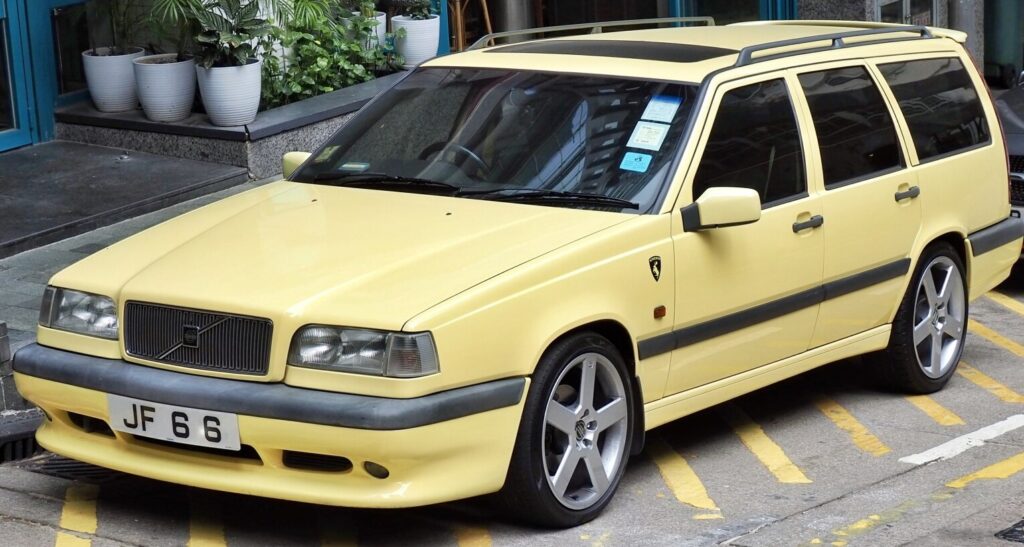
The Volvo 850 Combi 2.5 TDI, produced from 1996 to 1997, represented a significant offering in Volvo’s lineup, blending the practicality of a station wagon with the efficiency of a turbocharged diesel engine. This variant, part of the broader 850 series (internally designated the LW chassis), aimed to provide a more economical and torque-rich alternative to the gasoline-powered models, particularly appealing to buyers in Europe where diesel station wagons were highly favored. It sat within the 850 range as a mid-level offering, positioned above the base gasoline models but below the higher-performance petrol variants.
Technical Specifications
| Brand | Volvo |
| Model | 850 |
| Generation | 850 Combi (LW) |
| Type (Engine) | 2.5 TDI (140 Hp) |
| Start of production | 1996 |
| End of production | 1997 |
| Powertrain Architecture | Internal Combustion engine |
| Body type | Station wagon (estate) |
| Seats | 5 |
| Doors | 5 |
| Fuel consumption (urban) | 10 l/100 km (23.5 US mpg, 28.2 UK mpg, 10 km/l) |
| Fuel consumption (extra urban) | 6.5 l/100 km (36.2 US mpg, 43.5 UK mpg, 15.4 km/l) |
| Fuel consumption (combined) | 8 l/100 km (29.4 US mpg, 35.3 UK mpg, 12.5 km/l) |
| Fuel Type | Diesel |
| Acceleration 0 – 100 km/h | 10.1 sec |
| Acceleration 0 – 62 mph | 10.1 sec |
| Acceleration 0 – 60 mph | 9.6 sec |
| Maximum speed | 200 km/h (124.27 mph) |
| Weight-to-power ratio | 10.7 kg/Hp, 93.4 Hp/tonne |
| Weight-to-torque ratio | 5.2 kg/Nm, 193.5 Nm/tonne |
| Power | 140 Hp @ 4000 rpm |
| Power per litre | 56.9 Hp/l |
| Torque | 290 Nm @ 1900 rpm (213.89 lb.-ft. @ 1900 rpm) |
| Engine layout | Front, Transverse |
| Engine Model/Code | D5252T |
| Engine displacement | 2461 cm3 (150.18 cu. in.) |
| Number of cylinders | 5 |
| Engine configuration | Inline |
| Cylinder Bore | 81 mm (3.19 in.) |
| Piston Stroke | 95.5 mm (3.76 in.) |
| Compression ratio | 20.5:1 |
| Number of valves per cylinder | 2 |
| Fuel injection system | Direct injection |
| Engine aspiration | Turbocharger |
| Valvetrain | OHC |
| Engine oil capacity | 6 l (6.34 US qt | 5.28 UK qt) |
| Coolant | 12 l (12.68 US qt | 10.56 UK qt) |
| Kerb Weight | 1499 kg (3304.73 lbs.) |
| Max. weight | 2000 kg (4409.25 lbs.) |
| Max load | 501 kg (1104.52 lbs.) |
| Trunk (boot) space – minimum | 420 l (14.83 cu. ft.) |
| Trunk (boot) space – maximum | 1580 l (55.8 cu. ft.) |
| Fuel tank capacity | 73 l (19.28 US gal | 16.06 UK gal) |
| Length | 4720 mm (185.83 in.) |
| Width | 1761 mm (69.33 in.) |
| Height | 1415 mm (55.71 in.) |
| Wheelbase | 2670 mm (105.12 in.) |
| Front track | 1520 mm (59.84 in.) |
| Rear (Back) track | 1470 mm (57.87 in.) |
| Drivetrain Architecture | The Internal combustion engine (ICE) drives the front wheels of the vehicle. |
| Drive wheel | Front wheel drive |
| Number of gears and type of gearbox | 5 gears, manual transmission |
| Front suspension | Independent type McPherson |
| Rear suspension | Independent coil spring |
| Front brakes | Ventilated discs |
| Rear brakes | Disc |
| Assisting systems | ABS (Anti-lock braking system) |
| Steering type | Steering rack and pinion |
| Power steering | Hydraulic Steering |
| Tires size | 185/65 R15 |
| Wheel rims size | 6J x 15 |
INTRODUCTION
The Volvo 850 Combi 2.5 TDI, launched in 1996 and continuing through 1997, was a key variant within the second-generation 850 series (produced from 1991-1997). Built on Volvo’s 850 platform (1HX0/A3), the Combi – Volvo’s term for a station wagon – offered a practical and spacious alternative to traditional sedans. The introduction of the 2.5-liter TDI engine broadened the 850’s appeal, particularly in European markets where diesel engines were preferred for their fuel efficiency and torque characteristics. This model aimed to deliver a balance of practicality, economy, and reasonable performance for families and those requiring a versatile vehicle.
Powertrain & Engine Architecture
The heart of the 850 Combi 2.5 TDI is the D5252T engine, a five-cylinder, 2.5-liter diesel engine. This engine utilizes direct fuel injection, a technology that improves combustion efficiency and reduces emissions. The D5252T is a turbocharged engine, employing a Garrett turbocharger to boost power output. The engine’s overhead camshaft (OHC) valvetrain operates two valves per cylinder. The engine produces 140 horsepower at 4000 rpm and a substantial 290 Nm (213.89 lb-ft) of torque at just 1900 rpm. This high torque output, available at low engine speeds, is a hallmark of diesel engines and contributes to the 850 TDI’s effortless cruising ability. The engine is transversely mounted in the front of the vehicle. The 850 TDI was exclusively offered with a 5-speed manual transmission, designed to handle the engine’s torque output and provide a responsive driving experience.
Driving Characteristics
The 850 Combi 2.5 TDI offers a distinctly different driving experience compared to its gasoline-powered siblings. While lacking the outright acceleration of the 850 T5, the TDI compensates with strong low-end torque. This makes it particularly well-suited for everyday driving, providing ample power for overtaking and effortless cruising on highways. The 5-speed manual transmission allows for precise control, and the gear ratios are well-matched to the engine’s torque curve. Acceleration from 0-60 mph takes approximately 9.6 seconds, and the car has a top speed of 200 km/h (124 mph). The diesel engine’s weight contributes to a slightly heavier feel compared to the gasoline models, but the robust suspension effectively manages body roll. The steering is precise, providing good feedback to the driver.
Equipment & Trim Levels
The 850 Combi 2.5 TDI typically came with a reasonable level of standard equipment. Interior features included comfortable cloth upholstery, a straightforward dashboard layout, and power windows. Safety features, a Volvo hallmark, were also standard, including ABS anti-lock brakes and a driver’s airbag. Optional extras included a sunroof, upgraded audio systems, and leather upholstery. Trim levels were relatively simple, with the TDI generally positioned as a mid-range offering. The focus was on providing a practical and well-equipped vehicle without the luxury appointments of the higher-end models.
Chassis & Braking
The 850 Combi 2.5 TDI utilizes an independent McPherson strut suspension at the front and an independent coil spring suspension at the rear. This setup provides a comfortable ride and good handling characteristics. The front brakes are ventilated discs, offering strong stopping power, while the rear brakes are solid discs. The car is equipped with hydraulic power steering, providing light and precise steering control. The chassis is reinforced to handle the additional weight of the diesel engine and the demands of carrying passengers and cargo.
Market Reception & Comparison
The 850 Combi 2.5 TDI was generally well-received by automotive critics, particularly in Europe. Reviewers praised its fuel efficiency, strong torque, and spacious interior. Compared to the gasoline-powered 850 models, the TDI offered significantly better fuel economy, making it an attractive option for high-mileage drivers. However, it was acknowledged that the TDI lacked the sporty character of the T5 model. Compared to other diesel station wagons of the time, the 850 TDI offered a compelling combination of performance, practicality, and safety. Reliability was generally good, although diesel engines can be more susceptible to issues with the fuel injection system and turbocharger over time.
Legacy
The Volvo 850 Combi 2.5 TDI remains a popular choice among enthusiasts and those seeking a practical and reliable used car. The D5252T engine is known for its durability, and many examples have exceeded 200,000 miles with proper maintenance. The 850’s reputation for safety and its spacious interior continue to make it a desirable vehicle. While finding parts can sometimes be challenging, the 850 benefits from a strong aftermarket support network. Today, the 850 TDI represents a unique blend of Swedish practicality, diesel efficiency, and classic Volvo styling.
