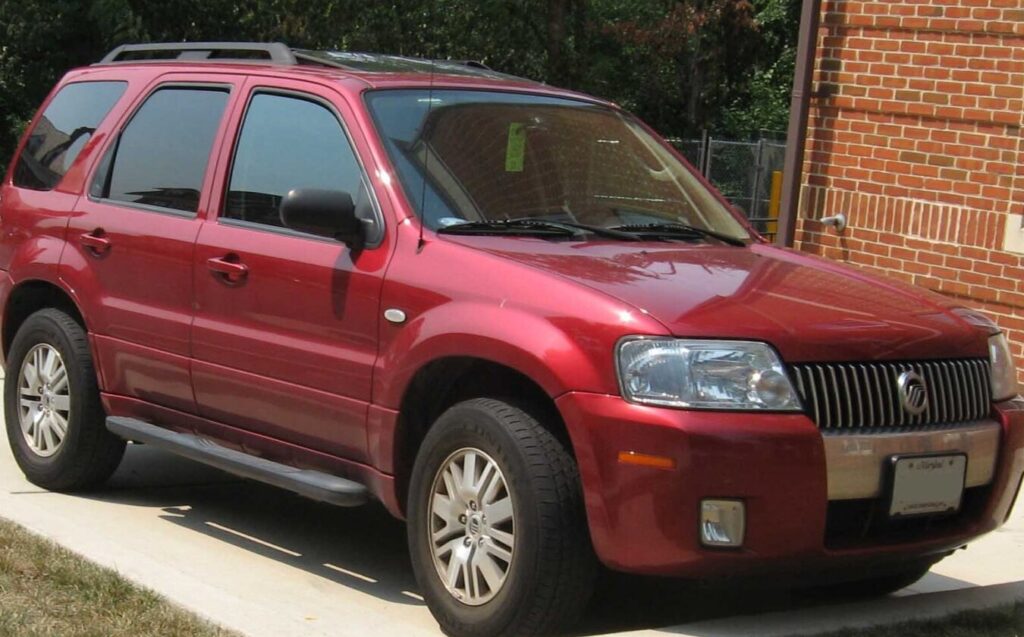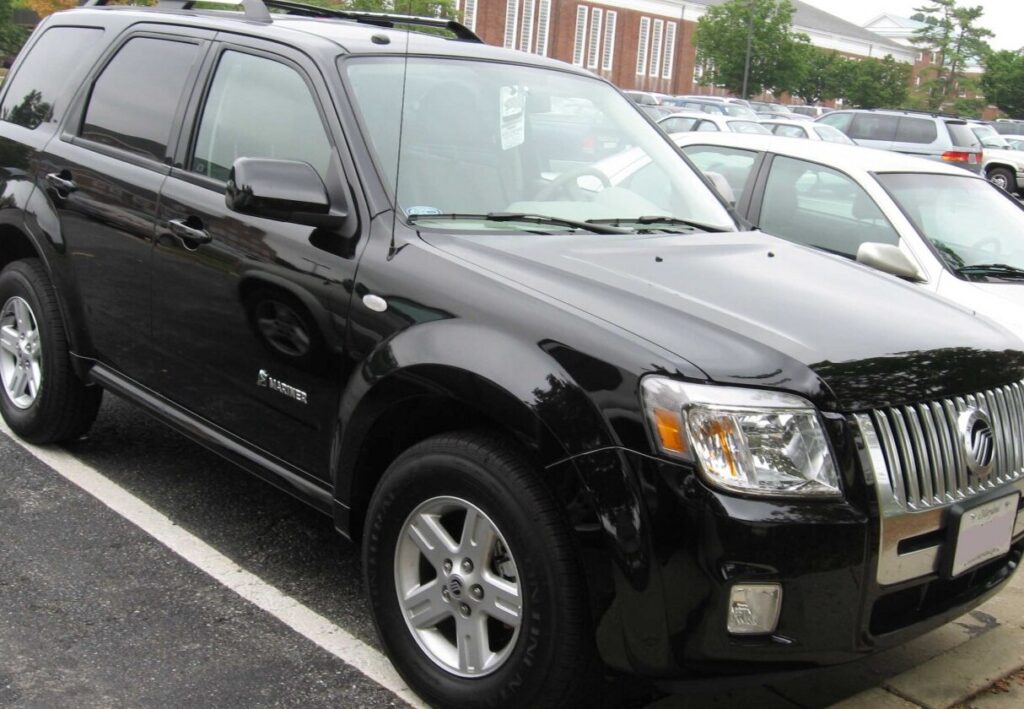
The Mercury Mariner II 2.5, equipped with a 171 horsepower 4-wheel drive automatic transmission, was a compact crossover SUV produced by the Mercury division of Ford Motor Company from 2008 to October 2010. Positioned as a slightly more upscale alternative to the Ford Escape, the Mariner II represented a mid-cycle refresh of the first-generation Mariner, offering updated styling and some revised features. This particular 2.5L 4WD Automatic configuration occupied the mid-range position within the Mariner II lineup, offering a balance between performance, fuel economy, and all-weather capability. It was designed to appeal to buyers seeking a versatile and practical vehicle for daily commuting and light-duty family transportation.
Technical Specifications
| Brand | Mercury |
| Model | Mariner |
| Generation | Mariner II |
| Type (Engine) | 2.5 (171 Hp) 4WD Automatic |
| Start of production | 2008 |
| End of production | October, 2010 |
| Powertrain Architecture | Internal Combustion engine |
| Body type | SUV, Crossover |
| Seats | 5 |
| Doors | 5 |
| Fuel consumption (urban) | 11.8-12.4 l/100 km (19.9 – 22.8 US mpg) |
| Fuel consumption (extra urban) | 9-9.4 l/100 km (26.1 – 25 US mpg) |
| Fuel consumption (combined) | 10.7 l/100 km (22 US mpg) |
| Fuel Type | Petrol (Gasoline) |
| Weight-to-power ratio | 9.3 kg/Hp |
| Weight-to-torque ratio | 6.8 kg/Nm |
| Power | 171 Hp @ 4500 rpm |
| Torque | 232 Nm @ 4500 rpm (171.11 lb.-ft. @ 4500 rpm) |
| Engine layout | Front, Transverse |
| Engine Model/Code | Duratec 25 |
| Engine displacement | 2488 cm3 (151.83 cu. in.) |
| Number of cylinders | 4 |
| Engine configuration | Inline |
| Cylinder Bore | 89 mm (3.5 in.) |
| Piston Stroke | 100 mm (3.94 in.) |
| Compression ratio | 9.7:1 |
| Number of valves per cylinder | 4 |
| Fuel injection system | Multi-port manifold injection |
| Engine aspiration | Naturally aspirated |
| Engine oil capacity | 5 l (5.28 US qt | 4.4 UK qt) |
| Coolant capacity | 7 l (7.4 US qt | 6.16 UK qt) |
| Kerb Weight | 1584 kg (3492.12 lbs.) |
| Max. weight | 2059 kg (4539.32 lbs.) |
| Max load | 475 kg (1047.2 lbs.) |
| Trunk (boot) space – minimum | 889 l (31.39 cu. ft.) |
| Trunk (boot) space – maximum | 1903 l (67.2 cu. ft.) |
| Fuel tank capacity | 62 l (16.38 US gal | 13.64 UK gal) |
| Permitted trailer load with brakes (12%) | 680 kg (1499.14 lbs.) |
| Length | 4448 mm (175.12 in.) |
| Width | 1806 mm (71.1 in.) |
| Width with mirrors folded | 1979 mm (77.91 in.) |
| Width including mirrors | 2065 mm (81.3 in.) |
| Height | 1725-1778 mm (67.91 – 70 in.) |
| Wheelbase | 2619 mm (103.11 in.) |
| Front track | 1542 mm (60.71 in.) |
| Rear track | 1529 mm (60.2 in.) |
| Ride height (ground clearance) | 206 mm (8.11 in.) |
| Minimum turning circle | 11.2 m (36.75 ft.) |
| Drivetrain Architecture | All wheel drive (4×4) |
| Number of gears | 6 |
| Type of gearbox | automatic transmission |
| Front suspension | Independent, McPherson with coil spring and anti-roll bar |
| Rear suspension | Independent multi-link spring suspension with stabilizer |
| Front brakes | Ventilated discs, 302 mm |
| Rear brakes | Drum, 254 mm |
| Assisting systems | ABS (Anti-lock braking system) |
| Steering type | Steering rack and pinion |
| Power steering | Electric |
| Tires size | 235/70 R16; 225/65 R17 |
| Wheel rims size | 16; 17 |
Powertrain & Engine Architecture
The Mercury Mariner II 2.5 4WD Automatic utilized Ford’s Duratec 25 engine, a 2.5-liter inline-four cylinder powerplant. This engine, part of the Duratec family, featured a cast iron block and aluminum cylinder head, incorporating a double overhead camshaft (DOHC) valvetrain with four valves per cylinder. Fuel delivery was managed by a multi-port fuel injection system. The engine produced 171 horsepower at 4500 rpm and 232 Nm (171 lb-ft) of torque at the same engine speed. The engine’s relatively simple design prioritized reliability and affordability over outright performance. The engine was mated to a six-speed automatic transmission, providing smooth shifts and adequate acceleration for everyday driving. The 4WD system was an on-demand system, primarily driving the front wheels but engaging the rear wheels when wheel slip was detected, enhancing traction in inclement weather or on loose surfaces.
Driving Characteristics
The 2.5L engine and six-speed automatic combination in the Mariner II delivered adequate, though not particularly sporty, performance. Acceleration was sufficient for merging onto highways and passing slower traffic, but the vehicle wasn’t designed for quick bursts of speed. The automatic transmission was tuned for comfort and fuel efficiency, with gear ratios optimized for relaxed cruising. Compared to the available V6 engine option in the Mariner II, this 2.5L version offered noticeably less power, resulting in slower acceleration and a less engaging driving experience. However, the 2.5L engine provided better fuel economy and a lower purchase price, making it an attractive option for budget-conscious buyers. The 4WD system provided enhanced stability and control in slippery conditions, but added some weight and complexity compared to the front-wheel drive models.
Equipment & Trim Levels
The Mariner II 2.5 4WD Automatic typically came standard with features such as air conditioning, power windows and locks, a CD player with auxiliary input, and cloth upholstery. Higher trim levels offered upgrades like leather upholstery, a sunroof, upgraded audio systems, and alloy wheels. Safety features included anti-lock brakes (ABS) and front airbags. Optional extras included a navigation system, rear parking sensors, and a power liftgate. The interior design was functional and straightforward, prioritizing practicality over luxury. The Mariner II aimed to provide a comfortable and convenient driving experience for families and individuals alike.
Chassis & Braking
The Mariner II utilized an independent front suspension with McPherson struts and a coil spring, coupled with an independent multi-link rear suspension. This setup provided a comfortable ride quality and decent handling characteristics. The front brakes were ventilated discs, while the rear brakes were drum brakes. The braking system was adequate for the vehicle’s weight and performance, and the inclusion of ABS helped to maintain control during emergency braking situations. Stabilizer bars were fitted to both the front and rear suspensions to reduce body roll during cornering.
Market Reception & Comparison
The Mercury Mariner II 2.5 4WD Automatic received generally positive reviews for its practicality, fuel efficiency, and comfortable ride. Critics noted that the 2.5L engine was adequate for most driving situations, but lacked the power of the optional V6. Compared to competitors like the Honda CR-V and Toyota RAV4, the Mariner II offered a competitive price point and a spacious interior. However, some reviewers criticized the Mariner II’s interior materials and overall refinement. Fuel economy was rated at around 22 mpg combined, which was competitive for its class at the time. Reliability was generally considered to be average, with some reports of minor issues with the automatic transmission and electrical systems.
Legacy
The Mercury Mariner II, and specifically the 2.5L 4WD Automatic variant, represents a solid, if unremarkable, entry in the early 2000s compact crossover segment. The Duratec 2.5 engine is known for its durability and relatively low maintenance costs, making these vehicles an affordable option on the used car market. While not a performance standout, the Mariner II offered a practical and reliable transportation solution for many buyers. Today, these vehicles are often found with relatively high mileage, but well-maintained examples can still provide years of service. The Mariner II’s legacy lies in its role as a versatile and affordable crossover SUV that appealed to a broad range of buyers.