Technical Specifications
| Brand | Opel |
| Model | Insignia |
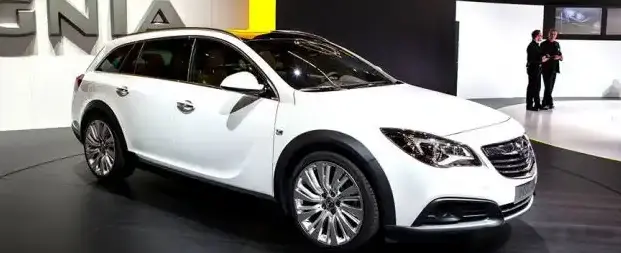
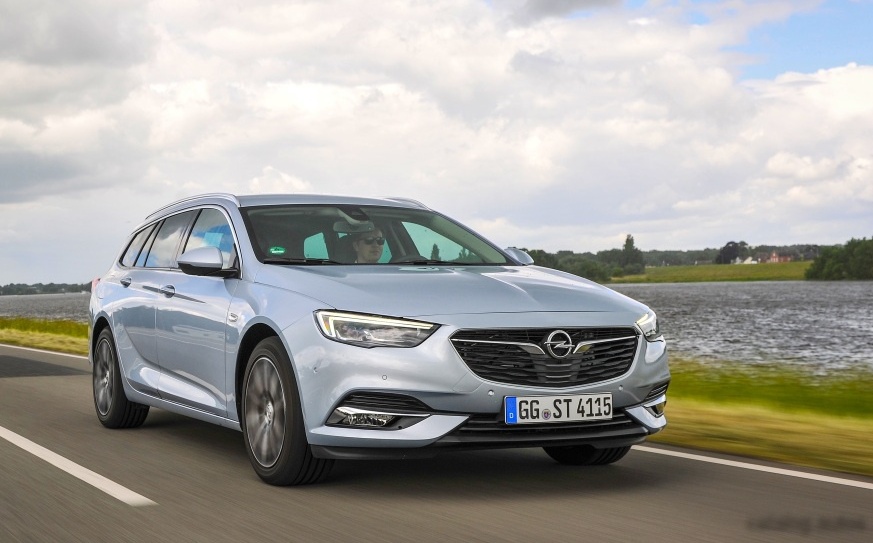
| Generation | Insignia Sports Tourer (B) |
| Type (Engine) | 2.0 Turbo (260 Hp) AWD Automatic |
| Start of production | June, 2017 |
| End of production | June, 2018 |
| Powertrain Architecture | Internal Combustion engine |
| Body type | Station wagon (estate) |
| Seats | 5 |
| Doors | 5 |
| Fuel consumption (economy) – urban | 11.5 l/100 km (20.5 US mpg, 24.6 UK mpg, 8.7 km/l) |
| Fuel consumption (economy) – extra urban | 7.1 l/100 km (33.1 US mpg, 39.8 UK mpg, 14.1 km/l) |
| Fuel consumption (economy) – combined | 8.7 l/100 km (27 US mpg, 32.5 UK mpg, 11.5 km/l) |
| CO2 emissions | 199 g/km |
| Fuel Type | Petrol (Gasoline) |
| Acceleration 0 – 100 km/h | 7.5 sec |
| Acceleration 0 – 62 mph | 7.5 sec |
| Acceleration 0 – 60 mph | 7.1 sec |
| Maximum speed | 245 km/h (152.24 mph) |
| Emission standard | Euro 6 |
| Weight-to-power ratio | 6.2 kg/Hp, 161.7 Hp/tonne |
| Weight-to-torque ratio | 4 kg/Nm, 248.8 Nm/tonne |
| Power | 260 Hp @ 5300 rpm |
| Power per litre | 130.1 Hp/l |
| Torque | 400 Nm @ 2500-4000 rpm (295.02 lb.-ft. @ 2500-4000 rpm) |
| Engine layout | Front, Transverse |
| Engine Model/Code | B20NFT |
| Engine displacement | 1998 cm3 (121.93 cu. in.) |
| Number of cylinders | 4 |
| Engine configuration | Inline |
| Cylinder Bore | 86 mm (3.39 in.) |
| Piston Stroke | 86 mm (3.39 in.) |
| Compression ratio | 9.5:1 |
| Number of valves per cylinder | 4 |
| Fuel injection system | Direct injection |
| Engine aspiration | Turbocharger, Intercooler |
| Valvetrain | DOHC |
| Engine oil capacity | 5.7 l (6.02 US qt | 5.02 UK qt) |
| Coolant | 5 l (5.28 US qt | 4.4 UK qt) |
| Kerb Weight | 1608 kg (3545.03 lbs.) |
| Max. weight | 2295 kg (5059.61 lbs.) |
| Max load | 687 kg (1514.58 lbs.) |
| Trunk (boot) space – minimum | 560 l (19.78 cu. ft.) |
| Trunk (boot) space – maximum | 1665 l (58.8 cu. ft.) |
| Fuel tank capacity | 62 l (16.38 US gal | 13.64 UK gal) |
| Max. roof load | 100 kg (220.46 lbs.) |
| Permitted trailer load with brakes (12%) | 2200 kg (4850.17 lbs.) |
| Permitted trailer load without brakes | 750 kg (1653.47 lbs.) |
| Length | 4986 mm (196.3 in.) |
| Width | 1863 mm (73.35 in.) |
| Width with mirrors folded | 1941 mm (76.42 in.) |
| Width including mirrors | 2093 mm (82.4 in.) |
| Height | 1500 mm (59.06 in.) |
| Wheelbase | 2829 mm (111.38 in.) |
| Front track | 1607 mm (63.27 in.) |
| Rear (Back) track | 1610 mm (63.39 in.) |
| Front overhang | 990 mm (38.98 in.) |
| Rear overhang | 1167 mm (45.94 in.) |
| Minimum turning circle (turning diameter) | 11.74 m (38.52 ft.) |
| Drive wheel | All wheel drive (4×4) |
| Number of gears and type of gearbox | 8 gears, automatic transmission |
| Front suspension | Independent type McPherson |
| Front brakes | Ventilated discs |
| Rear brakes | Disc |
| Assisting systems | ABS (Anti-lock braking system) |
| Steering type | Steering rack and pinion |
| Power steering | Electric Steering |
| Tires size | 245/35 R20 |
| Wheel rims size | 8.5 J x 20 |
The Opel Insignia Sports Tourer (B) 2.0 Turbo 260 hp AWD Automatic, launched in mid-2017, was a key variant within the second generation of Opel’s flagship model. The “B” designation signifies the second generation, building upon the success of the original Insignia launched in 2008. This particular version aimed to provide a premium experience within the Sports Tourer (wagon) body style, offering a compelling combination of performance, space, and all-weather capability. It was primarily marketed in Europe, where the station wagon body style remains popular, and competed directly with offerings from Volkswagen (Passat Variant), Ford (Mondeo Wagon), and Skoda (Superb Combi).
Powertrain & Engine Architecture
At the heart of this Insignia variant lies the B20NFT engine, a 2.0-liter turbocharged inline-four cylinder gasoline engine. This engine is part of Opel’s family of direct-injection engines, utilizing a multi-point direct injection system for precise fuel delivery and improved efficiency. The engine boasts a relatively high compression ratio of 9.5:1, contributing to its power output. The turbocharger, coupled with an intercooler, provides increased air density for enhanced combustion. The engine’s DOHC (Dual Overhead Camshaft) valvetrain further optimizes airflow and engine breathing. Paired with this engine is an eight-speed automatic transmission, providing smooth and efficient gear changes. This transmission was designed to handle the engine’s 400 Nm (295 lb-ft) of torque and deliver power effectively to all four wheels via Opel’s all-wheel-drive system.
Driving Characteristics
The 260 hp and 400 Nm of torque delivered by the B20NFT engine, combined with the all-wheel-drive system, resulted in a responsive and capable driving experience. Acceleration from 0 to 100 km/h (0-62 mph) was achieved in 7.5 seconds, making it one of the quicker options in the Insignia lineup. The eight-speed automatic transmission was well-tuned, offering quick shifts and contributing to a comfortable ride. Compared to the lower-powered 1.6-liter diesel or gasoline versions, this 2.0-liter turbo offered significantly more punch, particularly during overtaking maneuvers. While not as overtly sporty as some performance-focused wagons, the Insignia 2.0 Turbo provided a good balance between performance and everyday usability. The all-wheel-drive system enhanced traction, especially in inclement weather conditions, providing a secure and confident driving experience.
Equipment & Trim Levels
The 2.0 Turbo AWD Automatic variant typically came with a high level of standard equipment. This included features such as leather upholstery, heated front seats, a touchscreen infotainment system with navigation, automatic climate control, and a suite of safety features including lane departure warning, forward collision alert, and adaptive cruise control. Optional extras included a panoramic sunroof, premium sound system, and advanced driver-assistance systems like a 360-degree camera. The interior design was modern and well-appointed, with a focus on comfort and ergonomics. Trim levels varied slightly depending on the specific market, but generally, this variant represented a near-top-of-the-line offering.
Chassis & Braking
The Insignia Sports Tourer (B) featured an independent McPherson strut suspension at the front and a multi-link suspension at the rear, providing a comfortable and controlled ride. The all-wheel-drive system added to the vehicle’s stability and handling characteristics. Braking duties were handled by ventilated discs at the front and solid discs at the rear, providing adequate stopping power. The inclusion of ABS (Anti-lock Braking System) and electronic stability control further enhanced safety. The chassis was designed to balance ride comfort with handling precision, making it suitable for both long-distance cruising and spirited driving.
Market Reception & Comparison
The Opel Insignia Sports Tourer 2.0 Turbo AWD Automatic was generally well-received by automotive critics. It was praised for its spacious interior, comfortable ride, and strong performance. However, some reviewers noted that the styling was somewhat conservative compared to some of its rivals. Fuel economy, while respectable, was not a standout feature, with combined consumption figures around 8.7 l/100 km (27 US mpg). Compared to the lower-powered diesel variants, the 2.0 Turbo offered a more engaging driving experience but at the cost of fuel efficiency. Against competitors like the Volkswagen Passat Variant, the Insignia offered a compelling value proposition, often undercutting the VW on price while offering similar levels of equipment and performance.
Legacy
The B20NFT engine, while generally reliable, is known to require regular maintenance, particularly regarding oil changes and timing chain inspections. The eight-speed automatic transmission has also proven to be relatively durable, but proper fluid changes are crucial for longevity. In the used car market, the Insignia Sports Tourer 2.0 Turbo AWD Automatic remains a popular choice for buyers seeking a spacious, comfortable, and capable wagon. Its combination of performance, practicality, and features makes it a compelling alternative to more mainstream offerings. However, potential buyers should be aware of the importance of maintaining a comprehensive service history to ensure the continued reliability of this powertrain.