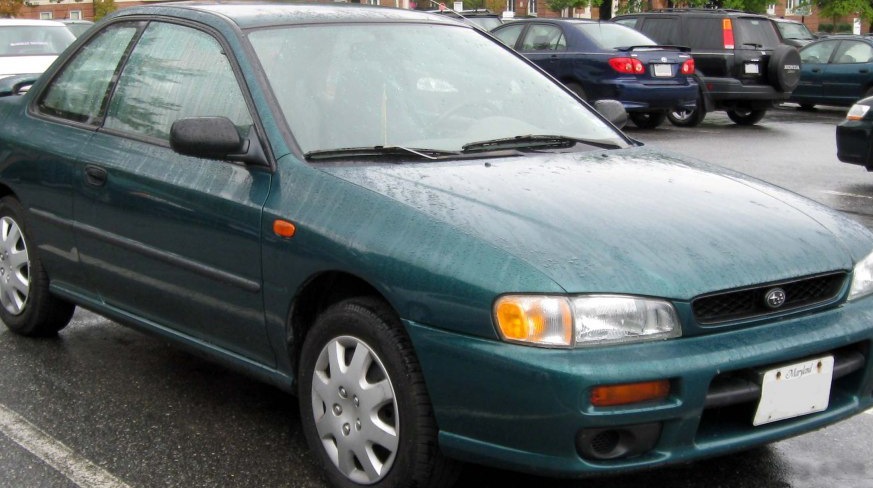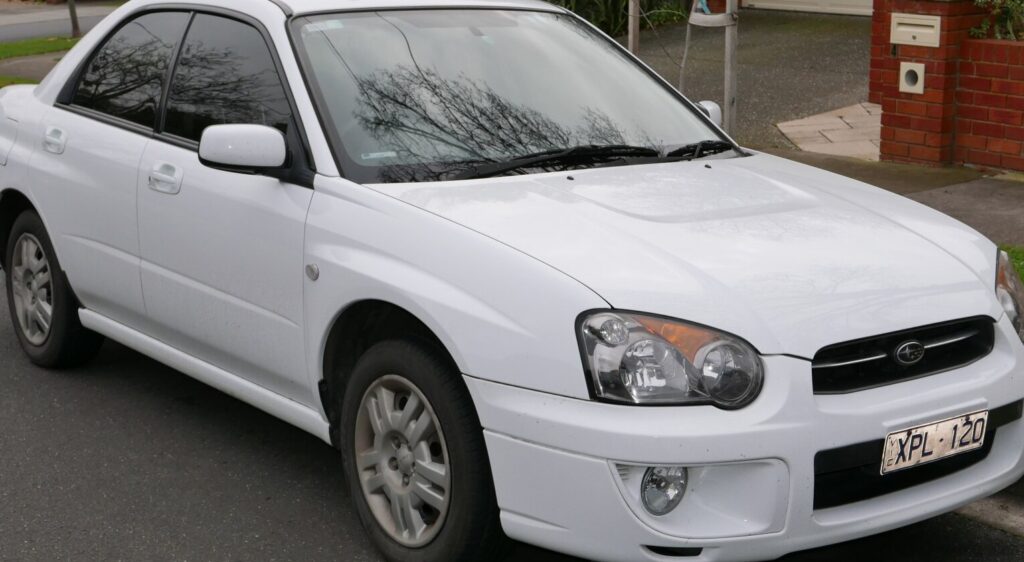
The Subaru Impreza II, specifically the RS 2.5 model produced from 2002 to 2005, represented a significant evolution of Subaru’s popular compact car. This facelifted version of the second-generation Impreza (codenamed GD) aimed to refine the blend of practicality, performance, and all-wheel-drive capability that had become synonymous with the Impreza nameplate. The RS 2.5, positioned as a sporty trim level, offered a step up in power and handling compared to the base models, while remaining more accessible than the high-performance WRX and STI variants. It was primarily marketed towards enthusiasts seeking a capable and engaging driving experience in a practical package, and found a solid following in North America and Europe.
Technical Specifications
| Brand | Subaru |
| Model | Impreza |
| Generation | Impreza II (facelift 2002) |
| Type | RS 2.5 (165 Hp) AWD |
| Start of production | 2002 |
| End of production | 2005 |
| Powertrain Architecture | Internal Combustion engine |
| Body type | Sedan |
| Seats | 5 |
| Doors | 4 |
| Fuel consumption (urban) | 10.2 l/100 km (23.1 US mpg) |
| Fuel consumption (extra urban) | 7.8 l/100 km (30.2 US mpg) |
| Fuel Type | Petrol (Gasoline) |
| Maximum speed | 203 km/h (126.14 mph) |
| Weight-to-power ratio | 8.2 kg/Hp |
| Weight-to-torque ratio | 6 kg/Nm |
| Power | 165 Hp @ 5600 rpm |
| Power per litre | 67.2 Hp/l |
| Torque | 225 Nm @ 4000 rpm (165.95 lb.-ft. @ 4000 rpm) |
| Engine layout | Front, Longitudinal |
| Engine Model/Code | EJ251 |
| Engine displacement | 2457 cm3 (149.94 cu. in.) |
| Number of cylinders | 4 |
| Engine configuration | Boxer |
| Cylinder Bore | 99.5 mm (3.92 in.) |
| Piston Stroke | 79 mm (3.11 in.) |
| Compression ratio | 10:1 |
| Number of valves per cylinder | 4 |
| Fuel injection system | Multi-port manifold injection |
| Engine aspiration | Naturally aspirated engine |
| Valvetrain | SOHC |
| Engine oil capacity | 4.5 l (4.76 US qt | 3.96 UK qt) |
| Coolant capacity | 7 l (7.4 US qt | 6.16 UK qt) |
| Kerb Weight | 1348 kg (2971.83 lbs.) |
| Trunk (boot) space | 311 l (10.98 cu. ft.) |
| Fuel tank capacity | 50 l (13.21 US gal | 11 UK gal) |
| Length | 4415 mm (173.82 in.) |
| Width | 1740 mm (68.5 in.) |
| Height | 1440 mm (56.69 in.) |
| Wheelbase | 2525 mm (99.41 in.) |
| Front track | 1486 mm (58.5 in.) |
| Rear track | 1481 mm (58.31 in.) |
| Drag coefficient (Cd) | 0.33 |
| Drivetrain Architecture | All wheel drive (4×4) |
| Number of gears | 5 |
| Gearbox type | Manual transmission |
| Front suspension | Spring Strut, Transverse stabilizer |
| Rear suspension | Spring Strut, Transverse stabilizer |
| Front brakes | Ventilated discs |
| Rear brakes | Disc |
| Assisting systems | ABS (Anti-lock braking system) |
| Steering type | Steering rack and pinion |
| Power steering | Hydraulic Steering |
| Tires size | 205/55 R16 |
| Wheel rims size | 6.5J x 16 |
Powertrain & Engine Architecture
The heart of the RS 2.5 was the EJ251 2.5-liter naturally aspirated boxer-four engine. This engine, a hallmark of Subaru’s engineering philosophy, featured horizontally opposed pistons, which contributed to a lower center of gravity and reduced engine vibrations. The EJ251 utilized a single overhead camshaft (SOHC) design and multi-port fuel injection. The engine produced 165 horsepower at 5600 rpm and 166 lb-ft of torque at 4000 rpm. This engine code was known for its relative reliability, though preventative maintenance, particularly regarding oil changes, was crucial. The RS 2.5 was exclusively offered with a five-speed manual transmission, providing a direct and engaging driving experience. The transmission was well-matched to the engine’s characteristics, offering smooth shifts and effective power delivery.
Driving Characteristics
The RS 2.5 offered a noticeable step up in performance compared to the base Impreza models. While not as quick as the turbocharged WRX, the RS 2.5 provided a more linear and predictable power delivery. The five-speed manual transmission allowed drivers to fully utilize the engine’s torque band, making it a capable performer in everyday driving situations. The all-wheel-drive system provided excellent traction in various weather conditions, enhancing both safety and confidence. The suspension, while tuned for comfort, offered a reasonably sporty feel, with minimal body roll during cornering. Compared to the WRX, the RS 2.5 prioritized refinement and ease of use over outright performance.
Equipment & Trim Levels
The RS 2.5 typically came standard with features such as air conditioning, power windows and locks, and a basic audio system. Interior upholstery was typically cloth, with a focus on durability rather than luxury. Optional extras included a sunroof, upgraded audio systems, and alloy wheels. The dashboard layout was functional and straightforward, prioritizing usability over aesthetic flair. The RS 2.5 aimed to provide a well-equipped, yet affordable, sporty compact car.
Chassis & Braking
The RS 2.5 utilized a MacPherson strut suspension setup at both the front and rear, incorporating a transverse stabilizer bar to reduce body roll. The braking system consisted of ventilated discs at the front and solid discs at the rear. Anti-lock brakes (ABS) were standard, enhancing safety during emergency braking situations. The chassis was reinforced compared to the base Impreza models to handle the increased power and provide a more stable driving experience. The RS 2.5’s suspension tuning struck a balance between comfort and handling, making it suitable for both daily commuting and spirited driving.
Market Reception & Comparison
The RS 2.5 was generally well-received by automotive critics, who praised its balanced performance, all-wheel-drive capability, and practicality. It was often seen as a compelling alternative to front-wheel-drive sporty compact cars. Fuel economy was respectable for its class, averaging around 23 mpg in the city and 30 mpg on the highway. Compared to the WRX, the RS 2.5 offered better fuel economy and lower insurance costs, but lacked the turbocharged power and aggressive styling. Compared to the base Impreza models, the RS 2.5 provided a significant upgrade in performance and handling, making it a worthwhile investment for driving enthusiasts.
Legacy
The EJ251 engine, while not as iconic as the turbocharged EJ20 engines found in the WRX and STI, proved to be a reliable and durable powerplant when properly maintained. Today, the RS 2.5 is gaining recognition as a desirable classic Subaru, appreciated for its simplicity, engaging driving experience, and all-wheel-drive capability. Well-maintained examples are becoming increasingly sought after by collectors and enthusiasts. The RS 2.5 represents a sweet spot in the Impreza lineup, offering a blend of performance, practicality, and affordability that continues to appeal to drivers today. Its relative rarity compared to other Impreza trims further contributes to its growing collectibility.