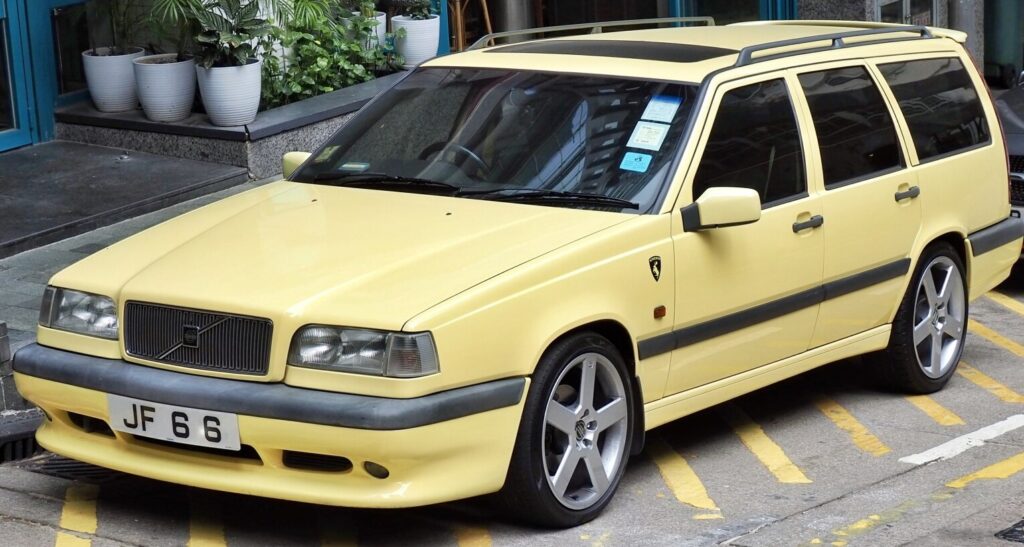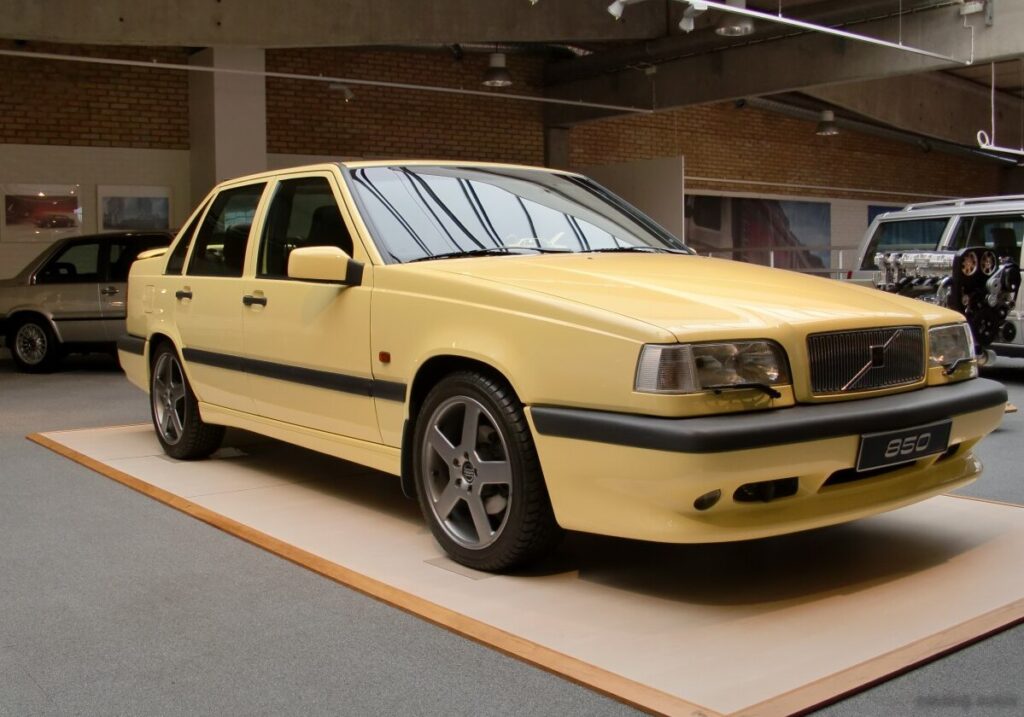
The Volvo 850 2.0 20V Turbo, produced between 1993 and 1997, represents a pivotal moment in Volvo’s history. This variant, often referred to as the LS trim in the US market, was a key component of the first-generation 850 series (designated as the 850 GLT in Europe). It marked Volvo’s departure from traditionally conservative designs and a move towards a more dynamic and performance-oriented image. The 850 series, built on Volvo’s new P80 platform, was a significant investment for the company and aimed to compete directly with German and Japanese rivals in the mid-size segment. The 2.0 20V Turbo model specifically targeted buyers seeking a blend of luxury, safety, and respectable performance.
Technical Specifications
| Brand | Volvo |
| Model | 850 |
| Generation | 850 (LS) |
| Type (Engine) | 2.0 20V Turbo (210 Hp) |
| Start of production | 1993 |
| End of production | 1997 |
| Powertrain Architecture | Internal Combustion engine |
| Body type | Sedan |
| Fuel Type | Petrol (Gasoline) |
| Power | 210 Hp |
| Engine Model/Code | B5204T |
| Engine aspiration | Turbocharger |
| Engine oil capacity | 5.3 l (5.6 US qt | 4.66 UK qt) |
| Coolant capacity | 7.2 l (7.61 US qt | 6.34 UK qt) |
Powertrain & Engine Architecture
The heart of the 850 2.0 20V Turbo is the B5204T engine, a 1,984 cc (121 cubic inch) inline-four cylinder powerplant. This engine is notable for its cast iron block and aluminum cylinder head, a common configuration for durability and weight reduction. The “20V” designation refers to the engine’s five valves per cylinder – three intake and two exhaust – a feature intended to improve breathing and overall efficiency. The turbocharger, a Mitsubishi TD04HL-13C, is a key component, providing a significant boost in power output. Fuel delivery is managed by Bosch Motronic 3.1 engine management system, utilizing sequential fuel injection. This system carefully controls fuel delivery based on various sensor inputs, optimizing performance and minimizing emissions. The engine’s compression ratio is 9.0:1. The B5204T engine was known for its robust construction and ability to handle increased boost pressures with relatively minor modifications, making it a popular choice for enthusiasts.
Driving Characteristics
The 850 2.0 20V Turbo offered a noticeable step up in performance compared to the naturally aspirated 850 models. With 210 horsepower and approximately 221 lb-ft of torque, the turbocharged engine provided brisk acceleration. While not a sports car, the 850 Turbo could achieve 0-60 mph times in the low-to-mid 7-second range, depending on transmission and drivetrain configuration. The turbocharger does exhibit some lag, particularly at lower RPMs, but once it spools up, the power delivery is strong and linear. The automatic transmission, a four-speed unit sourced from Aisin-Warner, was geared for comfortable cruising rather than outright performance. It provided smooth shifts but didn’t offer the same level of driver engagement as the available five-speed manual transmission. Compared to the later 850 T5 models, the 2.0 20V Turbo offered a slightly less aggressive driving experience, prioritizing refinement and usability over raw speed.
Equipment & Trim Levels
The 850 LS (Luxury Sedan) trim, as it was typically marketed in the US, came standard with a generous array of features. These included leather upholstery, power-adjustable front seats, a premium sound system, and air conditioning. Cruise control, power windows and locks, and heated mirrors were also standard. Optional extras included a sunroof, upgraded audio systems, and a rear window wiper. The interior design was typically Scandinavian – functional, comfortable, and understated. The dashboard layout was clean and intuitive, with easy-to-read gauges. The LS trim distinguished itself from the base 850 models with its more luxurious appointments and added convenience features.
Chassis & Braking
The 850 series featured an independent suspension system all around, with MacPherson struts at the front and a multi-link setup at the rear. This suspension design provided a comfortable ride while maintaining good handling characteristics. The 2.0 20V Turbo models typically came equipped with stabilizer bars on both the front and rear axles to reduce body roll during cornering. Braking duties were handled by ventilated disc brakes at the front and solid disc brakes at the rear. Anti-lock braking system (ABS) was standard equipment, enhancing safety and control. The chassis was designed with safety in mind, incorporating reinforced structures and crumple zones to protect occupants in the event of a collision.
Market Reception & Comparison
The Volvo 850 2.0 20V Turbo was generally well-received by automotive critics. It was praised for its blend of performance, safety, and comfort. Reviewers noted the engine’s strong power output and the car’s overall refinement. However, some criticized the automatic transmission for its lack of responsiveness and the turbocharger lag. Compared to its rivals, such as the BMW 3 Series and the Audi A4, the 850 offered a different driving experience – more focused on comfort and safety than outright sportiness. Fuel economy was respectable for the time, averaging around 20-24 mpg in mixed driving. Reliability was generally good, although some owners reported issues with the turbocharger and the automatic transmission over the long term.
Legacy
The Volvo 850 2.0 20V Turbo played a significant role in reshaping Volvo’s image. It demonstrated that Volvo could build cars that were both safe and enjoyable to drive. The B5204T engine proved to be a durable and capable powerplant, and many examples are still on the road today. In the used car market, the 850 2.0 20V Turbo remains a popular choice for enthusiasts and those seeking a reliable and affordable mid-size sedan. Parts availability is generally good, and the car’s relatively simple mechanical design makes it relatively easy to maintain. The 850 series paved the way for Volvo’s subsequent models, such as the S70 and S80, which continued to build on the brand’s reputation for safety, quality, and innovation. The 850 Turbo, in particular, is remembered as a turning point for Volvo, marking its transition from a conservative automaker to a more dynamic and performance-oriented brand.