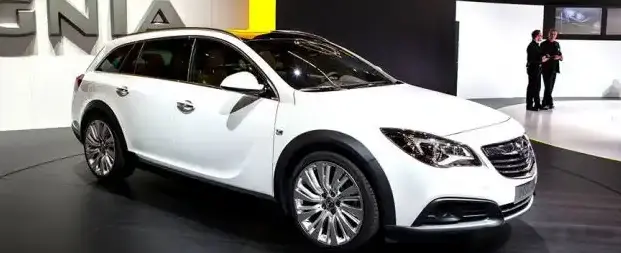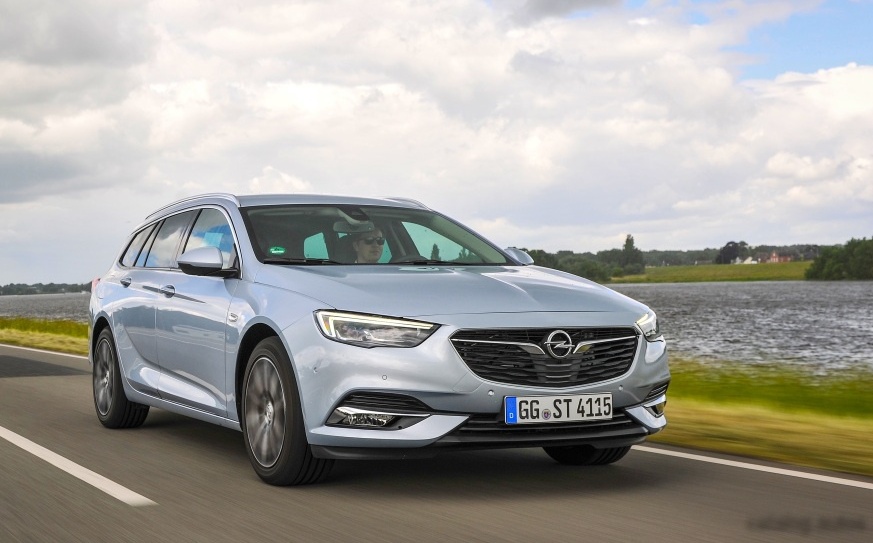
The Opel Insignia Sports Tourer (B) 2.0d (170 hp) 4×4, produced between April 2018 and February 2020, represents a compelling blend of practicality, performance, and technology within the Insignia B generation. Positioned as a mid-range offering in the Sports Tourer (estate) lineup, this variant catered to buyers seeking all-weather capability and reasonable fuel economy without sacrificing space or comfort. It built upon the success of the original Insignia, aiming to compete with established players in the European market like the Ford Mondeo, Volkswagen Passat, and Skoda Superb. This model was primarily sold in Europe, where station wagons remain a popular body style.
Technical Specifications
| Brand | Opel |
| Model | Insignia |
| Generation | Insignia Sports Tourer (B) |
| Type (Engine) | 2.0d (170 Hp) 4×4 |
| Start of production | April, 2018 |
| End of production | February, 2020 |
| Powertrain Architecture | Internal Combustion engine |
| Body type | Station wagon (estate) |
| Seats | 5 |
| Doors | 5 |
| Fuel consumption (urban) | 7.8 l/100 km (30.2 US mpg, 36.2 UK mpg, 12.8 km/l) |
| Fuel consumption (extra urban) | 4.9-5.2 l/100 km (48 – 45.2 US mpg, 57.6 – 54.3 UK mpg, 20.4 – 19.2 km/l) |
| Fuel consumption (combined) | 5.9-6.2 l/100 km (39.9 – 37.9 US mpg, 47.9 – 45.6 UK mpg, 16.9 – 16.1 km/l) |
| CO2 emissions | 156-162 g/km |
| Fuel Type | Diesel |
| Acceleration 0 – 100 km/h | 9.9 sec |
| Acceleration 0 – 62 mph | 9.9 sec |
| Acceleration 0 – 60 mph | 9.4 sec |
| Maximum speed | 220 km/h (136.7 mph) |
| Emission standard | Euro 6d-Temp |
| Weight-to-power ratio | 9.7 kg/Hp, 103.6 Hp/tonne |
| Weight-to-torque ratio | 4.1 kg/Nm, 243.8 Nm/tonne |
| Power | 170 Hp @ 3750 rpm |
| Torque | 400 Nm @ 1750-2500 rpm (295.02 lb.-ft. @ 1750-2500 rpm) |
| Engine layout | Front, Transverse |
| Engine Model/Code | D20DTH |
| Engine displacement | 1956 cm3 (119.36 cu. in.) |
| Number of cylinders | 4 |
| Engine configuration | Inline |
| Cylinder Bore | 83 mm (3.27 in.) |
| Piston Stroke | 90.4 mm (3.56 in.) |
| Compression ratio | 16.5:1 |
| Number of valves per cylinder | 4 |
| Fuel injection system | Diesel Commonrail |
| Engine aspiration | Turbocharger, Intercooler |
| Engine oil capacity | 4.9 l (5.18 US qt | 4.31 UK qt) |
| Coolant | 5.9 l (6.23 US qt | 5.19 UK qt) |
| Kerb Weight | 1641 kg (3617.79 lbs.) |
| Max. weight | 2330 kg (5136.77 lbs.) |
| Max load | 689 kg (1518.98 lbs.) |
| Trunk (boot) space – minimum | 560 l (19.78 cu. ft.) |
| Trunk (boot) space – maximum | 1660 l (58.62 cu. ft.) |
| Fuel tank capacity | 62 l (16.38 US gal | 13.64 UK gal) |
| AdBlue tank | 15 l (3.96 US gal | 3.3 UK gal) |
| Max. roof load | 100 kg (220.46 lbs.) |
| Permitted trailer load with brakes (12%) | 2200 kg (4850.17 lbs.) |
| Permitted trailer load without brakes | 750 kg (1653.47 lbs.) |
| Permitted towbar download | 90 kg (198.42 lbs.) |
| Length | 4986 mm (196.3 in.) |
| Width | 1863 mm (73.35 in.) |
| Width with mirrors folded | 1941 mm (76.42 in.) |
| Width including mirrors | 2093 mm (82.4 in.) |
| Height | 1500 mm (59.06 in.) |
| Wheelbase | 2829 mm (111.38 in.) |
| Front track | 1607 mm (63.27 in.) |
| Rear (Back) track | 1610 mm (63.39 in.) |
| Front overhang | 990 mm (38.98 in.) |
| Rear overhang | 1167 mm (45.94 in.) |
| Minimum turning circle | 11.74 m (38.52 ft.) |
| Drive wheel | All wheel drive (4×4) |
| Number of gears and type of gearbox | 6 gears, manual transmission |
| Front brakes | Disc |
| Rear brakes | Disc |
Powertrain & Engine Architecture
The heart of the Insignia Sports Tourer 2.0d (170 hp) 4×4 is the D20DTH engine, a 1.956-liter inline-four cylinder diesel. This engine belongs to Opel’s family of modern diesel engines, utilizing a common-rail direct injection system for optimized fuel delivery and combustion. The D20DTH features a turbocharger with an intercooler, boosting power output to 170 horsepower at 3750 rpm and a substantial 400 Nm (295 lb-ft) of torque between 1750 and 2500 rpm. The engine’s architecture includes four valves per cylinder and a compression ratio of 16.5:1. A particulate filter is included to meet stringent Euro 6d-Temp emission standards. The 6-speed manual transmission was standard, providing a balance between fuel efficiency and driver engagement.
Driving Characteristics
The 170 hp diesel engine, coupled with the all-wheel-drive system, provided the Insignia Sports Tourer with confident handling and traction in various conditions. While not a performance-oriented variant, the 2.0d offered adequate acceleration, achieving 0-100 km/h (0-62 mph) in approximately 9.9 seconds. The torque-rich engine delivered strong pulling power at lower revs, making it well-suited for long-distance cruising and carrying loads. Compared to the more powerful 2.0 BiTurbo diesel, this version felt less urgent in its acceleration, but it offered significantly better fuel economy. The manual transmission, while engaging, had gear ratios tuned for efficiency rather than outright performance.
Equipment & Trim Levels
The 2.0d (170 hp) 4×4 trim typically included standard features such as air conditioning, a touchscreen infotainment system with Bluetooth connectivity, alloy wheels, and a suite of safety features including ABS, electronic stability control, and multiple airbags. Higher trim levels offered options like leather upholstery, heated seats, a panoramic sunroof, and advanced driver-assistance systems such as adaptive cruise control and lane departure warning. The interior design was modern and functional, with a focus on ergonomics and passenger comfort.
Chassis & Braking
The Insignia Sports Tourer featured a MacPherson strut front suspension and a multi-link rear suspension, providing a comfortable ride and good handling characteristics. The all-wheel-drive system utilized a multi-plate clutch to distribute torque between the front and rear axles as needed, enhancing traction and stability. Braking duties were handled by disc brakes on all four wheels, providing ample stopping power. The chassis was tuned to balance ride comfort with handling precision, making it a capable and versatile vehicle.
Market Reception & Comparison
The Opel Insignia Sports Tourer 2.0d (170 hp) 4×4 was generally well-received by automotive critics. It was praised for its spacious interior, comfortable ride, and good fuel economy. However, some reviewers noted that the interior materials weren’t quite as premium as those found in some of its competitors. Compared to the higher-output diesel variants, this version offered a more affordable entry point into the Insignia range, appealing to buyers who prioritized fuel efficiency and practicality over outright performance. Against rivals like the Ford Mondeo and Volkswagen Passat, the Insignia offered a compelling combination of features and value.
Legacy
The D20DTH engine, while generally reliable, is known to require regular maintenance, particularly regarding the diesel particulate filter (DPF) and the exhaust gas recirculation (EGR) system. Proper servicing and the use of high-quality diesel fuel are crucial for ensuring long-term reliability. On the used car market, the Insignia Sports Tourer 2.0d (170 hp) 4×4 represents a practical and affordable option for buyers seeking a spacious and capable estate car. Its all-wheel-drive system and reasonable running costs make it a popular choice for those who need a versatile vehicle for both everyday commuting and longer journeys.