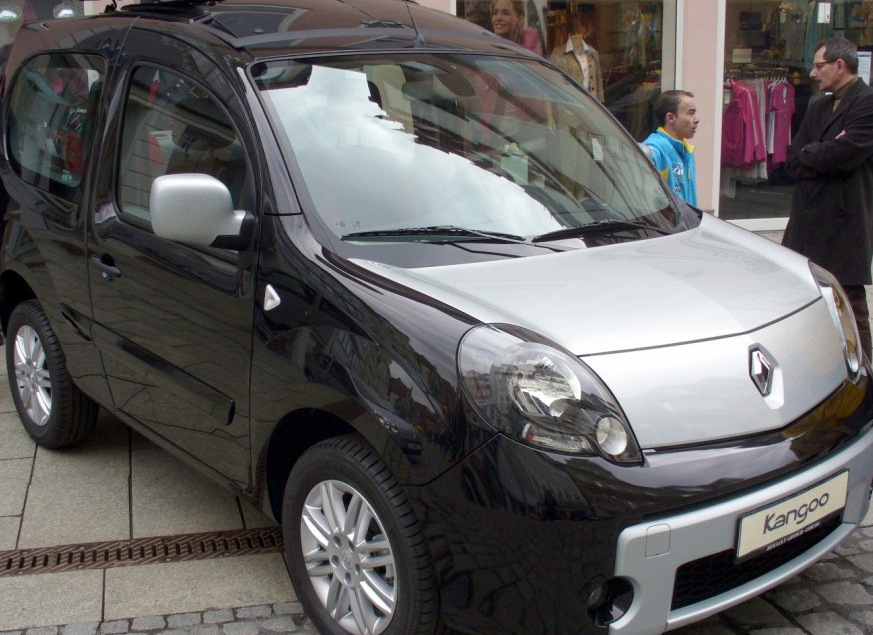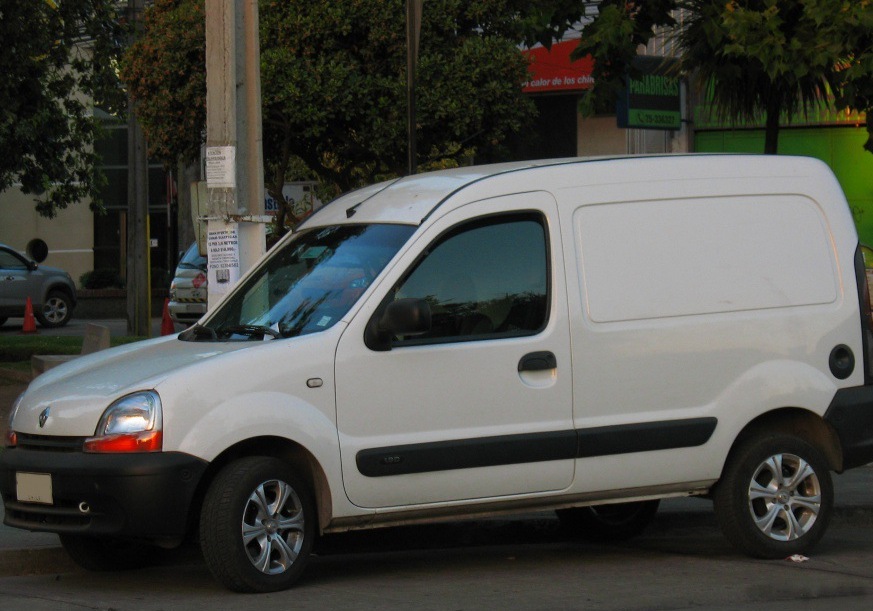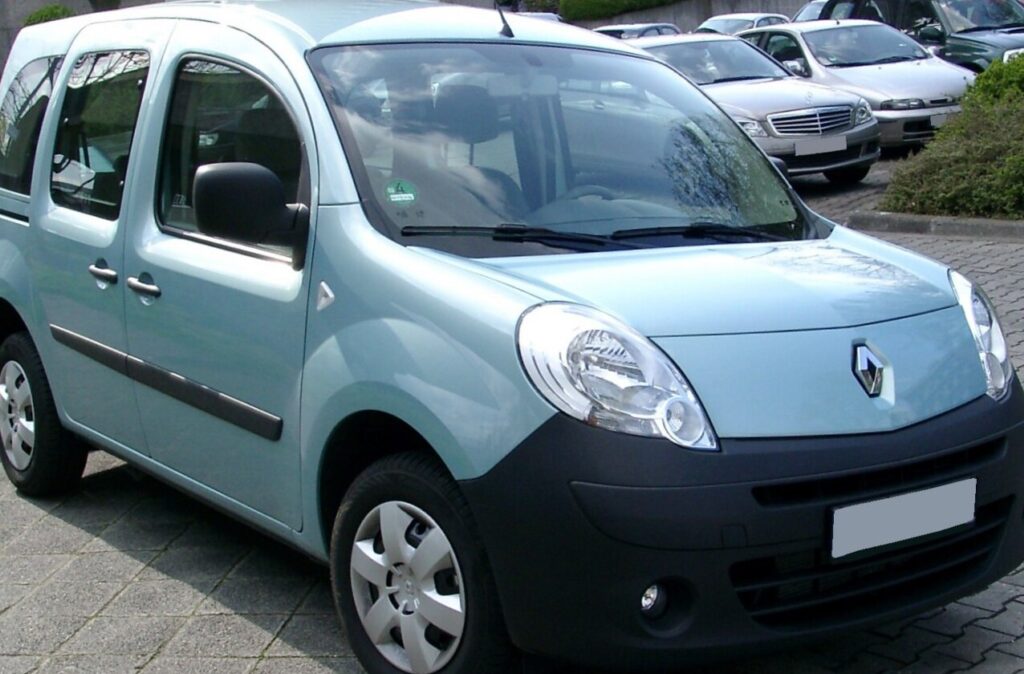
The Renault Kangoo II 1.5 dCi, producing 109 horsepower, was a popular configuration of Renault’s versatile light commercial vehicle and passenger car, sold from 2007 to 2013. Positioned as a mid-range offering within the Kangoo II lineup, it bridged the gap between the base-level diesel engines and the more powerful variants. This version aimed to balance fuel efficiency with adequate performance for both commercial and family use, primarily targeting European markets where compact vans and leisure activity vehicles were in high demand. The Kangoo II itself was built on the shared Renault-Nissan B platform, also known as the X98 series, and represented a significant step forward in terms of practicality, safety, and refinement compared to its predecessor.
Technical Specifications
| Brand | Renault |
| Model | Kangoo |
| Generation | Kangoo II |
| Type (Engine) | 1.5 dCi (109 Hp) |
| Start of production | 2007 |
| End of production | 2013 |
| Powertrain Architecture | Internal Combustion engine |
| Body type | Minivan |
| Seats | 5 |
| Doors | 5 |
| Fuel consumption (urban) | 6.2 l/100 km (37.9 US mpg, 45.6 UK mpg, 16.1 km/l) |
| Fuel consumption (extra urban) | 4.8 l/100 km (49 US mpg, 58.9 UK mpg, 20.8 km/l) |
| Fuel consumption (combined) | 5.3 l/100 km (44.4 US mpg, 53.3 UK mpg, 18.9 km/l) |
| CO2 emissions | 140 g/km |
| Fuel Type | Diesel |
| Acceleration 0 – 100 km/h | 12.3 sec |
| Acceleration 0 – 62 mph | 12.3 sec |
| Acceleration 0 – 60 mph | 11.7 sec |
| Maximum speed | 170 km/h (105.63 mph) |
| Emission standard | Euro 5 |
| Weight-to-power ratio | 12.8 kg/Hp, 78.2 Hp/tonne |
| Weight-to-torque ratio | 5.8 kg/Nm, 172.2 Nm/tonne |
| Power | 109 Hp @ 4000 rpm |
| Power per litre | 74.6 Hp/l |
| Torque | 240 Nm @ 2000 rpm (177.01 lb.-ft. @ 2000 rpm) |
| Engine layout | Front, Transverse |
| Engine Model/Code | K9K |
| Engine displacement | 1461 cm3 (89.16 cu. in.) |
| Number of cylinders | 4 |
| Engine configuration | Inline |
| Cylinder Bore | 76 mm (2.99 in.) |
| Piston Stroke | 80.5 mm (3.17 in.) |
| Compression ratio | 18.8:1 |
| Number of valves per cylinder | 2 |
| Fuel injection system | Diesel Commonrail |
| Engine aspiration | Turbocharger, Intercooler |
| Valvetrain | DOHC |
| Engine oil capacity | 4.5 l (4.76 US qt | 3.96 UK qt) |
| Coolant | 7.2 l (7.61 US qt | 6.34 UK qt) |
| Kerb Weight | 1394 kg (3073.24 lbs.) |
| Max. weight | 1982 kg (4369.56 lbs.) |
| Max load | 588 kg (1296.32 lbs.) |
| Trunk (boot) space – minimum | 438 l (15.47 cu. ft.) |
| Trunk (boot) space – maximum | 1977 l (69.82 cu. ft.) |
| Fuel tank capacity | 60 l (15.85 US gal | 13.2 UK gal) |
| Max. roof load | 100 kg (220.46 lbs.) |
| Permitted trailer load with brakes (12%) | 1350 kg (2976.24 lbs.) |
| Permitted trailer load without brakes | 697 kg (1536.62 lbs.) |
| Permitted towbar download | 75 kg (165.35 lbs.) |
| Length | 4213 mm (165.87 in.) |
| Width | 1829 mm (72.01 in.) |
| Width including mirrors | 2133 mm (83.98 in.) |
| Height | 1839 mm (72.4 in.) |
| Wheelbase | 2697 mm (106.18 in.) |
| Front track | 1533 mm (60.35 in.) |
| Rear (Back) track | 1521 mm (59.88 in.) |
| Front overhang | 807 mm (31.77 in.) |
| Rear overhang | 709 mm (27.91 in.) |
| Minimum turning circle | 11 m (36.09 ft.) |
| Drivetrain | Front wheel drive |
| Number of gears and type of gearbox | 6 gears, manual transmission |
| Front suspension | Independent type McPherson |
| Rear suspension | Torsion |
| Front brakes | Ventilated discs |
| Rear brakes | Disc |
| Assisting systems | ABS (Anti-lock braking system) |
| Steering type | Steering rack and pinion |
| Power steering | Electric Steering |
| Tires size | 195/65 R15 |
| Wheel rims size | 15 |
Powertrain & Engine Architecture
The heart of the Kangoo II 1.5 dCi 109 was the K9K engine, a member of Renault’s widely used family of small-displacement diesel engines. This 1.5-liter, inline-four cylinder engine featured a common rail direct injection system, delivering fuel at extremely high pressure for improved combustion efficiency and reduced emissions. The engine utilized a single overhead camshaft (SOHC) design for each cylinder bank, operating two valves per cylinder. A turbocharger with an intercooler was employed to boost power output, providing 109 horsepower at 4000 rpm and 240 Nm (177 lb-ft) of torque at 2000 rpm. The engine’s high compression ratio of 18.8:1 was typical for diesel engines, contributing to its thermal efficiency. The 6-speed manual transmission was the standard offering, providing a good balance between fuel economy and drivability.
Driving Characteristics
The 109 hp 1.5 dCi engine in the Kangoo II provided adequate, though not exhilarating, performance. Acceleration from 0 to 60 mph took around 11.7 seconds, and top speed was approximately 105 mph. The engine’s torque characteristics made it well-suited for carrying loads, and the six-speed gearbox allowed for comfortable cruising on highways. Compared to the lower-powered diesel versions, the 109 hp variant offered noticeably improved responsiveness, particularly when fully loaded or climbing hills. However, it didn’t possess the outright performance of the more powerful gasoline engines available in the Kangoo II range. The gear ratios were tuned for fuel efficiency, meaning the engine could feel slightly strained at very high speeds.
Equipment & Trim Levels
The Kangoo II 1.5 dCi 109 typically came equipped with features such as air conditioning, power steering, electric front windows, and a basic audio system. Higher trim levels added features like alloy wheels, rear parking sensors, cruise control, and upgraded interior upholstery. The interior was functional and durable, designed to withstand the rigors of commercial use. Safety features included ABS brakes, driver and passenger airbags, and seatbelt pretensioners. Optional extras included a panoramic sunroof, navigation system, and various storage solutions tailored to commercial users.
Chassis & Braking
The Kangoo II utilized a McPherson strut front suspension and a torsion beam rear suspension. This setup provided a reasonable balance between ride comfort and handling. The front brakes were ventilated discs, while the rear brakes were solid discs. The electric power steering offered light and precise steering feel. The suspension was tuned to prioritize comfort and stability when carrying loads, rather than sporty handling. The vehicle’s relatively high center of gravity meant that it wasn’t particularly agile in corners.
Market Reception & Comparison
The Renault Kangoo II 1.5 dCi 109 was generally well-received by critics and buyers alike. It was praised for its fuel efficiency, practicality, and versatility. Compared to the lower-powered diesel versions, the 109 hp variant offered a significant improvement in performance without sacrificing fuel economy. It was also considered a more refined and comfortable option than many of its competitors. However, some critics noted that the engine could be noisy under heavy acceleration. In terms of reliability, the K9K engine proved to be generally robust, although issues with the turbocharger and fuel injectors were occasionally reported.
Legacy
The Renault Kangoo II 1.5 dCi 109 remains a popular choice in the used car market, particularly for those seeking a practical and fuel-efficient light commercial vehicle or family car. The K9K engine is known for its durability and relatively low maintenance costs. While older examples may require some attention to wear and tear, the Kangoo II is generally considered a reliable and affordable vehicle. Its versatility and practicality have ensured its continued popularity among both commercial and private buyers.