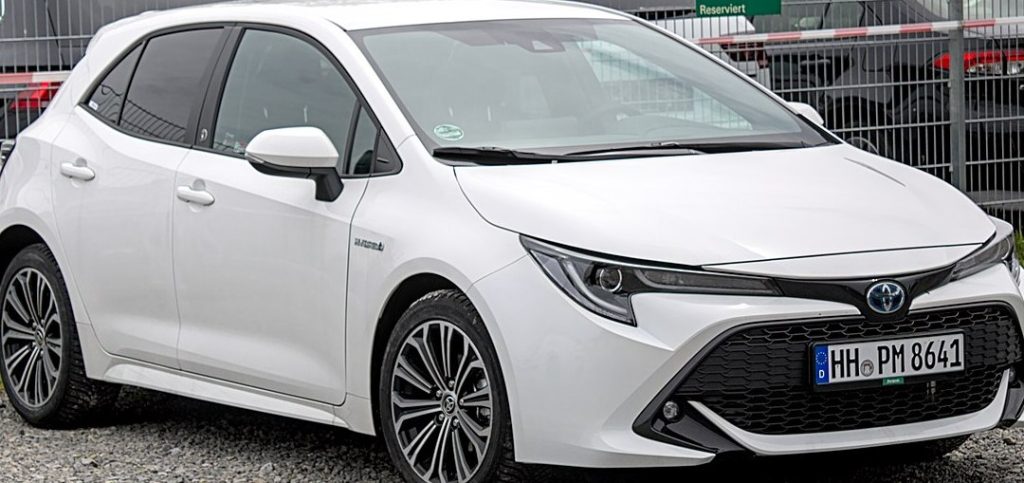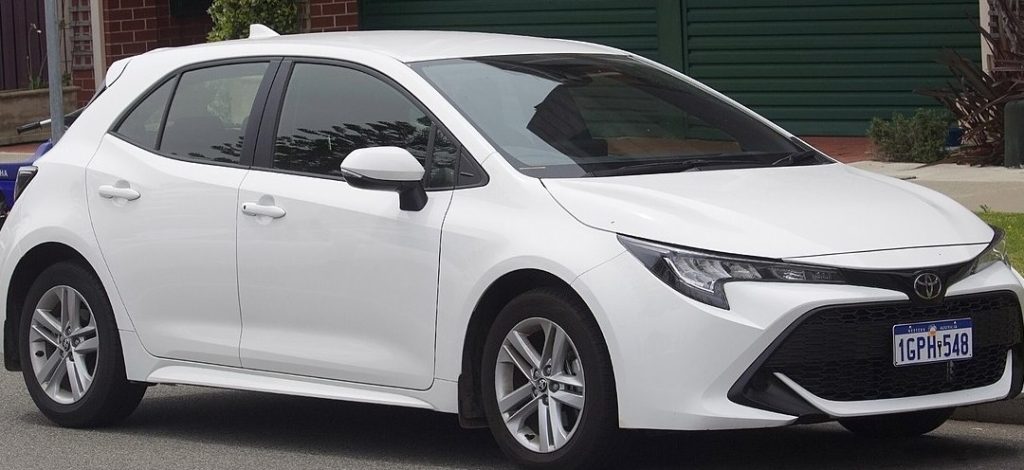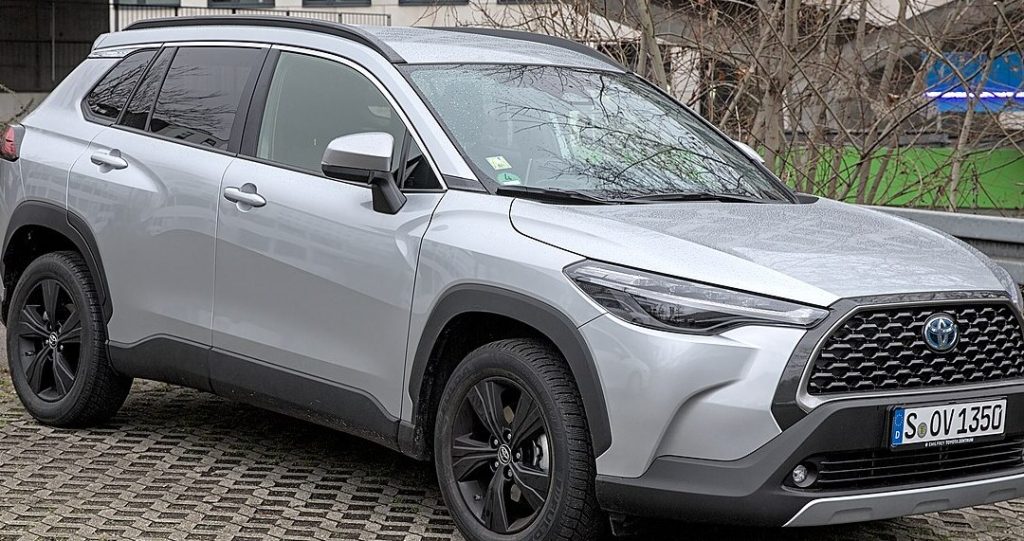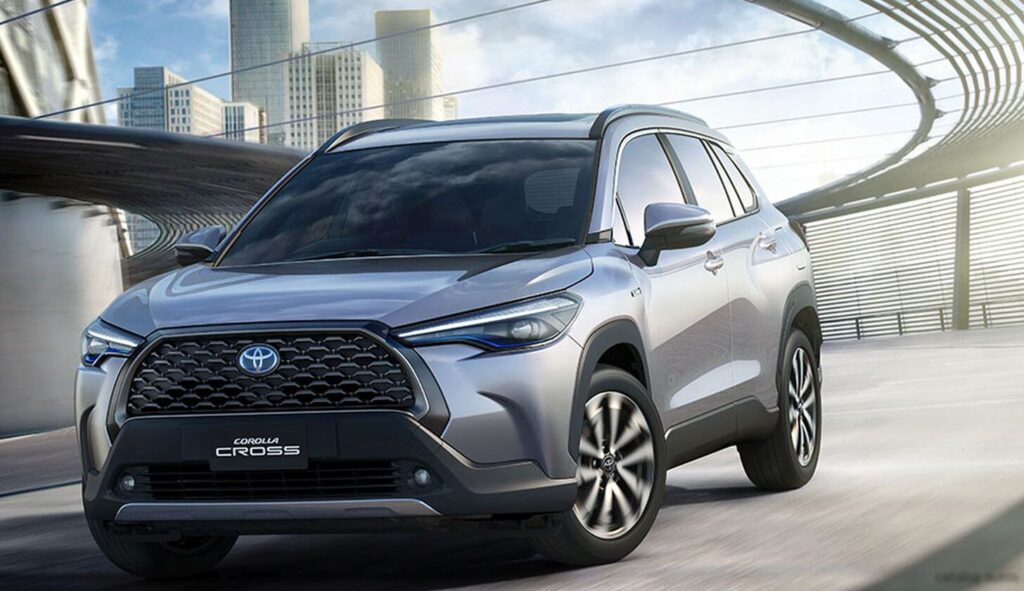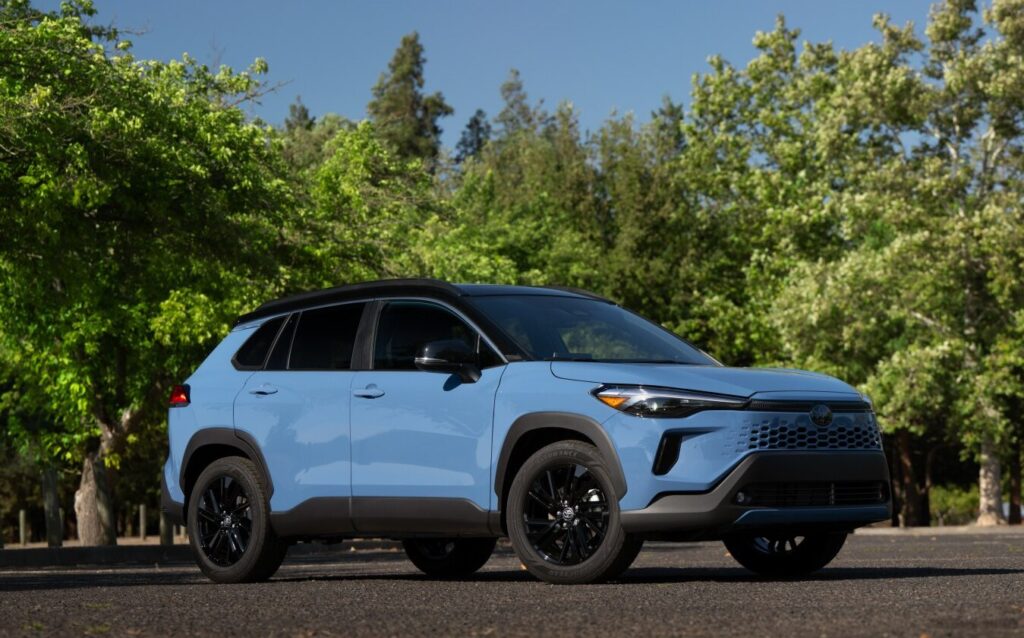
The Toyota Corolla Cross, introduced for the 2022 model year, represents Toyota’s entry into the subcompact SUV segment. The 2024 facelift brought styling updates and, crucially, a new powertrain option: a 2.0-liter (196 horsepower) Hybrid AWD configuration utilizing an e-CVT transmission. Production of this variant began in September 2025, positioned as a mid-to-upper trim level within the Corolla Cross lineup, offering a balance of fuel efficiency, all-weather capability, and respectable performance. This model builds upon the foundation of the Corolla’s renowned reliability while offering the practicality of a small SUV.
Technical Specifications
| Brand | Toyota |
| Model | Corolla Cross |
| Generation | Corolla Cross (facelift 2024) |
| Type (Engine) | 2.0 (196 Hp) Hybrid AWD e-CVT |
| Start of production | September, 2025 |
| Powertrain Architecture | FHEV (Full Hybrid Electric Vehicle) |
| Body type | SUV |
| Seats | 5 |
| Doors | 5 |
| Fuel consumption (urban) | 5.2 l/100 km (45.2 US mpg, 54.3 UK mpg, 19.2 km/l) |
| Fuel consumption (extra urban) | 6.2 l/100 km (37.9 US mpg, 45.6 UK mpg, 16.1 km/l) |
| Fuel consumption (combined) | 5.6 l/100 km (42 US mpg, 50.4 UK mpg, 17.9 km/l) |
| Fuel Type | Petrol (Gasoline) |
| Acceleration 0 – 60 mph | 8 sec |
| Emission standard | SULEV 30 |
| Weight-to-power ratio | 7.7 kg/Hp, 129.8 Hp/tonne |
| Weight-to-torque ratio | 8 kg/Nm, 124.5 Nm/tonne |
| Gross battery capacity | 0.9 kWh |
| Battery voltage | 222 V |
| Battery technology | Lithium-ion (Li-Ion) |
| Electric motor location | Integrated into the transmission & Rear axle, Transverse |
| Electric motor type | Synchronous |
| System power | 196 Hp |
| Power | 150 Hp @ 6000 rpm |
| Power per litre | 75.5 Hp/l |
| Torque | 188 Nm @ 4400-5200 rpm (138.66 lb.-ft. @ 4400-5200 rpm) |
| Engine layout | Front, Transverse |
| Engine Model/Code | Dynamic Force |
| Engine displacement | 1987 cm3 (121.25 cu. in.) |
| Number of cylinders | 4 |
| Engine configuration | Inline |
| Cylinder Bore | 80.5 mm (3.17 in.) |
| Piston Stroke | 97.6 mm (3.84 in.) |
| Compression ratio | 14:1 |
| Number of valves per cylinder | 4 |
| Fuel injection system | Direct injection and Multi-port manifold injection |
| Engine aspiration | Naturally aspirated engine |
| Valvetrain | DOHC, Dual VVT-i |
| Engine oil capacity | 4.5 l (4.76 US qt | 3.96 UK qt) |
| Kerb Weight | 1510-1556 kg (3328.98 – 3430.39 lbs.) |
| Max. weight | 2086 kg (4598.84 lbs.) |
| Max load | 530-576 kg (1168.45 – 1269.86 lbs.) |
| Trunk (boot) space – minimum | 481 l (16.99 cu. ft.) |
| Trunk (boot) space – maximum | 1246 l (44 cu. ft.) |
| Fuel tank capacity | 40 l (10.57 US gal | 8.8 UK gal) |
| Permitted trailer load with brakes (12%) | 680 kg (1499.14 lbs.) |
| Permitted towbar download | 68 kg (149.91 lbs.) |
| Length | 4490 mm (176.77 in.) |
| Width | 1825 mm (71.85 in.) |
| Height | 1648 mm (64.88 in.) |
| Wheelbase | 2640 mm (103.94 in.) |
| Front track | 1557 mm (61.3 in.) |
| Rear (Back) track | 1557 mm (61.3 in.) |
| Ride height (ground clearance) | 204 mm (8.03 in.) |
| Minimum turning circle (turning diameter) | 10.8 m (35.43 ft.) |
| Approach angle | 16.2° |
| Departure angle | 22.8° |
| Drivetrain Architecture | ICE drives front wheels, electric motor drives front wheels, electric motor drives rear wheels. Full electric or mixed mode. |
| Drive wheel | All wheel drive (4×4) |
| Number of gears and type of gearbox | automatic transmission e-CVT |
| Front suspension | Independent, type McPherson with coil spring and anti-roll bar |
| Rear suspension | Double wishbone, Independent coil spring, Transverse stabilizer |
| Front brakes | Ventilated discs, 305 mm |
| Rear brakes | Disc, 282 mm |
| Assisting systems | ABS (Anti-lock braking system) |
| Steering type | Steering rack and pinion |
| Power steering | Electric Steering |
| Tires size | 215/65 R17; 225/55 R18 |
| Wheel rims size | 17; 18 |
Powertrain & Engine Architecture
The heart of this Corolla Cross variant is Toyota’s Dynamic Force 2.0-liter inline-four cylinder engine. This engine, designated for internal use with specific codes varying by region, features a high compression ratio of 14:1 and utilizes both direct injection and multi-port fuel injection for optimized combustion efficiency. The engine produces 150 horsepower at 6000 rpm and 188 Nm (138.66 lb.-ft.) of torque between 4400-5200 rpm. The engine is paired with Toyota’s fourth-generation Hybrid Synergy Drive system. This system incorporates a permanent magnet synchronous electric motor integrated into the e-CVT (electronically controlled continuously variable transmission). A rear electric motor provides additional torque to the rear wheels, enabling all-wheel drive capability. The relatively small 0.9 kWh lithium-ion battery pack provides supplemental power and allows for limited all-electric driving at low speeds. The e-CVT, unlike traditional CVTs, doesn’t have fixed gear ratios but simulates them electronically, providing a smooth and efficient driving experience.
Driving Characteristics
The 196-horsepower hybrid powertrain delivers a noticeable improvement in acceleration compared to the base 1.8-liter Corolla Cross models, achieving a 0-60 mph time of around 8 seconds. The e-CVT provides seamless power delivery, although it lacks the immediate response of a traditional automatic transmission. The all-wheel drive system enhances traction in inclement weather conditions, making it a practical choice for regions with snow or rain. While not a performance-oriented SUV, the 2.0L Hybrid offers sufficient power for everyday driving and highway merging. The hybrid system prioritizes fuel efficiency, and the vehicle can operate in electric-only mode for short distances at lower speeds.
Equipment & Trim Levels
The 2.0L Hybrid AWD trim typically includes standard features such as Toyota Safety Sense 3.0 (including pre-collision system, lane departure alert, and adaptive cruise control), an 8-inch touchscreen infotainment system with Apple CarPlay and Android Auto compatibility, automatic climate control, and LED headlights. Higher sub-trims within the 2.0L Hybrid range often add features like a larger touchscreen display, premium audio system, heated front seats, a power liftgate, and blind-spot monitoring. Interior upholstery generally consists of fabric or SofTex (Toyota’s synthetic leather) depending on the specific package.
Chassis & Braking
The Corolla Cross utilizes a McPherson strut front suspension and a double-wishbone rear suspension, providing a comfortable ride quality. Stabilizer bars are included on both axles to reduce body roll during cornering. Braking duties are handled by ventilated discs at the front and solid discs at the rear. The ABS (Anti-lock Braking System) is standard, enhancing braking performance and stability. The suspension tuning is geared towards comfort rather than sporty handling, prioritizing a smooth ride over aggressive cornering.
Market Reception & Comparison
The 2.0L Hybrid AWD Corolla Cross has been well-received by automotive critics for its fuel efficiency, comfortable ride, and standard safety features. Compared to the base 1.8-liter models, the hybrid offers significantly improved performance and fuel economy. Against competitors like the Honda HR-V and Mazda CX-5, the Corolla Cross stands out with its standard hybrid powertrain and Toyota’s reputation for reliability. Some reviewers have noted that the e-CVT can feel less engaging than traditional automatic transmissions, and the interior materials are not as premium as some rivals.
Legacy
Toyota’s hybrid technology has a long-standing reputation for reliability, and the powertrain in the 2.0L Hybrid AWD Corolla Cross is expected to be durable and long-lasting. The e-CVT transmission, while complex, has proven to be reliable in other Toyota hybrid models. As the Corolla Cross gains more years on the market, it is anticipated to hold its value well due to its fuel efficiency and Toyota’s brand reputation. The combination of all-wheel drive and hybrid technology makes this variant a particularly attractive option in the used car market for buyers seeking a practical and efficient SUV.