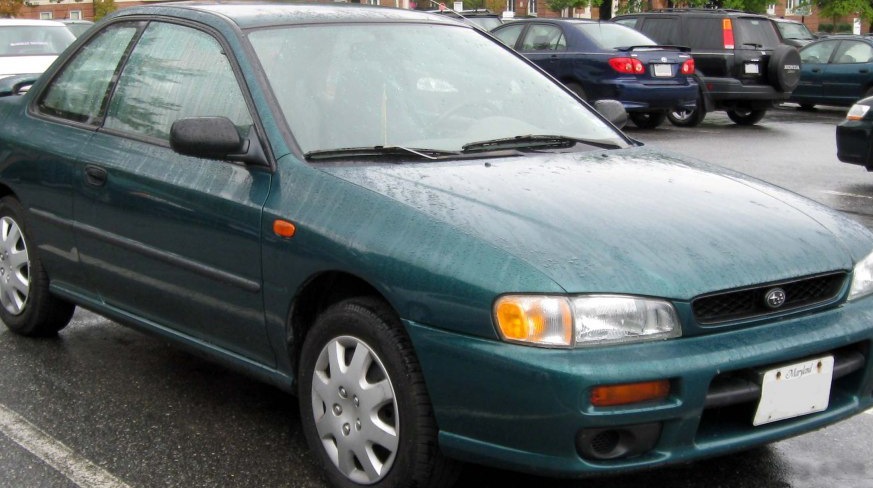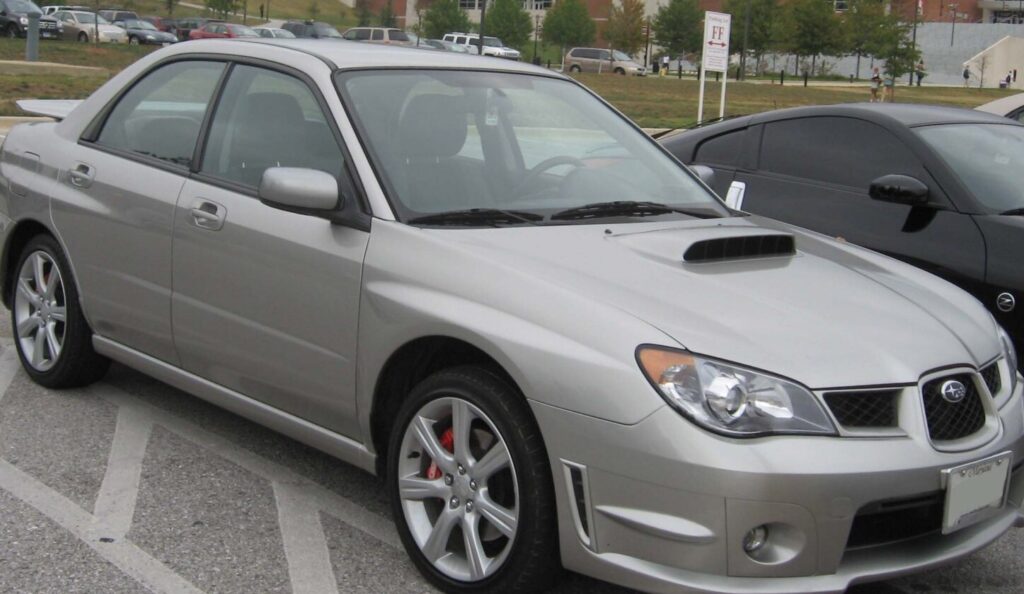
The Subaru Impreza II, specifically the facelifted version introduced in 2005, represented a significant evolution of Subaru’s popular compact car. Production of the 1.5-liter (105 horsepower) all-wheel-drive variant spanned from 2006 to 2007. This model occupied the entry-level position within the Impreza lineup, offering a more affordable and fuel-conscious option compared to the more potent 2.5-liter turbocharged WRX and naturally aspirated 2.5i models. It was primarily aimed at buyers seeking the security of Subaru’s symmetrical all-wheel drive system in a practical, everyday package. The Impreza II, built on the GD chassis platform, was a key model for Subaru in numerous international markets, though its US market presence was limited to the 2.5-liter variants.
Technical Specifications
| Brand | Subaru |
| Model | Impreza |
| Generation | Impreza II (facelift 2005) |
| Type (Engine) | 1.5 (105 Hp) AWD |
| Start of production | 2006 |
| End of production | 2007 |
| Powertrain Architecture | Internal Combustion engine |
| Body type | Sedan |
| Seats | 5 |
| Doors | 4 |
| Fuel consumption (urban) | 10.4 l/100 km (22.6 US mpg) |
| Fuel consumption (extra urban) | 6.4 l/100 km (36.8 US mpg) |
| Fuel consumption (combined) | 7.9 l/100 km (29.8 US mpg) |
| CO2 emissions | 184 g/km |
| Fuel Type | Petrol (Gasoline) |
| Acceleration 0 – 100 km/h | 12.4 sec |
| Acceleration 0 – 62 mph | 12.4 sec |
| Acceleration 0 – 60 mph | 11.8 sec |
| Maximum speed | 175 km/h (108.74 mph) |
| Emission standard | Euro 4 |
| Weight-to-power ratio | 12.2 kg/Hp |
| Weight-to-torque ratio | 9 kg/Nm |
| Power | 105 Hp @ 6400 rpm |
| Torque | 142 Nm @ 3200 rpm (104.73 lb.-ft. @ 3200 rpm) |
| Engine layout | Front, Longitudinal |
| Engine Model/Code | EJ15 |
| Engine displacement | 1498 cm3 (91.41 cu. in.) |
| Number of cylinders | 4 |
| Engine configuration | Boxer |
| Cylinder Bore | 77.7 mm (3.06 in.) |
| Piston Stroke | 79 mm (3.11 in.) |
| Compression ratio | 10.1:1 |
| Number of valves per cylinder | 4 |
| Fuel injection system | Multi-port manifold injection |
| Engine aspiration | Naturally aspirated |
| Valvetrain | SOHC |
| Engine oil capacity | 4.2 l (4.44 US qt | 3.7 UK qt) |
| Coolant capacity | 7.4 l (7.82 US qt | 6.51 UK qt) |
| Kerb Weight | 1280 kg (2821.92 lbs.) |
| Max. weight | 1720 kg (3791.95 lbs.) |
| Max load | 440 kg (970.03 lbs.) |
| Trunk (boot) space | 401 l (14.16 cu. ft.) |
| Fuel tank capacity | 50 l (13.21 US gal | 11 UK gal) |
| Max. roof load | 80 kg (176.37 lbs.) |
| Permitted trailer load (braked) | 1000 kg (2204.62 lbs.) |
| Permitted trailer load (unbraked) | 500 kg (1102.31 lbs.) |
| Length | 4465 mm (175.79 in.) |
| Width | 1740 mm (68.5 in.) |
| Height | 1440 mm (56.69 in.) |
| Wheelbase | 2525 mm (99.41 in.) |
| Front track | 1485 mm (58.46 in.) |
| Rear track | 1475 mm (58.07 in.) |
| Ride height | 155 mm (6.1 in.) |
| Turning circle | 11.2 m (36.75 ft.) |
| Drivetrain | All wheel drive (4×4) |
| Number of gears | 5 |
| Gearbox type | Manual transmission |
| Front suspension | Spring Strut, Transverse stabilizer |
| Rear suspension | Spring Strut, Transverse stabilizer |
| Front brakes | Ventilated discs |
| Rear brakes | Drum |
| Assisting systems | ABS (Anti-lock braking system) |
| Steering type | Steering rack and pinion |
| Power steering | Hydraulic |
| Tires size | 195/60 R15 |
| Wheel rims size | 6J x 15 |
Powertrain & Engine Architecture
The heart of the 2006-2007 Subaru Impreza 1.5 AWD was the EJ15 1.5-liter horizontally-opposed (boxer) four-cylinder engine. This engine, a hallmark of Subaru engineering, featured a single overhead camshaft (SOHC) design and multi-point fuel injection. The boxer configuration, with its pistons moving horizontally, contributed to a lower center of gravity, enhancing stability and handling. The EJ15 produced 105 horsepower at 6,400 rpm and 142 Nm (104.73 lb-ft) of torque at 3,200 rpm. This engine was paired with a five-speed manual transmission, delivering power to all four wheels via Subaru’s symmetrical all-wheel-drive system. The AWD system utilized a viscous coupling center differential, providing full-time all-wheel drive without driver intervention.
Driving Characteristics
The 1.5-liter Impreza offered a comfortable, if not particularly exhilarating, driving experience. Acceleration from 0-60 mph took around 11.8 seconds, and top speed was limited to 175 km/h (108.74 mph). The engine felt somewhat strained at higher speeds, requiring frequent downshifts to maintain momentum. The five-speed manual transmission was well-matched to the engine’s characteristics, offering precise shifts. The all-wheel-drive system provided excellent traction in various weather conditions, making it a capable and sure-footed vehicle. Compared to the more powerful 2.5-liter Impreza models, the 1.5 felt noticeably slower, but it offered a more economical and refined driving experience.
Equipment & Trim Levels
The 1.5-liter Impreza typically came with a relatively basic level of equipment. Standard features generally included power windows, power locks, air conditioning, and an AM/FM radio with a CD player. Safety features included dual front airbags, side airbags, and ABS brakes. Optional extras could include alloy wheels, a sunroof, and upgraded audio systems. Interior upholstery was typically cloth, and the dashboard featured a straightforward, functional design. The trim level was generally considered the base model, focusing on providing essential features at an affordable price point.
Chassis & Braking
The Impreza II utilized a MacPherson strut suspension setup at both the front and rear, incorporating a transverse stabilizer bar to reduce body roll. The front brakes were ventilated discs, providing adequate stopping power, while the rear brakes were drums. This configuration was typical for vehicles in this weight class and price range. The chassis was designed to provide a balance between comfort and handling, offering a relatively smooth ride while maintaining good stability in corners. The steering was a rack-and-pinion system with hydraulic power assistance, providing precise and responsive steering feel.
Market Reception & Comparison
The 1.5-liter Impreza was generally well-received as a practical and affordable all-wheel-drive vehicle. Critics praised its fuel efficiency and sure-footed handling, but noted its lack of outright performance. Compared to the 2.5-liter Impreza models, the 1.5 offered significantly better fuel economy (around 29.8 US mpg combined) but considerably less power. The 1.5 was often seen as a sensible choice for buyers prioritizing practicality and safety over performance. Its lower price point made it an attractive option for first-time car buyers or those seeking a reliable and economical vehicle for daily commuting.
Legacy
The EJ15 engine, while not as renowned as Subaru’s larger engines, proved to be a relatively reliable unit when properly maintained. Common issues included oil leaks and occasional sensor failures. The Impreza II 1.5 AWD has maintained a modest following in the used car market, particularly among buyers seeking an affordable and capable all-wheel-drive vehicle. Its simplicity and relatively low maintenance costs make it an appealing option for those looking for a practical and dependable car. While not a performance icon, the 1.5-liter Impreza played an important role in making Subaru’s all-wheel-drive technology accessible to a wider range of buyers.