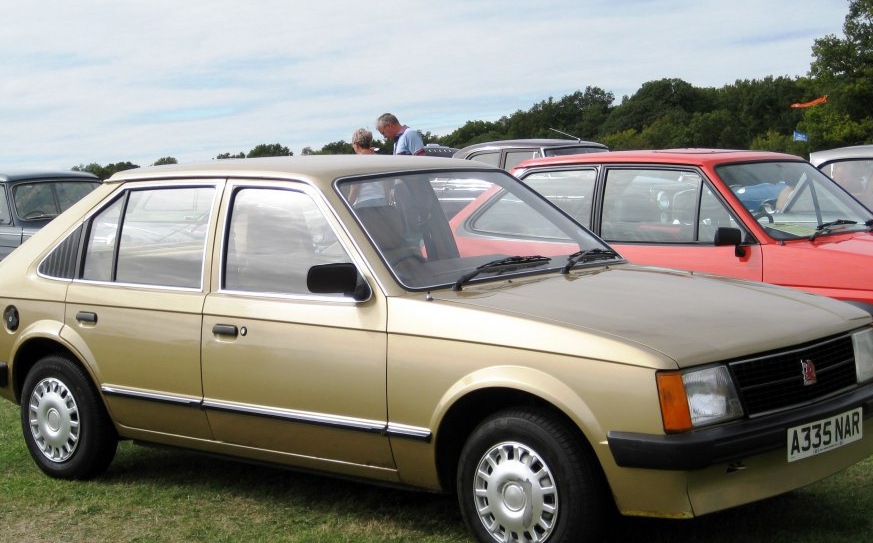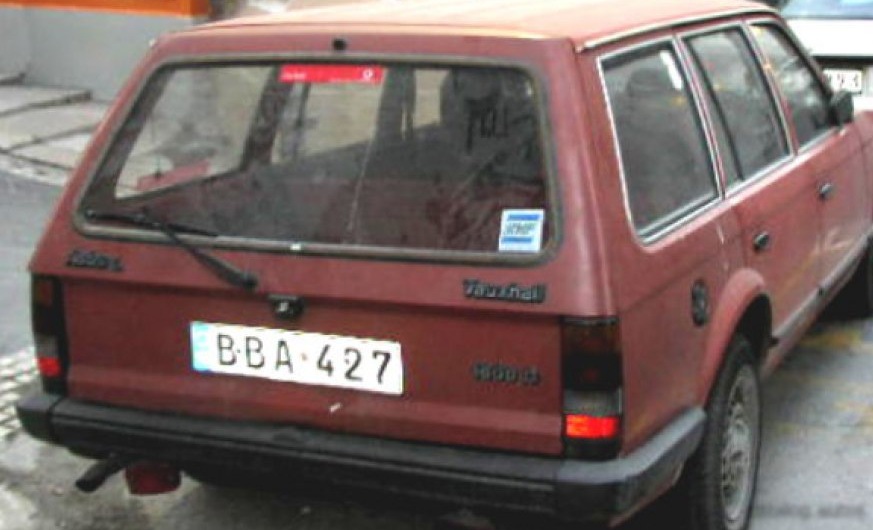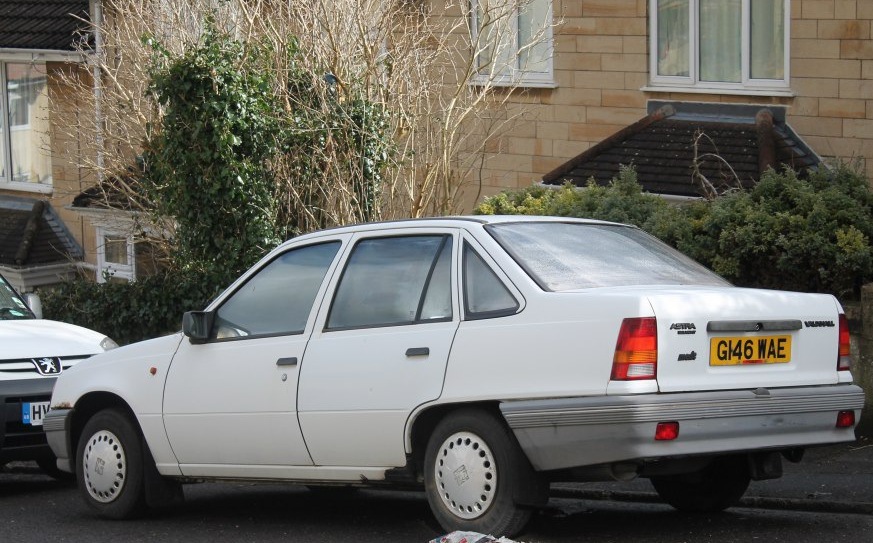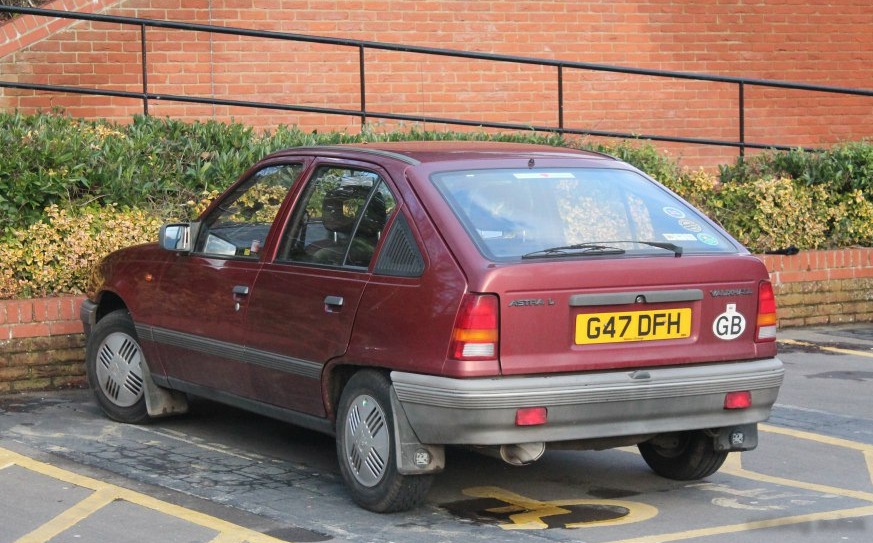
The Vauxhall Astra Mk II CC 2.0 GTE 16V, produced between 1987 and 1992, represented a performance-oriented variant within the Mk II Astra range (designated as the Astra GTE). Positioned as the flagship model, it aimed to deliver a sporty driving experience and a more sophisticated image than the standard Astra trims. The “CC” designation stood for “Coupe Convenience,” reflecting the model’s blend of sporty styling with practical hatchback versatility. This variant was a key player in Vauxhall’s attempt to capture a larger share of the hot hatch market in the United Kingdom and Europe, competing with rivals like the Ford Escort RS Turbo and Volkswagen Golf GTI. It was built on the GM T platform, shared with other Opel and Isuzu models.
Technical Specifications
| Brand | Vauxhall |
| Model | Astra |
| Generation | Astra Mk II CC |
| Type (Engine) | 2.0 GTE 16V (156 Hp) |
| Start of production | 1987 |
| End of production | 1992 |
| Powertrain Architecture | Internal Combustion engine |
| Body type | Hatchback |
| Seats | 5 |
| Doors | 3-5 |
| Fuel consumption (economy) – combined | 7.4 l/100 km |
| Fuel consumption (economy) – combined | 31.8 US mpg |
| Fuel consumption (economy) – combined | 38.2 UK mpg |
| Fuel consumption (economy) – combined | 13.5 km/l |
| Fuel Type | Petrol (Gasoline) |
| Acceleration 0 – 100 km/h | 7.7 sec |
| Acceleration 0 – 62 mph | 7.7 sec |
| Acceleration 0 – 60 mph | 7.3 sec |
| Maximum speed | 217 km/h |
| Maximum speed | 134.84 mph |
| Weight-to-power ratio | 6.4 kg/Hp |
| Weight-to-power ratio | 155.2 Hp/tonne |
| Weight-to-torque ratio | 4.9 kg/Nm |
| Weight-to-torque ratio | 206 Nm/tonne |
| Power | 156 Hp @ 6000 rpm |
| Power per litre | 78.1 Hp/l |
| Torque | 207 Nm @ 4800 rpm |
| Torque | 152.68 lb.-ft. @ 4800 rpm |
| Engine layout | Front, Transverse |
| Engine Model/Code | 20XE |
| Engine displacement | 1998 cm3 |
| Engine displacement | 121.93 cu. in. |
| Number of cylinders | 4 |
| Engine configuration | Inline |
| Cylinder Bore | 86 mm |
| Cylinder Bore | 3.39 in. |
| Piston Stroke | 86 mm |
| Piston Stroke | 3.39 in. |
| Number of valves per cylinder | 4 |
| Fuel injection system | Multi-port manifold injection |
| Engine aspiration | Naturally aspirated engine |
| Valvetrain | DOHC |
| Engine oil capacity | 4.5 l |
| Engine oil capacity | 4.76 US qt | 3.96 UK qt |
| Coolant | 6.9 l |
| Coolant | 7.29 US qt | 6.07 UK qt |
| Kerb Weight | 1005 kg |
| Kerb Weight | 2215.65 lbs. |
| Trunk (boot) space – minimum | 390 l |
| Trunk (boot) space – minimum | 13.77 cu. ft. |
| Trunk (boot) space – maximum | 1000 l |
| Trunk (boot) space – maximum | 35.31 cu. ft. |
| Fuel tank capacity | 52 l |
| Fuel tank capacity | 13.74 US gal | 11.44 UK gal |
| Length | 3998 mm |
| Length | 157.4 in. |
| Width | 1666 mm |
| Width | 65.59 in. |
| Height | 1395 mm |
| Height | 54.92 in. |
| Wheelbase | 2520 mm |
| Wheelbase | 99.21 in. |
| Drag coefficient (Cd) | 0.32 |
| Minimum turning circle (turning diameter) | 10.5 m |
| Minimum turning circle (turning diameter) | 34.45 ft. |
| Drivetrain Architecture | The Internal combustion engine (ICE) drives the front wheels of the vehicle. |
| Drive wheel | Front wheel drive |
| Number of gears and type of gearbox | 5 gears, manual transmission |
| Tires size | 185/60 R14 |
| Wheel rims size | 14 |
Powertrain & Engine Architecture
The heart of the Astra GTE 16V was the 2.0-liter, naturally aspirated inline-four cylinder engine, designated the 20XE. This engine was a significant upgrade over the earlier 8-valve versions, featuring a dual overhead camshaft (DOHC) valvetrain with four valves per cylinder. This configuration allowed for improved breathing and higher engine speeds, contributing to the increased power output. The engine utilized Bosch Motronic fuel injection, a sophisticated system for its time, which precisely controlled fuel delivery based on various sensor inputs. The 20XE engine was known for its robust construction and relatively simple design, making it a popular choice for tuners and enthusiasts. The engine’s 86mm bore and 86mm stroke resulted in a displacement of 1998cc (121.93 cubic inches). Power was delivered to the front wheels through a five-speed manual transmission, providing precise control and engaging driving dynamics. An automatic transmission was also available, though it was less common and generally resulted in slightly reduced performance.
Driving Characteristics
The 2.0 GTE 16V offered a noticeably more spirited driving experience compared to lower-spec Astra models. The 156 horsepower output, while not excessive by modern standards, provided brisk acceleration, with a 0-60 mph time of around 7.3 seconds. The engine’s torque curve was relatively flat, delivering usable power throughout the rev range. The five-speed manual transmission allowed drivers to keep the engine in its sweet spot, maximizing performance. The automatic transmission, while offering convenience, did diminish acceleration and responsiveness. Handling was generally considered good for a front-wheel-drive hatchback of its era, with a well-tuned suspension providing a balance between comfort and control. The steering was precise, offering good feedback to the driver. However, torque steer could be noticeable under hard acceleration.
Equipment & Trim Levels
The Astra GTE 16V came reasonably well-equipped for its time. Standard features typically included power steering, alloy wheels, a sunroof, and a more comprehensive instrument cluster than the base models. The interior featured sport seats with upgraded upholstery, often in a distinctive patterned fabric. Optional extras included central locking, electric windows, and an upgraded stereo system. The GTE trim also featured unique exterior styling cues, such as a rear spoiler, body-colored bumpers, and side skirts, giving it a more aggressive appearance. The dashboard layout was typical of early 1990s Vauxhalls, with a functional but somewhat dated design.
Chassis & Braking
The Astra Mk II GTE 16V utilized a MacPherson strut front suspension and a torsion beam rear suspension. The suspension was tuned to provide a balance between ride comfort and handling performance. Braking was typically accomplished with disc brakes on the front wheels and drum brakes on the rear. While adequate for normal driving, the rear drum brakes were a point of criticism, as they lacked the stopping power and fade resistance of disc brakes. Stabilizer bars were fitted to both the front and rear axles to reduce body roll during cornering. The chassis was reinforced compared to standard Astra models to handle the increased power and stresses of performance driving.
Market Reception & Comparison
The Astra GTE 16V was generally well-received by automotive critics, who praised its performance, handling, and overall value. It was seen as a credible alternative to rivals like the Ford Escort RS Turbo and Volkswagen Golf GTI. However, some critics noted the relatively basic interior and the lack of rear disc brakes. Compared to the 1.8-liter and diesel versions of the Astra, the GTE 16V offered significantly more performance but at the cost of slightly lower fuel economy. The 1.8-liter models were more affordable and fuel-efficient, while the diesel versions prioritized economy over performance. The GTE 16V appealed to drivers who wanted a sporty and engaging driving experience without sacrificing practicality.
Legacy
The Vauxhall Astra Mk II GTE 16V has become a sought-after classic among enthusiasts. The 20XE engine is renowned for its durability and tunability, and many examples have been modified for increased performance. Original, unmodified examples are becoming increasingly rare and valuable. While generally reliable, the 20XE engine can be susceptible to timing chain wear if not properly maintained. Rust is a common issue with these cars, particularly in areas prone to corrosion. Today, the Astra GTE 16V represents a nostalgic reminder of a golden era of hot hatches, offering a unique blend of performance, style, and affordability.