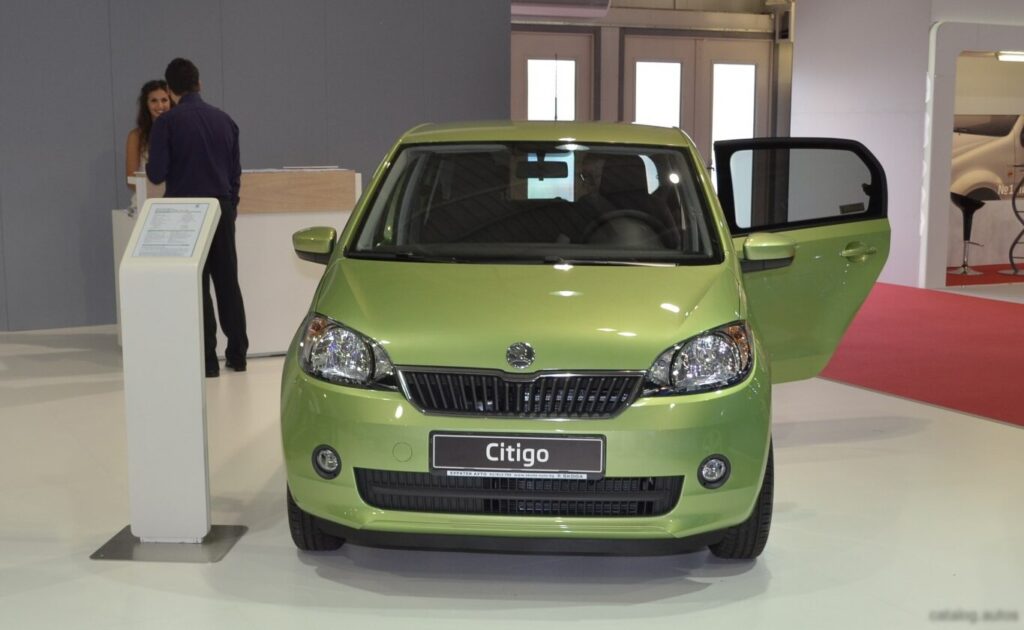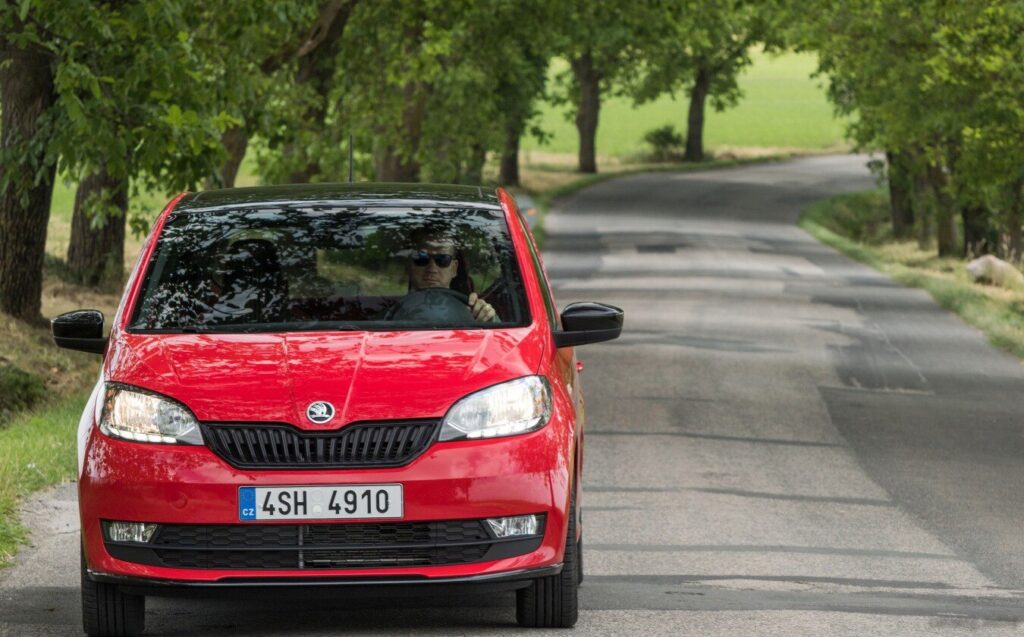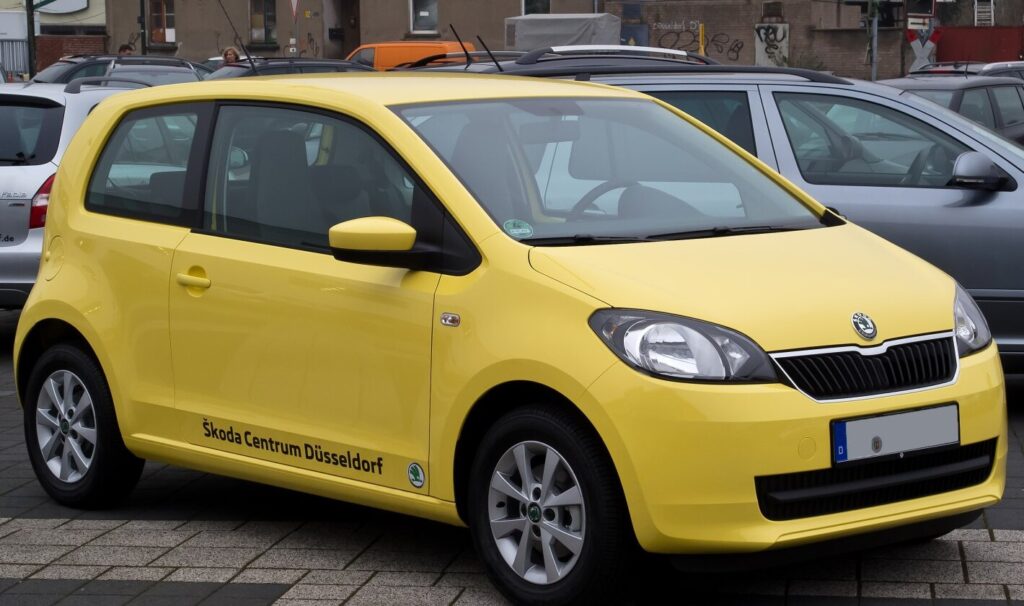
The Skoda Citigo 1.0 (60 hp) Automatic, a three-door hatchback, was produced from October 2011 to 2017. It represented the entry point into the Citigo range, which was Skoda’s offering in the city car segment, developed alongside the Volkswagen up! and SEAT Mii as part of the Volkswagen Group’s New Small Family (NSF) project, internally designated as the 1HX0/A3 platform. Positioned as an affordable and economical urban vehicle, the 1.0 Automatic aimed to provide a convenient and accessible option for drivers prioritizing ease of use over outright performance. This variant was particularly popular in European markets where compact size and low running costs were highly valued.
Technical Specifications
| Brand | Skoda |
| Model | Citigo |
| Generation | Citigo (3-door) |
| Type (Engine) | 1.0 (60 Hp) Automatic |
| Start of production | October, 2011 |
| End of production | 2017 |
| Powertrain Architecture | Internal Combustion engine |
| Body type | Hatchback |
| Seats | 4 |
| Doors | 3 |
| Fuel consumption (urban) | 5.3 l/100 km (44.4 US mpg, 53.3 UK mpg, 18.9 km/l) |
| Fuel consumption (extra urban) | 3.9 l/100 km (60.3 US mpg, 72.4 UK mpg, 25.6 km/l) |
| Fuel consumption (combined) | 4.4 l/100 km (53.5 US mpg, 64.2 UK mpg, 22.7 km/l) |
| CO2 emissions | 103 g/km |
| Fuel Type | Petrol (Gasoline) |
| Acceleration 0 – 100 km/h | 15.3 sec |
| Acceleration 0 – 62 mph | 15.3 sec |
| Acceleration 0 – 60 mph | 14.5 sec |
| Maximum speed | 160 km/h (99.42 mph) |
| Emission standard | Euro 5 |
| Weight-to-power ratio | 15.5 kg/Hp, 64.4 Hp/tonne |
| Weight-to-torque ratio | 9.8 kg/Nm, 101.9 Nm/tonne |
| Power | 60 Hp @ 5000-6000 rpm |
| Power per litre | 60.1 Hp/l |
| Torque | 95 Nm @ 3000-4300 rpm (70.07 lb.-ft. @ 3000-4300 rpm) |
| Engine layout | Front, Transverse |
| Engine Model/Code | CHYA |
| Engine displacement | 999 cm3 (60.96 cu. in.) |
| Number of cylinders | 3 |
| Engine configuration | Inline |
| Fuel injection system | Multi-port manifold injection |
| Engine aspiration | Naturally aspirated engine |
| Engine oil capacity | 3.4 l (3.59 US qt | 2.99 UK qt) |
| Coolant capacity | 4.2 l (4.44 US qt | 3.7 UK qt) |
| Kerb Weight | 932 kg (2054.71 lbs.) |
| Max. weight | 1290 kg (2843.96 lbs.) |
| Max load | 358 kg (789.25 lbs.) |
| Trunk (boot) space – minimum | 251 l (8.86 cu. ft.) |
| Trunk (boot) space – maximum | 951 l (33.58 cu. ft.) |
| Fuel tank capacity | 35 l (9.25 US gal | 7.7 UK gal) |
| Length | 3563 mm (140.28 in.) |
| Width | 1641 mm (64.61 in.) |
| Height | 1478 mm (58.19 in.) |
| Wheelbase | 2420 mm (95.28 in.) |
| Front track | 1428 mm (56.22 in.) |
| Rear track | 1424 mm (56.06 in.) |
| Minimum turning circle | 9.8 m (32.15 ft.) |
| Drivetrain Architecture | Front wheel drive |
| Number of gears | 5 |
| Gearbox type | Automatic transmission |
| Front suspension | Independent, McPherson with coil spring and anti-roll bar |
| Rear suspension | Semi-dependent beam with stabilizer |
| Front brakes | Ventilated discs |
| Rear brakes | Drum |
| Assisting systems | ABS (Anti-lock braking system) |
| Steering type | Steering rack and pinion |
| Power steering | Electric |
| Tires size | 165/70 R14 |
| Wheel rims size | 5.0J x 14 |
Powertrain & Engine Architecture
The Skoda Citigo 1.0 Automatic is powered by the CHYA engine code, a naturally aspirated, three-cylinder 1.0-liter (999 cc) petrol engine. This engine utilizes a multi-point fuel injection system, delivering fuel directly into the intake ports. The engine features a single overhead camshaft (SOHC) valvetrain with two valves per cylinder. Its relatively simple design prioritized reliability and fuel efficiency over high performance. The engine’s output of 60 horsepower at 5000-6000 rpm and 95 Nm (70 lb-ft) of torque between 3000-4300 rpm was modest, but adequate for city driving. Paired with this engine was a five-speed automatic transmission. This transmission, while providing convenience, was not known for its particularly quick shifts or sporty feel, focusing instead on smooth operation and fuel economy. The automatic transmission was a key selling point for drivers seeking an easy-to-drive city car.
Driving Characteristics
The 1.0 Automatic Citigo offered a comfortable, if uninspiring, driving experience. Acceleration was slow, taking approximately 15.3 seconds to reach 62 mph (100 km/h). The automatic transmission’s gear ratios were optimized for fuel efficiency rather than performance, resulting in a noticeable delay during acceleration. Compared to the five-speed manual version, the automatic felt noticeably slower. However, the automatic transmission made the Citigo exceptionally easy to maneuver in congested urban environments. The light steering and compact dimensions further enhanced its city driving credentials. The engine was generally quiet and refined for a three-cylinder unit, although it could become noticeably strained when climbing hills or carrying a full load.
Equipment & Trim Levels
The Citigo 1.0 Automatic typically came with a basic, yet functional, level of equipment. Standard features included central locking, power steering, electric front windows, and an ABS anti-lock braking system. Interior upholstery was typically cloth, with a simple dashboard layout. Optional extras included air conditioning, alloy wheels, and a stereo system with CD player. Higher trim levels, such as the Elegance, added features like alloy wheels, front fog lights, and a leather-wrapped steering wheel. The focus was on providing essential features at an affordable price point.
Chassis & Braking
The Citigo’s chassis was designed for nimble handling and ride comfort. The front suspension utilized an independent McPherson strut setup, while the rear employed a semi-independent torsion beam axle. This configuration provided a good balance between ride quality and handling. The front brakes were ventilated discs, offering adequate stopping power, while the rear brakes were drums, a cost-saving measure common in this segment. The electric power steering provided light and precise steering feel, making it easy to maneuver in tight spaces. A stabilizer bar was included on both axles to reduce body roll during cornering.
Market Reception & Comparison
The Skoda Citigo 1.0 Automatic was generally well-received by critics as a practical and affordable city car. Its fuel economy of around 53.5 US mpg (64.2 UK mpg) was a major selling point. However, the slow acceleration and somewhat basic interior were often criticized. Compared to the manual version, the automatic offered less engaging driving experience but greater convenience. Against competitors like the Fiat 500, Toyota Aygo, and Peugeot 107, the Citigo offered a compelling combination of price, space, and fuel efficiency. The automatic transmission, while not the sportiest, broadened its appeal to a wider range of drivers.
Legacy
The Skoda Citigo 1.0 Automatic has proven to be a relatively reliable vehicle, with the CHYA engine generally considered durable. Common issues are typically limited to wear and tear items such as brake pads, tires, and suspension components. The automatic transmission, if properly maintained, is also generally reliable. On the used car market, the Citigo 1.0 Automatic remains an affordable and economical option for those seeking a small, practical city car. Its low running costs and simple mechanicals make it an attractive choice for first-time drivers or those on a budget. While not a performance car, the Citigo 1.0 Automatic fulfilled its intended purpose as a convenient and efficient urban runabout.