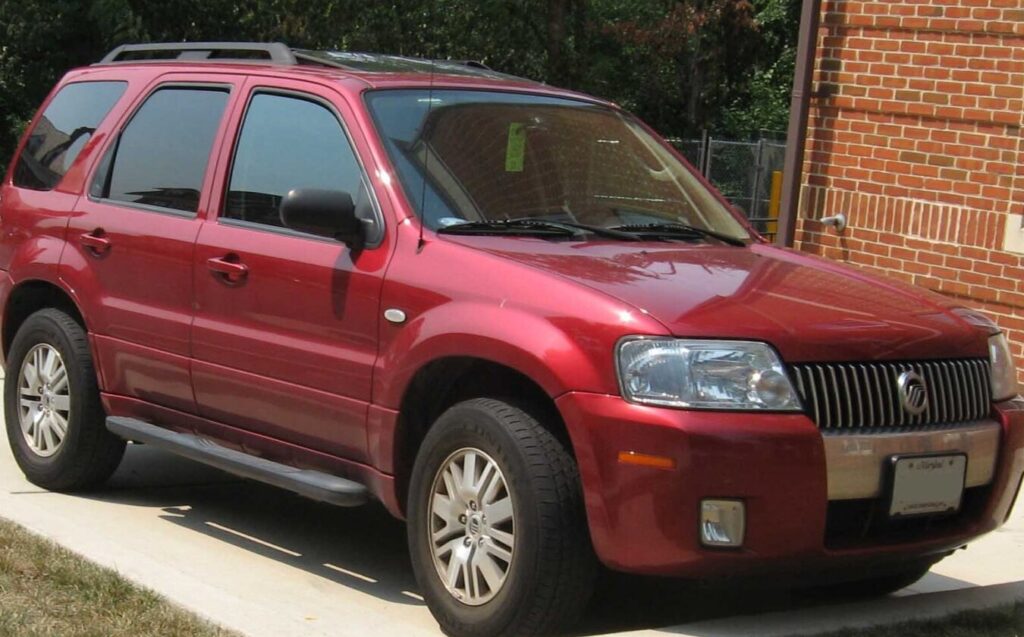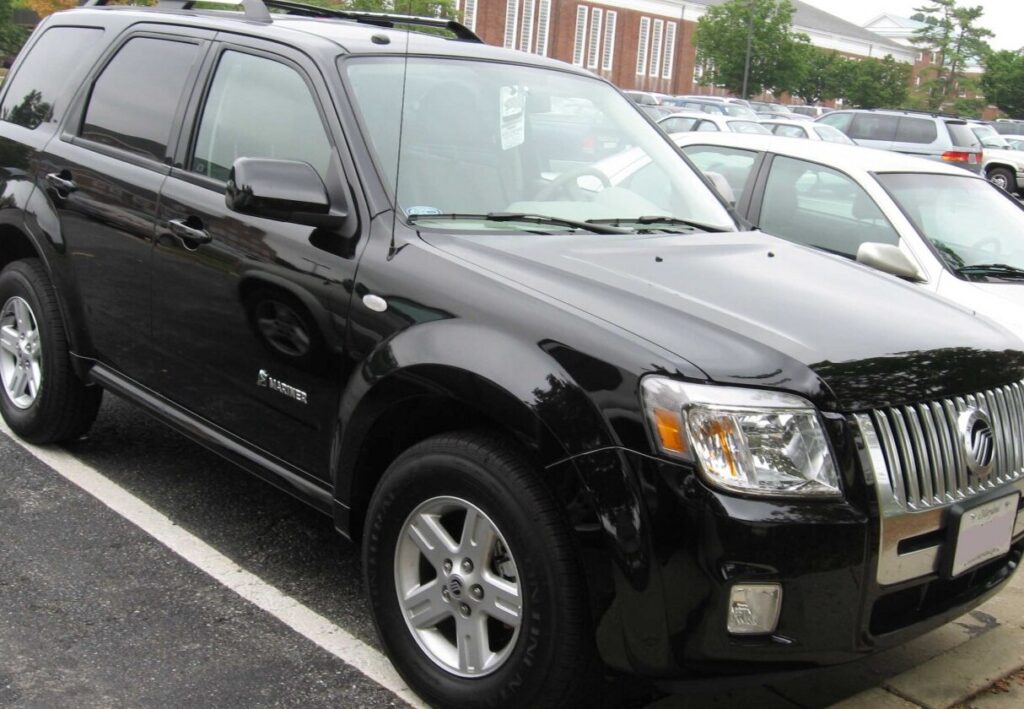
The Mercury Mariner II 3.0 V6 4WD Automatic, produced from 2008 to October 2010, represented a significant iteration of Mercury’s compact crossover SUV offering. Positioned as a mid-range trim within the Mariner II lineup, it aimed to provide a balance of power, capability, and comfort for American families. The Mariner II itself was based on the Ford Escape, sharing its platform and many components, but distinguished by Mercury’s more refined styling and features. This particular variant, equipped with the 3.0-liter Duratec V6 and a six-speed automatic transmission, catered to buyers seeking a more robust engine option than the base four-cylinder, while still offering the convenience of an automatic gearbox and the added security of all-wheel drive.
Technical Specifications
| Brand | Mercury |
| Model | Mariner |
| Generation | Mariner II |
| Type (Engine) | 3.0 V6 (240 Hp) 4WD Automatic |
| Start of production | 2008 |
| End of production | October, 2010 |
| Powertrain Architecture | Internal Combustion engine |
| Body type | SUV, Crossover |
| Seats | 5 |
| Doors | 5 |
| Fuel consumption (urban) | 13.1-13.8 l/100 km (18-17 US mpg, 21.6-20.5 UK mpg, 7.6-7.2 km/l) |
| Fuel consumption (extra urban) | 9.8-10.2 l/100 km (24-23.1 US mpg, 28.8-27.7 UK mpg, 10.2-9.8 km/l) |
| Fuel consumption (combined) | 11.8 l/100 km (19.9 US mpg, 23.9 UK mpg, 8.5 km/l) |
| Fuel Type | Petrol (Gasoline) |
| Weight-to-power ratio | 6.7 kg/Hp, 149.1 Hp/tonne |
| Weight-to-torque ratio | 5.1 kg/Nm, 196.3 Nm/tonne |
| Power | 240 Hp @ 6550 rpm |
| Power per litre | 80.9 Hp/l |
| Torque | 316 Nm @ 4300 rpm (233.07 lb.-ft. @ 4300 rpm) |
| Engine layout | Front, Transverse |
| Engine Model/Code | Duratec 30 |
| Engine displacement | 2967 cm3 (181.06 cu. in.) |
| Number of cylinders | 6 |
| Engine configuration | V-engine |
| Cylinder Bore | 89 mm (3.5 in.) |
| Piston Stroke | 79.5 mm (3.13 in.) |
| Compression ratio | 10.3:1 |
| Number of valves per cylinder | 4 |
| Fuel injection system | Multi-port manifold injection |
| Engine aspiration | Naturally aspirated engine |
| Valvetrain | DOHC |
| Engine oil capacity | 5.7 l (6.02 US qt | 5.02 UK qt) |
| Coolant capacity | 9 l (9.51 US qt | 7.92 UK qt) |
| Kerb Weight | 1610 kg (3549.44 lbs.) |
| Max. weight | 2105 kg (4640.73 lbs.) |
| Max load | 495 kg (1091.29 lbs.) |
| Trunk (boot) space – minimum | 889 l (31.39 cu. ft.) |
| Trunk (boot) space – maximum | 1903 l (67.2 cu. ft.) |
| Fuel tank capacity | 62 l (16.38 US gal | 13.64 UK gal) |
| Permitted trailer load with brakes (12%) | 1588 kg (3500.94 lbs.) |
| Length | 4448 mm (175.12 in.) |
| Width | 1806 mm (71.1 in.) |
| Width with mirrors folded | 1979 mm (77.91 in.) |
| Width including mirrors | 2065 mm (81.3 in.) |
| Height | 1725-1778 mm (67.91 – 70 in.) |
| Wheelbase | 2619 mm (103.11 in.) |
| Front track | 1542 mm (60.71 in.) |
| Rear (Back) track | 1529 mm (60.2 in.) |
| Ride height (ground clearance) | 206 mm (8.11 in.) |
| Minimum turning circle (turning diameter) | 11.2 m (36.75 ft.) |
| Drivetrain Architecture | All wheel drive (4×4) |
| Number of gears and type of gearbox | 6 gears, automatic transmission |
| Front suspension | Independent, type McPherson with coil spring and anti-roll bar |
| Rear suspension | Independent multi-link spring suspension with stabilizer |
| Front brakes | Ventilated discs, 302 mm |
| Rear brakes | Drum, 254 mm |
| Assisting systems | ABS (Anti-lock braking system) |
| Steering type | Steering rack and pinion |
| Power steering | Electric Steering |
| Tires size | 235/70 R16; 225/65 R17 |
| Wheel rims size | 16; 17 |
Powertrain & Engine Architecture
The heart of the Mariner II 3.0 V6 was the Ford Duratec 30 engine. This 3.0-liter, naturally aspirated V6 utilized a cast iron block with aluminum cylinder heads, a configuration chosen for its balance of durability and weight savings. The engine featured a double overhead camshaft (DOHC) valvetrain with four valves per cylinder, enhancing breathing and contributing to its respectable power output. Fuel delivery was managed by a multi-port fuel injection system, providing precise fuel metering for optimal combustion. The engine code, often found as a sticker in the engine bay, would typically be ABS or similar variations depending on specific calibration. Paired with this engine was a six-speed automatic transmission, a significant upgrade from the four-speed units found in earlier Mariner models. This transmission offered smoother shifts and improved fuel efficiency, contributing to a more refined driving experience. The all-wheel-drive system employed an electronically controlled clutch to engage the rear wheels when traction was needed, providing enhanced stability in adverse weather conditions.
Driving Characteristics
The 240 horsepower and 316 lb-ft of torque produced by the 3.0-liter V6 provided a noticeable performance boost compared to the base 2.4-liter four-cylinder engine. Acceleration was brisk, allowing for confident merging and passing maneuvers. The six-speed automatic transmission was generally well-tuned, offering smooth and timely shifts. However, it wasn’t particularly sporty, prioritizing comfort and fuel economy over aggressive downshifts. Compared to a manual transmission equipped Mariner II, the automatic offered less driver engagement but greater convenience, particularly in urban driving. The all-wheel-drive system provided enhanced traction, making the vehicle feel more secure in slippery conditions, but also added some weight, slightly impacting handling responsiveness.
Equipment & Trim Levels
The Mariner II 3.0 V6 4WD Automatic typically came standard with features such as air conditioning, power windows and locks, a CD player with an auxiliary input, and keyless entry. Higher trim levels, often denoted by Convenience or Luxury packages, added features like leather upholstery, heated front seats, a sunroof, and upgraded audio systems. Interior upholstery was typically cloth on the base models, with leather available as an option. The dashboard layout was functional and straightforward, with easy-to-read gauges and logically placed controls. Optional extras included a navigation system, rear parking sensors, and a premium sound system.
Chassis & Braking
The Mariner II utilized an independent front suspension with McPherson struts and a multi-link independent rear suspension, providing a comfortable ride quality. A stabilizer bar was included at both ends to reduce body roll during cornering. Braking duties were handled by ventilated discs at the front and drum brakes at the rear. Anti-lock brakes (ABS) were standard, enhancing safety by preventing wheel lockup during hard braking. The suspension was tuned for comfort rather than sporty handling, prioritizing a smooth ride over sharp cornering ability.
Market Reception & Comparison
The Mariner II 3.0 V6 4WD Automatic was generally well-received by critics as a competent and comfortable crossover SUV. It was praised for its spacious interior, comfortable ride, and capable all-wheel-drive system. However, some reviewers noted that the interior materials weren’t as upscale as those found in some competitors, and the fuel economy was average for its class. Compared to the base four-cylinder Mariner II, the 3.0 V6 offered a significant performance upgrade, but at a higher price point. Compared to other V6-powered crossovers like the Honda CR-V or Toyota RAV4, the Mariner II offered a competitive level of features and performance, but often at a slightly lower price.
Legacy
The Duratec 30 engine, while generally reliable, is known to have some potential issues, including oil leaks and timing chain wear, particularly as mileage increases. Regular maintenance, including oil changes and timing chain inspections, is crucial for ensuring long-term reliability. Today, the Mariner II 3.0 V6 4WD Automatic can be found on the used car market at relatively affordable prices. It remains a viable option for buyers seeking a spacious, capable, and comfortable crossover SUV, but a thorough pre-purchase inspection is recommended to identify any potential mechanical issues. Its blend of practicality and available power continues to appeal to those seeking a versatile family vehicle.