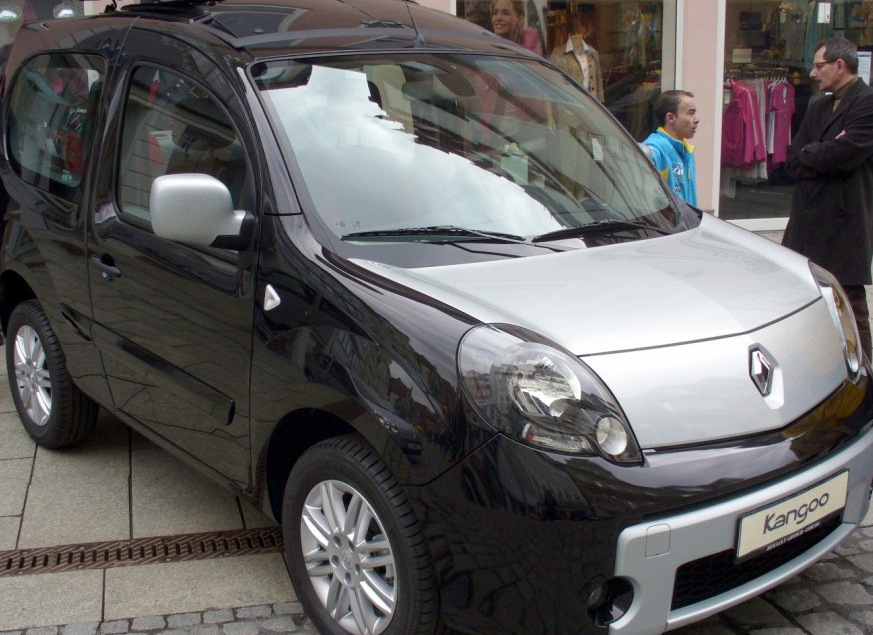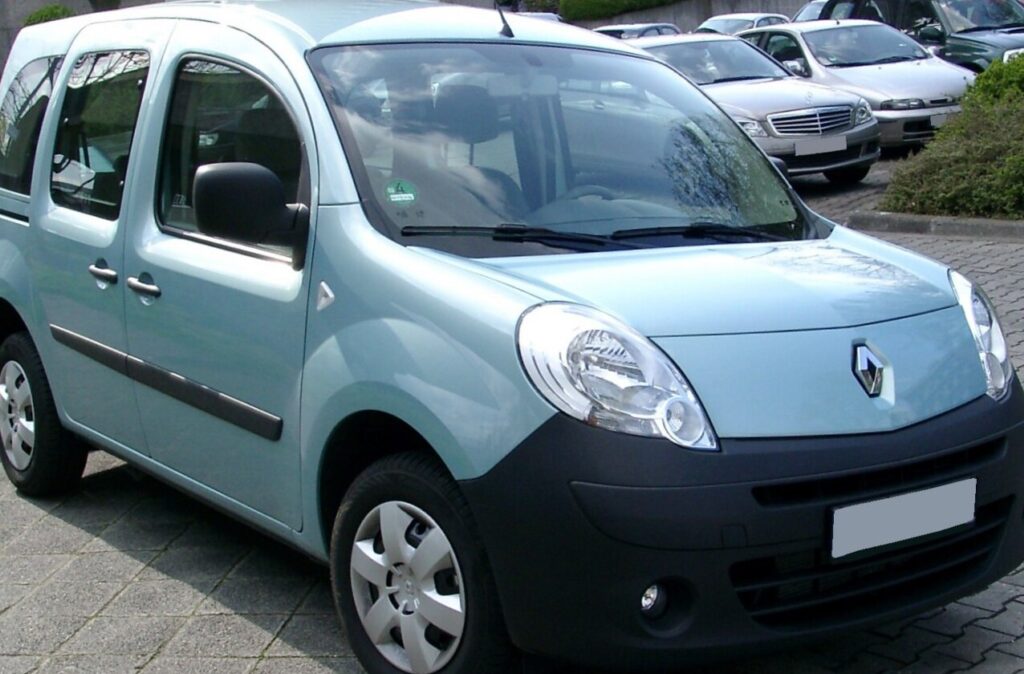
The Renault Kangoo II 1.5 dCi 86 horsepower variant was a popular choice in the European market, particularly from its introduction in 2007 through 2013. Positioned as an entry-level offering within the Kangoo II range, it provided a practical and economical solution for families and commercial users alike. This version of the Kangoo II, built on the X0/B91 platform, aimed to balance affordability with the versatility expected of a compact minivan. It served as a key model in Renault’s light commercial vehicle and passenger car lineup, offering a diesel-powered alternative to gasoline engines and more powerful dCi options.
Technical Specifications
| Brand | Renault |
| Model | Kangoo |
| Generation | Kangoo II |
| Type (Engine) | 1.5 dCi (86 Hp) |
| Start of production | 2007 |
| End of production | 2013 |
| Powertrain Architecture | Internal Combustion engine |
| Body type | Minivan |
| Seats | 5 |
| Doors | 5 |
| Fuel consumption (urban) | 5.9 l/100 km (39.9 US mpg, 47.9 UK mpg, 16.9 km/l) |
| Fuel consumption (extra urban) | 5 l/100 km (47 US mpg, 56.5 UK mpg, 20 km/l) |
| Fuel consumption (combined) | 5.3 l/100 km (44.4 US mpg, 53.3 UK mpg, 18.9 km/l) |
| CO2 emissions | 140 g/km |
| Fuel Type | Diesel |
| Acceleration 0 – 100 km/h | 16 sec |
| Acceleration 0 – 62 mph | 16 sec |
| Acceleration 0 – 60 mph | 15.2 sec |
| Maximum speed | 159 km/h (98.8 mph) |
| Emission standard | Euro 4 |
| Weight-to-power ratio | 17 kg/Hp, 58.7 Hp/tonne |
| Weight-to-torque ratio | 7.3 kg/Nm, 136.6 Nm/tonne |
| Power | 86 Hp @ 3750 rpm |
| Power per litre | 58.9 Hp/l |
| Torque | 200 Nm @ 1900 rpm (147.51 lb.-ft. @ 1900 rpm) |
| Engine layout | Front, Transverse |
| Engine Model/Code | K9K |
| Engine displacement | 1461 cm3 (89.16 cu. in.) |
| Number of cylinders | 4 |
| Engine configuration | Inline |
| Cylinder Bore | 76 mm (2.99 in.) |
| Piston Stroke | 80.5 mm (3.17 in.) |
| Compression ratio | 18.8:1 |
| Number of valves per cylinder | 2 |
| Fuel injection system | Diesel Commonrail |
| Engine aspiration | Turbocharger, Intercooler |
| Valvetrain | DOHC |
| Engine oil capacity | 4.5 l (4.76 US qt | 3.96 UK qt) |
| Coolant | 7.2 l (7.61 US qt | 6.34 UK qt) |
| Kerb Weight | 1464 kg (3227.57 lbs.) |
| Max. weight | 1954 kg (4307.83 lbs.) |
| Max load | 490 kg (1080.27 lbs.) |
| Trunk (boot) space – minimum | 438 l (15.47 cu. ft.) |
| Trunk (boot) space – maximum | 1977 l (69.82 cu. ft.) |
| Fuel tank capacity | 60 l (15.85 US gal | 13.2 UK gal) |
| Max. roof load | 100 kg (220.46 lbs.) |
| Permitted trailer load with brakes (12%) | 1010 kg (2226.67 lbs.) |
| Permitted trailer load without brakes | 732 kg (1613.78 lbs.) |
| Permitted towbar download | 75 kg (165.35 lbs.) |
| Length | 4213 mm (165.87 in.) |
| Width | 1829 mm (72.01 in.) |
| Width including mirrors | 2133 mm (83.98 in.) |
| Height | 1839 mm (72.4 in.) |
| Wheelbase | 2697 mm (106.18 in.) |
| Front track | 1533 mm (60.35 in.) |
| Rear (Back) track | 1521 mm (59.88 in.) |
| Front overhang | 807 mm (31.77 in.) |
| Rear overhang | 709 mm (27.91 in.) |
| Minimum turning circle | 11 m (36.09 ft.) |
| Drivetrain | Front wheel drive |
| Number of gears | 5 |
| Gearbox type | Manual transmission |
| Front suspension | Independent type McPherson |
| Rear suspension | Torsion |
| Front brakes | Ventilated discs |
| Rear brakes | Disc |
| Assisting systems | ABS (Anti-lock braking system) |
| Steering type | Steering rack and pinion |
| Power steering | Electric Steering |
| Tires size | 195/65 R15 |
| Wheel rims size | 15 |
Powertrain & Engine Architecture
The heart of the Kangoo II 1.5 dCi 86 Hp is the K9K engine, a member of Renault’s widely used family of small-displacement diesel engines. This 1.5-liter, inline-four cylinder engine utilizes a common rail direct injection system, delivering fuel at high pressure for improved combustion efficiency and reduced emissions. The engine is equipped with a turbocharger and intercooler, enhancing power output and torque. The 86 horsepower version of the K9K engine features a relatively conservative tuning, prioritizing fuel economy and reliability over outright performance. The engine’s DOHC (Double Overhead Camshaft) valvetrain, with two valves per cylinder, contributes to its smooth operation. The 5-speed manual transmission was the standard offering for this variant, chosen for its simplicity and cost-effectiveness. The transmission’s gear ratios were optimized for everyday driving, focusing on providing adequate acceleration and maintaining reasonable engine speeds at highway cruising speeds.
Driving Characteristics
The Kangoo II 1.5 dCi 86 Hp offered a practical and undemanding driving experience. Acceleration was modest, taking around 16 seconds to reach 62 mph (100 km/h), making it less suited for drivers seeking spirited performance. However, the engine’s 200 Nm (147.51 lb.-ft.) of torque, available from 1900 rpm, provided sufficient pulling power for everyday tasks, such as carrying passengers and cargo. The 5-speed manual transmission allowed for reasonable control over engine speed, but the gear ratios were spaced to favor fuel efficiency rather than rapid acceleration. Compared to the more powerful dCi variants, the 86 hp version felt noticeably slower, particularly when fully loaded. However, it offered a smoother and more relaxed driving experience, especially in urban environments.
Equipment & Trim Levels
The 1.5 dCi 86 Hp Kangoo II typically came with a basic but functional equipment level. Standard features generally included power steering, central locking, electric front windows, and an adjustable steering column. Safety features such as ABS (Anti-lock Braking System) and driver/passenger airbags were also standard. Interior upholstery was typically cloth, with a durable and practical design. Optional extras included air conditioning, a radio/CD player, and rear parking sensors. The trim level was generally positioned as the entry point to the Kangoo II range, appealing to budget-conscious buyers who prioritized practicality and fuel economy.
Chassis & Braking
The Kangoo II featured a McPherson strut independent suspension at the front and a torsion beam suspension at the rear. This setup provided a comfortable ride quality, suitable for everyday driving conditions. The front brakes were ventilated discs, offering good stopping power, while the rear brakes were discs. The electric power steering provided light and easy steering, making it maneuverable in urban environments. The suspension was tuned to prioritize comfort and stability, rather than sporty handling.
Market Reception & Comparison
The Renault Kangoo II 1.5 dCi 86 Hp was well-received in the European market as a practical and economical choice for families and commercial users. Critics praised its fuel efficiency, spacious interior, and versatility. However, some reviewers noted its modest performance and basic interior trim. Compared to the more powerful dCi variants, the 86 hp version offered lower running costs but sacrificed performance. It also provided a more affordable entry point into the Kangoo II range, making it accessible to a wider range of buyers. Its fuel economy was a key selling point, consistently achieving around 5.3 l/100 km (44.4 US mpg) in combined driving conditions.
Legacy
The K9K engine, found in the Kangoo II 1.5 dCi 86 Hp, has proven to be a relatively reliable powertrain. While not without its potential issues (such as turbocharger wear and injector problems), it is generally considered a durable and long-lasting engine when properly maintained. In the used car market, this variant of the Kangoo II remains a popular choice for those seeking an affordable and practical minivan. Its fuel efficiency and relatively low maintenance costs continue to appeal to budget-conscious buyers. However, potential buyers should be aware of the engine’s age and mileage, and ensure that it has been regularly serviced.