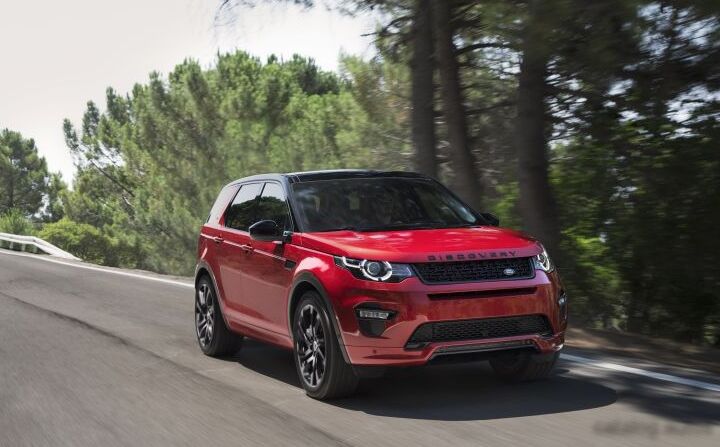
The Land Rover Discovery Sport 2.0 (150 hp) AWD, powered by the Ingenium engine, was a key variant in the first generation of the Discovery Sport, produced from 2016 to 2018. Positioned as an entry-level offering within the range, it aimed to provide access to the Discovery Sport’s capabilities and styling at a more affordable price point. This model played a significant role in establishing the Discovery Sport as a popular premium compact SUV, particularly in European and Asian markets, offering a blend of on-road comfort and respectable off-road ability. It represented Land Rover’s attempt to broaden the appeal of the Discovery brand to a wider customer base.
Technical Specifications
| Brand | Land Rover |
| Model | Discovery Sport |
| Generation | Discovery Sport |
| Type (Engine) | 2.0 (150 Hp) AWD Ingenium engine |
| Start of production | 2016 year |
| End of production | 2018 year |
| Powertrain Architecture | Internal Combustion engine |
| Body type | SUV |
| Seats | 5 |
| Doors | 5 |
| Fuel consumption (economy) – urban | 5.6 l/100 km (42 US mpg, 50.4 UK mpg, 17.9 km/l) |
| Fuel consumption (economy) – extra urban | 4.5 l/100 km (52.3 US mpg, 62.8 UK mpg, 22.2 km/l) |
| Fuel consumption (economy) – combined | 4.9 l/100 km (48 US mpg, 57.6 UK mpg, 20.4 km/l) |
| CO2 emissions | 129 g/km |
| Fuel Type | Diesel |
| Acceleration 0 – 100 km/h | 11.7 sec |
| Acceleration 0 – 62 mph | 11.7 sec |
| Acceleration 0 – 60 mph | 11.1 sec |
| Maximum speed | 180 km/h (111.85 mph) |
| Emission standard | Euro 6 |
| Weight-to-power ratio | 11.8 kg/Hp, 84.5 Hp/tonne |
| Weight-to-torque ratio | 4.7 kg/Nm, 214.1 Nm/tonne |
| Power | 150 Hp @ 3500 rpm |
| Power per litre | 75 Hp/l |
| Torque | 380 Nm @ 1750 rpm (280.27 lb.-ft. @ 1750 rpm) |
| Engine layout | Front, Transverse |
| Engine Model/Code | Ingenium / 204DTD |
| Engine displacement | 1999 cm3 (121.99 cu. in.) |
| Number of cylinders | 4 |
| Engine configuration | Inline |
| Cylinder Bore | 83 mm (3.27 in.) |
| Piston Stroke | 92.35 mm (3.64 in.) |
| Compression ratio | 15.5:1 |
| Number of valves per cylinder | 4 |
| Fuel injection system | Diesel Commonrail |
| Engine aspiration | Turbocharger, Intercooler |
| Engine oil capacity | 6.5 l (6.87 US qt | 5.72 UK qt) |
| Coolant | 7.4 l (7.82 US qt | 6.51 UK qt) |
| Kerb Weight | 1775 kg (3913.21 lbs.) |
| Fuel tank capacity | 54 l (14.27 US gal | 11.88 UK gal) |
| AdBlue tank | 13.7 l (3.62 US gal | 3.01 UK gal) |
| Permitted trailer load with brakes (12%) | 2000 kg (4409.25 lbs.) |
| Permitted trailer load without brakes | 750 kg (1653.47 lbs.) |
| Length | 4599 mm (181.06 in.) |
| Width with mirrors folded | 2069 mm (81.46 in.) |
| Width including mirrors | 2173 mm (85.55 in.) |
| Height | 1724 mm (67.87 in.) |
| Wheelbase | 2741 mm (107.91 in.) |
| Front track | 1621 mm (63.82 in.) |
| Rear (Back) track | 1630 mm (64.17 in.) |
| Ride height (ground clearance) | 211 mm (8.31 in.) |
| Drag coefficient (Cd) | 0.37 |
| Minimum turning circle (turning diameter) | 11.6 m (38.06 ft.) |
| Approach angle | 23° |
| Departure angle | 31° |
| Ramp-over (brakeover) angle | 20° |
| Climb angle | 45° |
| Wading depth | 600 mm (23.62 in.) |
| Drive wheel | All wheel drive (4×4) |
| Number of gears and type of gearbox | 6 gears, manual transmission |
| Front suspension | Independent, type McPherson with coil spring and anti-roll bar |
| Rear suspension | Independent multi-link suspension |
| Front brakes | Ventilated discs, 325 mm |
| Rear brakes | Disc, 300 mm |
| Assisting systems | ABS (Anti-lock braking system) |
| Steering type | Steering rack and pinion |
| Power steering | Electric Steering |
| Tires size | 225/65 R17; 235/65 R17; 235/60 R18; 235/55 R19; 245/45 R20 |
| Wheel rims size | 7.0J x 17; 8.0J x 18; 8.0J x 19; 8.0J x 20 |
Powertrain & Engine Architecture
The heart of the Discovery Sport 2.0 (150 hp) is the Ingenium engine family, specifically the 204DTD diesel. This 2.0-liter inline-four cylinder engine utilizes a cast aluminum block and cylinder head, designed for modularity and efficiency. The engine employs a sophisticated turbocharger with variable geometry, coupled with an intercooler, to deliver 150 horsepower at 3500 rpm and a substantial 380 Nm (280 lb-ft) of torque from as low as 1750 rpm. The fuel injection system is a direct common rail diesel injection system, operating at very high pressures to optimize combustion. The engine features four valves per cylinder and a compression ratio of 15.5:1. The 6-speed manual transmission was standard on this variant, providing a balance between fuel economy and driver engagement.
Driving Characteristics
The 150 hp Discovery Sport, while not the quickest variant, offered a usable and refined driving experience. Acceleration from 0-60 mph took around 11.1 seconds, and top speed was limited to 111.85 mph. The engine’s torque delivery was its strong suit, providing ample pulling power for everyday driving and overtaking maneuvers. The manual transmission allowed for greater driver control, but the gear ratios were tuned for fuel efficiency rather than outright performance. Compared to the higher-output 180 hp Ingenium diesel or the petrol variants, the 150 hp model felt noticeably less responsive, particularly at higher speeds. However, it provided a more economical option for those prioritizing fuel consumption over outright speed.
Equipment & Trim Levels
The 2.0 (150 hp) AWD typically came with a reasonable level of standard equipment. This included features like automatic headlights, rain-sensing wipers, a leather-wrapped steering wheel, air conditioning, and a basic infotainment system with a touchscreen display. Interior upholstery was generally cloth, though leather options were available as upgrades. Common optional extras included navigation, parking sensors, heated seats, and upgraded sound systems. Trim levels varied by market, but generally offered progressive upgrades in terms of interior materials, exterior styling, and technology features.
Chassis & Braking
The Discovery Sport’s chassis featured an independent suspension setup at all four corners, utilizing McPherson struts at the front and a multi-link system at the rear. This provided a comfortable ride quality, even on uneven surfaces. The braking system consisted of ventilated discs at the front and solid discs at the rear. Anti-lock Braking System (ABS) was standard. The all-wheel-drive system, Terrain Response, allowed drivers to select different driving modes optimized for various surfaces, enhancing the vehicle’s off-road capability.
Market Reception & Comparison
The Discovery Sport 2.0 (150 hp) AWD was generally well-received by critics as an accessible entry point into the Discovery Sport range. It was praised for its comfortable ride, spacious interior, and respectable fuel economy (around 48 US mpg combined). However, some reviewers noted that the 150 hp engine felt underpowered, particularly when fully loaded or tackling steep inclines. Compared to the more powerful variants, it offered a lower price point but sacrificed some performance. The 1.5L Ingenium petrol engine was also available, but the diesel offered superior fuel economy and torque.
Legacy
The Ingenium engine family, including the 204DTD, has proven to be relatively reliable, although some early models experienced issues with the diesel particulate filter (DPF). The 150 hp variant remains a popular choice in the used car market due to its affordability and fuel efficiency. While not the most exciting version of the Discovery Sport, it represents a practical and capable SUV that offers a good balance of comfort, space, and all-weather capability. Its success helped establish the Discovery Sport as a key model in Land Rover’s lineup, paving the way for future generations of the vehicle.