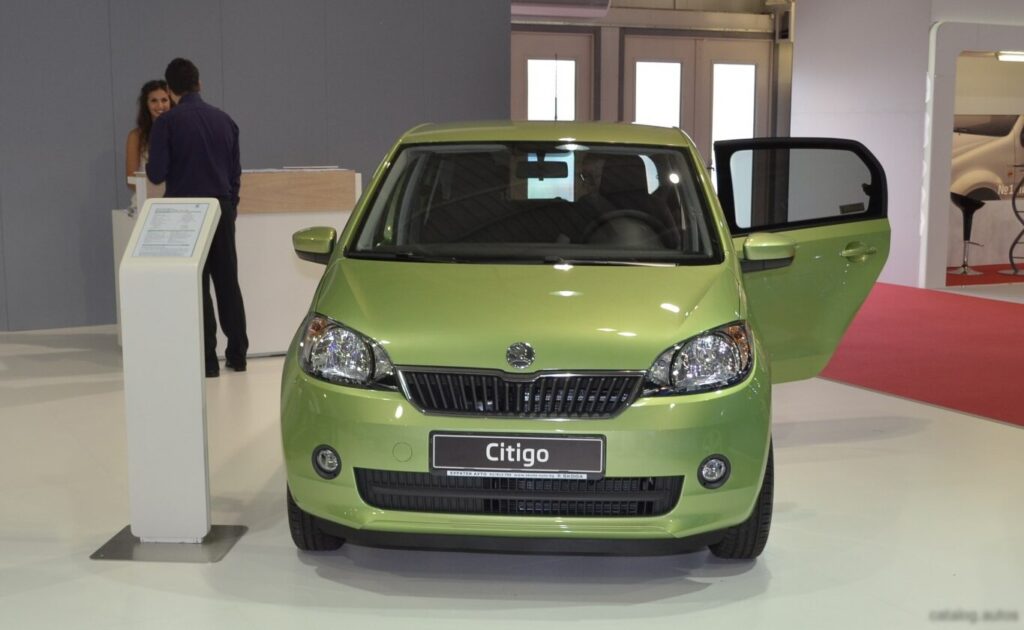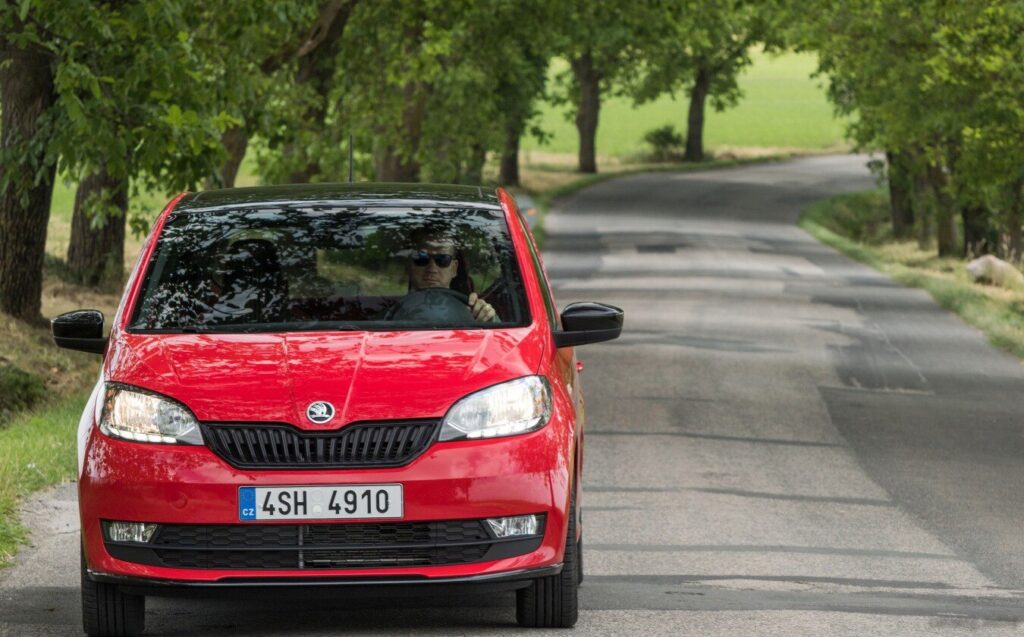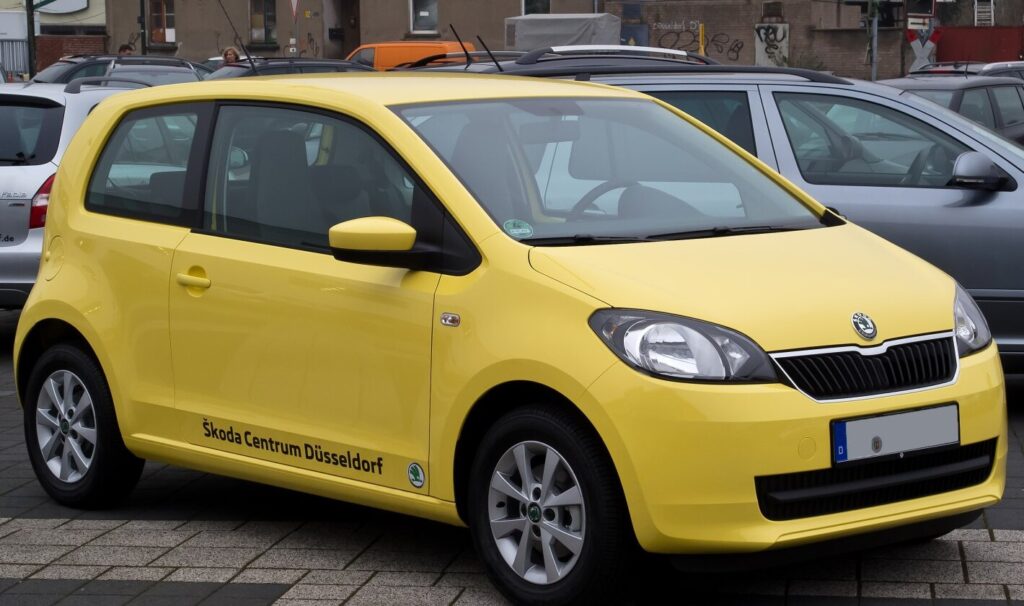
The Skoda Citigo, specifically the 3-door variant equipped with the 1.0-liter 75 horsepower engine and automatic transmission, was a key model in Skoda’s entry-level offerings from its introduction in October 2011 until production ended in 2017. Positioned as an affordable and practical city car, the Citigo shared its platform – the Volkswagen Group’s A05 (often referred to as the 1HX0/A3 platform) – with the Volkswagen up! and SEAT Mii. This collaborative effort aimed to provide a cost-effective solution for the European microcar segment, emphasizing fuel efficiency and ease of use. The automatic transmission option, while not the most common choice, broadened the Citigo’s appeal to drivers prioritizing convenience over outright performance.
Technical Specifications
| Brand | Skoda |
| Model | Citigo |
| Generation | Citigo (3-door) |
| Type (Engine) | 1.0 (75 Hp) Automatic |
| Start of production | October, 2011 |
| End of production | 2017 |
| Powertrain Architecture | Internal Combustion engine |
| Body type | Hatchback |
| Seats | 4 |
| Doors | 3 |
| Fuel consumption (urban) | 5.5 l/100 km (42.8 US mpg, 51.4 UK mpg, 18.2 km/l) |
| Fuel consumption (extra urban) | 4 l/100 km (58.8 US mpg, 70.6 UK mpg, 25 km/l) |
| Fuel consumption (combined) | 4.5 l/100 km (52.3 US mpg, 62.8 UK mpg, 22.2 km/l) |
| CO2 emissions | 105 g/km |
| Fuel Type | Petrol (Gasoline) |
| Acceleration 0 – 100 km/h | 13.9 sec |
| Acceleration 0 – 62 mph | 13.9 sec |
| Acceleration 0 – 60 mph | 13.2 sec |
| Maximum speed | 171 km/h (106.25 mph) |
| Emission standard | Euro 5 |
| Weight-to-power ratio | 12.4 kg/Hp, 80.5 Hp/tonne |
| Weight-to-torque ratio | 9.8 kg/Nm, 101.9 Nm/tonne |
| Power | 75 Hp @ 6200 rpm |
| Power per litre | 75.1 Hp/l |
| Torque | 95 Nm @ 3000-4300 rpm (70.07 lb.-ft. @ 3000-4300 rpm) |
| Engine layout | Front, Transverse |
| Engine Model/Code | CHYB |
| Engine displacement | 999 cm3 (60.96 cu. in.) |
| Number of cylinders | 3 |
| Engine configuration | Inline |
| Fuel injection system | Multi-port manifold injection |
| Engine aspiration | Naturally aspirated engine |
| Engine oil capacity | 3.4 l (3.59 US qt | 2.99 UK qt) |
| Coolant capacity | 4.2 l (4.44 US qt | 3.7 UK qt) |
| Kerb Weight | 932 kg (2054.71 lbs.) |
| Max. weight | 1290 kg (2843.96 lbs.) |
| Max load | 358 kg (789.25 lbs.) |
| Trunk (boot) space – minimum | 251 l (8.86 cu. ft.) |
| Trunk (boot) space – maximum | 959 l (33.87 cu. ft.) |
| Fuel tank capacity | 35 l (9.25 US gal | 7.7 UK gal) |
| Length | 3563 mm (140.28 in.) |
| Width | 1641 mm (64.61 in.) |
| Height | 1478 mm (58.19 in.) |
| Wheelbase | 2420 mm (95.28 in.) |
| Front track | 1428 mm (56.22 in.) |
| Rear track | 1424 mm (56.06 in.) |
| Minimum turning circle | 9.8 m (32.15 ft.) |
| Drivetrain Architecture | Front wheel drive |
| Number of gears | 5 |
| Gearbox type | Automatic transmission |
| Front suspension | Independent, McPherson with coil spring and anti-roll bar |
| Rear suspension | Semi-dependent beam with stabilizer |
| Front brakes | Ventilated discs |
| Rear brakes | Drum |
| Assisting systems | ABS (Anti-lock braking system) |
| Steering type | Steering rack and pinion |
| Power steering | Electric |
| Tires size | 165/70 R14 |
| Wheel rims size | 5.0J x 14 |
Powertrain & Engine Architecture
The heart of the Citigo 1.0 Automatic is the CHYB engine code, a naturally aspirated, three-cylinder 999cc petrol engine. This engine utilizes a multi-point fuel injection system, a relatively simple and reliable setup for its time. The engine’s three cylinders are arranged in an inline configuration, contributing to its compact size. The valvetrain features two valves per cylinder (two intake, two exhaust), optimized for low-end torque rather than high-revving power. Paired with this engine is a five-speed automatic transmission. This transmission, while providing convenience, is not known for its particularly quick shifts or sporty feel. It was designed primarily for fuel efficiency and smooth operation in urban environments. The engine produces 75 horsepower at 6200 rpm and 95 Nm (70 lb-ft) of torque between 3000 and 4300 rpm.
Driving Characteristics
The 1.0-liter 75 hp automatic Citigo delivers modest performance. Acceleration from 0-60 mph takes around 13.2 seconds, and top speed is approximately 106 mph. The automatic transmission’s gear ratios are geared towards maximizing fuel economy, resulting in a somewhat leisurely driving experience. Compared to the manual transmission version, the automatic is noticeably slower, particularly during overtaking maneuvers. The engine feels strained when pushed hard, and the transmission can sometimes hunt for the right gear, especially on inclines. However, in typical city driving conditions, the automatic provides a comfortable and convenient experience, with smooth gear changes and predictable power delivery.
Equipment & Trim Levels
The Citigo 1.0 Automatic typically came with a fairly basic level of equipment, reflecting its position as an entry-level car. Standard features generally included central locking, power steering, electric front windows, and an ABS anti-lock braking system. Interior upholstery was typically cloth, and the dashboard featured a simple, functional design. Optional extras included air conditioning, alloy wheels, and a radio/CD player. Higher trim levels, such as the ‘Elegance’ trim, added features like parking sensors, heated mirrors, and more premium interior materials.
Chassis & Braking
The Citigo’s chassis is designed for nimble handling and comfortable ride quality. The front suspension utilizes an independent McPherson strut setup, while the rear suspension employs a semi-dependent torsion beam. This configuration provides a good balance between ride comfort and handling precision. Braking duties are handled by ventilated discs at the front and drum brakes at the rear. The drum brakes on the rear were a cost-saving measure, common in this segment. The steering is electrically assisted, providing light and easy steering feel, ideal for maneuvering in tight city streets.
Market Reception & Comparison
The Skoda Citigo 1.0 Automatic received mixed reviews. Critics praised its affordability, fuel efficiency, and ease of use, but noted its lack of performance and somewhat basic interior. Compared to the manual transmission version, the automatic was often criticized for its slower acceleration and less engaging driving experience. However, it offered a compelling alternative to other city cars like the Fiat Panda and Toyota Aygo, particularly for drivers who prioritized convenience over performance. Fuel economy was a strong point, with combined figures around 52.3 US mpg.
Legacy
The Skoda Citigo, including the 1.0 Automatic variant, has proven to be a relatively reliable car in the used car market. The CHYB engine is known for its durability, and the automatic transmission, while not particularly sophisticated, is generally dependable. However, potential buyers should be aware of the possibility of wear and tear on the suspension components, particularly the rear torsion beam. Today, the Citigo remains a popular choice for first-time car buyers and those seeking an affordable and economical city car. Its simple design and relatively low maintenance costs contribute to its enduring appeal.