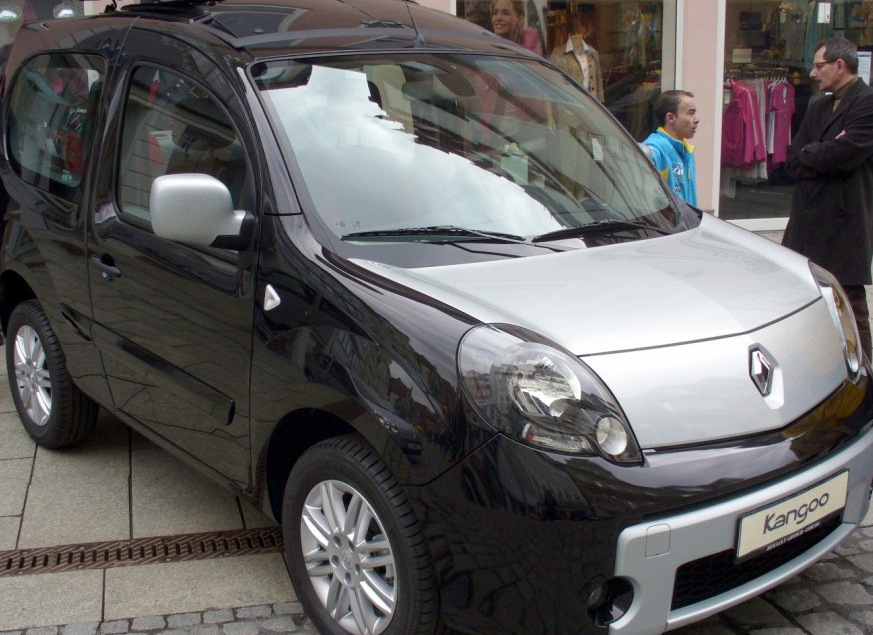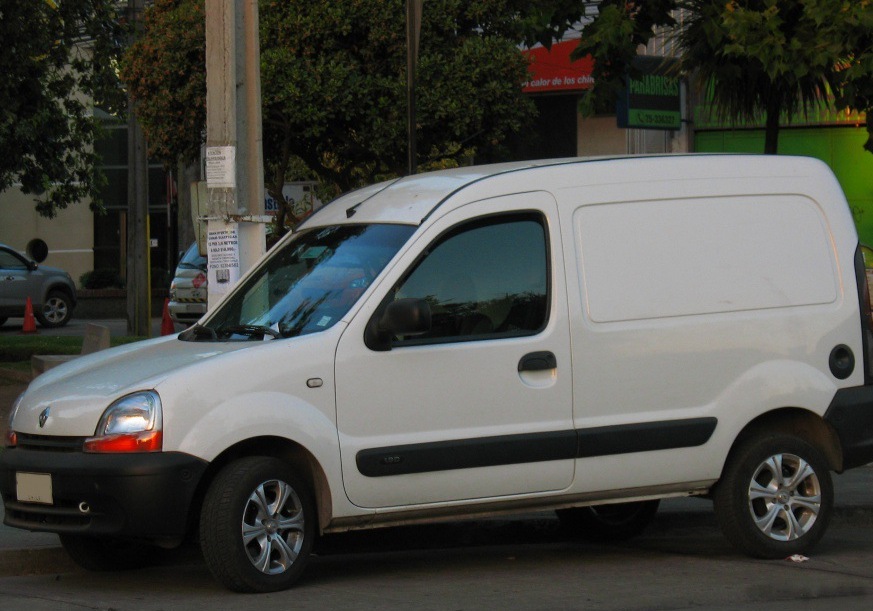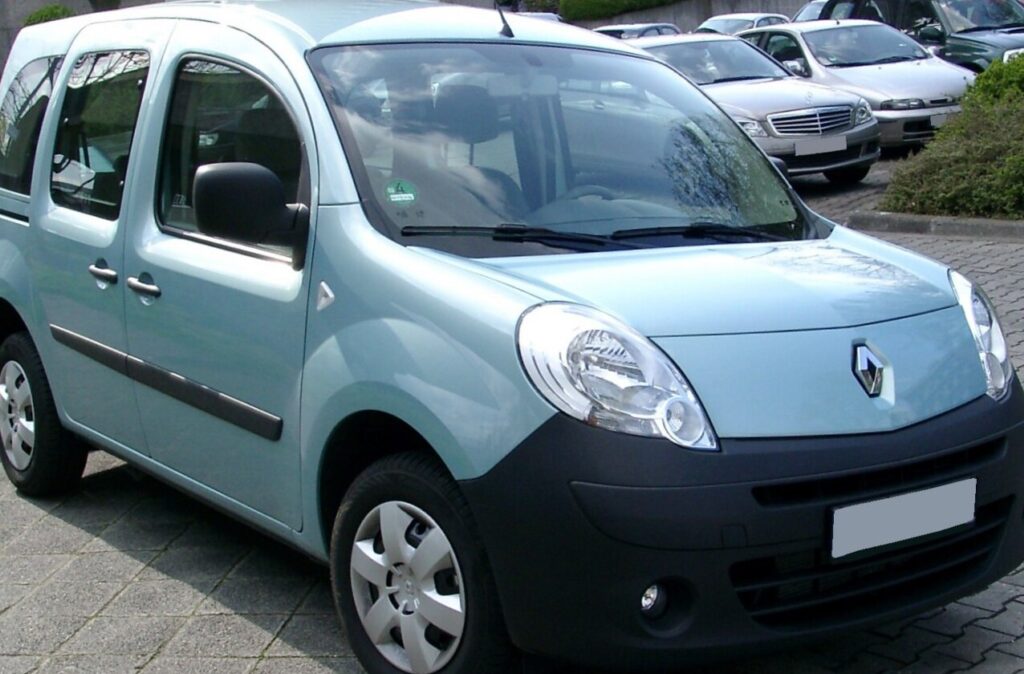
The Renault Kangoo II 1.5 dCi 90 hp, produced between 2009 and 2013, represented a popular entry point into the second generation Kangoo range. Positioned as a practical and economical choice, this variant catered to buyers prioritizing fuel efficiency and functionality over outright performance. It was a key model within the Kangoo II lineup, which itself was based on the Renault-Nissan’s 1HX0/A3 platform, shared with models like the Renault Scenic and Nissan Tiida. The Kangoo II, in general, aimed to modernize the compact van segment, offering increased space, improved safety features, and a more car-like driving experience compared to its predecessor.
Technical Specifications
| Brand | Renault |
| Model | Kangoo |
| Generation | Kangoo II |
| Type (Engine) | 1.5 dCi (90 Hp) |
| Start of production | 2009 |
| End of production | 2013 |
| Powertrain Architecture | Internal Combustion engine |
| Body type | Minivan |
| Seats | 5 |
| Doors | 5 |
| Fuel consumption (urban) | 6 l/100 km (39.2 US mpg, 47.1 UK mpg, 16.7 km/l) |
| Fuel consumption (extra urban) | 4.9 l/100 km (48 US mpg, 57.6 UK mpg, 20.4 km/l) |
| Fuel consumption (combined) | 5.3 l/100 km (44.4 US mpg, 53.3 UK mpg, 18.9 km/l) |
| CO2 emissions | 140 g/km |
| Fuel Type | Diesel |
| Acceleration 0 – 100 km/h | 16 sec |
| Acceleration 0 – 62 mph | 16 sec |
| Acceleration 0 – 60 mph | 15.2 sec |
| Maximum speed | 160 km/h (99.42 mph) |
| Emission standard | Euro 4 |
| Weight-to-power ratio | 16.4 kg/Hp, 60.9 Hp/tonne |
| Weight-to-torque ratio | 7.4 kg/Nm, 135.4 Nm/tonne |
| Power | 90 Hp @ 4000 rpm |
| Power per litre | 61.6 Hp/l |
| Torque | 200 Nm @ 1750 rpm (147.51 lb.-ft. @ 1750 rpm) |
| Engine layout | Front, Transverse |
| Engine Model/Code | K9K |
| Engine displacement | 1461 cm3 (89.16 cu. in.) |
| Number of cylinders | 4 |
| Engine configuration | Inline |
| Cylinder Bore | 76 mm (2.99 in.) |
| Piston Stroke | 80.5 mm (3.17 in.) |
| Compression ratio | 18.8:1 |
| Number of valves per cylinder | 2 |
| Fuel injection system | Diesel Commonrail |
| Engine aspiration | Turbocharger, Intercooler |
| Valvetrain | DOHC |
| Engine oil capacity | 4.5 l (4.76 US qt | 3.96 UK qt) |
| Coolant | 7.2 l (7.61 US qt | 6.34 UK qt) |
| Kerb Weight | 1477 kg (3256.23 lbs.) |
| Max. weight | 1954 kg (4307.83 lbs.) |
| Max load | 477 kg (1051.6 lbs.) |
| Trunk (boot) space – minimum | 438 l (15.47 cu. ft.) |
| Trunk (boot) space – maximum | 1977 l (69.82 cu. ft.) |
| Fuel tank capacity | 60 l (15.85 US gal | 13.2 UK gal) |
| Max. roof load | 100 kg (220.46 lbs.) |
| Permitted trailer load with brakes (12%) | 1050 kg (2314.85 lbs.) |
| Permitted trailer load without brakes | 739 kg (1629.22 lbs.) |
| Permitted towbar download | 75 kg (165.35 lbs.) |
| Length | 4213 mm (165.87 in.) |
| Width | 1829 mm (72.01 in.) |
| Width including mirrors | 2133 mm (83.98 in.) |
| Height | 1839 mm (72.4 in.) |
| Wheelbase | 2697 mm (106.18 in.) |
| Front track | 1533 mm (60.35 in.) |
| Rear (Back) track | 1521 mm (59.88 in.) |
| Front overhang | 807 mm (31.77 in.) |
| Rear overhang | 709 mm (27.91 in.) |
| Minimum turning circle | 11 m (36.09 ft.) |
| Drivetrain | Front wheel drive |
| Number of gears | 5 |
| Gearbox type | Manual transmission |
| Front suspension | Independent type McPherson |
| Rear suspension | Torsion |
| Front brakes | Ventilated discs |
| Rear brakes | Disc |
| Assisting systems | ABS (Anti-lock braking system) |
| Steering type | Steering rack and pinion |
| Power steering | Electric |
| Tires size | 195/65 R15 |
| Wheel rims size | 15 |
Powertrain & Engine Architecture
The heart of this Kangoo variant is the Renault K9K engine, a 1.5-liter inline-four diesel. This engine, part of the well-established K-series family, had been continuously developed by Renault since the 1990s. The 90 hp version, specifically, utilized a turbocharger with an intercooler to boost power output. Fuel was delivered via a Diesel Commonrail direct injection system, contributing to improved combustion efficiency and reduced emissions. The engine featured a double overhead camshaft (DOHC) valvetrain with two valves per cylinder. The 5-speed manual transmission was the standard offering, chosen for its simplicity and fuel efficiency. While an automated manual transmission was available on some Kangoo II models, it wasn’t typically paired with this specific 90 hp engine.
Driving Characteristics
The 1.5 dCi 90 hp Kangoo II offered a practical, if not particularly exciting, driving experience. Acceleration was modest, taking around 16 seconds to reach 62 mph. The engine’s 200 Nm of torque, available from 1750 rpm, provided adequate pulling power for everyday driving and carrying loads. The 5-speed gearbox was well-matched to the engine’s characteristics, offering reasonable spacing between gears. Compared to higher-output versions of the Kangoo II, such as those with the 1.5 dCi 110 hp engine, this variant felt noticeably slower, especially when fully loaded. However, it excelled in fuel economy, making it a cost-effective choice for those covering long distances or frequently operating in urban environments.
Equipment & Trim Levels
The 90 hp Kangoo II typically came with a fairly basic level of equipment, reflecting its position as an entry-level model. Standard features generally included power steering, central locking, electric front windows, and an ABS anti-lock braking system. Interior upholstery was typically cloth, and the dashboard featured a functional, if somewhat utilitarian, design. Optional extras included air conditioning, a CD player, and rear parking sensors. Higher trim levels, such as the Expression or Dynamique, added features like alloy wheels, upgraded interior trim, and more advanced audio systems.
Chassis & Braking
The Kangoo II utilized a McPherson strut independent suspension at the front and a torsion beam suspension at the rear. This setup provided a reasonable balance between ride comfort and handling. The front brakes were ventilated discs, while the rear brakes were solid discs. The relatively lightweight nature of the Kangoo II, combined with the ABS system, ensured adequate braking performance for its intended use. Stabilizer bars were fitted to both the front and rear axles to reduce body roll during cornering.
Market Reception & Comparison
The Renault Kangoo II 1.5 dCi 90 hp was generally well-received by critics as a practical and economical van. It was praised for its spacious interior, fuel efficiency, and low running costs. However, some reviewers noted its lack of outright performance and somewhat basic interior. Compared to other compact vans in its class, such as the Citroën Berlingo and Peugeot Partner, the Kangoo II offered a competitive package, particularly in terms of fuel economy and practicality. The 90 hp engine was often seen as a good compromise for buyers who didn’t require the extra power of the 110 hp version.
Legacy
The K9K engine, in its various iterations, proved to be a durable and reliable powerplant. The 1.5 dCi 90 hp version of the Kangoo II has generally maintained a good reputation for reliability, although, like any diesel engine, it’s important to ensure regular maintenance, including oil changes and filter replacements. In the used car market, these Kangoos represent a good value proposition for buyers seeking a practical and economical van. They continue to be popular choices for small businesses, families, and individuals who need a versatile vehicle for both work and leisure.