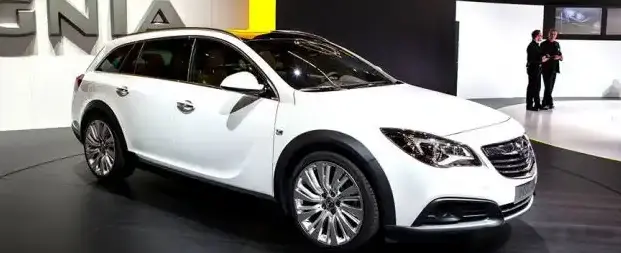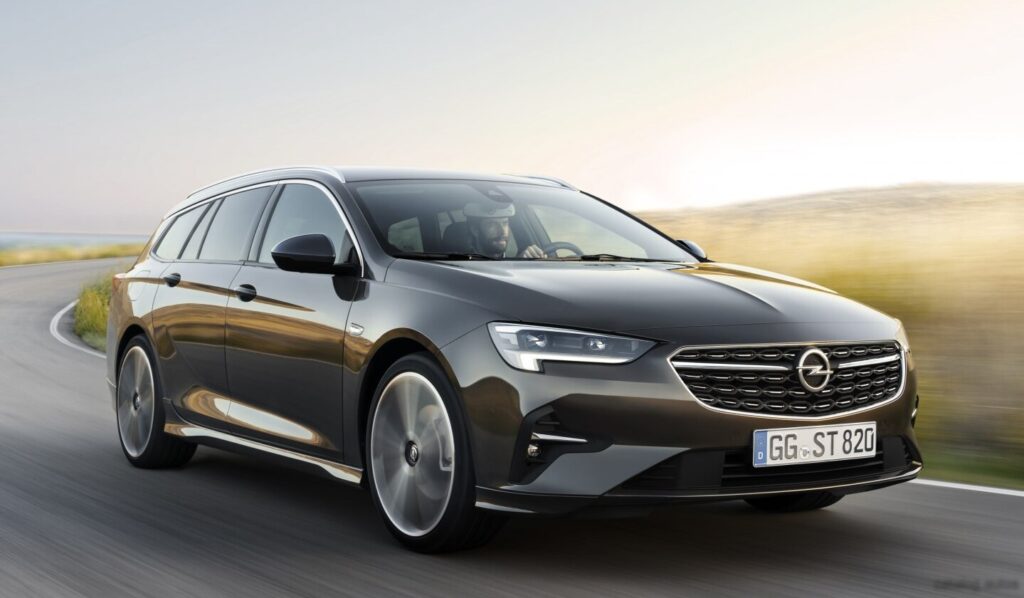
The Opel Insignia Sports Tourer (B, facelift 2020) 2.0d (174 hp) represents a mid-cycle refresh of Opel’s flagship wagon, positioned as a practical and relatively efficient option within the Insignia range. Introduced in March 2020, this variant aimed to balance fuel economy with acceptable performance for long-distance touring and family transport. It falls within the broader B generation of the Insignia, which utilizes the GM/Opel Epsilon II platform, and the facelift brought styling updates, improved technology, and revised engine options. This specific 2.0-liter diesel engine and six-speed manual transmission combination was a popular choice in European markets, offering a compromise between the more affordable base engines and the higher-performance variants.
Technical Specifications
| Brand | Opel |
| Model | Insignia |
| Generation | Insignia Sports Tourer (B, facelift 2020) |
| Type (Engine) | 2.0d (174 Hp) |
| Start of production | March, 2020 |
| Powertrain Architecture | Internal Combustion engine |
| Body type | Station wagon (estate) |
| Seats | 5 |
| Doors | 5 |
| Fuel consumption (urban) | 5.7 l/100 km (41.3 US mpg, 49.6 UK mpg, 17.5 km/l) |
| Fuel consumption (extra urban) | 3.6 l/100 km (65.3 US mpg, 78.5 UK mpg, 27.8 km/l) |
| Fuel consumption (combined) | 4.4 l/100 km (53.5 US mpg, 64.2 UK mpg, 22.7 km/l) |
| CO2 emissions | 115 g/km |
| Fuel Type | Diesel |
| Acceleration 0 – 100 km/h | 8 sec |
| Acceleration 0 – 62 mph | 8 sec |
| Acceleration 0 – 60 mph | 7.6 sec |
| Maximum speed | 223 km/h (138.57 mph) |
| Emission standard | Euro 6d |
| Power | 174 Hp @ 3500 rpm |
| Power per litre | 89 Hp/l |
| Torque | 380 Nm @ 1500-2750 rpm (280.27 lb.-ft. @ 1500-2750 rpm) |
| Engine layout | Front, Transverse |
| Engine Model/Code | F20DVH |
| Engine displacement | 1955 cm3 (119.3 cu. in.) |
| Number of cylinders | 4 |
| Engine configuration | Inline |
| Compression ratio | 15.5:1 |
| Number of valves per cylinder | 4 |
| Fuel injection system | Diesel Commonrail |
| Engine aspiration | Turbocharger, Intercooler |
| Engine oil capacity | 5 l (5.28 US qt | 4.4 UK qt) |
| Trunk (boot) space – minimum | 560 l (19.78 cu. ft.) |
| Trunk (boot) space – maximum | 1665 l (58.8 cu. ft.) |
| Fuel tank capacity | 62 l (16.38 US gal | 13.64 UK gal) |
| AdBlue tank | 15 l (3.96 US gal | 3.3 UK gal) |
| Length | 4986 mm (196.3 in.) |
| Width | 1863 mm (73.35 in.) |
| Width with mirrors folded | 1941 mm (76.42 in.) |
| Width including mirrors | 2093 mm (82.4 in.) |
| Height | 1500 mm (59.06 in.) |
| Wheelbase | 2829 mm (111.38 in.) |
| Front track | 1607 mm (63.27 in.) |
| Rear track | 1610 mm (63.39 in.) |
| Front overhang | 990 mm (38.98 in.) |
| Rear overhang | 1167 mm (45.94 in.) |
| Minimum turning circle | 11.74 m (38.52 ft.) |
| Drivetrain Architecture | Front wheel drive |
| Number of gears | 6 gears, manual transmission |
INTRODUCTION
The 2020 facelift of the Opel Insignia Sports Tourer brought a refreshed look and updated technology to Opel’s D-segment wagon. The 2.0d (174 hp) variant occupied a central position in the lineup, appealing to buyers seeking a balance between performance, fuel efficiency, and practicality. It was designed to compete with rivals like the Ford Mondeo, Volkswagen Passat, and Peugeot 508, offering a spacious interior, a large cargo area, and a comfortable ride. This model was primarily sold in Europe, where diesel engines remained popular due to their fuel economy and suitability for long-distance driving.
Powertrain & Engine Architecture
At the heart of the Insignia Sports Tourer 2.0d is the F20DVH engine, a 1.955-liter inline-four cylinder diesel. This engine is part of Opel’s/PSA’s modular engine family and features a turbocharger with an intercooler to boost power and efficiency. The engine utilizes a common-rail direct fuel injection system, delivering fuel directly into the combustion chamber at extremely high pressure for optimized combustion. The engine produces 174 horsepower at 3500 rpm and 380 Nm (280 lb-ft) of torque between 1500 and 2750 rpm. This broad torque curve provides good responsiveness in everyday driving situations. The engine also incorporates a particulate filter to reduce emissions, meeting the stringent Euro 6d emission standards. The engine is paired with a six-speed manual transmission, which provides precise gear changes and contributes to the car’s overall efficiency.
Driving Characteristics
The 174 hp 2.0d engine, coupled with the six-speed manual transmission, delivers a respectable, if not exhilarating, driving experience. Acceleration from 0 to 62 mph takes around 8 seconds, and the car feels adequately powered for highway cruising and overtaking. The manual transmission allows for greater driver control, but the gear ratios are tuned for fuel economy rather than outright performance. Compared to the more powerful 210 hp BiTurbo diesel, the 174 hp version feels less urgent, but it offers a more relaxed and refined driving experience. The suspension is tuned for comfort, providing a smooth ride over most road surfaces. The steering is precise and well-weighted, offering good feedback to the driver. The front-wheel-drive configuration provides good traction in most conditions, but it can struggle for grip on slippery surfaces.
Equipment & Trim Levels
The Insignia Sports Tourer 2.0d (174 hp) typically came with a generous level of standard equipment. This included features such as air conditioning, a touchscreen infotainment system with Apple CarPlay and Android Auto compatibility, Bluetooth connectivity, and a suite of safety features including automatic emergency braking, lane departure warning, and traffic sign recognition. Higher trim levels offered additional features such as leather upholstery, heated front seats, a panoramic sunroof, and adaptive cruise control. Interior upholstery was typically cloth on the base models, with leather options available on higher trims. The dashboard layout was clean and modern, with a focus on ergonomics and ease of use.
Chassis & Braking
The Insignia Sports Tourer utilizes a MacPherson strut front suspension and a multi-link rear suspension, providing a comfortable and controlled ride. The suspension is tuned to balance handling and comfort, offering a good compromise between the two. Braking duties are handled by ventilated front disc brakes and solid rear disc brakes. Anti-lock braking system (ABS) and electronic stability control (ESC) are standard features, providing enhanced safety and control. The steering system is an electric power-assisted rack and pinion system, offering precise and responsive steering feel. Wheel sizes typically ranged from 17 to 20 inches, depending on the trim level.
Market Reception & Comparison
The Opel Insignia Sports Tourer 2.0d (174 hp) was generally well-received by automotive critics. It was praised for its spacious interior, comfortable ride, and good fuel economy. However, some critics noted that the engine lacked the punch of its more powerful counterparts. Compared to the 210 hp BiTurbo diesel, the 174 hp version offered a more affordable price point and better fuel economy, making it a more attractive option for buyers who prioritized practicality and efficiency. Against rivals like the Ford Mondeo and Volkswagen Passat, the Insignia offered a compelling combination of features, space, and value.
Legacy
The F20DVH engine has proven to be a relatively reliable unit, with few major issues reported. The Insignia Sports Tourer, in general, has established a reputation for being a practical and dependable family car. On the used car market, the 2.0d (174 hp) variant represents a good value proposition, offering a spacious and well-equipped wagon at a reasonable price. Maintenance costs are generally moderate, and parts availability is good. However, as with any diesel vehicle, it’s important to ensure that the diesel particulate filter (DPF) has been properly maintained and that the car has been serviced according to the manufacturer’s recommendations.