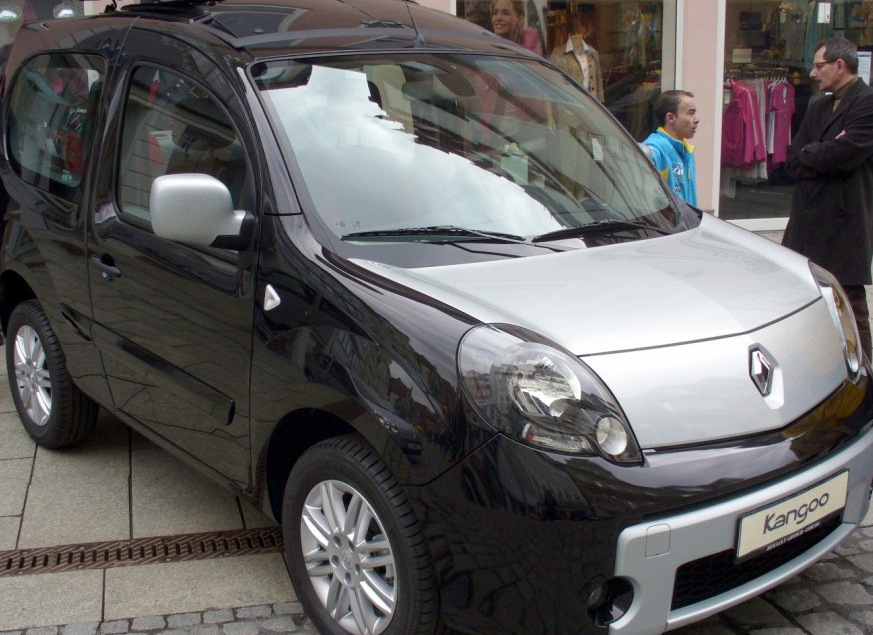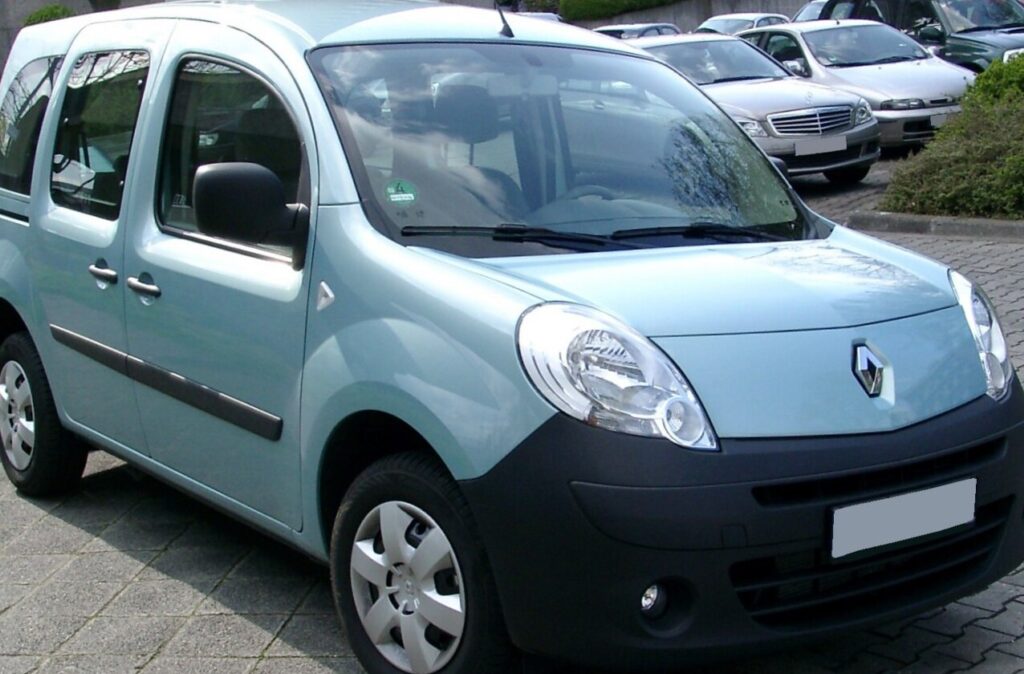
The Renault Kangoo II 1.6 16V (106 hp) LPG, produced from 2009 to 2010, represents a versatile and practical offering within the second generation Kangoo range (2008-2012). Positioned as a mid-range option, this variant catered to buyers seeking a balance between affordability, fuel efficiency – enhanced by the LPG conversion – and reasonable performance for everyday use. The Kangoo II, built on the X0/B9 platform shared with the Renault Scenic II and Mégane II, aimed to modernize the Kangoo’s appeal, moving it further from its utilitarian origins towards a more family-oriented vehicle. This particular engine and fuel combination was primarily aimed at the European market, where LPG infrastructure was more developed and incentives for alternative fuels were common.
Technical Specifications
| Brand | Renault |
| Model | Kangoo |
| Generation | Kangoo II |
| Type (Engine) | 1.6 16V (106 Hp) LPG |
| Start of production | 2009 |
| End of production | 2010 |
| Powertrain Architecture | Internal Combustion engine |
| Body type | Minivan |
| Seats | 5 |
| Doors | 5 |
| Fuel consumption (economy) – urban (NEDC) | 10.5 l/100 km (22.4 US mpg, 26.9 UK mpg, 9.5 km/l) |
| Fuel consumption (economy) – urban (LPG) (NEDC) | 13.2 l/100 km |
| Fuel consumption (economy) – extra urban (NEDC) | 6.7 l/100 km (35.1 US mpg, 42.2 UK mpg, 14.9 km/l) |
| Fuel consumption (economy) – extra urban (LPG) (NEDC) | 8.4 l/100 km |
| Fuel consumption (economy) – combined (NEDC) | 8.1 l/100 km (29 US mpg, 34.9 UK mpg, 12.3 km/l) |
| Fuel consumption (economy) – combined (LPG) (NEDC) | 10.2 l/100 km |
| CO2 emissions (NEDC) | 191 g/km |
| CO2 emissions (LPG) (NEDC) | 170 g/km |
| Fuel Type | Petrol / LPG |
| Acceleration 0 – 100 km/h | 13.0 sec |
| Acceleration 0 – 62 mph | 13.0 sec |
| Acceleration 0 – 60 mph | 12.4 sec |
| Maximum speed | 170 km/h (105.63 mph) |
| Emission standard | Euro 4 |
| Weight-to-power ratio | 13.4 kg/Hp, 74.5 Hp/tonne |
| Weight-to-torque ratio | 9.6 kg/Nm, 104 Nm/tonne |
| Power | 106 Hp @ 5750 rpm |
| Power per litre | 66.3 Hp/l |
| Power (LPG) | 98 Hp @ 5750 rpm |
| Power per litre (LPG) | 61.3 Hp/l |
| Torque | 148 Nm @ 3750 rpm (109.16 lb.-ft. @ 3750 rpm) |
| Engine layout | Front, Transverse |
| Engine Model/Code | K4M |
| Engine displacement | 1598 cm3 (97.52 cu. in.) |
| Number of cylinders | 4 |
| Engine configuration | Inline |
| Cylinder Bore | 79.5 mm (3.13 in.) |
| Piston Stroke | 80.5 mm (3.17 in.) |
| Compression ratio | 9.7:1 |
| Number of valves per cylinder | 4 |
| Fuel injection system | Multi-port manifold injection |
| Engine aspiration | Naturally aspirated engine |
| Engine oil capacity | 4.8 l (5.07 US qt, 4.22 UK qt) |
| Coolant | 5 l (5.28 US qt, 4.4 UK qt) |
| Kerb Weight | 1423 kg (3137.18 lbs.) |
| Max. weight | 1924 kg (4241.69 lbs.) |
| Max load | 501 kg (1104.52 lbs.) |
| Trunk (boot) space – minimum | 438 l (15.47 cu. ft.) |
| Trunk (boot) space – maximum | 1977 l (69.82 cu. ft.) |
| Fuel tank capacity | 60 l (15.85 US gal, 13.2 UK gal) |
| Fuel tank capacity (LPG) | 24 l |
| Max. roof load | 100 kg (220.46 lbs.) |
| Permitted trailer load with brakes (12%) | 1050 kg (2314.85 lbs.) |
| Permitted trailer load without brakes | 750 kg (1653.47 lbs.) |
| Permitted towbar download | 75 kg (165.35 lbs.) |
| Length | 4213 mm (165.87 in.) |
| Width | 1829 mm (72.01 in.) |
| Width including mirrors | 2138 mm (84.17 in.) |
| Height | 1839 mm (72.4 in.) |
| Wheelbase | 2697 mm (106.18 in.) |
| Front track | 1533 mm (60.35 in.) |
| Rear (Back) track | 1521 mm (59.88 in.) |
| Front overhang | 807 mm (31.77 in.) |
| Rear overhang | 709 mm (27.91 in.) |
| Ride height (ground clearance) | 183 mm (7.2 in.) |
| Minimum turning circle (turning diameter) | 10.7 m (35.1 ft.) |
| Drivetrain Architecture | The Internal combustion engine (ICE) drives the front wheels of the vehicle. |
| Drive wheel | Front wheel drive |
| Number of gears and type of gearbox | 5 gears, manual transmission |
| Front suspension | Independent type McPherson |
| Rear suspension | Torsion |
| Front brakes | Disc |
| Rear brakes | Disc |
| Assisting systems | ABS (Anti-lock braking system) |
| Steering type | Steering rack and pinion |
| Power steering | Electric Steering |
| Tires size | 195/65 R15 |
| Wheel rims size | 15 |
INTRODUCTION
The Renault Kangoo II 1.6 16V (106 hp) LPG, produced between 2009 and 2010, was a popular choice in Europe, particularly for families and small businesses. It built upon the success of the first-generation Kangoo, offering improved practicality, comfort, and a more modern design. The addition of LPG capability provided a cost-effective alternative to petrol, appealing to drivers seeking to reduce their fuel expenses. This variant occupied a middle ground in the Kangoo II lineup, offering a step up in performance from the base 1.2L engine while remaining more affordable than the diesel options.
Powertrain & Engine Architecture
At the heart of this Kangoo variant lies the Renault K4M engine, a 1.6-liter inline-four cylinder petrol engine. This engine, widely used across the Renault range, is known for its relative simplicity and durability. The 16-valve configuration contributes to improved breathing and power output. The engine utilizes a multi-point fuel injection system, delivering fuel directly to the intake ports. The LPG conversion is typically a dedicated system, meaning it has a separate fuel tank and fuel delivery system alongside the petrol system, allowing the driver to switch between fuels. The engine produces 106 horsepower at 5750 rpm and 148 Nm (109.16 lb-ft) of torque at 3750 rpm. When running on LPG, power output is slightly reduced to around 98 hp. The engine is paired with a five-speed manual transmission, which was the standard offering for this trim level. Automatic transmissions were available on other Kangoo II variants, but not typically with this specific engine.
Driving Characteristics
The 1.6 16V engine, coupled with the five-speed manual gearbox, provides adequate performance for everyday driving. Acceleration from 0-100 km/h (0-62 mph) takes around 13.0 seconds, and the top speed is approximately 170 km/h (105.63 mph). While not particularly sporty, the engine offers sufficient power for overtaking and maintaining comfortable cruising speeds on highways. The gear ratios are well-suited for general use, providing a balance between acceleration and fuel economy. Compared to the base 1.2L engine, the 1.6L offers noticeably more power and torque, making it more capable of handling a fully loaded vehicle or navigating hilly terrain. However, it lacks the low-end grunt and fuel efficiency of the diesel variants. The LPG system provides a noticeable cost saving at the pump, but can slightly impact performance and engine responsiveness.
Equipment & Trim Levels
The Kangoo II 1.6 16V LPG typically came equipped with a reasonable level of standard features. These included power steering, central locking, electric front windows, and an adjustable steering column. Safety features included ABS brakes and driver and passenger airbags. Interior upholstery was typically cloth, with a functional and durable design. Optional extras included air conditioning, a CD player, and alloy wheels. Higher trim levels offered additional features such as rear parking sensors, cruise control, and upgraded interior trim.
Chassis & Braking
The Kangoo II utilizes a McPherson strut front suspension and a torsion beam rear suspension. This setup provides a comfortable ride quality, suitable for everyday use. The front brakes are disc brakes, while the rear brakes are also disc brakes, offering adequate stopping power. The electric power steering provides light and precise steering feel. The vehicle’s relatively high center of gravity and soft suspension setup mean it’s not particularly sporty to drive, but it offers good stability and predictable handling.
Market Reception & Comparison
The Renault Kangoo II 1.6 16V LPG was generally well-received by critics and buyers alike. It was praised for its practicality, versatility, and relatively low running costs, especially when utilizing the LPG system. Compared to the diesel variants, the petrol/LPG model offered a quieter and smoother driving experience, but at the expense of fuel economy. The 1.2L engine was considered underpowered for many users, making the 1.6L a more appealing option for those who frequently carried passengers or cargo. The LPG conversion added to the initial cost of the vehicle, but the potential fuel savings often offset this expense over the long term.
Legacy
The Renault K4M engine has proven to be a reliable and durable unit, and the Kangoo II remains a popular choice in the used car market. The LPG system, if properly maintained, can provide years of trouble-free service. However, potential buyers should be aware of the need for regular LPG system checks and maintenance. The Kangoo II’s spacious interior, practical design, and relatively low running costs continue to make it a compelling option for families and small businesses seeking a versatile and affordable vehicle. Parts availability is generally good, and the Kangoo II is relatively easy to maintain, contributing to its enduring popularity.