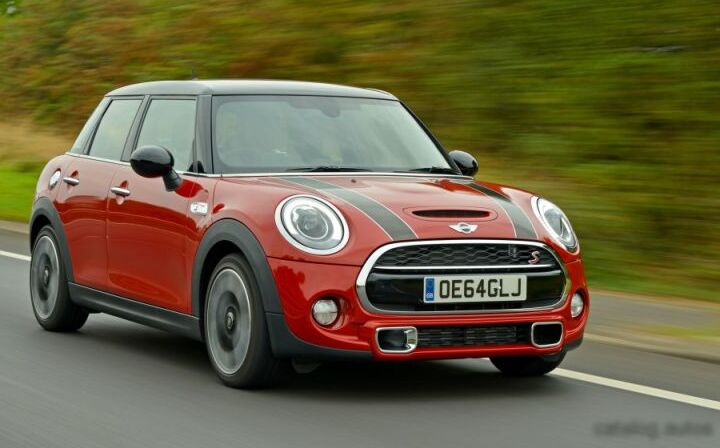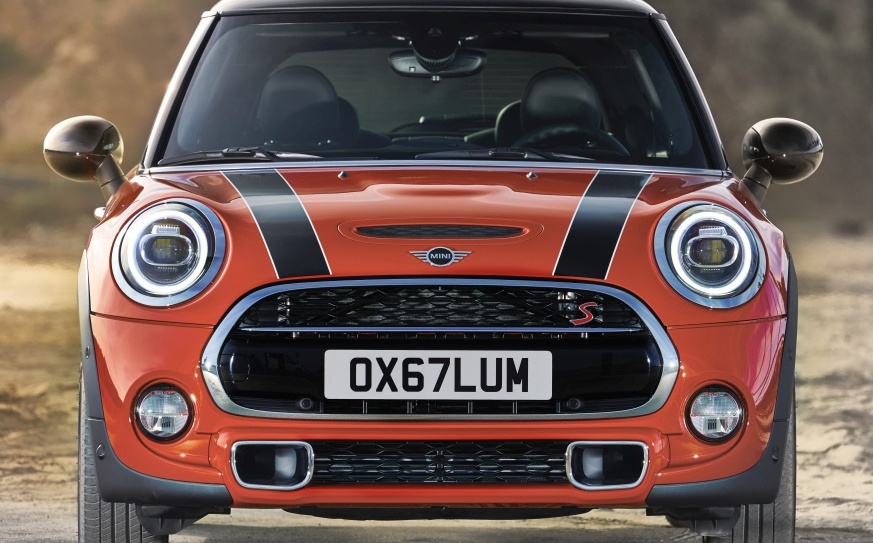
The Mini Hatch JCW 2.0 (231 Hp) is a high-performance variant of the third-generation Mini Hatch (F56), specifically the facelifted model introduced in 2018. Positioned as the flagship of the three-door Hatch range, it offered a significant performance upgrade over the standard Cooper and Cooper S models. Production ran from 2018 to 2021, building upon the foundation of the UKL1 platform shared with BMW models. This iteration of the JCW aimed to deliver a more focused driving experience, appealing to enthusiasts seeking a premium, sporty hatchback.
Technical Specifications
| Brand | Mini |
| Model | Hatch |
| Generation | Hatch (F56, facelift 2018) 3-door |
| Type (Engine) | JCW 2.0 (231 Hp) |
| Start of production | 2018 |
| End of production | 2021 |
| Powertrain Architecture | Internal Combustion engine |
| Body type | Hatchback |
| Seats | 4 |
| Doors | 3 |
| Fuel consumption (urban) | 9-9.2 l/100 km (26.1 – 25.6 US mpg, 31.4 – 30.7 UK mpg, 11.1 – 10.9 km/l) |
| Fuel consumption (extra urban) | 5.7-5.9 l/100 km (41.3 – 39.9 US mpg, 49.6 – 47.9 UK mpg, 17.5 – 16.9 km/l) |
| Fuel consumption (combined) | 6.9-7.1 l/100 km (34.1 – 33.1 US mpg, 40.9 – 39.8 UK mpg, 14.5 – 14.1 km/l) |
| CO2 emissions | 157-162 g/km |
| Fuel Type | Petrol (Gasoline) |
| Acceleration 0 – 100 km/h | 6.3 sec |
| Acceleration 0 – 62 mph | 6.3 sec |
| Acceleration 0 – 60 mph | 6 sec |
| Maximum speed | 246 km/h (152.86 mph) |
| Emission standard | Euro 6d-TEMP |
| Weight-to-power ratio | 5.3 kg/Hp, 187 Hp/tonne |
| Weight-to-torque ratio | 3.9 kg/Nm, 259.1 Nm/tonne |
| Power | 231 Hp @ 5200-6200 rpm |
| Torque | 320 Nm @ 1450-4800 rpm (236.02 lb.-ft. @ 1450-4800 rpm) |
| Engine layout | Front, Transverse |
| Engine Model/Code | B48A20B |
| Engine displacement | 1998 cm3 (121.93 cu. in.) |
| Number of cylinders | 4 |
| Engine configuration | Inline |
| Cylinder Bore | 82 mm (3.23 in.) |
| Piston Stroke | 94.6 mm (3.72 in.) |
| Compression ratio | 10.2:1 |
| Number of valves per cylinder | 4 |
| Fuel injection system | Direct injection |
| Engine aspiration | Twin-power turbo, Intercooler |
| Valvetrain | VALVETRONIC, Double-VANOS |
| Engine oil capacity | 5.25 l (5.55 US qt | 4.62 UK qt) |
| Kerb Weight | 1235 kg (2722.71 lbs.) |
| Max. weight | 1685-1690 kg (3714.79 – 3725.81 lbs.) |
| Max load | 450-455 kg (992.08 – 1003.1 lbs.) |
| Trunk (boot) space – minimum | 211 l (7.45 cu. ft.) |
| Trunk (boot) space – maximum | 731 l (25.82 cu. ft.) |
| Fuel tank capacity | 44 l (11.62 US gal | 9.68 UK gal) |
| Max. roof load | 60 kg (132.28 lbs.) |
| Length | 3874 mm (152.52 in.) |
| Width | 1727 mm (67.99 in.) |
| Width including mirrors | 1932 mm (76.06 in.) |
| Height | 1414 mm (55.67 in.) |
| Wheelbase | 2495 mm (98.23 in.) |
| Front track | 1485 mm (58.46 in.) |
| Rear track | 1485 mm (58.46 in.) |
| Front overhang | 782 mm (30.79 in.) |
| Rear overhang | 597 mm (23.5 in.) |
| Ride height (ground clearance) | 143 mm (5.63 in.) |
| Drag coefficient (Cd) | 0.34 |
| Minimum turning circle | 10.8 m (35.43 ft.) |
| Drivetrain Architecture | Front wheel drive |
| Number of gears | 6 |
| Type of gearbox | Manual transmission |
| Front suspension | Independent, type McPherson with coil spring and anti-roll bar |
| Rear suspension | Independent multi-link spring suspension with stabilizer |
| Front brakes | Ventilated discs |
| Rear brakes | Disc |
| Assisting systems | ABS (Anti-lock braking system) |
| Steering type | Steering rack and pinion |
| Power steering | Electric Steering |
| Tires size | 205/45 R17 |
| Wheel rims size | 7J x 17 |
INTRODUCTION
The 2018-2021 Mini Hatch JCW 2.0 represented a significant step up in performance for the F56 generation. It was positioned as the halo model for the Mini lineup, offering a more aggressive aesthetic and a substantially more powerful engine than the standard Cooper and Cooper S variants. The facelift brought subtle styling revisions, but the core focus remained on enhancing the driving experience. This model aimed to capture the spirit of the original Mini Cooper S while incorporating modern technology and safety features.
Powertrain & Engine Architecture
At the heart of the JCW 2.0 is the BMW B48A20B 2.0-liter turbocharged inline-four cylinder engine. This engine, a member of the BMW modular engine family, utilizes direct fuel injection and variable valve timing (VALVETRONIC) and variable valve lift (Double-VANOS) to optimize performance and efficiency. The engine produces 231 horsepower at 5200-6200 rpm and 320 Nm (236 lb-ft) of torque between 1450 and 4800 rpm. The turbocharger is a twin-scroll unit, designed to minimize turbo lag and provide a more responsive throttle. The standard transmission was a 6-speed manual, although an optional 8-speed automatic transmission was also available. The automatic transmission featured paddle shifters for manual control. The engine also incorporated a start/stop system to improve fuel economy in urban driving conditions.
Driving Characteristics
The JCW 2.0 delivered a noticeably more engaging driving experience than its lesser-powered siblings. The increased power and torque, combined with the relatively short wheelbase of the Mini, resulted in brisk acceleration – 0 to 60 mph in around 6 seconds. The manual transmission offered precise shifts and a direct connection to the engine, while the automatic provided smooth and quick gear changes. The JCW’s suspension was tuned for a firmer ride, providing improved handling and reduced body roll. However, this came at the expense of some ride comfort. The steering was quick and responsive, offering excellent feedback to the driver. Compared to the Cooper S, the JCW felt significantly more powerful and capable, particularly in the mid-range, making it more enjoyable for spirited driving on winding roads.
Equipment & Trim Levels
The JCW 2.0 came standard with a comprehensive list of features, including sport seats, a sport leather steering wheel, and JCW-specific exterior styling cues such as a more aggressive front bumper, rear diffuser, and a rear spoiler. Interior trim options included various cloth and leather upholstery choices. Available options included a panoramic sunroof, navigation system, Harman Kardon premium sound system, and adaptive dampers. The infotainment system featured a 6.5-inch or 8.8-inch touchscreen display, depending on the options selected. Standard safety features included ABS, stability control, and multiple airbags.
Chassis & Braking
The JCW 2.0 featured a reinforced chassis and upgraded suspension components compared to the standard Mini Hatch. The front suspension utilized McPherson struts with coil springs and an anti-roll bar, while the rear suspension employed a multi-link setup with a stabilizer bar. Brakes consisted of ventilated discs at the front and solid discs at the rear. The JCW also benefited from a larger brake master cylinder and more powerful calipers for improved stopping power. The standard tire size was 205/45 R17, providing a good balance of grip and ride comfort.
Market Reception & Comparison
The Mini JCW 2.0 was generally well-received by automotive critics, who praised its performance, handling, and distinctive styling. However, some reviewers noted that the ride could be firm and that the rear seat space was limited. Compared to other hot hatchbacks in its class, such as the Volkswagen GTI and Ford Focus ST, the JCW offered a more premium and stylish experience, but at a higher price point. Fuel economy was respectable for a performance car, averaging around 34 mpg combined, but was lower than the standard Cooper models. Reliability was generally good, although some owners reported minor issues with the infotainment system.
Legacy
The 2018-2021 Mini Hatch JCW 2.0 remains a popular choice in the used car market, appealing to enthusiasts seeking a fun-to-drive and stylish hatchback. The B48 engine has proven to be relatively reliable, although regular maintenance is essential. The JCW’s distinctive character and engaging driving dynamics have cemented its place as a modern classic, representing a high point in the Mini brand’s history. Its blend of performance, style, and technology continues to attract buyers looking for a unique and rewarding driving experience.