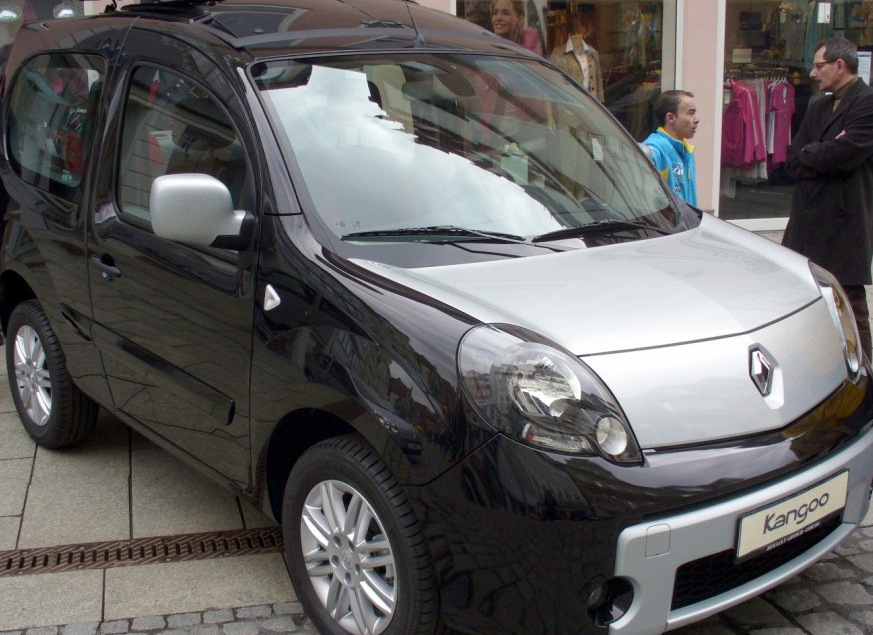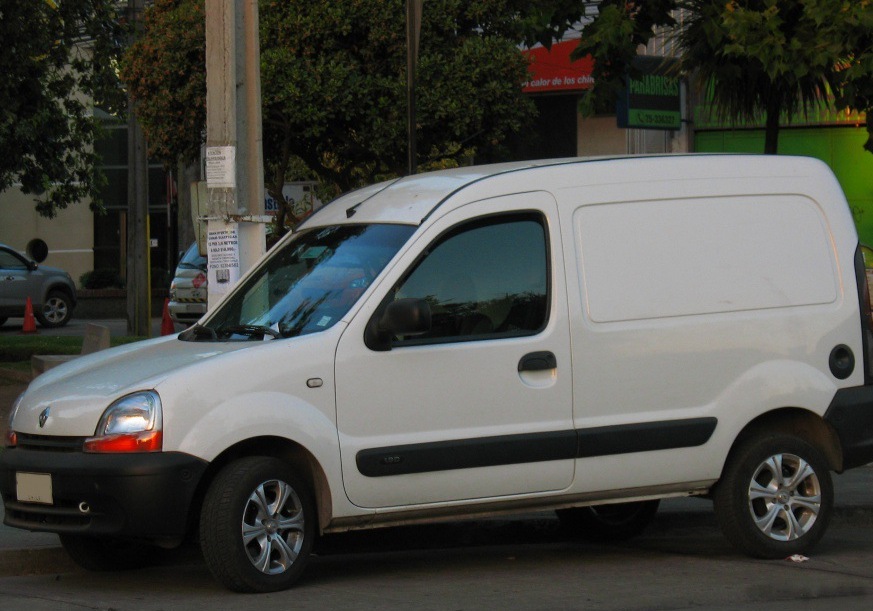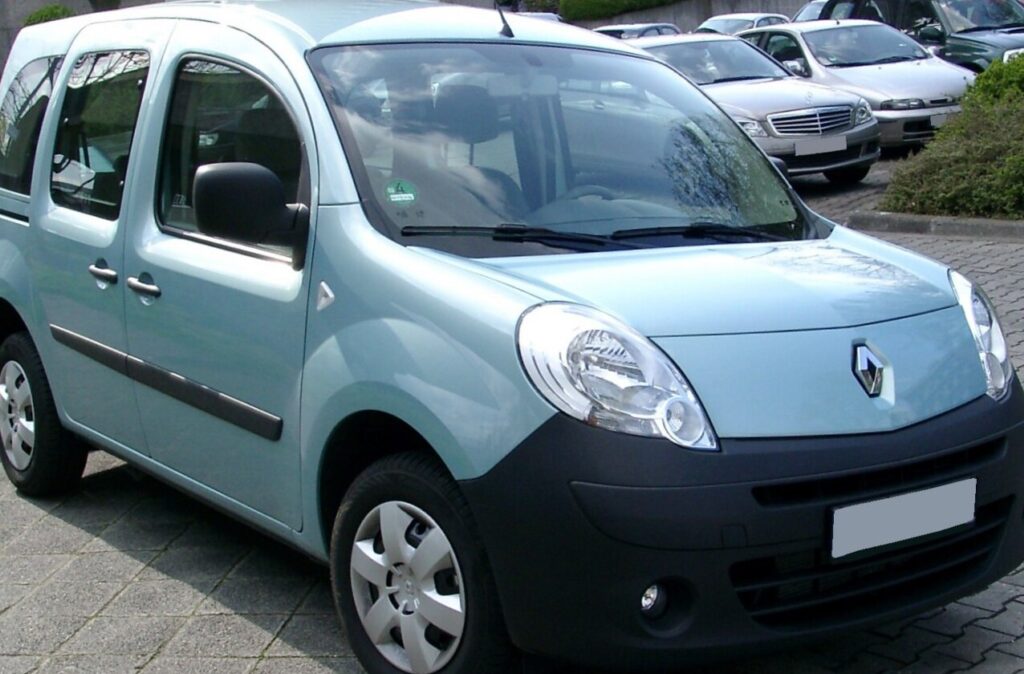
The Renault Kangoo II 1.6 8V (87 hp) was a popular configuration of Renault’s second-generation Kangoo, produced from 2008 to 2010. Positioned as an entry-level to mid-range option within the Kangoo II lineup, it offered a practical and affordable solution for families and commercial users alike. Built on the X0/B9 platform, the Kangoo II represented a significant step forward in terms of design, practicality, and overall refinement compared to its predecessor. This particular variant, with its 1.6-liter naturally aspirated engine and manual transmission, was primarily aimed at buyers prioritizing fuel efficiency and low running costs over outright performance.
Technical Specifications
| Brand | Renault |
| Model | Kangoo |
| Generation | Kangoo II |
| Type (Engine) | 1.6 8V (87 Hp) |
| Start of production | 2008 |
| End of production | 2010 |
| Powertrain Architecture | Internal Combustion engine |
| Body type | Minivan |
| Seats | 5 |
| Doors | 5 |
| Fuel consumption (urban) | 10.6 l/100 km (22.2 US mpg, 26.6 UK mpg, 9.4 km/l) |
| Fuel consumption (extra urban) | 6.7 l/100 km (35.1 US mpg, 42.2 UK mpg, 14.9 km/l) |
| Fuel consumption (combined) | 8.1 l/100 km (29 US mpg, 34.9 UK mpg, 12.3 km/l) |
| CO2 emissions | 192 g/km |
| Fuel Type | Petrol (Gasoline) |
| Acceleration 0 – 100 km/h | 15.8 sec |
| Acceleration 0 – 62 mph | 15.8 sec |
| Acceleration 0 – 60 mph | 15 sec |
| Maximum speed | 158 km/h (98.18 mph) |
| Emission standard | Euro 4 |
| Weight-to-power ratio | 16.2 kg/Hp, 61.6 Hp/tonne |
| Weight-to-torque ratio | 11 kg/Nm, 90.7 Nm/tonne |
| Power | 87 Hp @ 5500 rpm |
| Power per litre | 54.4 Hp/l |
| Torque | 128 Nm @ 3750 rpm (94.41 lb.-ft. @ 3750 rpm) |
| Engine layout | Front, Transverse |
| Engine Model/Code | K7M |
| Engine displacement | 1598 cm3 (97.52 cu. in.) |
| Number of cylinders | 4 |
| Engine configuration | Inline |
| Cylinder Bore | 79.5 mm (3.13 in.) |
| Piston Stroke | 80.5 mm (3.17 in.) |
| Compression ratio | 9.7:1 |
| Number of valves per cylinder | 4 |
| Fuel injection system | Multi-port manifold injection |
| Engine aspiration | Naturally aspirated engine |
| Engine oil capacity | 3.4 l (3.59 US qt | 2.99 UK qt) |
| Coolant | 5 l (5.28 US qt | 4.4 UK qt) |
| Kerb Weight | 1412 kg (3112.93 lbs.) |
| Max. weight | 1923 kg (4239.49 lbs.) |
| Max load | 511 kg (1126.56 lbs.) |
| Trunk (boot) space – minimum | 438 l (15.47 cu. ft.) |
| Trunk (boot) space – maximum | 1977 l (69.82 cu. ft.) |
| Fuel tank capacity | 60 l (15.85 US gal | 13.2 UK gal) |
| Max. roof load | 100 kg (220.46 lbs.) |
| Permitted trailer load with brakes (12%) | 1010 kg (2226.67 lbs.) |
| Permitted trailer load without brakes | 737 kg (1624.81 lbs.) |
| Permitted towbar download | 75 kg (165.35 lbs.) |
| Length | 4213 mm (165.87 in.) |
| Width | 1829 mm (72.01 in.) |
| Width including mirrors | 2133 mm (83.98 in.) |
| Height | 1839 mm (72.4 in.) |
| Wheelbase | 2697 mm (106.18 in.) |
| Front track | 1533 mm (60.35 in.) |
| Rear (Back) track | 1521 mm (59.88 in.) |
| Front overhang | 807 mm (31.77 in.) |
| Rear overhang | 709 mm (27.91 in.) |
| Minimum turning circle | 11 m (36.09 ft.) |
| Drivetrain | Front wheel drive |
| Number of gears and type of gearbox | 5 gears, manual transmission |
| Front suspension | Independent type McPherson |
| Rear suspension | Torsion |
| Front brakes | Ventilated discs |
| Rear brakes | Disc |
| Assisting systems | ABS (Anti-lock braking system) |
| Steering type | Steering rack and pinion |
| Power steering | Electric Steering |
| Tires size | 195/65 R15 |
| Wheel rims size | 15 |
Powertrain & Engine Architecture
The heart of the Kangoo II 1.6 8V was the K7M engine, a 1.6-liter inline-four cylinder petrol engine. This engine, a staple in many Renault and Peugeot vehicles of the era, featured a single overhead camshaft (SOHC) operating two valves per cylinder. The 8V designation refers to the total number of valves. Fuel delivery was handled by a multi-point fuel injection system, providing adequate, though not exceptional, fuel atomization. The K7M engine was known for its robustness and relative simplicity, contributing to its longevity and ease of maintenance. The 5-speed manual transmission was a standard feature, offering a reasonable spread of gears for both urban and highway driving. The transmission was a conventional setup, prioritizing durability and ease of use over sporty performance.
Driving Characteristics
With 87 horsepower and 128 Nm (94.41 lb-ft) of torque, the Kangoo II 1.6 8V wasn’t designed for rapid acceleration. The 0-60 mph time of around 15 seconds reflects this. However, the engine provided sufficient power for everyday driving, particularly when unladen. The manual transmission allowed drivers to make the most of the available power, although the long gear ratios emphasized fuel economy over spirited performance. Compared to the more powerful 1.6 16V or diesel variants, the 8V model felt noticeably slower, especially when fully loaded or climbing hills. The focus was on providing a comfortable and economical driving experience, rather than an engaging one.
Equipment & Trim Levels
The 1.6 8V Kangoo II typically came with a fairly basic level of equipment, reflecting its position as an entry-level model. Standard features generally included power steering, central locking, and an adjustable steering column. Interior upholstery was typically cloth, and the dashboard featured a functional, if somewhat utilitarian, design. Optional extras could include air conditioning, electric windows, and a radio/CD player. Higher trim levels, such as the Expression or Dynamique, added more features as standard, but the 1.6 8V was often chosen by buyers seeking a no-frills, practical vehicle.
Chassis & Braking
The Kangoo II utilized a McPherson strut front suspension and a torsion beam rear suspension. This setup provided a comfortable ride quality, although it wasn’t particularly sporty. The front brakes were ventilated discs, offering adequate stopping power, while the rear brakes were solid discs. Anti-lock Braking System (ABS) was standard, enhancing safety. The suspension was tuned for comfort and load-carrying capacity, rather than aggressive handling. The relatively narrow 195/65 R15 tires further emphasized comfort over grip.
Market Reception & Comparison
The Kangoo II 1.6 8V was generally well-received as a practical and affordable small van/MPV. Critics praised its spacious interior, versatility, and low running costs. However, the engine’s lack of power was often noted, particularly when compared to the more potent alternatives. The 1.6 16V offered a noticeable performance improvement, while the 1.5 dCi diesel engine provided superior fuel economy. Despite its limitations, the 1.6 8V remained a popular choice for buyers prioritizing value and practicality.
Legacy
The Renault Kangoo II 1.6 8V has proven to be a relatively reliable vehicle, with the K7M engine being known for its durability. While not without its quirks, the engine is generally straightforward to maintain and repair. In the used car market, these models are often available at very affordable prices, making them an attractive option for budget-conscious buyers. However, potential buyers should be aware of the engine’s age and potential for wear and tear. Overall, the Kangoo II 1.6 8V represents a solid and practical choice for those seeking a versatile and economical vehicle.