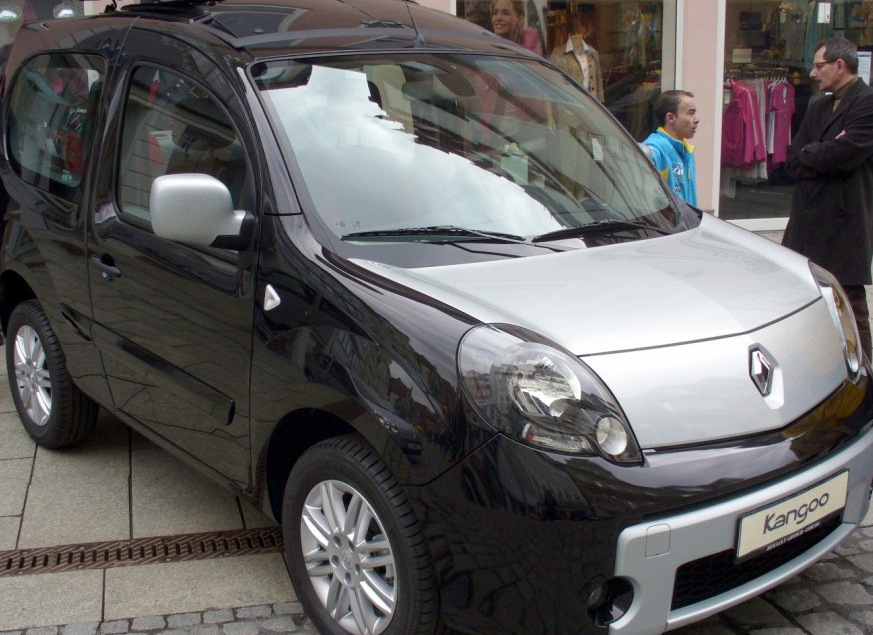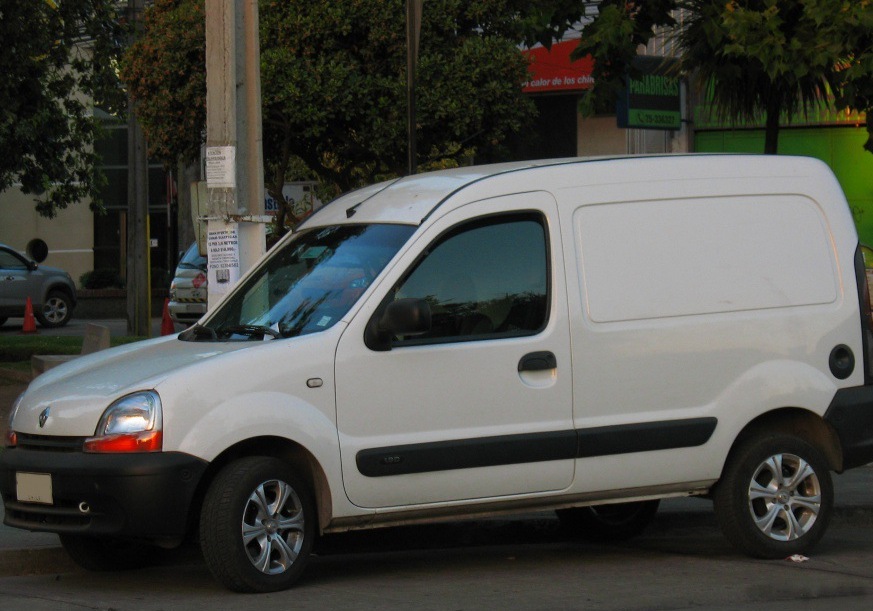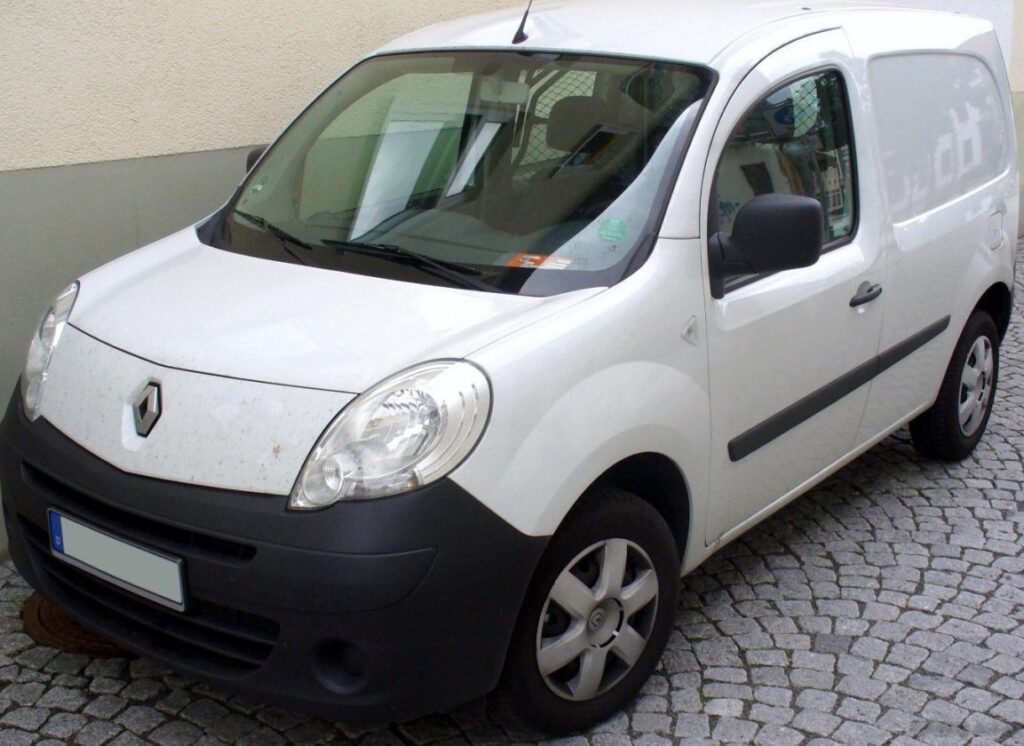
The Renault Kangoo II Express 1.5 dCi, producing 103 horsepower, was a commercially-focused panel van offered by Renault from February 2008 to August 2010. Positioned as a workhorse variant within the broader Kangoo II range (which also included passenger-oriented models and different engine options), the Express 1.5 dCi catered to businesses and tradespeople requiring a practical and economical light commercial vehicle. It was part of the second generation Kangoo, built on the X0/B platform, known for its modularity and efficient packaging. This particular engine and trim level represented a balance between affordability and capability, aiming to provide sufficient power for typical delivery and service applications without the higher cost of more powerful engines.
Technical Specifications
| Brand | Renault |
| Model | Kangoo |
| Generation | Kangoo II Express |
| Type (Engine) | 1.5 dCi (103 Hp) FAP |
| Start of production | February, 2008 |
| End of production | August, 2010 |
| Powertrain Architecture | Internal Combustion engine |
| Body type | Minivan |
| Seats | 2 |
| Doors | 3 |
| CO2 emissions (WLTP) | 146 g/km |
| Fuel consumption (urban) | 6.2 l/100 km (37.9 US mpg, 45.6 UK mpg, 16.1 km/l) |
| Fuel consumption (extra urban) | 5.2 l/100 km (45.2 US mpg, 54.3 UK mpg, 19.2 km/l) |
| Fuel consumption (combined) | 5.5 l/100 km (42.8 US mpg, 51.4 UK mpg, 18.2 km/l) |
| CO2 emissions (NEDC) | 147 g/km |
| Fuel Type | Diesel |
| Acceleration 0 – 100 km/h | 13.2 sec |
| Acceleration 0 – 62 mph | 13.2 sec |
| Acceleration 0 – 60 mph | 12.5 sec |
| Maximum speed | 170 km/h (105.63 mph) |
| Weight-to-power ratio | 12.7 kg/Hp, 78.9 Hp/tonne |
| Weight-to-torque ratio | 5.4 kg/Nm, 183.9 Nm/tonne |
| Power | 103 Hp @ 3750 rpm |
| Power per litre | 70.5 Hp/l |
| Torque | 240 Nm @ 2000 rpm (177.01 lb.-ft. @ 2000 rpm) |
| Engine layout | Front, Transverse |
| Engine Model/Code | K9K |
| Engine displacement | 1461 cm3 (89.16 cu. in.) |
| Number of cylinders | 4 |
| Engine configuration | Inline |
| Number of valves per cylinder | 2 |
| Fuel injection system | Diesel Commonrail |
| Engine aspiration | Turbocharger, Intercooler |
| Engine oil capacity | 4.5 l (4.76 US qt | 3.96 UK qt) |
| Coolant capacity | 7.2 l (7.61 US qt | 6.34 UK qt) |
| Kerb Weight | 1305 kg (2877.03 lbs.) |
| Max. weight | 1962 kg (4325.47 lbs.) |
| Max load | 657 kg (1448.44 lbs.) |
| Trunk (boot) space – maximum | 3000 l (105.94 cu. ft.) |
| Fuel tank capacity | 60 l (15.85 US gal | 13.2 UK gal) |
| Max. roof load | 100 kg (220.46 lbs.) |
| Permitted trailer load (braked) | 1050 kg (2314.85 lbs.) |
| Permitted trailer load (unbraked) | 650 kg (1433 lbs.) |
| Permitted towbar download | 75 kg (165.35 lbs.) |
| Length | 4213 mm (165.87 in.) |
| Width | 1829 mm (72.01 in.) |
| Width including mirrors | 2133 mm (83.98 in.) |
| Height | 1844 mm (72.6 in.) |
| Wheelbase | 2697 mm (106.18 in.) |
| Ride height (ground clearance) | 184 mm (7.24 in.) |
| Minimum turning circle | 10.5 m (34.45 ft.) |
| Drivetrain Architecture | Front wheel drive |
| Number of gears | 6 |
| Gearbox type | Manual transmission |
| Front brakes | Disc |
| Rear brakes | Disc |
| Assisting systems | ABS (Anti-lock braking system) |
| Tires size | 195/65 R15 |
| Wheel rims size | 15 |
Powertrain & Engine Architecture
The heart of the Kangoo II Express 1.5 dCi was the K9K engine, a member of Renault’s widely-used family of small-displacement diesel engines. This 1461cc inline-four cylinder engine featured a single overhead camshaft (SOHC) with two valves per cylinder. The engine utilized a second-generation common rail direct injection system, delivering fuel at extremely high pressures for optimized combustion and reduced emissions. A turbocharger with an intercooler was employed to boost power output and improve torque across a wider rev range. The inclusion of a Diesel Particulate Filter (DPF), denoted by the “FAP” in the model name, was crucial for meeting increasingly stringent European emission standards. The six-speed manual transmission was the standard offering, providing a good balance between fuel efficiency and drivability. The gear ratios were tuned for commercial use, prioritizing low-end torque for hauling loads rather than outright acceleration.
Driving Characteristics
The 103 hp 1.5 dCi engine in the Kangoo II Express provided adequate, though not exhilarating, performance. Acceleration from 0-60 mph took around 12.5 seconds, and top speed was approximately 105 mph. The engine’s strength lay in its usable torque, peaking at 240 Nm (177 lb-ft) at 2000 rpm. This made it well-suited for carrying loads and navigating urban environments. Compared to the higher-output 1.5 dCi variants (typically around 110 hp), the 103 hp version offered slightly less power but generally delivered better fuel economy. The six-speed manual transmission allowed drivers to keep the engine in its optimal torque band, maximizing efficiency and minimizing gear changes. The driving experience was functional and focused on practicality, rather than sporty handling.
Equipment & Trim Levels
The Kangoo II Express 1.5 dCi was typically equipped with a utilitarian interior focused on durability and ease of use. Standard features included a driver’s airbag, central locking, and power steering. The cabin was designed for two occupants, with a focus on maximizing cargo space. The dashboard was functional, with clearly labeled controls. Upholstery was typically hard-wearing fabric. Optional extras included air conditioning, a radio/CD player, and electric windows. The Express trim level generally represented the base level of the Kangoo II range, prioritizing affordability and functionality over luxury features.
Chassis & Braking
The Kangoo II Express featured a MacPherson strut front suspension and a torsion beam rear suspension. This setup provided a reasonable compromise between ride comfort and load-carrying capacity. The front brakes were ventilated discs, while the rear brakes were solid discs. Anti-lock Braking System (ABS) was standard, enhancing safety during emergency braking. The suspension was tuned to handle the weight of typical commercial loads without compromising stability. The relatively simple suspension design contributed to the vehicle’s affordability and ease of maintenance.
Market Reception & Comparison
The Renault Kangoo II Express 1.5 dCi was well-received in the European light commercial vehicle market. Critics praised its fuel efficiency, practicality, and competitive pricing. Compared to rivals like the Citroën Berlingo and Peugeot Partner, the Kangoo offered a similar level of functionality and economy. The 1.5 dCi engine was considered a good balance between performance and fuel consumption, making it a popular choice for businesses. However, some reviewers noted that the interior was somewhat basic and lacked the refinement of some competitors. Reliability was generally good, with the K9K engine proving to be a durable and dependable unit.
Legacy
The Renault Kangoo II Express 1.5 dCi remains a common sight on European roads today. The K9K engine has proven to be remarkably durable, and many examples are still in service with high mileage. The vehicle’s simple construction and readily available parts contribute to its relatively low maintenance costs. On the used car market, the Kangoo II Express 1.5 dCi represents a practical and affordable option for small businesses and tradespeople. Its reputation for reliability and fuel efficiency continues to make it a popular choice for those seeking a no-nonsense light commercial vehicle.