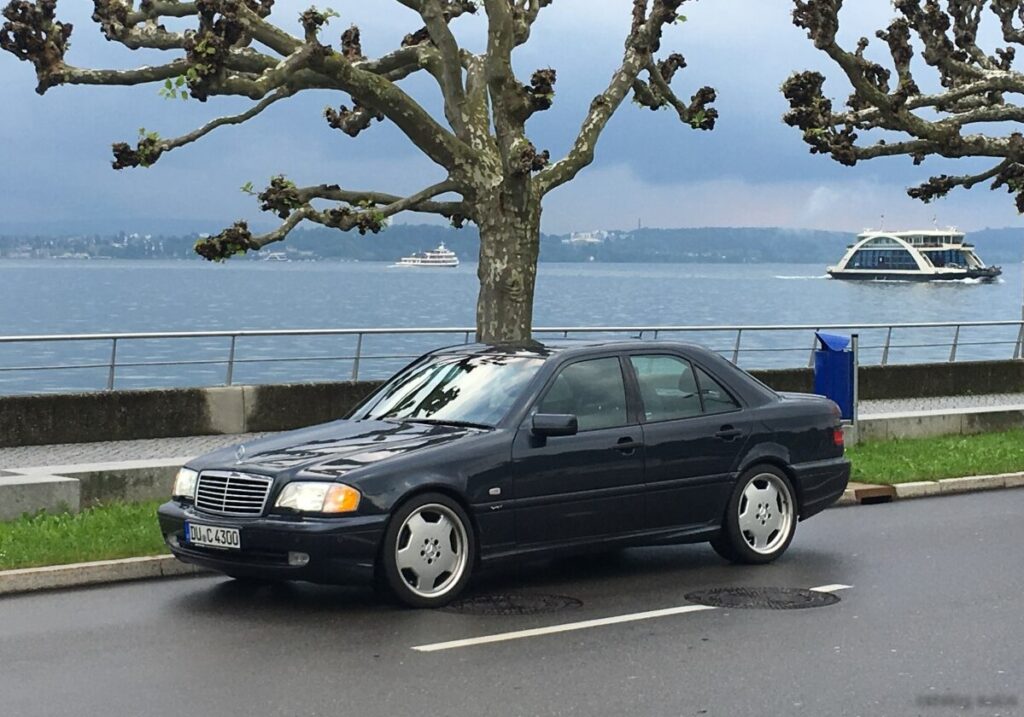
The Mercedes-Benz C55 AMG, produced from July 1998 to May 2000, was a high-performance variant of the W202 C-Class sedan. Positioned as the flagship of the facelifted W202 range (introduced in 1997), it represented Mercedes-AMG’s entry into the compact executive segment with a naturally aspirated V8 engine. The C55 AMG aimed to deliver a blend of luxury, performance, and exclusivity, offering a more potent alternative to the standard C-Class models and competitors like the BMW M3 and Audi S4. It was a relatively short-lived model, bridging the gap between the W202 and the subsequent W203 generation.
Technical Specifications
| Brand | Mercedes-Benz |
| Model | C-class |
| Generation | C-class (W202, facelift 1997) |
| Type | AMG C 55 V8 (347 Hp) 5G-TRONIC |
| Start of production | July, 1998 |
| End of production | May, 2000 |
| Powertrain Architecture | Internal Combustion engine |
| Body type | Sedan |
| Seats | 5 |
| Doors | 4 |
| Fuel consumption (urban) | 17.1 l/100 km (13.8 US mpg, 16.5 UK mpg, 5.8 km/l) |
| Fuel consumption (extra urban) | 8.5 l/100 km (27.7 US mpg, 33.2 UK mpg, 11.8 km/l) |
| Fuel consumption (combined) | 11.7 l/100 km (20.1 US mpg, 24.1 UK mpg, 8.5 km/l) |
| Fuel Type | Petrol (Gasoline) |
| Acceleration 0 – 100 km/h | 5.5 sec |
| Acceleration 0 – 62 mph | 5.5 sec |
| Acceleration 0 – 60 mph | 5.2 sec |
| Maximum speed | 250 km/h (155.34 mph), Electronically limited |
| Weight-to-power ratio | 4.5 kg/Hp, 221 Hp/tonne |
| Weight-to-torque ratio | 3.1 kg/Nm, 324.8 Nm/tonne |
| Power | 347 Hp @ 5500 rpm |
| Power per litre | 63.8 Hp/l |
| Torque | 510 Nm @ 3000-4300 rpm (376.16 lb.-ft. @ 3000-4300 rpm) |
| Engine layout | Front, Longitudinal |
| Engine Model/Code | M 113 E 55 / 113.983 |
| Engine displacement | 5439 cm3 (331.91 cu. in.) |
| Number of cylinders | 8 |
| Engine configuration | V-engine |
| Cylinder Bore | 97 mm (3.82 in.) |
| Piston Stroke | 92 mm (3.62 in.) |
| Compression ratio | 10.5:1 |
| Number of valves per cylinder | 3 |
| Fuel injection system | Multi-port manifold injection |
| Engine aspiration | Naturally aspirated engine |
| Valvetrain | SOHC |
| Kerb Weight | 1570 kg (3461.26 lbs.) |
| Max. weight | 1970 kg (4343.11 lbs.) |
| Max load | 400 kg (881.85 lbs.) |
| Fuel tank capacity | 62 l (16.38 US gal | 13.64 UK gal) |
| Length | 4516 mm (177.8 in.) |
| Width | 1723 mm (67.83 in.) |
| Height | 1387 mm (54.61 in.) |
| Wheelbase | 2690 mm (105.91 in.) |
| Front track | 1509 mm (59.41 in.) |
| Rear track | 1483 mm (58.39 in.) |
| Drivetrain Architecture | The Internal combustion engine (ICE) drives the rear wheels of the vehicle. |
| Drive wheel | Rear wheel drive |
| Number of gears | 5 |
| Gearbox type | automatic transmission G-TRONIC |
| Front suspension | Double wishbone |
| Rear suspension | Independent multi-link spring suspension with stabilizer |
| Front brakes | Ventilated discs |
| Rear brakes | Disc |
| Assisting systems | ABS (Anti-lock braking system) |
| Steering type | Cone worm with recirculation balls |
| Power steering | Hydraulic Steering |
| Front tires | 225/45 R17 |
| Rear tires | 245/40 R17 |
| Front wheel rims | 7.5J x 17 |
| Rear wheel rims | 8.5J x 17 |
Powertrain & Engine Architecture
The heart of the C55 AMG is the M113 E 55 engine, a 5.4-liter (5439 cc) naturally aspirated V8. This engine, a significant departure from the four and six-cylinder engines typically found in the C-Class, was derived from the larger engines used in the S-Class and SL-Class models. It featured a cast iron block, aluminum cylinder heads, and three valves per cylinder (two intake, one exhaust). Fuel delivery was handled by a multi-port fuel injection system, and the engine boasted a compression ratio of 10.5:1. The M113 was known for its robust construction and smooth power delivery. The engine was paired exclusively with a 5G-TRONIC five-speed automatic transmission, offering smooth shifts but lacking the driver engagement of a manual gearbox. This transmission was specifically tuned by AMG to handle the V8’s substantial torque output.
Driving Characteristics
The C55 AMG delivered a noticeably different driving experience compared to other W202 C-Class variants. The 347 horsepower and 376 lb-ft of torque provided brisk acceleration, with 0-60 mph times consistently around 5.2 to 5.5 seconds. While not as nimble as some of its rivals, the C55 offered a comfortable and refined ride, thanks to its well-tuned suspension. The 5G-TRONIC transmission, while smooth, could feel somewhat hesitant during quick downshifts. The gear ratios were optimized for both acceleration and highway cruising. Compared to the C36 AMG (the previous AMG C-Class), the C55 offered a significant power increase and a more sophisticated engine. It also differed from the later C43 AMG, which utilized a supercharged inline-six engine, offering a different character and sound.
Equipment & Trim Levels
The C55 AMG came generously equipped, reflecting its position as the range-topping model. Standard features included leather upholstery, automatic climate control, power-adjustable front seats, and a premium sound system. Exterior features included AMG-specific body styling (including unique front and rear bumpers, side skirts, and a rear spoiler), 17-inch alloy wheels, and dual exhaust outlets. Optional extras included a sunroof, navigation system, and upgraded interior trim options. The interior generally featured a dark wood trim, and the instrument cluster was modified with AMG badging and unique graphics.
Chassis & Braking
The C55 AMG featured a reinforced chassis and upgraded suspension components compared to standard C-Class models. The front suspension utilized a double wishbone design, while the rear employed an independent multi-link setup with a stabilizer bar. Braking duties were handled by ventilated disc brakes at all four corners, providing ample stopping power. ABS (Anti-lock Braking System) was standard. The suspension was tuned to provide a balance between sporty handling and comfortable ride quality, although it was noticeably firmer than the standard C-Class suspension.
Market Reception & Comparison
The C55 AMG was generally well-received by automotive critics, who praised its powerful engine, comfortable ride, and luxurious interior. However, some criticized the lack of a manual transmission option and the relatively high price. Compared to the BMW M3, the C55 offered a more comfortable ride and a more refined interior, but lacked the M3’s sharp handling and driver engagement. Against the Audi S4, the C55 provided a more powerful engine but was less technologically advanced. Fuel economy was predictably poor for a V8-powered vehicle, averaging around 20 mpg combined.
Legacy
The C55 AMG, while a relatively short-lived model, has gained a following among enthusiasts. The M113 engine is known for its reliability and durability, and well-maintained examples are still sought after today. However, maintenance costs can be higher than for standard C-Class models due to the complexity of the V8 engine and the age of the vehicle. The C55 AMG represents a unique chapter in the history of the C-Class, offering a compelling blend of performance, luxury, and exclusivity. It remains a desirable classic for those seeking a powerful and refined German sedan.