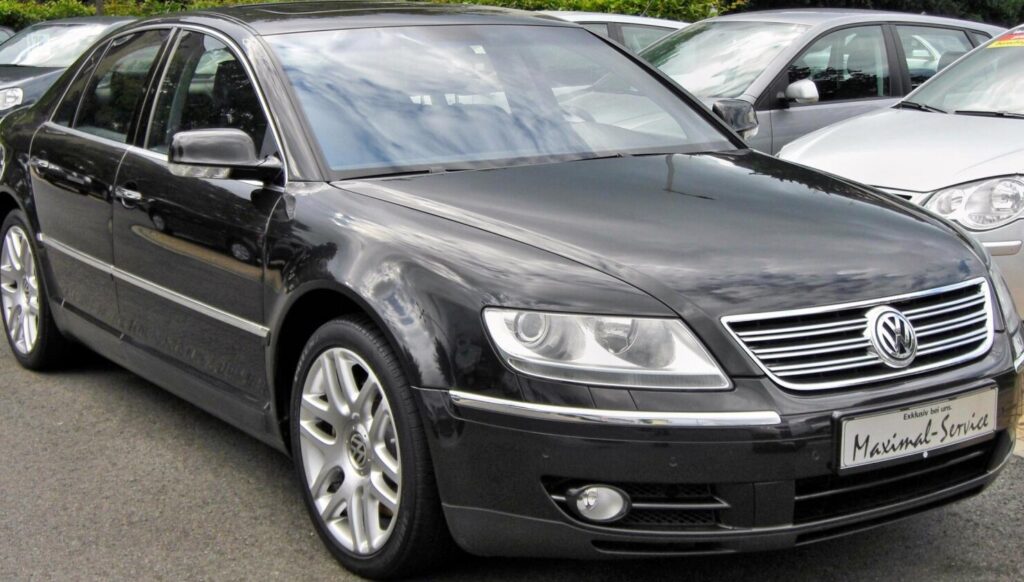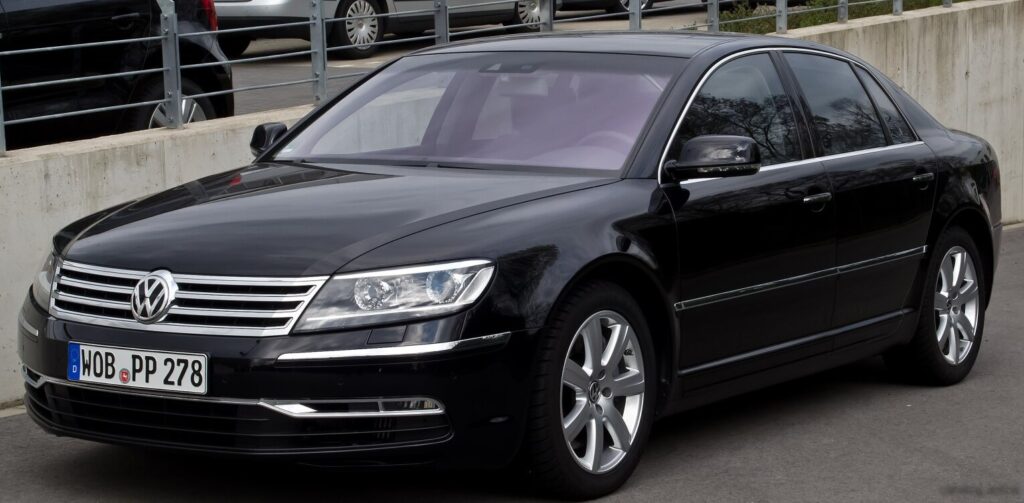
The Volkswagen Phaeton, particularly the facelifted version produced from May 2010 to April 2015, represented Volkswagen’s ambitious foray into the ultra-luxury sedan segment. This iteration, specifically equipped with the 4.2-liter V8 engine producing 335 horsepower and paired with a six-speed Tiptronic automatic transmission and 4MOTION all-wheel drive, aimed to compete directly with established marques like BMW, Mercedes-Benz, and Audi. Positioned as the flagship model, it offered a blend of sophisticated technology, opulent comfort, and understated elegance. The 2010 facelift brought revised styling, enhanced interior appointments, and updated technology features, solidifying the Phaeton’s position as a statement vehicle for Volkswagen.
Technical Specifications
| Brand | Volkswagen |
| Model | Phaeton |
| Generation | Phaeton (facelift 2010) |
| Type (Engine) | 4.2 V8 (335 Hp) 4MOTION Tiptronic |
| Start of production | May, 2010 |
| End of production | April, 2015 |
| Powertrain Architecture | Internal Combustion engine |
| Body type | Sedan |
| Seats | 5 |
| Doors | 4 |
| Fuel consumption (economy) – urban (NEDC) | 18.2 l/100 km (12.9 US mpg, 15.5 UK mpg, 5.5 km/l) |
| Fuel consumption (economy) – extra urban (NEDC) | 9.2 l/100 km (25.6 US mpg, 30.7 UK mpg, 10.9 km/l) |
| Fuel consumption (economy) – combined (NEDC) | 12.5 l/100 km (18.8 US mpg, 22.6 UK mpg, 8 km/l) |
| CO2 emissions (NEDC) | 290 g/km |
| Fuel Type | Petrol (Gasoline) |
| Acceleration 0 – 100 km/h | 6.9 sec |
| Acceleration 0 – 62 mph | 6.9 sec |
| Acceleration 0 – 60 mph | 6.6 sec |
| Maximum speed | 250 km/h (155.34 mph), Electronically limited |
| Emission standard | Euro 5 |
| Weight-to-power ratio | 6.3 kg/Hp, 159 Hp/tonne |
| Weight-to-torque ratio | 4.9 kg/Nm, 204.1 Nm/tonne |
| Power | 335 Hp @ 6500 rpm |
| Power per litre | 80.3 Hp/l |
| Torque | 430 Nm @ 3500 rpm (317.15 lb.-ft. @ 3500 rpm) |
| Engine layout | Front, Longitudinal |
| Engine Model/Code | BGH, BGJ |
| Engine displacement | 4172 cm3 (254.59 cu. in.) |
| Number of cylinders | 8 |
| Engine configuration | V-engine |
| Cylinder Bore | 84.5 mm (3.33 in.) |
| Piston Stroke | 93 mm (3.66 in.) |
| Compression ratio | 11:1 |
| Number of valves per cylinder | 5 |
| Fuel injection system | Multi-port manifold injection |
| Engine aspiration | Naturally aspirated engine |
| Valvetrain | DOHC |
| Engine oil capacity | 7.5 l (7.93 US qt | 6.6 UK qt) |
| Coolant | 9 l (9.51 US qt | 7.92 UK qt) |
| Kerb Weight | 2107 kg (4645.14 lbs.) |
| Max. weight | 2700 kg (5952.48 lbs.) |
| Max load | 593 kg (1307.34 lbs.) |
| Trunk (boot) space – minimum | 500 l (17.66 cu. ft.) |
| Fuel tank capacity | 90 l (23.78 US gal | 19.8 UK gal) |
| Max. roof load | 100 kg (220.46 lbs.) |
| Permitted trailer load with brakes (8%) | 2500 kg (5511.56 lbs.) |
| Permitted trailer load with brakes (12%) | 2400 kg (5291.09 lbs.) |
| Permitted trailer load without brakes | 750 kg (1653.47 lbs.) |
| Permitted towbar download | 100 kg (220.46 lbs.) |
| Length | 5059 mm (199.17 in.) |
| Width | 1903 mm (74.92 in.) |
| Width including mirrors | 2118 mm (83.39 in.) |
| Height | 1450 mm (57.09 in.) |
| Wheelbase | 2881 mm (113.43 in.) |
| Front track | 1630 mm (64.17 in.) |
| Rear (Back) track | 1617 mm (63.66 in.) |
| Ride height (ground clearance) | 120 mm (4.72 in.) |
| Minimum turning circle (turning diameter) | 12 m (39.37 ft.) |
| Front suspension | Double wishbone, Transverse stabilizer, Air suspension |
| Rear suspension | Independent on trapezoidal lever, Air suspension, Transverse stabilizer |
| Front brakes | Ventilated discs, 360×34 mm |
| Rear brakes | Ventilated discs, 310×22 mm |
| Number of gears and type of gearbox | 6 gears, automatic transmission Tiptronic |
Powertrain & Engine Architecture
At the heart of this Phaeton variant lies the 4.2-liter, naturally aspirated V8 engine, designated as either BGH or BGJ depending on minor revisions. This engine is a 90-degree V8, known for its smooth power delivery and refined character. It utilizes multi-port fuel injection and a double overhead camshaft (DOHC) valvetrain with five valves per cylinder. The engine’s 4172cc displacement, combined with a 11:1 compression ratio, produces 335 horsepower at 6500 rpm and 430 Nm (317 lb-ft) of torque at 3500 rpm. The six-speed Tiptronic automatic transmission, a torque-converter type, was specifically tuned to complement the V8’s power characteristics. ‘Tiptronic’ allowed for manual gear selection alongside the fully automatic mode, offering drivers more control. The 4MOTION all-wheel-drive system, a permanent system, distributes power between the front and rear axles as needed, enhancing traction and stability.
Driving Characteristics
The 4.2 V8 Phaeton delivers a distinctly different driving experience compared to the lower-powered, four-cylinder or diesel variants. Acceleration is brisk, with a 0-60 mph time of around 6.6 seconds and a limited top speed of 155 mph. The Tiptronic transmission provides smooth and relatively quick shifts, although it isn’t as responsive as some modern dual-clutch transmissions. The 4MOTION system provides excellent grip in all weather conditions, making the car feel planted and secure. The air suspension contributes to a remarkably comfortable ride, effectively isolating passengers from road imperfections. However, the Phaeton’s considerable weight (over 4600 lbs) is noticeable in spirited driving, and it doesn’t possess the agility of some of its sportier competitors.
Equipment & Trim Levels
The 4.2 V8 Phaeton came standard with a comprehensive array of luxury features. Interior appointments included premium leather upholstery, wood trim, and a high level of sound insulation. Standard equipment typically included a navigation system, a premium audio system, multi-zone climate control, power-adjustable and heated front and rear seats, and a sunroof. Optional extras included massaging seats, rear-seat entertainment systems, and a variety of customization options for interior materials and colors. The Phaeton aimed to provide a bespoke experience, allowing buyers to tailor the car to their individual preferences.
Chassis & Braking
The Phaeton’s chassis was designed for comfort and stability. It features a double wishbone front suspension and an independent trapezoidal lever rear suspension, both incorporating air suspension. The air suspension allows for adjustable ride height and damping, further enhancing ride quality. Braking duties are handled by ventilated disc brakes on all four wheels, providing ample stopping power. The front brakes measure 360x34mm, while the rear brakes are 310x22mm. Anti-lock braking system (ABS) is standard, along with electronic stability control.
Market Reception & Comparison
The 4.2 V8 Phaeton was generally well-received by critics, who praised its luxurious interior, comfortable ride, and refined powertrain. However, it faced an uphill battle against established luxury brands with stronger reputations. Fuel economy was a common criticism, with combined fuel consumption averaging around 18.8 US mpg. Compared to the more fuel-efficient diesel variants, the V8 offered significantly less economy. Reliability was generally good, although the complex technology and numerous features could potentially lead to higher maintenance costs. The Phaeton’s price point also positioned it in a highly competitive segment, making it a challenging sell for some buyers.
Legacy
The Volkswagen Phaeton, despite not achieving the sales success Volkswagen hoped for, remains a fascinating and ambitious vehicle. The 4.2 V8 variant, in particular, represents the pinnacle of the Phaeton’s engineering and luxury aspirations. On the used car market, these models are relatively rare and can be found in good condition, often commanding a premium price. The powertrain, while not the most fuel-efficient, is known for its durability and smooth operation. The Phaeton’s legacy lies in its demonstration of Volkswagen’s ability to create a world-class luxury sedan, even if it didn’t fully resonate with the target audience.