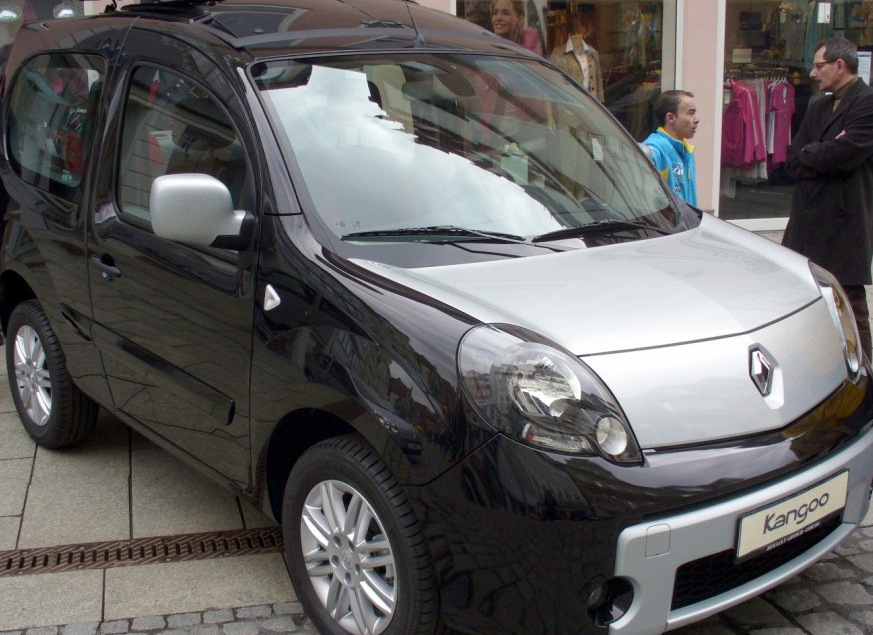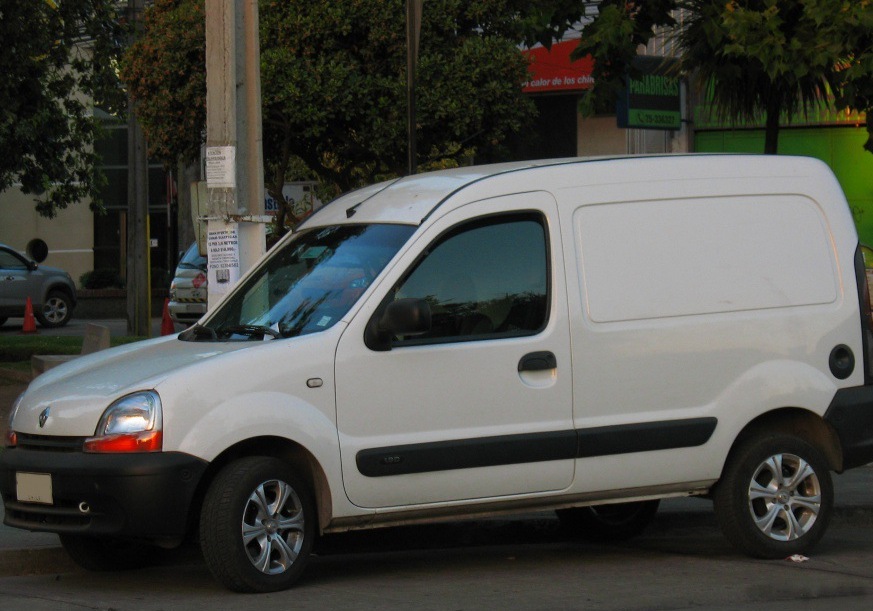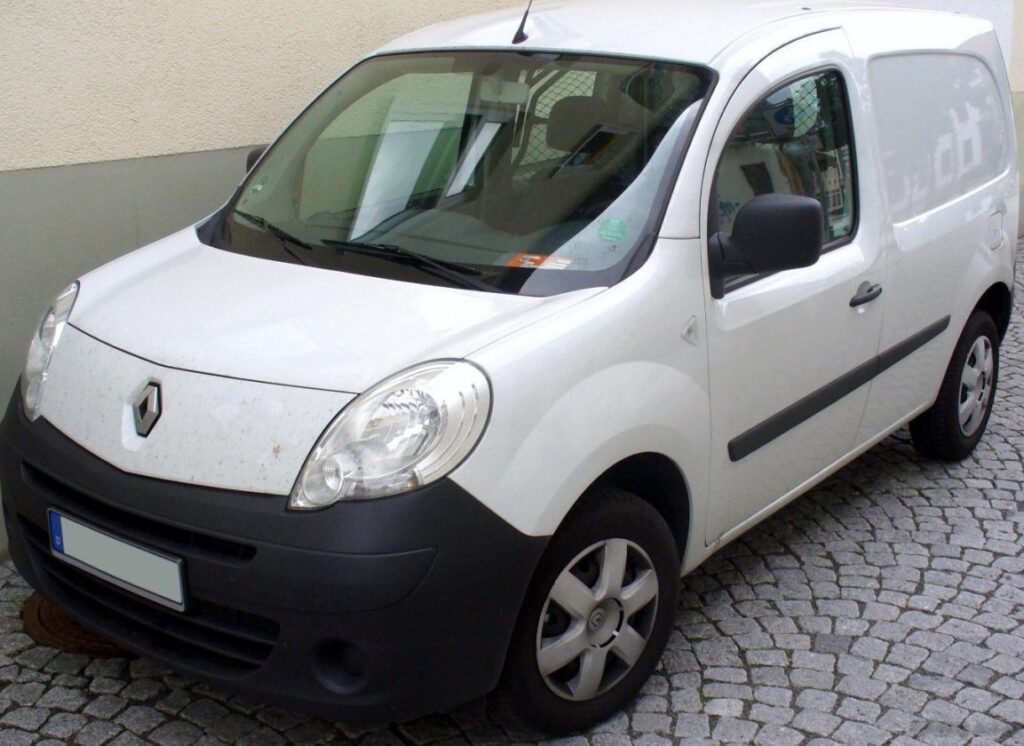
The Renault Kangoo II Express 1.5 dCi, producing 68 horsepower, was a commercially-oriented panel van offered by Renault from 2008 to 2010. Positioned as an entry-level workhorse within the Kangoo II range, it catered to businesses and tradespeople requiring a practical and economical vehicle. This variant was a key part of Renault’s strategy to offer a diverse Kangoo lineup, appealing to a broad spectrum of commercial customers. It’s built on the X0/B platform, shared with the Renault Scenic and Megane.
Technical Specifications
| Brand | Renault |
| Model | Kangoo |
| Generation | Kangoo II Express |
| Type (Engine) | 1.5 dCi (68 Hp) |
| Start of production | August, 2008 |
| End of production | August, 2010 |
| Powertrain Architecture | Internal Combustion engine |
| Body type | Minivan |
| Seats | 2 |
| Doors | 3 |
| CO2 emissions (WLTP) | 143 g/km |
| Fuel consumption (urban) | 5.9 l/100 km (39.9 US mpg, 47.9 UK mpg, 16.9 km/l) |
| Fuel consumption (extra urban) | 5.0 l/100 km (47 US mpg, 56.5 UK mpg, 20 km/l) |
| Fuel consumption (combined) | 5.3 l/100 km (44.4 US mpg, 53.3 UK mpg, 18.9 km/l) |
| CO2 emissions (NEDC) | 140 g/km |
| Fuel Type | Diesel |
| Acceleration 0 – 100 km/h | 20.3 sec |
| Acceleration 0 – 62 mph | 20.3 sec |
| Acceleration 0 – 60 mph | 19.3 sec |
| Maximum speed | 146 km/h (90.72 mph) |
| Weight-to-power ratio | 18.4 kg/Hp, 54.4 Hp/tonne |
| Weight-to-torque ratio | 7.8 kg/Nm, 127.9 Nm/tonne |
| Power | 68 Hp @ 4000 rpm |
| Power per litre | 46.5 Hp/l |
| Torque | 160 Nm @ 1700 rpm (118.01 lb.-ft. @ 1700 rpm) |
| Engine layout | Front, Transverse |
| Engine Model/Code | K9K |
| Engine displacement | 1461 cm3 (89.16 cu. in.) |
| Number of cylinders | 4 |
| Engine configuration | Inline |
| Number of valves per cylinder | 2 |
| Fuel injection system | Diesel Commonrail |
| Engine aspiration | Turbocharger, Intercooler |
| Engine oil capacity | 4.5 l (4.76 US qt | 3.96 UK qt) |
| Coolant capacity | 7.2 l (7.61 US qt | 6.34 UK qt) |
| Kerb Weight | 1251 kg (2757.98 lbs) |
| Max. weight | 1918 kg (4228.47 lbs) |
| Max load | 667 kg (1470.48 lbs) |
| Trunk (boot) space – maximum | 3000 l (105.94 cu. ft) |
| Fuel tank capacity | 60 l (15.85 US gal | 13.2 UK gal) |
| Max. roof load | 100 kg (220.46 lbs) |
| Permitted trailer load (braked) | 1050 kg (2314.85 lbs) |
| Permitted trailer load (unbraked) | 625 kg (1377.89 lbs) |
| Permitted towbar download | 75 kg (165.35 lbs) |
| Length | 4213 mm (165.87 in) |
| Width | 1829 mm (72.01 in) |
| Width including mirrors | 2133 mm (83.98 in) |
| Height | 1844 mm (72.6 in) |
| Wheelbase | 2697 mm (106.18 in) |
| Ride height (ground clearance) | 184 mm (7.24 in) |
| Minimum turning circle | 10.5 m (34.45 ft) |
| Drivetrain Architecture | Front wheel drive |
| Number of gears | 5 |
| Gearbox type | Manual transmission |
| Front brakes | Disc |
| Rear brakes | Disc |
| Assisting systems | ABS (Anti-lock braking system) |
| Tires size | 195/65 R15 |
| Wheel rims size | 15 |
Powertrain & Engine Architecture
The Kangoo II Express 1.5 dCi (68 Hp) was powered by the K9K engine, a 1.5-liter inline-four cylinder diesel engine. This engine was a common sight in Renault and Nissan vehicles of the period, known for its relatively simple design and fuel efficiency. The 68 horsepower version utilized a fixed-geometry turbocharger and a diesel common rail fuel injection system. The common rail system, operating at high pressure, allowed for precise fuel delivery and improved combustion efficiency. The engine featured two valves per cylinder (SOHC) and an intercooler to further enhance performance. The five-speed manual transmission was the only gearbox option available for this specific configuration. The K9K engine, while not particularly powerful, was designed for durability and low running costs.
Driving Characteristics
The 1.5 dCi 68 hp engine in the Kangoo II Express delivered modest performance. Acceleration was slow, with a 0-60 mph time of around 19.3 seconds, and a top speed of approximately 91 mph. The engine’s torque peak of 160 Nm (118 lb-ft) at 1700 rpm provided adequate pulling power for typical commercial use, but it wasn’t designed for rapid acceleration or high-speed cruising. The five-speed manual gearbox was geared for economy, with relatively long ratios. Compared to higher-output versions of the Kangoo II, such as those with the 1.5 dCi 90 or 110 hp engines, this variant felt significantly underpowered, especially when fully loaded. However, the lower power output contributed to improved fuel economy, making it an attractive option for businesses prioritizing cost-effectiveness.
Equipment & Trim Levels
The Kangoo II Express 1.5 dCi (68 Hp) was typically offered with a basic level of equipment, reflecting its commercial focus. Standard features generally included a driver’s airbag, central locking, and power steering. The interior was functional and durable, with hard-wearing plastic trim and cloth upholstery. The cabin was designed for practicality, with ample storage compartments and a focus on ease of cleaning. Optional extras included air conditioning, a radio/CD player, and electric windows. The trim level was generally considered the base model, aimed at businesses seeking a no-frills, affordable van.
Chassis & Braking
The Kangoo II Express featured a MacPherson strut front suspension and a torsion beam rear suspension. The suspension setup was tuned for comfort and load-carrying capacity rather than sporty handling. Braking was provided by disc brakes on all four wheels, along with an Anti-lock Braking System (ABS) as standard. The braking system was adequate for the vehicle’s weight and performance, but it wasn’t particularly powerful. The relatively simple suspension design contributed to the Kangoo’s affordability and ease of maintenance.
Market Reception & Comparison
The Renault Kangoo II Express 1.5 dCi (68 Hp) was generally well-received by critics as a practical and economical work van. Its low purchase price and excellent fuel economy were major selling points. However, its lack of power was often criticized, particularly when compared to more powerful alternatives. Compared to the 1.5 dCi 90 hp version, the 68 hp model offered significantly lower performance but at a lower price point. The 90 hp version was a more popular choice for those who frequently carried heavy loads or drove on highways. The 68 hp model was best suited for urban deliveries and light commercial use.
Legacy
The K9K engine, in its various iterations, proved to be a reliable and durable powerplant. The 1.5 dCi (68 Hp) version of the Kangoo II Express is still found on the used car market today, often at very affordable prices. While it may not offer the performance of more modern vans, its simplicity and low running costs make it an attractive option for budget-conscious buyers. Common issues with these engines include turbocharger wear and potential problems with the fuel injectors, but these are generally manageable with regular maintenance. The Kangoo II Express remains a popular choice for small businesses and tradespeople seeking a dependable and economical van.