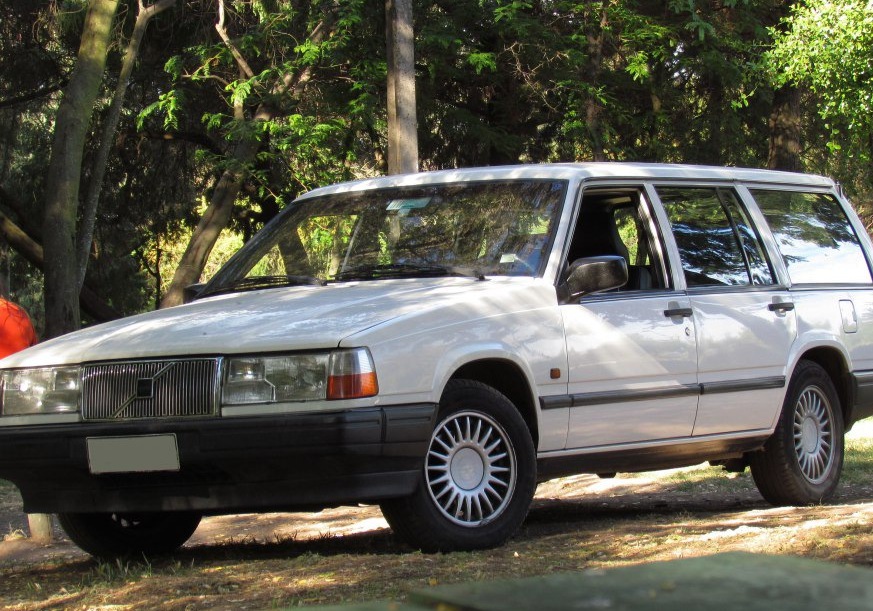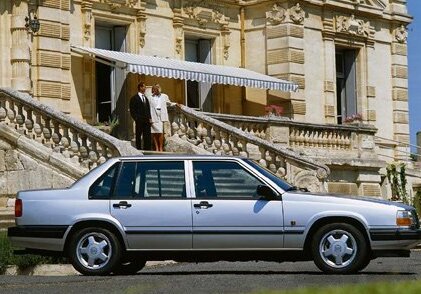
The Volvo 940 2.3i 16V, produced from 1990 to 1991, represents a refinement of Volvo’s long-running 900 series. Positioned as a mid-range offering within the 940 lineup, it bridged the gap between the base 2.3L 8-valve models and the more performance-oriented turbocharged variants. Built on the P90 platform (internally designated 944), the 940 aimed to deliver a blend of Scandinavian practicality, safety, and respectable performance for the family car market, primarily in Europe and North America. This variant was particularly popular with buyers seeking a durable, comfortable, and relatively fuel-efficient vehicle without sacrificing Volvo’s renowned safety features.
Technical Specifications
| Brand | Volvo |
| Model | 940 |
| Generation | 940 (944) |
| Type (Engine) | 2.3i 16V (155 Hp) |
| Start of production | 1990 |
| End of production | 1991 |
| Powertrain Architecture | Internal Combustion engine |
| Body type | Sedan |
| Seats | 5 |
| Doors | 4 |
| Fuel consumption (urban) | 13.4 l/100 km (17.6 US mpg, 21.1 UK mpg, 7.5 km/l) |
| Fuel consumption (extra urban) | 7.3 l/100 km (32.2 US mpg, 38.7 UK mpg, 13.7 km/l) |
| Fuel consumption (combined) | 9.7 l/100 km (24.2 US mpg, 29.1 UK mpg, 10.3 km/l) |
| Fuel Type | Petrol (Gasoline) |
| Acceleration 0 – 100 km/h | 10.2 sec |
| Acceleration 0 – 62 mph | 10.2 sec |
| Acceleration 0 – 60 mph | 9.7 sec |
| Maximum speed | 200 km/h (124.27 mph) |
| Power | 155 Hp @ 5700 rpm |
| Power per litre | 66.9 Hp/l |
| Torque | 203 Nm @ 4450 rpm (149.73 lb.-ft. @ 4450 rpm) |
| Engine layout | Front, Longitudinal |
| Engine Model/Code | B234F |
| Engine displacement | 2316 cm3 (141.33 cu. in.) |
| Number of cylinders | 4 |
| Engine configuration | Inline |
| Cylinder Bore | 96 mm (3.78 in.) |
| Piston Stroke | 80 mm (3.15 in.) |
| Compression ratio | 10:1 |
| Number of valves per cylinder | 4 |
| Fuel injection system | Multi-port manifold injection |
| Engine aspiration | Naturally aspirated engine |
| Valvetrain | DOHC |
| Engine oil capacity | 3.9 l (4.12 US qt, 3.43 UK qt) |
| Coolant capacity | 9.3 l (9.83 US qt, 8.18 UK qt) |
| Trunk (boot) space (minimum) | 471 l (16.63 cu. ft.) |
| Fuel tank capacity | 75 l (19.81 US gal, 16.5 UK gal) |
| Length | 4871 mm (191.77 in.) |
| Width | 1750 mm (68.9 in.) |
| Height | 1425 mm (56.1 in.) |
| Wheelbase | 2770 mm (109.06 in.) |
| Front track | 1470 mm (57.87 in.) |
| Rear track | 1460 mm (57.48 in.) |
| Drivetrain Architecture | Rear wheel drive |
| Number of gears | 4 |
| Gearbox type | Manual transmission |
| Front suspension | Wishbone |
| Rear suspension | Coil spring |
| Front brakes | Ventilated discs |
| Rear brakes | Disc |
| Assisting systems | ABS (Anti-lock braking system), Hydraulic Power Steering |
| Tires size | 195/60 R15 |
| Wheel rims size | 15 |
Powertrain & Engine Architecture
The heart of the 940 2.3i 16V is the B234F engine, a 2.3-liter inline-four cylinder powerplant. This engine represents a significant upgrade over the earlier 8-valve versions, featuring a dual overhead camshaft (DOHC) cylinder head with four valves per cylinder. This 16-valve configuration allows for improved breathing and higher engine speeds, resulting in increased power output. The B234F utilizes Bosch LH2.4 fuel injection, a multi-port system that precisely meters fuel into the intake ports. This system, coupled with electronic ignition, contributes to smooth operation and relatively good fuel efficiency for its time. The engine’s longitudinal mounting and rear-wheel-drive configuration were hallmarks of traditional Volvo engineering. The 4-speed manual transmission was the standard offering, providing a direct connection to the rear wheels. The transmission’s gear ratios were tuned for a balance of acceleration and highway cruising, though it wasn’t particularly sporty compared to some contemporary offerings.
Driving Characteristics
The 940 2.3i 16V with a manual transmission offered a reasonably engaging driving experience. While not a sports car, the 155 horsepower and 149.73 lb-ft of torque provided adequate power for everyday driving and even some spirited acceleration. The 0-60 mph time of around 9.7 seconds was respectable for the early 1990s. The manual gearbox allowed drivers to fully utilize the engine’s powerband, though the shift quality could feel somewhat notchy compared to more modern transmissions. Compared to the turbocharged 940 models, the 2.3i 16V lacked the immediate punch of forced induction, but it offered a more linear power delivery and arguably greater reliability. Against the base 8-valve models, the 16-valve engine provided a noticeable improvement in performance, making it a more enjoyable car to drive, especially on the open road.
Equipment & Trim Levels
The 940 2.3i 16V typically came with a fairly comprehensive list of standard features for its era. Interior appointments included comfortable cloth upholstery, a well-designed dashboard with clear instrumentation, and a practical layout. Power steering was standard, making the car easier to maneuver. Safety features, a Volvo hallmark, included ABS anti-lock brakes and reinforced steel body construction. Optional extras included a sunroof, upgraded audio systems, and leather upholstery. The trim level was generally consistent across the 2.3i 16V models, with variations primarily stemming from individual customer choices regarding optional equipment.
Chassis & Braking
The 940’s chassis featured a robust suspension system designed for comfort and stability. The front suspension utilized a wishbone design, while the rear employed a coil spring setup. This configuration provided a comfortable ride, even on rough roads. Braking duties were handled by ventilated discs at the front and solid discs at the rear, providing adequate stopping power for the vehicle’s weight and performance. The ABS system further enhanced braking safety by preventing wheel lockup during hard braking maneuvers.
Market Reception & Comparison
The Volvo 940 2.3i 16V was generally well-received by automotive critics. It was praised for its safety, build quality, and comfortable ride. However, some reviewers noted that the performance, while adequate, wasn’t particularly exciting compared to some of its rivals. Fuel economy was considered reasonable for a car of its size and class, averaging around 24.2 US mpg in combined driving. Compared to the turbocharged 940 models, the 2.3i 16V offered a lower price point and potentially greater long-term reliability, making it an attractive option for buyers who prioritized practicality and durability over outright performance.
Legacy
The Volvo 940 2.3i 16V has proven to be a remarkably durable and reliable vehicle. Many examples are still on the road today, a testament to Volvo’s engineering and build quality. The B234F engine is known for its longevity and relatively simple maintenance requirements. In the used car market, the 940 2.3i 16V is often sought after by enthusiasts and those looking for a classic Volvo that is both practical and enjoyable to drive. Parts availability remains good, and the car’s straightforward design makes it relatively easy to maintain and repair. It represents a high point in Volvo’s commitment to building safe, durable, and comfortable automobiles.