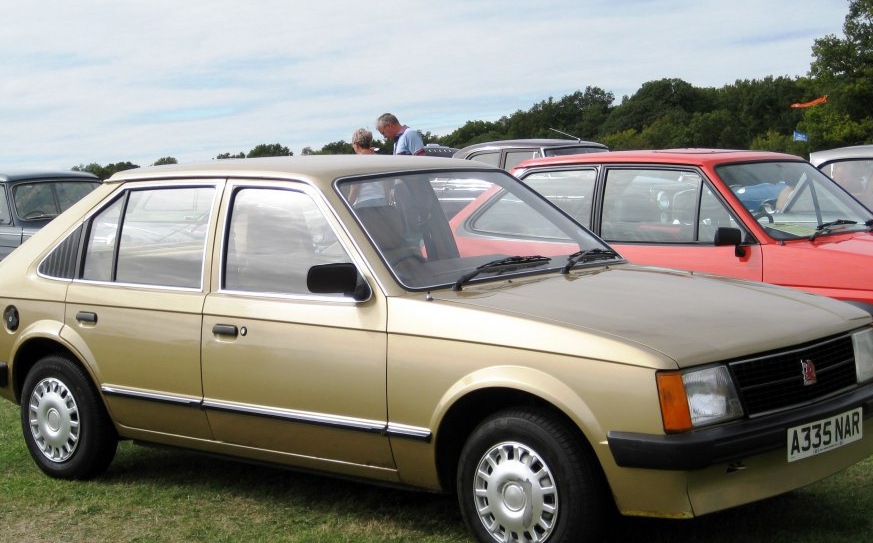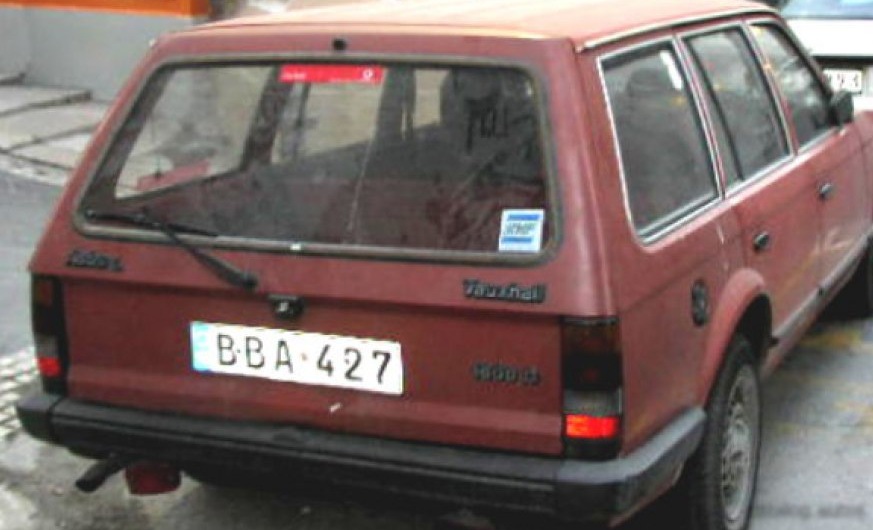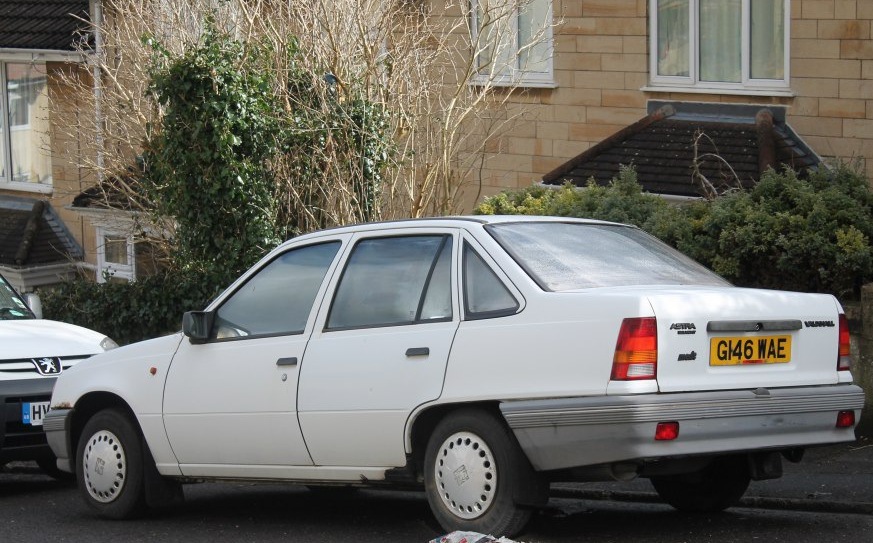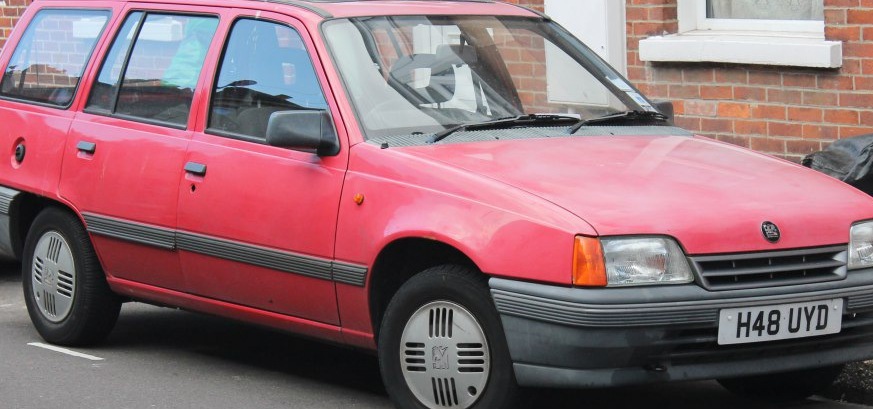
The Vauxhall Astra Mk II Estate 1.6 S (90 hp) was a practical and popular family vehicle produced between 1984 and 1986. Positioned as a mid-range offering within the Mk II Estate lineup, it provided a balance between affordability, fuel economy, and usability. This variant played a significant role in solidifying the Astra’s reputation as a versatile and reliable car in the British market, offering estate car practicality with a relatively economical engine. It was part of the broader Mk II Astra range, which utilized the 1HX0 platform, and represented a key evolution in Vauxhall’s family car offerings.
Technical Specifications
| Brand | Vauxhall |
| Model | Astra |
| Generation | Astra Mk II Estate |
| Type (Engine) | 1.6 S (90 Hp) |
| Start of production | 1984 |
| End of production | 1986 |
| Powertrain Architecture | Internal Combustion engine |
| Body type | Station wagon (estate) |
| Seats | 5 |
| Doors | 5 |
| Fuel Type | Petrol (Gasoline) |
| Power | 90 Hp @ 5800 rpm |
| Power per litre | 56.3 Hp/l |
| Torque | 123 Nm @ 4000 rpm |
| Torque (lb-ft) | 90.72 lb.-ft. @ 4000 rpm |
| Engine layout | Front, Transverse |
| Engine Model/Code | 16SH |
| Engine displacement | 1598 cm3 |
| Engine displacement (cu. in.) | 97.52 cu. in. |
| Number of cylinders | 4 |
| Engine configuration | Inline |
| Cylinder Bore | 79 mm |
| Cylinder Bore (in.) | 3.11 in. |
| Piston Stroke | 81.5 mm |
| Piston Stroke (in.) | 3.21 in. |
| Compression ratio | 9.2:1 |
| Number of valves per cylinder | 2 |
| Engine aspiration | Naturally aspirated engine |
| Engine oil capacity | 3.25 l |
| Engine oil capacity (US qt) | 3.43 US qt |
| Engine oil capacity (UK qt) | 2.86 UK qt |
| Coolant | 7.7 l |
| Coolant (US qt) | 8.14 US qt |
| Coolant (UK qt) | 6.78 UK qt |
| Trunk (boot) space – minimum | 470 l |
| Trunk (boot) space – minimum (cu. ft.) | 16.6 cu. ft. |
| Trunk (boot) space – maximum | 1520 l |
| Trunk (boot) space – maximum (cu. ft.) | 53.68 cu. ft. |
| Fuel tank capacity | 50 l |
| Fuel tank capacity (US gal) | 13.21 US gal |
| Fuel tank capacity (UK gal) | 11 UK gal |
| Length | 4228 mm |
| Length (in.) | 166.46 in. |
| Width | 1666 mm |
| Width (in.) | 65.59 in. |
| Height | 1430 mm |
| Height (in.) | 56.3 in. |
| Wheelbase | 2520 mm |
| Wheelbase (in.) | 99.21 in. |
| Front track | 1400 mm |
| Front track (in.) | 55.12 in. |
| Rear (Back) track | 1405 mm |
| Rear (Back) track (in.) | 55.31 in. |
| Ride height (ground clearance) | 140 mm |
| Ride height (ground clearance) (in.) | 5.51 in. |
| Drag coefficient (Cd) | 0.35 |
Powertrain & Engine Architecture
The 1.6 S variant was powered by the 16SH engine, a 1.6-liter inline-four cylinder petrol engine. This engine featured a naturally aspirated configuration and utilized a two-valve-per-cylinder setup. Fuel delivery was managed by a carburetor system, common for the era, providing adequate but not particularly sophisticated fuel management. The engine produced 90 horsepower at 5800 rpm and 123 Nm (90.72 lb-ft) of torque at 4000 rpm. The engine’s design prioritized reliability and affordability over outright performance. The 16SH engine was known for its relatively simple construction, making it easier to maintain and repair. The engine was transversely mounted, a common layout for front-wheel-drive vehicles, contributing to efficient packaging within the engine bay.
Driving Characteristics
The 1.6 S automatic transmission offered a comfortable, if not particularly sporty, driving experience. Acceleration was adequate for everyday driving, but the 90 hp output meant it wasn’t a particularly quick vehicle. The automatic transmission, typically a three-speed unit, provided smooth gear changes, but could feel somewhat sluggish when attempting quicker overtaking maneuvers. Compared to the five-speed manual version, the automatic suffered a slight performance penalty due to the transmission’s inherent efficiency losses. The gear ratios were tuned for fuel economy and drivability rather than outright performance. The automatic transmission made the Astra Estate more accessible to drivers who preferred the convenience of two-pedal operation.
Equipment & Trim Levels
The 1.6 S trim level offered a reasonable level of equipment for the time. Standard features typically included cloth upholstery, a basic instrument cluster, and a four-speaker stereo system. The interior was functional and durable, prioritizing practicality over luxury. Optional extras included a sunroof, upgraded stereo systems, and central locking. The exterior featured body-colored bumpers and door handles, distinguishing it from the more basic models. The 1.6 S aimed to provide a comfortable and well-equipped package for family buyers.
Chassis & Braking
The Astra Mk II Estate utilized a MacPherson strut front suspension and a twist-beam rear suspension. This setup provided a comfortable ride quality, although it wasn’t particularly sporty in handling. The front brakes were typically disc brakes, while the rear brakes were drum brakes, a common configuration for vehicles in this class during the 1980s. The steering was rack and pinion, providing reasonably precise steering feel. Stabilizer bars were often included to reduce body roll during cornering. The chassis was designed to provide a balance between comfort, stability, and affordability.
Market Reception & Comparison
The Astra Mk II Estate 1.6 S (90 hp) was generally well-received by critics as a practical and affordable family vehicle. It offered a good level of space and versatility, making it suitable for a wide range of uses. Compared to the higher-powered versions, such as the 1.8 or 2.0-liter models, the 1.6 S offered better fuel economy but less performance. Compared to the diesel versions, it provided more refinement and a smoother driving experience, but at the cost of fuel efficiency. The automatic transmission was seen as a convenient option, but some reviewers noted its impact on performance. Overall, the 1.6 S was considered a sensible and reliable choice for buyers seeking a practical estate car.
Legacy
The 16SH engine, while not known for being particularly high-performance, proved to be a durable and reliable unit. Many examples of the Astra Mk II Estate 1.6 S are still on the road today, testament to its robust construction. The automatic transmission, while not as sought-after as the manual version, remains relatively reliable with proper maintenance. In the used car market, the 1.6 S is often seen as a good value proposition, offering affordable motoring and a practical body style. The Astra Mk II Estate, in general, is remembered fondly as a well-rounded and dependable family car from the 1980s, and the 1.6 S variant represents a solid and sensible choice within the range.