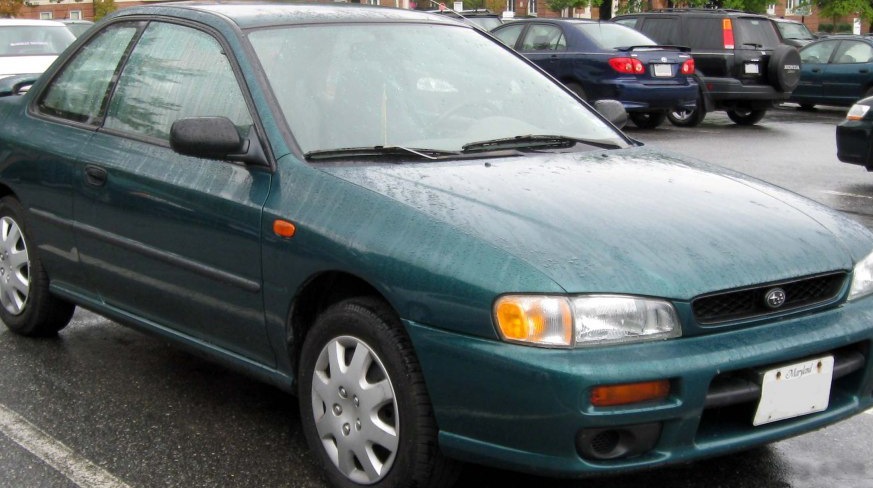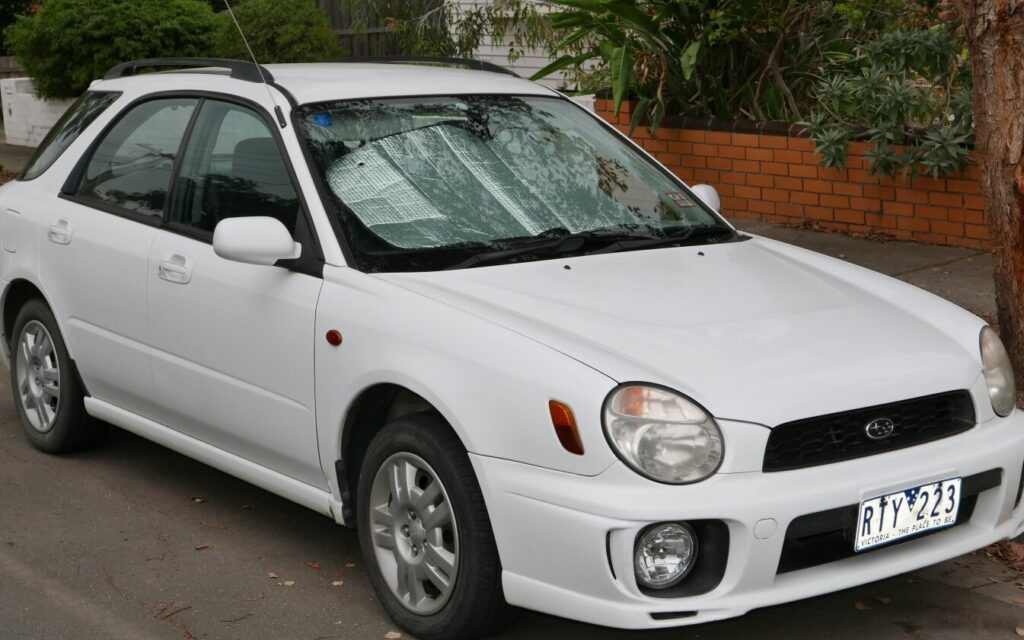
The Subaru Impreza II Station Wagon 2.5, produced between 2000 and 2002, represented Subaru’s entry into the increasingly popular compact estate car segment. This variant, equipped with the 2.5-liter naturally aspirated boxer engine and a four-speed automatic transmission, offered a blend of practicality, all-wheel drive capability, and relative affordability within the broader Impreza range. It was positioned as a family-oriented alternative to the more performance-focused Impreza WRX models, appealing to buyers prioritizing comfort and versatility over outright speed. The Impreza II series (GF chassis code) built upon the success of the first-generation Impreza, offering improved refinement and a more spacious interior.
Technical Specifications
| Brand | Subaru |
| Model | Impreza |
| Generation | Impreza II Station Wagon |
| Type (Engine) | 2.5 (165 Hp) AWD Automatic |
| Start of production | 2000 |
| End of production | 2002 |
| Powertrain Architecture | Internal Combustion engine |
| Body type | Station wagon (estate) |
| Seats | 5 |
| Doors | 5 |
| Fuel consumption (economy) – urban (EPA) | 10.7 l/100 km (22 US mpg, 26.4 UK mpg, 9.3 km/l) |
| Fuel consumption (economy) – extra urban (EPA) | 8.7 l/100 km (27 US mpg, 32.5 UK mpg, 11.5 km/l) |
| Fuel Type | Petrol (Gasoline) |
| Weight-to-power ratio | 8.5 kg/Hp, 117.4 Hp/tonne |
| Weight-to-torque ratio | 6.2 kg/Nm, 160 Nm/tonne |
| Power | 165 Hp @ 5600 rpm |
| Power per litre | 67.2 Hp/l |
| Torque | 225 Nm @ 4000 rpm (165.95 lb.-ft. @ 4000 rpm) |
| Engine layout | Front, Longitudinal |
| Engine Model/Code | EJ251 |
| Engine displacement | 2457 cm3 (149.94 cu. in.) |
| Number of cylinders | 4 |
| Engine configuration | Boxer |
| Cylinder Bore | 99.5 mm (3.92 in.) |
| Piston Stroke | 79 mm (3.11 in.) |
| Compression ratio | 10:1 |
| Number of valves per cylinder | 4 |
| Fuel injection system | Multi-port manifold injection |
| Engine aspiration | Naturally aspirated engine |
| Valvetrain | SOHC |
| Engine oil capacity | 4 l (4.23 US qt | 3.52 UK qt) |
| Coolant | 6.9 l (7.29 US qt | 6.07 UK qt) |
| Kerb Weight | 1406 kg (3099.7 lbs.) |
| Trunk (boot) space – minimum | 790 l (27.9 cu. ft.) |
| Trunk (boot) space – maximum | 1744 l (61.59 cu. ft.) |
| Fuel tank capacity | 60 l (15.85 US gal | 13.2 UK gal) |
| Permitted trailer load with brakes (12%) | 907 kg (1999.59 lbs.) |
| Length | 4405 mm (173.43 in.) |
| Width | 1695 mm (66.73 in.) |
| Height | 1465 mm (57.68 in.) |
| Wheelbase | 2525 mm (99.41 in.) |
| Front track | 1465 mm (57.68 in.) |
| Rear (Back) track | 1455 mm (57.28 in.) |
| Ride height (ground clearance) | 150 mm (5.91 in.) |
| Minimum turning circle (turning diameter) | 10.2 m (33.46 ft.) |
| Drivetrain Architecture | The Internal combustion engine (ICE) drives permanently the four wheels of the vehicle. |
| Drive wheel | All wheel drive (4×4) |
| Number of gears and type of gearbox | 4 gears, automatic transmission |
| Front suspension | Independent, type McPherson with coil spring and anti-roll bar |
| Rear suspension | Independent coil spring, Transverse stabilizer |
| Front brakes | Ventilated discs, 272 mm |
| Rear brakes | Drum, 229 mm |
| Assisting systems | ABS (Anti-lock braking system) |
| Steering type | Steering rack and pinion |
| Power steering | Hydraulic Steering |
| Tires size | 195/60 R15 |
| Wheel rims size | 6J x 15 |
Powertrain & Engine Architecture
The heart of the Impreza II 2.5 was the EJ251 engine, a 2.5-liter horizontally opposed (boxer) four-cylinder. This engine design, a Subaru hallmark, offered a low center of gravity, contributing to the car’s balanced handling. The EJ251 featured a single overhead camshaft (SOHC) valvetrain and multi-port fuel injection. While not a high-revving engine, it delivered a respectable 165 horsepower and 166 lb-ft of torque. The automatic transmission was a conventional four-speed unit, chosen for its ease of use and suitability for everyday driving. It wasn’t designed for rapid acceleration, but provided smooth shifts and adequate performance for most driving situations. The engine code, EJ251, is crucial for identifying specific parts and maintenance requirements.
Driving Characteristics
The 2.5-liter engine and four-speed automatic combination resulted in a driving experience focused on comfort and usability rather than sporty performance. Acceleration was adequate for merging onto highways and passing slower traffic, but it lacked the punch of the turbocharged WRX models. The automatic transmission’s gear ratios were optimized for fuel efficiency and smooth cruising, rather than aggressive downshifts. Compared to the five-speed manual transmission available on other Impreza variants, the automatic felt less engaging and slightly slower. However, the all-wheel drive system provided excellent traction in various weather conditions, making it a capable and confidence-inspiring vehicle.
Equipment & Trim Levels
The Impreza II 2.5 Automatic typically came with a reasonable level of standard equipment. This included air conditioning, power windows and locks, and an AM/FM stereo. Interior upholstery was typically cloth, with a relatively simple dashboard layout. Optional extras could include a sunroof, upgraded audio systems, and alloy wheels. The trim level was generally considered mid-range within the Impreza lineup, offering a step up in comfort and convenience compared to the base models, but lacking the sporty enhancements of the WRX.
Chassis & Braking
The Impreza II Station Wagon featured independent suspension all around, with McPherson struts at the front and a multi-link setup at the rear. This provided a comfortable ride and good handling characteristics. Front brakes were ventilated discs, offering good stopping power, while the rear brakes were drum brakes, a cost-saving measure common in this class of vehicle. Anti-lock brakes (ABS) were standard, enhancing safety. The suspension was tuned for a balance between comfort and handling, prioritizing ride quality over aggressive cornering.
Market Reception & Comparison
The Impreza II 2.5 Automatic was generally well-received by critics as a practical and reliable family car. It offered a compelling alternative to other compact wagons, particularly those without all-wheel drive. Fuel economy was reasonable for its class, although not exceptional. Compared to the manual transmission versions of the 2.5-liter Impreza, the automatic offered less engaging driving experience but greater convenience. Against the turbocharged WRX models, it lacked performance but offered significantly lower running costs and insurance premiums. Reliability was generally good, although regular maintenance was essential to ensure the longevity of the engine and transmission.
Legacy
The Subaru Impreza II 2.5 Automatic has proven to be a relatively durable vehicle, with many examples still on the road today. The EJ251 engine, while not without its potential issues (such as head gasket failures, a common issue with early EJ series engines), is generally considered reliable when properly maintained. In the used car market, these Imprezas are often sought after by buyers looking for an affordable, practical, and all-wheel drive wagon. Their simplicity and relatively low maintenance costs make them an attractive option for those seeking a dependable vehicle.