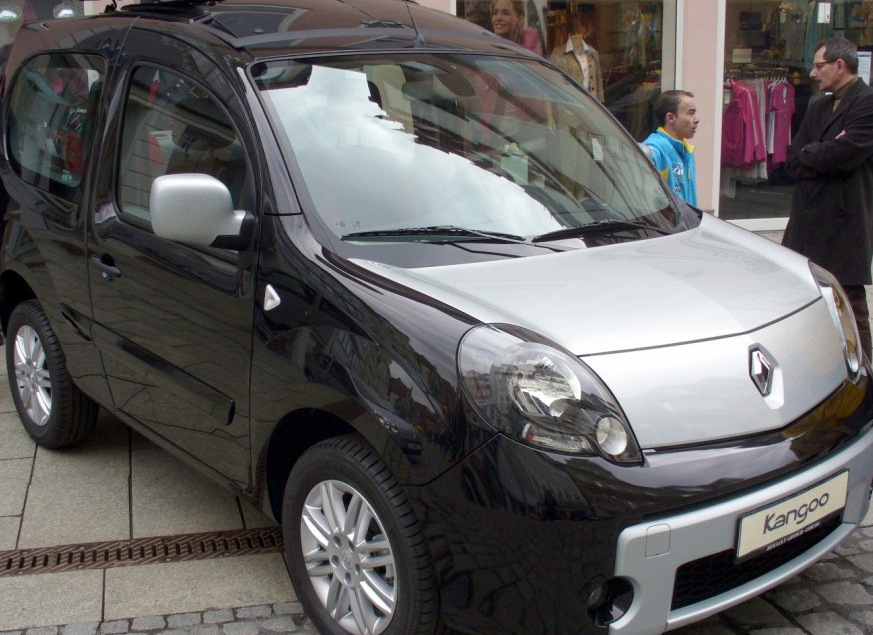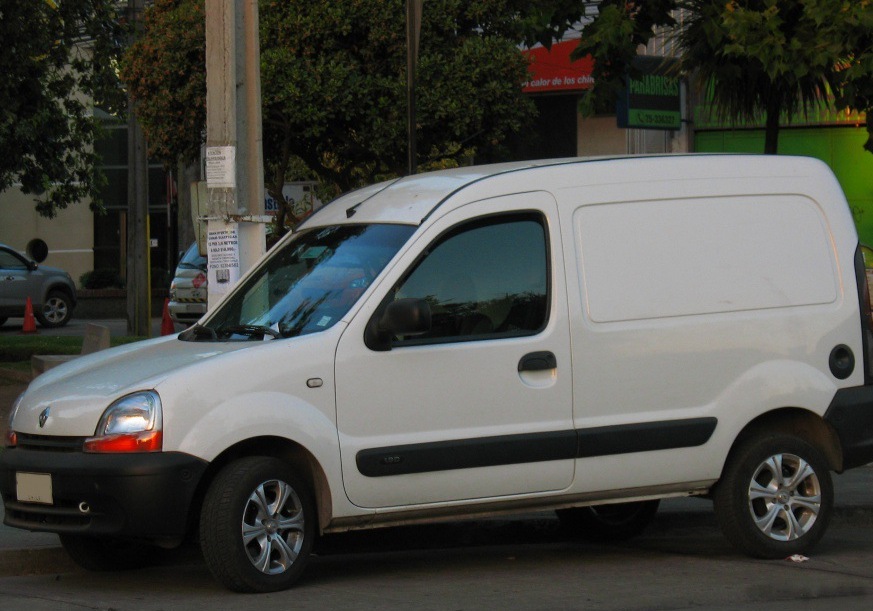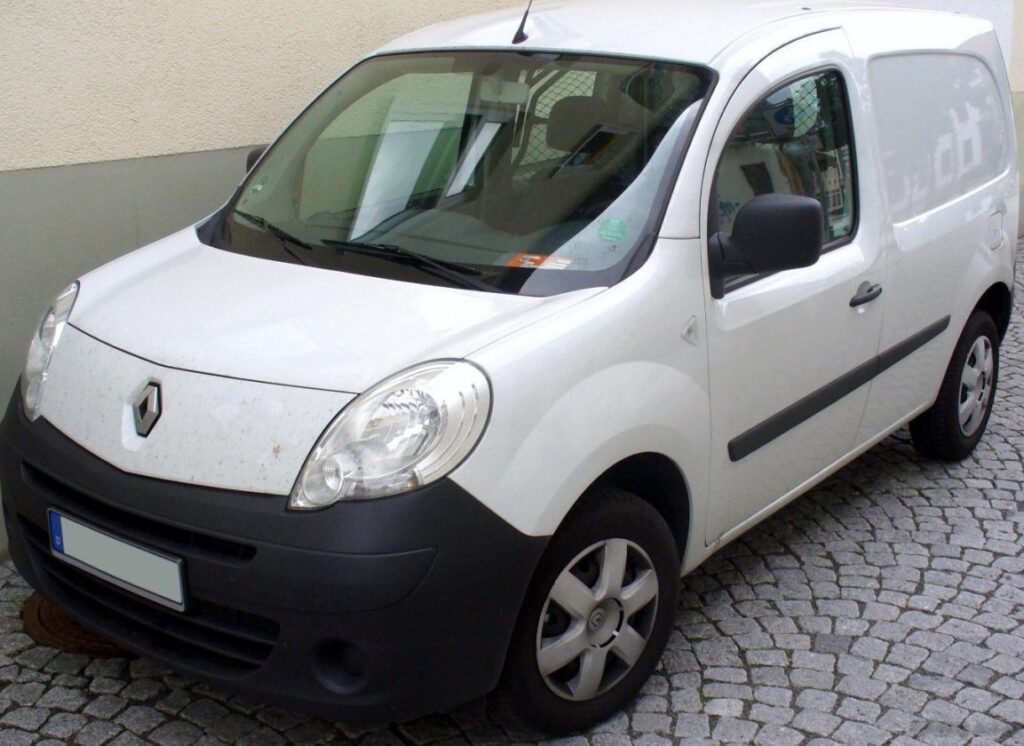
The Renault Kangoo II Express 1.5 dCi (75 hp) FAP is a commercial vehicle produced by Renault from August 2010 to March 2013. Positioned as an entry-level workhorse within the Kangoo II Express range, it catered to businesses and tradespeople requiring a practical and economical van. This variant, built on the X0/B9 platform, offered a balance between affordability and functionality, prioritizing fuel efficiency and load capacity over outright performance. The “FAP” designation indicates the inclusion of a Diesel Particulate Filter, a key component for meeting increasingly stringent European emissions standards.
Technical Specifications
| Brand | Renault |
| Model | Kangoo |
| Generation | Kangoo II Express |
| Type (Engine) | 1.5 dCi (75 Hp) FAP |
| Start of production | August, 2010 |
| End of production | March, 2013 |
| Powertrain Architecture | Internal Combustion engine |
| Body type | Minivan |
| Seats | 2 |
| Doors | 3 |
| CO2 emissions (WLTP) | 143 g/km |
| Fuel consumption (urban) | 5.4 l/100 km (43.6 US mpg, 52.3 UK mpg, 18.5 km/l) |
| Fuel consumption (extra urban) | 4.6 l/100 km (51.1 US mpg, 61.4 UK mpg, 21.7 km/l) |
| Fuel consumption (combined) | 4.9 l/100 km (48 US mpg, 57.6 UK mpg, 20.4 km/l) |
| CO2 emissions (NEDC) | 129 g/km |
| Fuel Type | Diesel |
| Acceleration 0 – 100 km/h | 15.0 sec |
| Acceleration 0 – 62 mph | 15.0 sec |
| Acceleration 0 – 60 mph | 14.3 sec |
| Maximum speed | 150 km/h (93.21 mph) |
| Weight-to-power ratio | 17.1 kg/Hp |
| Weight-to-torque ratio | 6.4 kg/Nm |
| Power | 75 Hp @ 4000 rpm |
| Power per litre | 51.3 Hp/l |
| Torque | 200 Nm @ 1750 rpm (147.51 lb.-ft. @ 1750 rpm) |
| Engine layout | Front, Transverse |
| Engine Model/Code | K9K |
| Engine displacement | 1461 cm3 (89.16 cu. in.) |
| Number of cylinders | 4 |
| Engine configuration | Inline |
| Number of valves per cylinder | 2 |
| Fuel injection system | Diesel Commonrail |
| Engine aspiration | Turbocharger, Intercooler |
| Engine oil capacity | 4.5 l (4.76 US qt, 3.96 UK qt) |
| Coolant capacity | 7.2 l (7.61 US qt, 6.34 UK qt) |
| Kerb Weight | 1280 kg (2821.92 lbs) |
| Max. weight | 1950 kg (4299.01 lbs) |
| Max load | 670 kg (1477.1 lbs) |
| Trunk (boot) space – maximum | 3000 l (105.94 cu. ft) |
| Fuel tank capacity | 60 l (15.85 US gal, 13.2 UK gal) |
| Max. roof load | 100 kg (220.46 lbs) |
| Permitted trailer load (braked) | 1050 kg (2314.85 lbs) |
| Permitted trailer load (unbraked) | 675 kg (1488.12 lbs) |
| Permitted towbar download | 75 kg (165.35 lbs) |
| Length | 4213 mm (165.87 in) |
| Width | 1829 mm (72.01 in) |
| Width including mirrors | 2133 mm (83.98 in) |
| Height | 1844 mm (72.6 in) |
| Wheelbase | 2697 mm (106.18 in) |
| Ride height (ground clearance) | 184 mm (7.24 in) |
| Minimum turning circle | 10.5 m (34.45 ft) |
| Drivetrain | Front wheel drive |
| Number of gears | 5 |
| Gearbox type | Manual transmission |
| Front brakes | Disc |
| Rear brakes | Disc |
| Assisting systems | ABS |
| Tires size | 195/65 R15 |
| Wheel rims size | 15 |
Powertrain & Engine Architecture
The Kangoo II Express 1.5 dCi (75 hp) utilizes the K9K engine, a member of Renault’s widely-used family of small-displacement diesel engines. This engine is a four-cylinder, inline configuration with two valves per cylinder. The 1461cc engine benefits from a turbocharger with an intercooler, which helps to improve power and torque output while maintaining reasonable fuel economy. Fuel is delivered via a Diesel Commonrail direct injection system, providing precise fuel metering and contributing to reduced emissions. The 75 horsepower output is achieved at 4000 rpm, while peak torque of 200 Nm (147.51 lb-ft) is available from 1750 rpm. This relatively low-end torque delivery is characteristic of diesel engines and is well-suited to the demands of commercial vehicle operation. The engine is paired with a five-speed manual transmission, chosen for its simplicity and cost-effectiveness in this segment.
Driving Characteristics
The 1.5 dCi 75 hp engine, coupled with the five-speed manual gearbox, provides adequate, but not exhilarating, performance. Acceleration from 0-100 km/h (0-62 mph) takes around 15 seconds, making it slower than higher-powered Kangoo variants. The focus is on usability and fuel efficiency rather than speed. The engine’s torque characteristics mean that it feels reasonably responsive in everyday driving situations, particularly when lightly loaded. However, when fully laden or climbing hills, the engine can feel strained, requiring frequent gear changes to maintain momentum. Compared to the 90 hp version of the same engine, the 75 hp model offers slightly less power but delivers marginally better fuel economy. The gear ratios are optimized for maximizing fuel efficiency and providing sufficient pulling power for typical commercial tasks.
Equipment & Trim Levels
The Kangoo II Express 1.5 dCi (75 hp) FAP was typically a basic, function-over-form vehicle. Standard equipment generally included a driver’s airbag, central locking, and power steering. The interior was typically finished with durable, easy-to-clean plastics. The seats were usually cloth-upholstered and designed for practicality rather than luxury. Optional extras included air conditioning, a radio/CD player, and electric windows. The emphasis was on providing a robust and reliable work vehicle, and as such, many examples were specified with minimal additional equipment to keep costs down.
Chassis & Braking
The Kangoo II Express features a front-wheel-drive layout with a MacPherson strut front suspension and a torsion beam rear suspension. This setup provides a reasonable balance between ride comfort and load-carrying capacity. The braking system consists of disc brakes on all four wheels, providing adequate stopping power for the vehicle’s weight and performance. Anti-lock Braking System (ABS) was standard, enhancing safety during emergency braking situations. The suspension was tuned to prioritize stability when carrying loads, resulting in a slightly firmer ride compared to passenger car variants.
Market Reception & Comparison
The Renault Kangoo II Express 1.5 dCi (75 hp) FAP was well-received in the commercial vehicle market as a cost-effective and fuel-efficient option. Critics praised its practicality, load capacity, and low running costs. However, the engine’s limited power output was often noted as a drawback, particularly when compared to higher-powered alternatives. Compared to the 90 hp version of the same engine, the 75 hp model offered slightly better fuel economy but at the expense of performance. The 1.5 dCi engine generally proved to be reliable, although the Diesel Particulate Filter (DPF) required periodic maintenance to prevent clogging, especially with frequent short journeys.
Legacy
The Renault Kangoo II Express 1.5 dCi (75 hp) FAP remains a common sight on European roads today. The K9K engine, while not known for being particularly refined, has proven to be durable and relatively inexpensive to maintain. Used examples are readily available and typically represent good value for money. The DPF can be a potential source of issues if not properly maintained, but overall, the powertrain is considered reasonably reliable. The Kangoo II Express continues to be a popular choice for small businesses and tradespeople seeking a practical and economical light commercial vehicle.