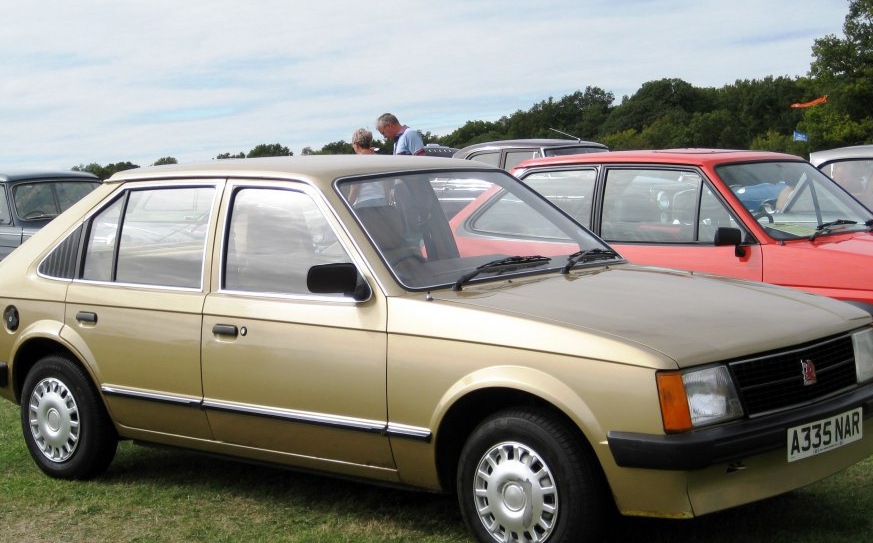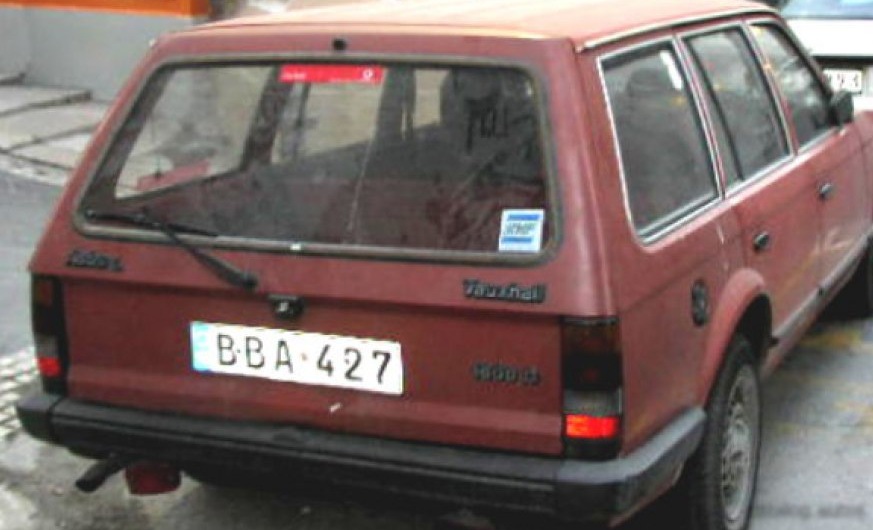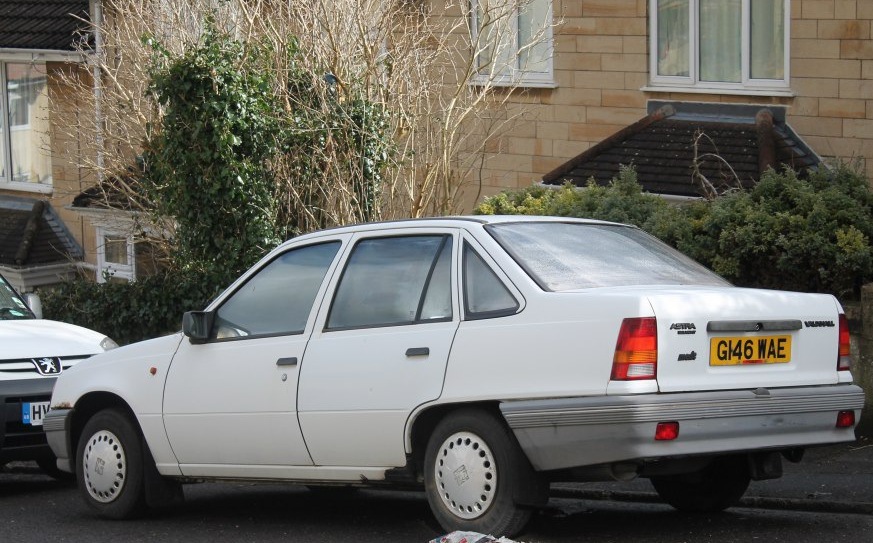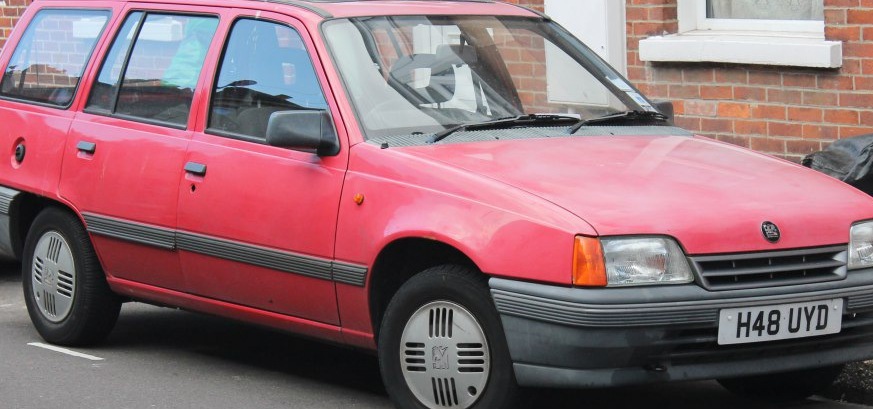
The Vauxhall Astra Mk II Estate 1.7 D, produced between 1989 and 1991, represented an economical and practical offering within the broader Astra Mk II range. Positioned as the entry-level diesel variant of the estate (station wagon) body style, it catered to buyers prioritizing fuel efficiency and load-carrying capacity over outright performance. This model, built on the GM G-platform, was a key part of Vauxhall’s strategy to provide affordable family transport in the United Kingdom and other European markets. The Mk II Estate, and specifically this 1.7 D trim, aimed to provide a versatile vehicle for families and businesses alike, offering a substantial cargo area combined with the durability expected of a diesel engine.
Technical Specifications
| Brand | Vauxhall |
| Model | Astra |
| Generation | Astra Mk II Estate |
| Type (Engine) | 1.7 D (57 Hp) |
| Start of production | 1989 |
| End of production | 1991 |
| Powertrain Architecture | Internal Combustion engine |
| Body type | Station wagon (estate) |
| Seats | 5 |
| Doors | 5 |
| Fuel Type | Diesel |
| Power | 57 Hp @ 4600 rpm |
| Power per litre | 33.5 Hp/l |
| Torque | 105 Nm @ 2400 rpm |
| Torque (lb.-ft.) | 77.44 lb.-ft. @ 2400 rpm |
| Engine layout | Front, Transverse |
| Engine Model/Code | 17D |
| Engine displacement | 1700 cm3 |
| Engine displacement (cu. in.) | 103.74 cu. in. |
| Number of cylinders | 4 |
| Engine configuration | Inline |
| Cylinder Bore | 82.5 mm |
| Cylinder Bore (in.) | 3.25 in. |
| Piston Stroke | 79.5 mm |
| Piston Stroke (in.) | 3.13 in. |
| Compression ratio | 23:1 |
| Number of valves per cylinder | 2 |
| Engine aspiration | Naturally aspirated engine |
| Engine oil capacity | 5 l |
| Engine oil capacity (US qt) | 5.28 US qt |
| Engine oil capacity (UK qt) | 4.4 UK qt |
| Coolant | 6.5 l |
| Coolant (US qt) | 6.87 US qt |
| Coolant (UK qt) | 5.72 UK qt |
| Trunk (boot) space – minimum | 470 l |
| Trunk (boot) space – minimum (cu. ft.) | 16.6 cu. ft. |
| Trunk (boot) space – maximum | 1520 l |
| Trunk (boot) space – maximum (cu. ft.) | 53.68 cu. ft. |
| Length | 4228 mm |
| Length (in.) | 166.46 in. |
| Width | 1666 mm |
| Width (in.) | 65.59 in. |
| Height | 1430 mm |
| Height (in.) | 56.3 in. |
| Wheelbase | 2520 mm |
| Wheelbase (in.) | 99.21 in. |
| Front track | 1400 mm |
| Front track (in.) | 55.12 in. |
| Rear (Back) track | 1405 mm |
| Rear (Back) track (in.) | 55.31 in. |
| Ride height (ground clearance) | 140 mm |
| Ride height (ground clearance) (in.) | 5.51 in. |
| Drag coefficient (Cd) | 0.35 |
| Drivetrain Architecture | The Internal combustion engine (ICE) drives the front wheels of the vehicle. |
| Drive wheel | Front wheel drive |
| Number of gears and type of gearbox | 5 gears, manual transmission |
Powertrain & Engine Architecture
The heart of the Astra Mk II Estate 1.7 D was the 17D engine, a naturally aspirated, indirect injection diesel engine. This engine, a mainstay of Vauxhall/Opel’s diesel offerings during the period, was known for its robustness and fuel economy, though not for its performance. The indirect injection system, utilizing a pre-chamber, contributed to quieter operation compared to direct injection diesels of the time, but at the cost of some efficiency. The engine featured a two-valve per cylinder configuration and a relatively low compression ratio of 23:1. The 57 horsepower output was achieved at 4600 rpm, while peak torque of 105 Nm (77.44 lb-ft) arrived at 2400 rpm. The engine was transversely mounted, driving the front wheels through a five-speed manual transmission. This transmission was a standard unit for the Mk II Astra, offering a relatively long-legged gear ratio spread designed for economical cruising.
Driving Characteristics
The 1.7 D-powered Astra Estate was not a vehicle designed for speed. Acceleration was modest, and overtaking required careful planning. The engine’s torque characteristics meant that it felt strongest in the mid-range, but even then, it lacked the punch of larger displacement or turbocharged diesel engines. The five-speed manual transmission helped to keep the engine within its optimal operating range, but the overall driving experience was geared towards practicality and economy rather than excitement. Compared to the petrol-powered Astra Estates, the 1.7 D offered significantly better fuel economy, but at the expense of performance. It was a noticeable step down in responsiveness compared to even the base 1.6-liter petrol engine.
Equipment & Trim Levels
The 1.7 D Estate typically represented the base trim level within the Astra Estate range. Standard equipment was relatively sparse, focusing on essential features. This included basic cloth upholstery, a simple dashboard layout, and manual windows and door locks. Central locking and electric windows were generally optional extras. The interior was designed for durability and ease of cleaning, reflecting the vehicle’s intended use as a workhorse. Optional extras could include a radio/cassette player, upgraded seat fabrics, and occasionally, a sunroof. The emphasis was on providing a functional and affordable vehicle, rather than a luxurious one.
Chassis & Braking
The Astra Mk II Estate utilized a MacPherson strut front suspension and a twist-beam rear suspension. The suspension setup was tuned for comfort and stability, prioritizing ride quality over sporty handling. Braking was typically accomplished with disc brakes on the front wheels and drum brakes on the rear. The braking system was adequate for the vehicle’s weight and performance, but lacked the stopping power of more modern systems. Stabilizer bars were often omitted on the base 1.7 D trim, further contributing to a softer, more comfortable ride.
Market Reception & Comparison
The Astra Mk II Estate 1.7 D was generally well-received by buyers seeking an affordable and economical estate car. Critics acknowledged its practicality and fuel efficiency, but often criticized its lack of performance. Compared to other diesel estates of the time, such as the Ford Sierra Estate diesel, the Astra offered a more modern design and a slightly more refined driving experience. However, the Sierra often boasted a larger cargo capacity. Within the Astra range, the 1.7 D was positioned as the budget-friendly option, appealing to buyers who prioritized economy over performance and features. The petrol-engined Astras offered more spirited driving, while higher-spec diesel models (if available) provided a better balance of performance and economy.
Legacy
The 1.7 D engine, while not renowned for its power, proved to be remarkably durable and reliable. Many examples of the Astra Mk II Estate 1.7 D continue to be seen on the roads today, a testament to the engine’s longevity. In the used car market, these vehicles are often sought after by enthusiasts looking for a simple, affordable, and reliable classic car. Maintenance is generally straightforward, and parts availability remains reasonable. However, potential buyers should be aware of the typical issues associated with older diesel engines, such as injector wear and potential for head gasket failure. The Astra Mk II Estate 1.7 D represents a practical and honest offering from a bygone era of automotive design, a vehicle built to serve its owners reliably for many years.