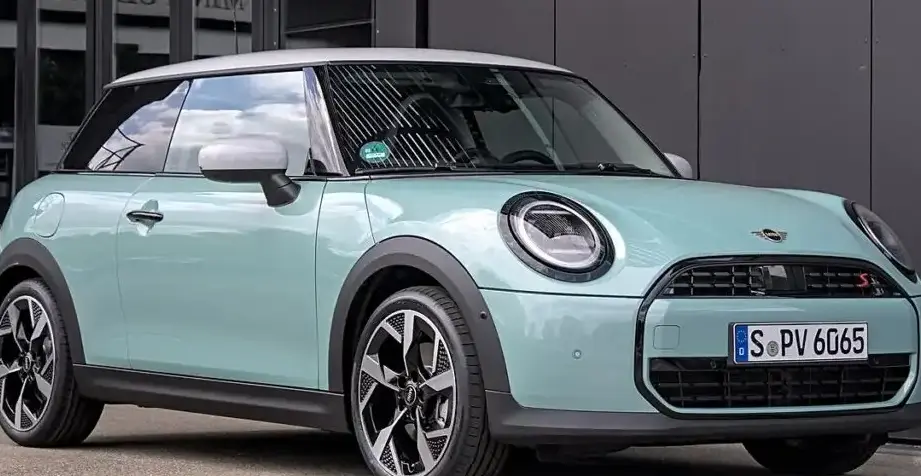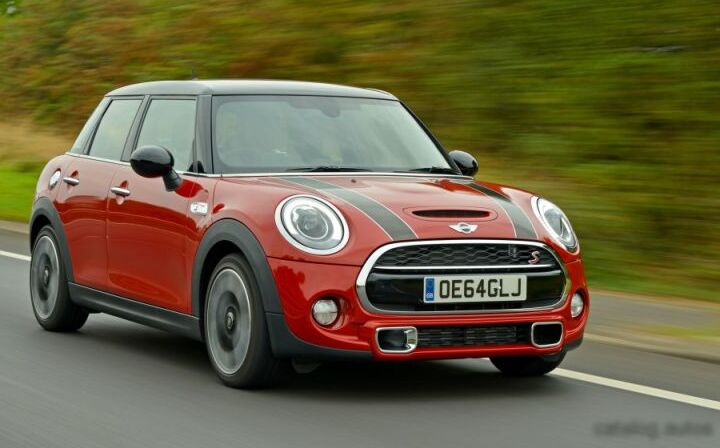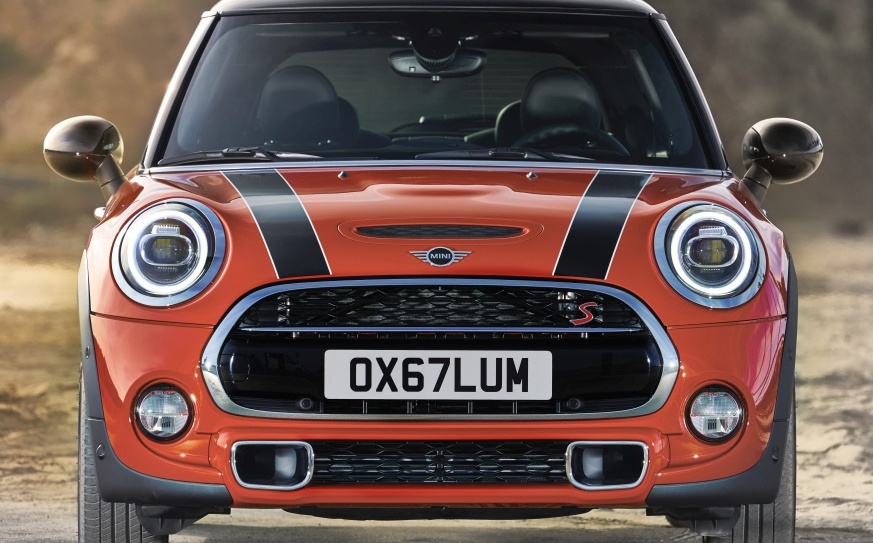
The Mini Hatch (F56) facelift, specifically the 3-door One D 1.5 95 hp variant, represents a refinement of the third-generation Mini, launched in 2014. Introduced in 2018, this model year brought styling updates, revised technology, and continued the One D’s role as the entry-level diesel offering within the Mini lineup. Positioned as a fuel-efficient and accessible option, the One D 1.5 catered to buyers prioritizing economy and practicality within the iconic Mini design. This particular iteration utilized a six-speed manual transmission, making it a popular choice in European markets where manual gearboxes remain prevalent.
Technical Specifications
| Brand | Mini |
| Model | Hatch |
| Generation | Hatch (F56, facelift 2018) 3-door |
| Type (Engine) | One D 1.5 (95 Hp) |
| Start of production | 2018 |
| End of production | 2018 |
| Powertrain Architecture | Internal Combustion engine |
| Body type | Hatchback |
| Seats | 4 |
| Doors | 3 |
| Fuel consumption (urban) | 4.2-4.3 l/100 km (56 – 54.7 US mpg) |
| Fuel consumption (extra urban) | 3.3-3.5 l/100 km (71.3 – 67.2 US mpg) |
| Fuel consumption (combined) | 3.7-3.8 l/100 km (63.6 – 61.9 US mpg) |
| CO2 emissions | 96-100 g/km |
| Fuel Type | Diesel |
| Acceleration 0 – 100 km/h | 11.2 sec |
| Acceleration 0 – 62 mph | 11.2 sec |
| Acceleration 0 – 60 mph | 10.6 sec |
| Maximum speed | 190 km/h (118.06 mph) |
| Emission standard | Euro 6 |
| Weight-to-power ratio | 12.1 kg/Hp |
| Weight-to-torque ratio | 5.2 kg/Nm |
| Power | 95 Hp @ 4000 rpm |
| Torque | 220 Nm @ 1500-2500 rpm (162.26 lb.-ft. @ 1500-2500 rpm) |
| Engine layout | Front, Transverse |
| Engine Model/Code | B37C15A |
| Engine displacement | 1496 cm3 (91.29 cu. in.) |
| Number of cylinders | 3 |
| Engine configuration | Inline |
| Cylinder Bore | 84 mm (3.31 in.) |
| Piston Stroke | 90 mm (3.54 in.) |
| Compression ratio | 16.5:1 |
| Number of valves per cylinder | 4 |
| Fuel injection system | Diesel Commonrail |
| Engine aspiration | Turbocharger, Intercooler |
| Engine oil capacity | 4.4 l (4.65 US qt | 3.87 UK qt) |
| Coolant | 3.3 l (3.49 US qt | 2.9 UK qt) |
| Kerb Weight | 1150 kg (2535.32 lbs.) |
| Max. weight | 1615 kg (3560.47 lbs.) |
| Max load | 465 kg (1025.15 lbs.) |
| Trunk (boot) space – minimum | 211 l (7.45 cu. ft.) |
| Fuel tank capacity | 44 l (11.62 US gal | 9.68 UK gal) |
| Length | 3821 mm (150.43 in.) |
| Width | 1727 mm (67.99 in.) |
| Height | 1414 mm (55.67 in.) |
| Wheelbase | 2495 mm (98.23 in.) |
| Front track | 1501 mm (59.09 in.) |
| Rear track | 1501 mm (59.09 in.) |
| Ride height (ground clearance) | 143 mm (5.63 in.) |
| Drag coefficient (Cd) | 0.29 |
| Minimum turning circle | 10.8 m (35.43 ft.) |
| Drivetrain Architecture | Front wheel drive |
| Number of gears | 6 |
| Gearbox type | Manual transmission |
| Front suspension | Independent, McPherson with coil spring and anti-roll bar |
| Rear suspension | Independent multi-link suspension |
| Front brakes | Ventilated discs |
| Rear brakes | Disc |
| Assisting systems | ABS (Anti-lock braking system) |
| Steering type | Steering rack and pinion |
| Power steering | Electric |
| Tires size | 175/65 R15 84H |
| Wheel rims size | 5.5J x 15 |
Powertrain & Engine Architecture
The heart of the One D 1.5 is the BMW Group’s B37C15A 1.5-liter three-cylinder diesel engine. This engine is a member of the modular engine family, designed for efficiency and scalability. It features a turbocharger with an intercooler to boost power output, and utilizes a common-rail direct fuel injection system for precise fuel delivery. The engine produces 95 horsepower at 4,000 rpm and 220 Nm (162 lb-ft) of torque between 1,500 and 2,500 rpm. The six-speed manual transmission provides a relatively long gearing, prioritizing fuel economy over outright acceleration. The engine’s architecture includes four valves per cylinder and a compression ratio of 16.5:1, contributing to its thermal efficiency. A particulate filter is included to meet stringent Euro 6 emissions standards.
Driving Characteristics
The One D 1.5 with a manual transmission offers a surprisingly engaging driving experience, despite its modest power output. Acceleration from 0 to 60 mph takes around 10.6 seconds, and top speed is 118 mph. The engine’s torque is readily available from low revs, making it suitable for city driving and overtaking maneuvers. The long gearing of the six-speed manual transmission means that the engine operates at relatively low speeds during highway cruising, further enhancing fuel economy. Compared to the more powerful Cooper D variants, the One D feels less urgent, but its lighter weight and responsive steering contribute to a nimble feel. The manual gearbox allows for greater driver control, a preference for many European enthusiasts.
Equipment & Trim Levels
The One D 1.5 typically came equipped with a respectable level of standard features. These included air conditioning, power windows, central locking, and a basic audio system with USB connectivity. Safety features such as ABS, electronic stability control, and multiple airbags were standard. Interior upholstery was typically cloth, with a functional and minimalist dashboard design. Optional extras included alloy wheels, a navigation system, parking sensors, and upgraded audio systems. The One D served as the entry point to the Mini range, so many examples were specified with fewer options to keep the price competitive.
Chassis & Braking
The F56 Mini Hatch utilizes a McPherson strut front suspension and a multi-link rear suspension, providing a comfortable yet sporty ride. The One D 1.5 variant typically featured ventilated front discs and solid rear discs for braking. ABS (Anti-lock Braking System) was standard. The suspension setup was tuned to balance handling and ride comfort, with a focus on minimizing body roll during cornering. The electric power steering provides precise and responsive steering feel. The relatively low weight of the One D, at around 1150 kg (2535 lbs), contributes to its agility.
Market Reception & Comparison
The Mini One D 1.5 was generally well-received by automotive critics as a practical and economical city car. Its fuel economy figures of around 62-64 mpg (combined) were a major selling point. Compared to the more powerful Cooper D models, the One D offered a lower purchase price and lower running costs, but at the expense of performance. It competed with other small diesel hatchbacks such as the Volkswagen Polo and Audi A1, offering a more premium and stylish alternative. Reliability was generally good, although some owners reported minor issues with the diesel particulate filter.
Legacy
The B37C15A engine, found in the One D 1.5, has proven to be a relatively reliable powertrain when properly maintained. On the used car market, these models represent an affordable entry point into Mini ownership. The combination of fuel efficiency, nimble handling, and the iconic Mini design continues to make the One D 1.5 a popular choice for urban commuters and those seeking a stylish and economical hatchback. However, potential buyers should be aware of the potential for DPF issues and ensure regular servicing to maintain optimal performance and longevity.