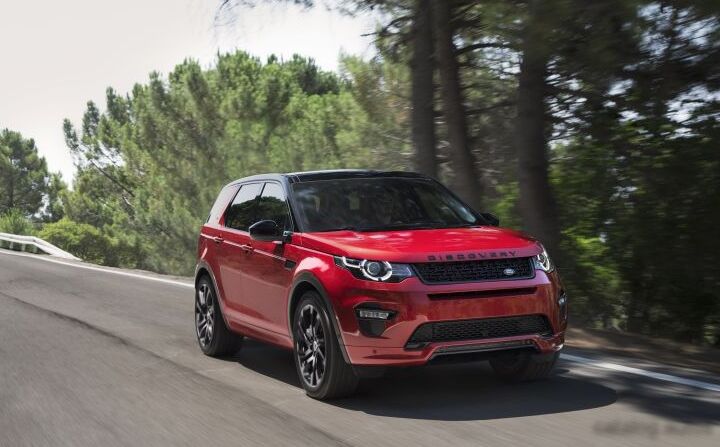
The Land Rover Discovery Sport 2.0 Si4, produced from 2018 to 2019, represents a significant iteration of Land Rover’s entry-level luxury SUV. Positioned as a mid-range offering within the Discovery Sport lineup, this variant combined the Ingenium 2.0-liter turbocharged four-cylinder engine producing 240 horsepower with a sophisticated nine-speed automatic transmission and all-wheel drive. It was a key model in establishing the Discovery Sport as a competitor in the compact luxury crossover segment, particularly in markets like North America and Europe where a balance of on-road refinement and off-road capability was highly valued. The Discovery Sport itself, launched in 2014, aimed to fill the gap between the more rugged, body-on-frame Land Rover Defender and the more luxurious Range Rover Evoque.
Technical Specifications
| Brand | Land Rover |
| Model | Discovery Sport |
| Type (Engine) | 2.0 Si4 (240 Hp) Ingenium engine AWD Automatic |
| Start of production | 2018 |
| End of production | 2019 |
| Powertrain Architecture | Internal Combustion engine |
| Body type | SUV |
| Seats | 5-7 |
| Doors | 5 |
| Fuel Type | Petrol (Gasoline) |
| Acceleration 0 – 100 km/h | 7.6 sec |
| Acceleration 0 – 62 mph | 7.6 sec |
| Acceleration 0 – 60 mph | 7.2 sec |
| Maximum speed | 200 km/h (124.27 mph) |
| Weight-to-power ratio | 7.5 kg/Hp, 133.6 Hp/tonne |
| Weight-to-torque ratio | 5.3 kg/Nm, 189.3 Nm/tonne |
| Power | 240 Hp @ 5500 rpm |
| Power per litre | 120.1 Hp/l |
| Torque | 340 Nm @ 1250 rpm (250.77 lb.-ft. @ 1250 rpm) |
| Engine layout | Front, Transverse |
| Engine Model/Code | Ingenium / PT204 |
| Engine displacement | 1999 cm3 (121.99 cu. in.) |
| Number of cylinders | 4 |
| Engine configuration | Inline |
| Cylinder Bore | 87.5 mm (3.44 in.) |
| Piston Stroke | 83.1 mm (3.27 in.) |
| Number of valves per cylinder | 4 |
| Fuel injection system | Direct injection |
| Engine aspiration | Turbocharger, Intercooler |
| Engine oil capacity | 7 l (7.4 US qt | 6.16 UK qt) |
| Coolant | 11.2 l (11.83 US qt | 9.85 UK qt) |
| Kerb Weight | 1796-1883 kg (3959.5 – 4151.3 lbs.) |
| Max. weight | 2660 kg (5864.3 lbs.) |
| Max load | 777-864 kg (1712.99 – 1904.79 lbs.) |
| Trunk (boot) space – maximum | 1698 l (59.96 cu. ft.) |
| Fuel tank capacity | 68.5 l (18.1 US gal | 15.07 UK gal) |
| Max. roof load | 75 kg (165.35 lbs.) |
| Permitted trailer load with brakes (12%) | 2000 kg (4409.25 lbs.) |
| Permitted trailer load without brakes | 750 kg (1653.47 lbs.) |
| Permitted towbar download | 100 kg (220.46 lbs.) |
| Length | 4599 mm (181.06 in.) |
| Width with mirrors folded | 2069 mm (81.46 in.) |
| Width including mirrors | 2173 mm (85.55 in.) |
| Height | 1724 mm (67.87 in.) |
| Wheelbase | 2741 mm (107.91 in.) |
| Front track | 1621 mm (63.82 in.) |
| Rear (Back) track | 1630 mm (64.17 in.) |
| Ride height (ground clearance) | 212 mm (8.35 in.) |
| Minimum turning circle (turning diameter) | 11.86 m (38.91 ft.) |
| Approach angle | 23.4° |
| Departure angle | 31° |
| Ramp-over (brakeover) angle | 20° |
| Wading depth | 600 mm (23.62 in.) |
| Drive wheel | All wheel drive (4×4) |
| Number of gears and type of gearbox | 9 gears, automatic transmission |
| Front suspension | Independent coil spring |
| Rear suspension | Independent multi-link suspension |
| Front brakes | Ventilated discs |
| Rear brakes | Disc |
| Assisting systems | ABS (Anti-lock braking system) |
| Steering type | Steering rack and pinion |
| Power steering | Electric Steering |
| Tires size | 235/60 R18 107H |
| Wheel rims size | 8J x 18 ET45 |
Powertrain & Engine Architecture
The heart of the Discovery Sport 2.0 Si4 is Land Rover’s Ingenium engine family. The PT204, a 2.0-liter inline-four, utilizes direct injection and a single twin-scroll turbocharger. This configuration allows for a broad torque curve and responsive power delivery. The engine features a relatively high compression ratio (around 11:1) for improved thermal efficiency. Valve timing is managed by a dual independent variable camshaft timing (DIVVT) system, optimizing performance and fuel economy across the rev range. The nine-speed automatic transmission, sourced from ZF, is a key component of this powertrain. Its close gear ratios contribute to both acceleration and fuel efficiency. The transmission is known for its smooth shifts, although some early units experienced software glitches that were addressed through updates. The all-wheel-drive system employs a multi-plate clutch to distribute torque between the front and rear axles, providing enhanced traction in various conditions.
Driving Characteristics
The 240 hp output and 340 Nm (250 lb-ft) of torque provide the Discovery Sport 2.0 Si4 with respectable performance. Acceleration from 0-60 mph takes around 7.2 to 7.6 seconds, making it competitive within its class. The nine-speed transmission keeps the engine within its optimal power band, resulting in a generally smooth and effortless driving experience. Compared to the lower-powered 180 hp version, the Si4 offers a noticeable improvement in acceleration and passing power. However, it doesn’t match the outright performance of the higher-spec models with more powerful engines. The automatic transmission, while refined, can sometimes feel hesitant during quick downshifts. The all-wheel-drive system provides confident handling on both paved and unpaved surfaces, making it a capable all-weather vehicle.
Equipment & Trim Levels
The 2.0 Si4 typically came equipped with a generous level of standard features. These included leather upholstery, a touchscreen infotainment system with navigation, automatic climate control, and a suite of safety features such as autonomous emergency braking and lane departure warning. Optional extras included a panoramic sunroof, premium audio system, adaptive cruise control, and various cosmetic enhancements. Trim levels varied by market, but generally offered increasing levels of luxury and technology. The HSE trim, for example, added features like upgraded leather, heated seats, and a more sophisticated infotainment system.
Chassis & Braking
The Discovery Sport utilizes a monocoque chassis construction for a balance of rigidity and weight savings. The suspension consists of independent coil springs at the front and an independent multi-link setup at the rear. This configuration provides a comfortable ride quality, even on rough roads. Braking duties are handled by ventilated discs at the front and solid discs at the rear. Anti-lock braking system (ABS) and electronic stability control (ESC) are standard features, enhancing safety and control. The steering is electrically assisted, providing a light and precise feel.
Market Reception & Comparison
The Discovery Sport 2.0 Si4 was generally well-received by automotive critics. It was praised for its stylish design, comfortable interior, and capable all-wheel-drive system. The Ingenium engine was lauded for its efficiency and refinement. However, some reviewers noted the occasionally hesitant behavior of the nine-speed transmission. Compared to the lower-powered 1.5L Ingenium engine, the 2.0 Si4 offered a significant performance upgrade, justifying the higher price tag for buyers prioritizing acceleration and towing capacity. Fuel economy was competitive for its class, averaging around 23-26 mpg in mixed driving conditions.
Legacy
The Land Rover Discovery Sport 2.0 Si4 has proven to be a relatively reliable vehicle, although some owners have reported minor issues with the infotainment system and occasional transmission glitches. The Ingenium engine has generally demonstrated good durability. On the used car market, these models hold their value reasonably well, particularly those with low mileage and a full service history. The Discovery Sport established itself as a popular choice in the compact luxury SUV segment, and the 2.0 Si4 variant remains a desirable option for buyers seeking a blend of performance, refinement, and all-weather capability.