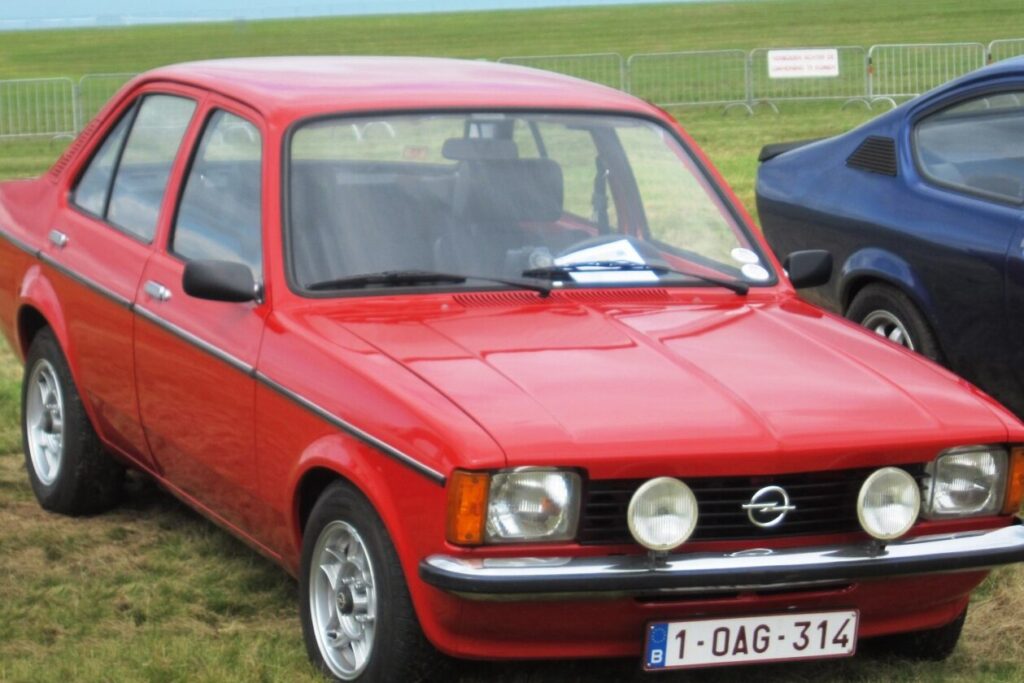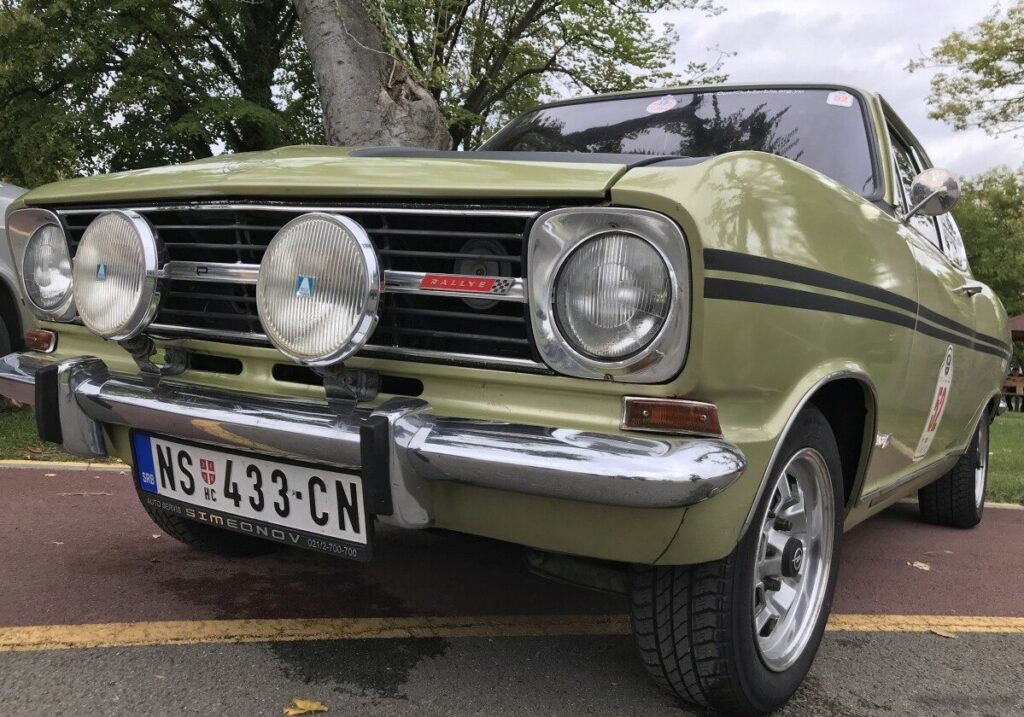
The Opel Kadett B Coupe 1.1 S, produced between 1965 and 1973, represented a significant step forward for Opel in the compact car segment. Part of the broader Kadett B generation (1965-1973), the Coupe offered a more stylish alternative to the four-door sedan, appealing to buyers seeking a sporty and affordable vehicle. The “S” designation denoted a slightly more performance-oriented trim level, though still firmly positioned as an entry-level offering within the Kadett B lineup. It played a crucial role in Opel’s expansion within the European market, offering a practical and relatively modern vehicle to a growing middle class.
Technical Specifications
| Brand | Opel |
| Model | Kadett |
| Generation | Kadett B Coupe |
| Type (Engine) | 1.1 S (60 Hp) |
| Start of production | 1965 |
| End of production | 1973 |
| Powertrain Architecture | Internal Combustion engine |
| Body type | Coupe |
| Seats | 5 |
| Doors | 2 |
| Fuel Type | Petrol (Gasoline) |
| Weight-to-power ratio | 12.5 kg/Hp, 80 Hp/tonne |
| Weight-to-torque ratio | 8.8 kg/Nm, 113.3 Nm/tonne |
| Power | 60 Hp @ 5600 rpm |
| Power per litre | 55.7 Hp/l |
| Torque | 85 Nm @ 2800-3600 rpm (62.69 lb.-ft. @ 2800-3600 rpm) |
| Engine layout | Front, Longitudinal |
| Engine Model/Code | 11S |
| Engine displacement | 1078 cm3 (65.78 cu. in.) |
| Number of cylinders | 4 |
| Engine configuration | Inline |
| Cylinder Bore | 75 mm (2.95 in.) |
| Piston Stroke | 61 mm (2.4 in.) |
| Compression ratio | 8.8:1 |
| Number of valves per cylinder | 2 |
| Fuel injection system | Carburettor |
| Engine aspiration | Naturally aspirated engine |
| Valvetrain | OHV |
| Engine oil capacity | 2.8 l (2.96 US qt | 2.46 UK qt) |
| Coolant | 5.1 l (5.39 US qt | 4.49 UK qt) |
| Kerb Weight | 750 kg (1653.47 lbs.) |
| Max. weight | 1280 kg (2821.92 lbs.) |
| Max load | 530 kg (1168.45 lbs.) |
| Trunk (boot) space – minimum | 460 l (16.24 cu. ft.) |
| Fuel tank capacity | 40 l (10.57 US gal | 8.8 UK gal) |
| Length | 4182 mm (164.65 in.) |
| Width | 1573 mm (61.93 in.) |
| Height | 1405 mm (55.31 in.) |
| Wheelbase | 2416 mm (95.12 in.) |
| Front track | 1250 mm (49.21 in.) |
| Rear (Back) track | 1274 mm (50.16 in.) |
| Ride height (ground clearance) | 173 mm (6.81 in.) |
| Minimum turning circle (turning diameter) | 9.4 m (30.84 ft.) |
| Drivetrain Architecture | The Internal combustion engine (ICE) drives the rear wheels of the vehicle. |
| Drive wheel | Rear wheel drive |
| Number of gears and type of gearbox | 4 gears, manual transmission |
| Front suspension | Double wishbone, Transverse stabilizer |
| Rear suspension | Transverse stabilizer, Trailing arm |
| Front brakes | Disc |
| Rear brakes | Drum |
| Steering type | Steering rack and pinion |
Powertrain & Engine Architecture
The Kadett B Coupe 1.1 S was powered by the 11S engine, a 1078cc inline-four cylinder unit. This engine featured a single overhead valve (OHV) valvetrain and utilized a carburetor for fuel delivery. The engine produced 60 horsepower at 5600 rpm and 85 Nm (62.69 lb-ft) of torque between 2800 and 3600 rpm. The engine was longitudinally mounted in the front of the vehicle, driving the rear wheels. The four-speed manual transmission was the standard offering, providing a relatively simple and robust drivetrain. The 11S engine, while not particularly powerful, was known for its durability and relative ease of maintenance. It was a common sight in European workshops of the era, and parts availability remained good for many years.
Driving Characteristics
The 1.1 S Coupe offered modest performance. Acceleration was leisurely, and top speed was around 80 mph (129 km/h). The four-speed manual transmission, while precise, required frequent shifting to maintain momentum, especially when encountering hills or overtaking. Compared to the more powerful Kadett B variants, such as those equipped with larger engines, the 1.1 S felt noticeably underpowered. However, its lighter weight and nimble handling made it enjoyable to drive on winding roads. The rear-wheel-drive configuration provided a balanced feel, although it lacked the sophistication of more modern handling technologies. Steering was relatively direct, providing a decent level of feedback to the driver. The overall driving experience was best described as uncomplicated and engaging, rather than outright sporty.
Equipment & Trim Levels
The 1.1 S trim level offered a step up in features compared to the base Kadett Coupe. Standard equipment typically included cloth upholstery, a basic instrument cluster, and chrome trim accents. Optional extras included a radio, whitewall tires, and upgraded interior trim. The interior was functional and relatively spartan, reflecting the car’s affordable price point. The Coupe body style itself was considered a more stylish and desirable option than the standard sedan, adding to the appeal of the 1.1 S. While not luxurious, the interior was well-built and durable, capable of withstanding years of use. The focus was on providing a practical and comfortable driving environment.
Chassis & Braking
The Kadett B Coupe utilized a body-on-frame construction, a common practice for the time. The front suspension consisted of a double wishbone setup with a transverse stabilizer, while the rear suspension employed a trailing arm design with a transverse stabilizer. This suspension setup provided a reasonable level of ride comfort and handling for the time. Braking was accomplished via disc brakes at the front and drum brakes at the rear. The braking system was adequate for normal driving conditions, but lacked the stopping power of more modern vehicles. Steering was via a rack and pinion system, providing precise and responsive control. The chassis design prioritized simplicity and robustness, contributing to the car’s overall reliability.
Market Reception & Comparison
The Kadett B Coupe 1.1 S was generally well-received by automotive critics as an affordable and practical transportation option. It was praised for its fuel efficiency and reliability. However, its modest performance was often criticized, particularly when compared to more powerful competitors. Compared to other Kadett B variants, such as the 1.7L models, the 1.1 S offered significantly less power but also lower running costs. It appealed to buyers who prioritized economy and practicality over outright performance. The 1.1 S was a popular choice for first-time car buyers and those seeking a reliable and inexpensive vehicle. It successfully filled a niche in the market for a stylish and affordable coupe.
Legacy
The Opel Kadett B Coupe 1.1 S, while not a high-performance machine, holds a significant place in automotive history as a representative of the affordable and practical European cars of the 1960s and early 1970s. The 11S engine proved to be remarkably durable, and many examples are still on the road today. In the used car market, well-maintained Kadett B Coupes are sought after by collectors and enthusiasts. The car’s simple mechanical design makes it relatively easy to maintain and repair, contributing to its enduring appeal. It remains a popular choice for classic car rallies and events, showcasing a bygone era of automotive engineering. Its influence can be seen in subsequent generations of Opel Kadett models, which continued to prioritize affordability and practicality.